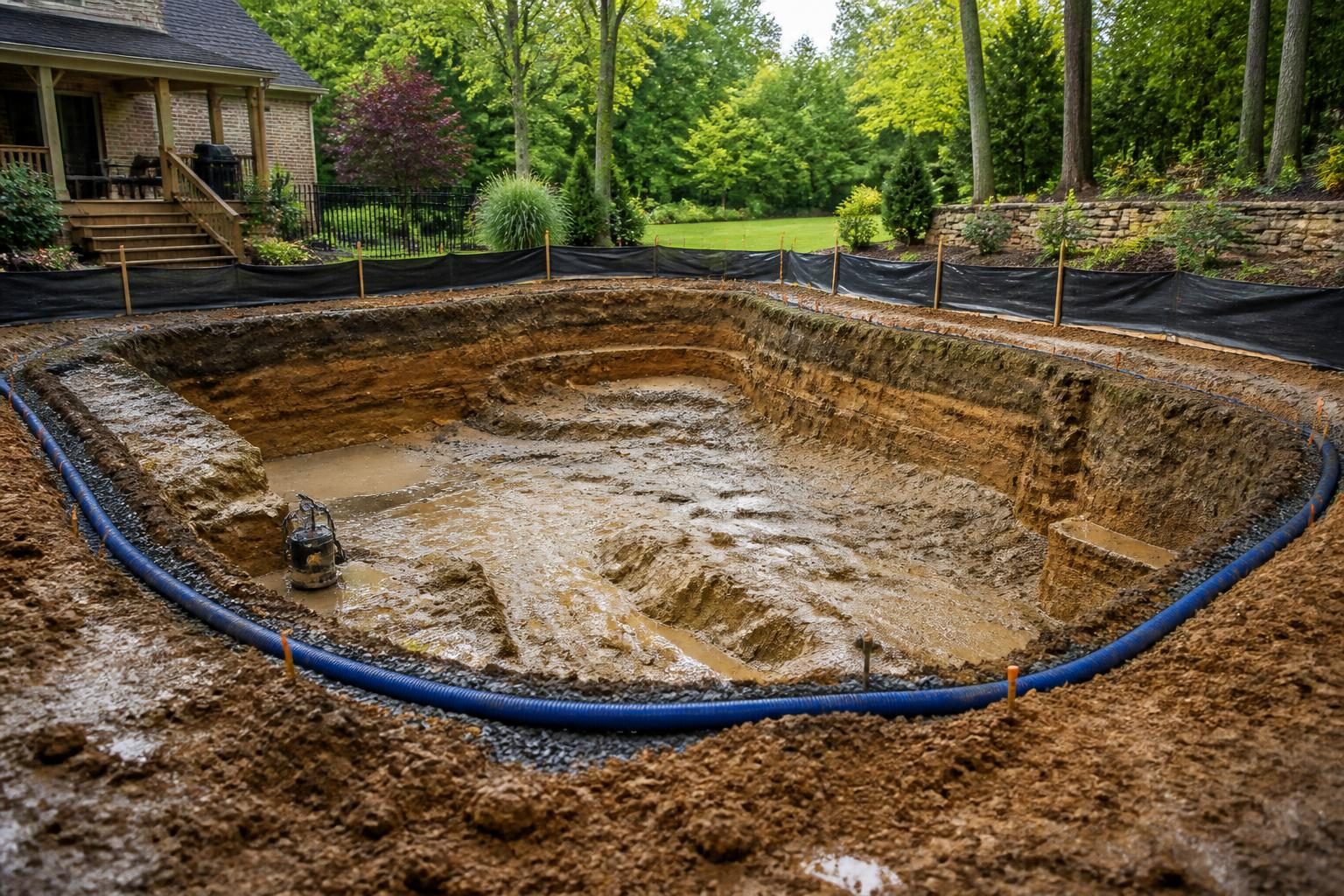
Groundwater can affect excavation, drainage, scheduling, and construction decisions. Learn what to observe and ask before work begins on a North Carolina pool.
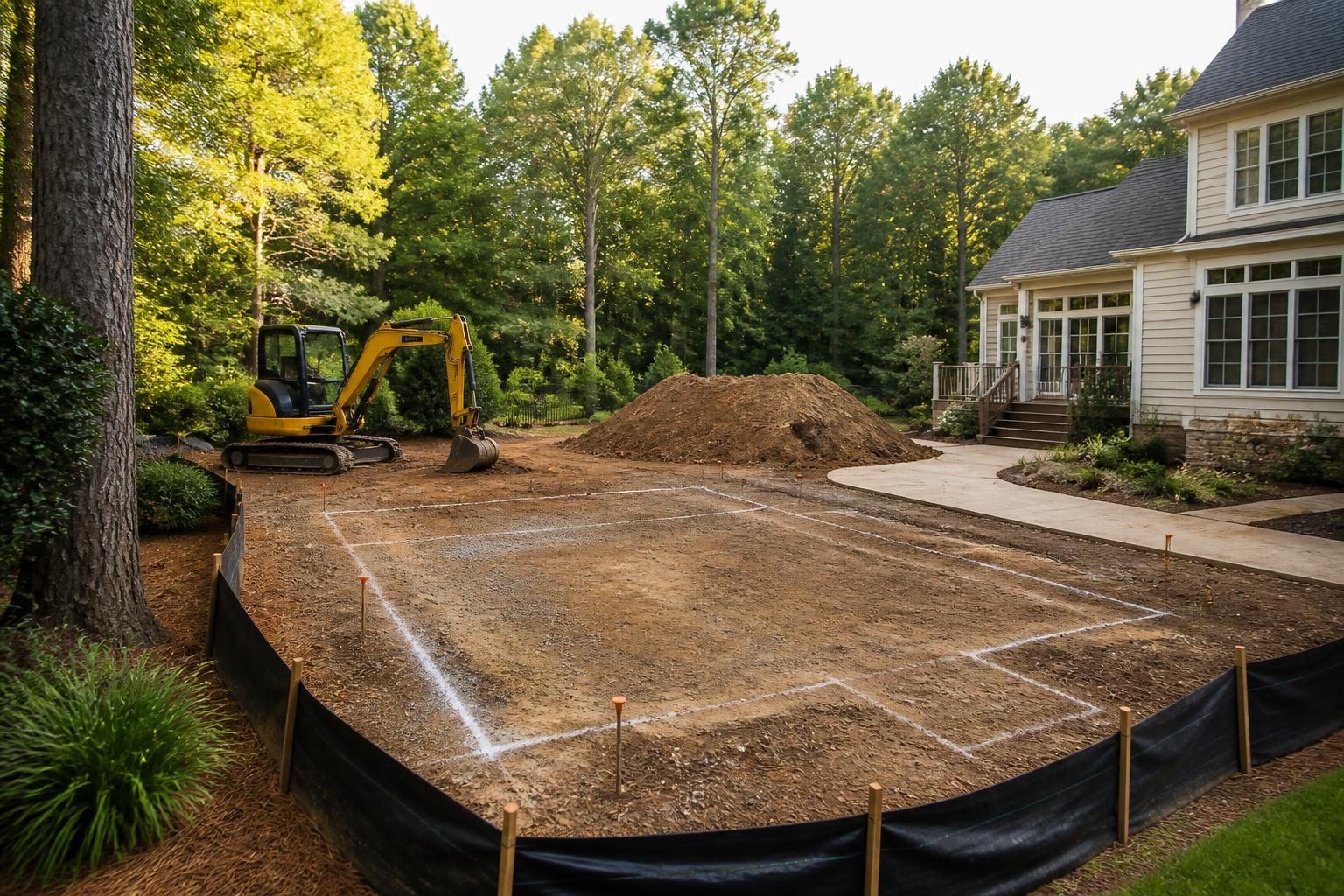
Before excavation begins, clarify where surplus soil will go, how hauling affects access, and how removal responsibilities appear in your pool documents.
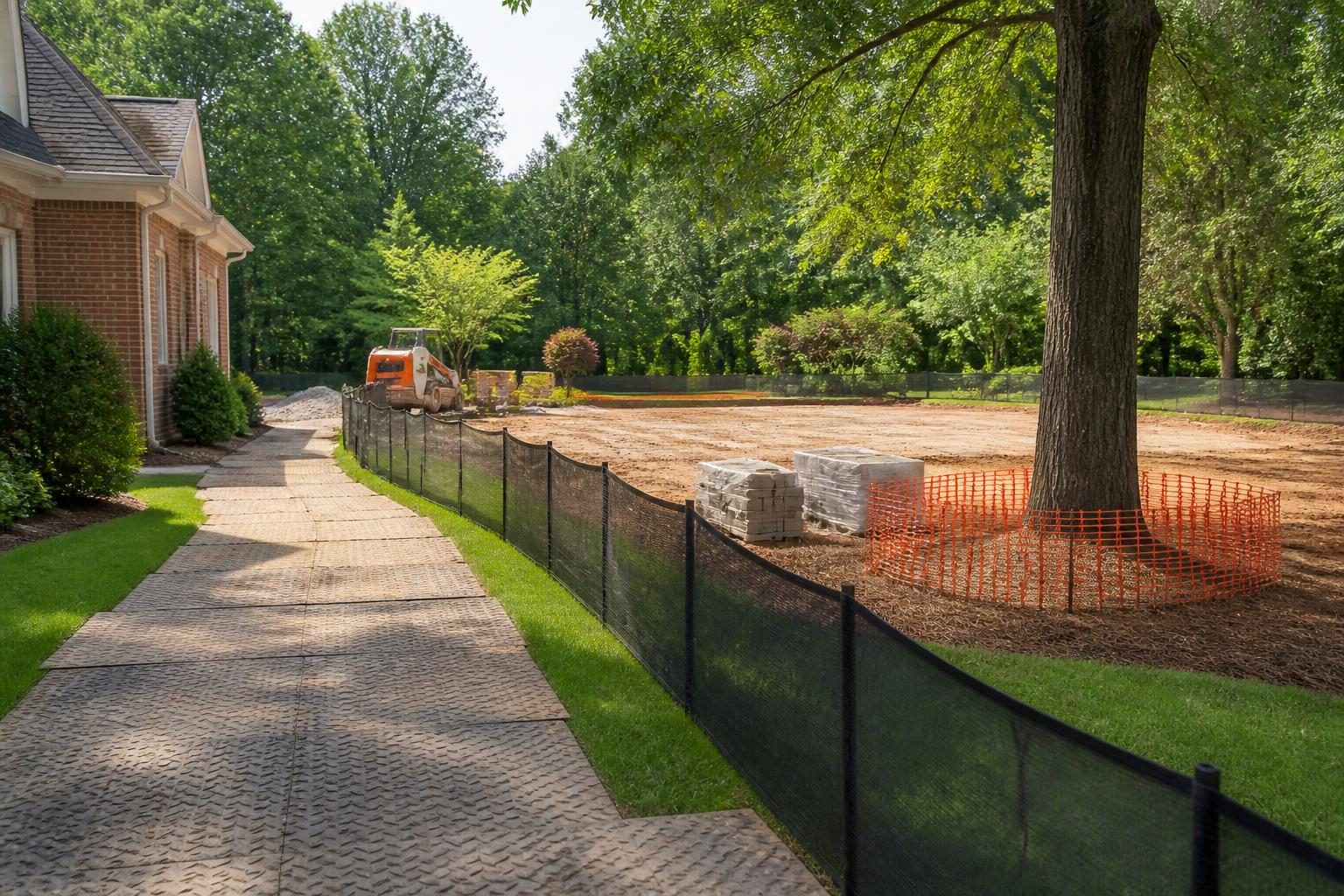
Plan temporary fencing, driveway protection, tree safeguards, material staging, pedestrian routes, and restoration records before pool work begins.
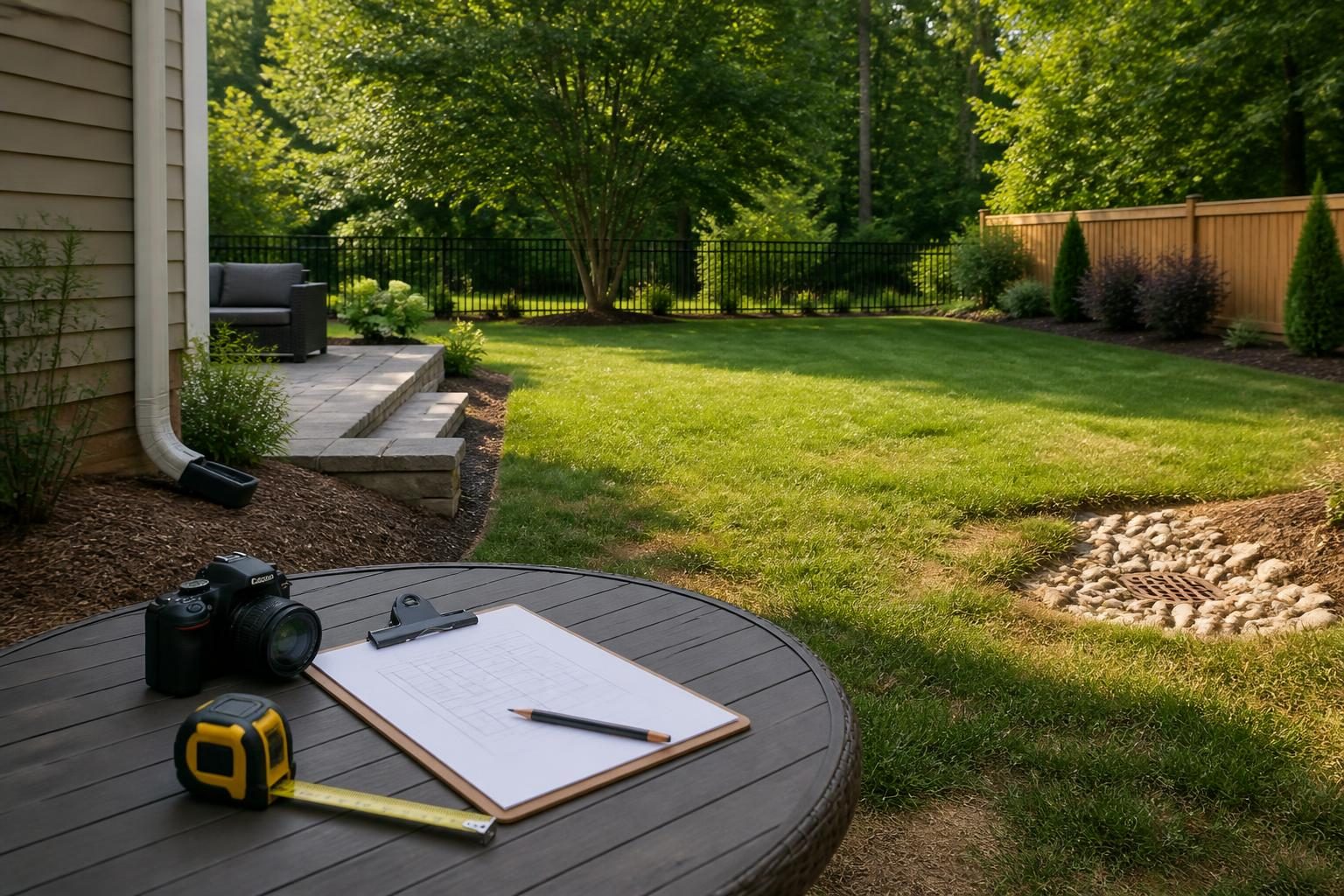
Learn how to photograph, measure, map, and record your yard before pool construction so existing landscaping, drainage, surfaces, utilities, and structures are easier to verify.
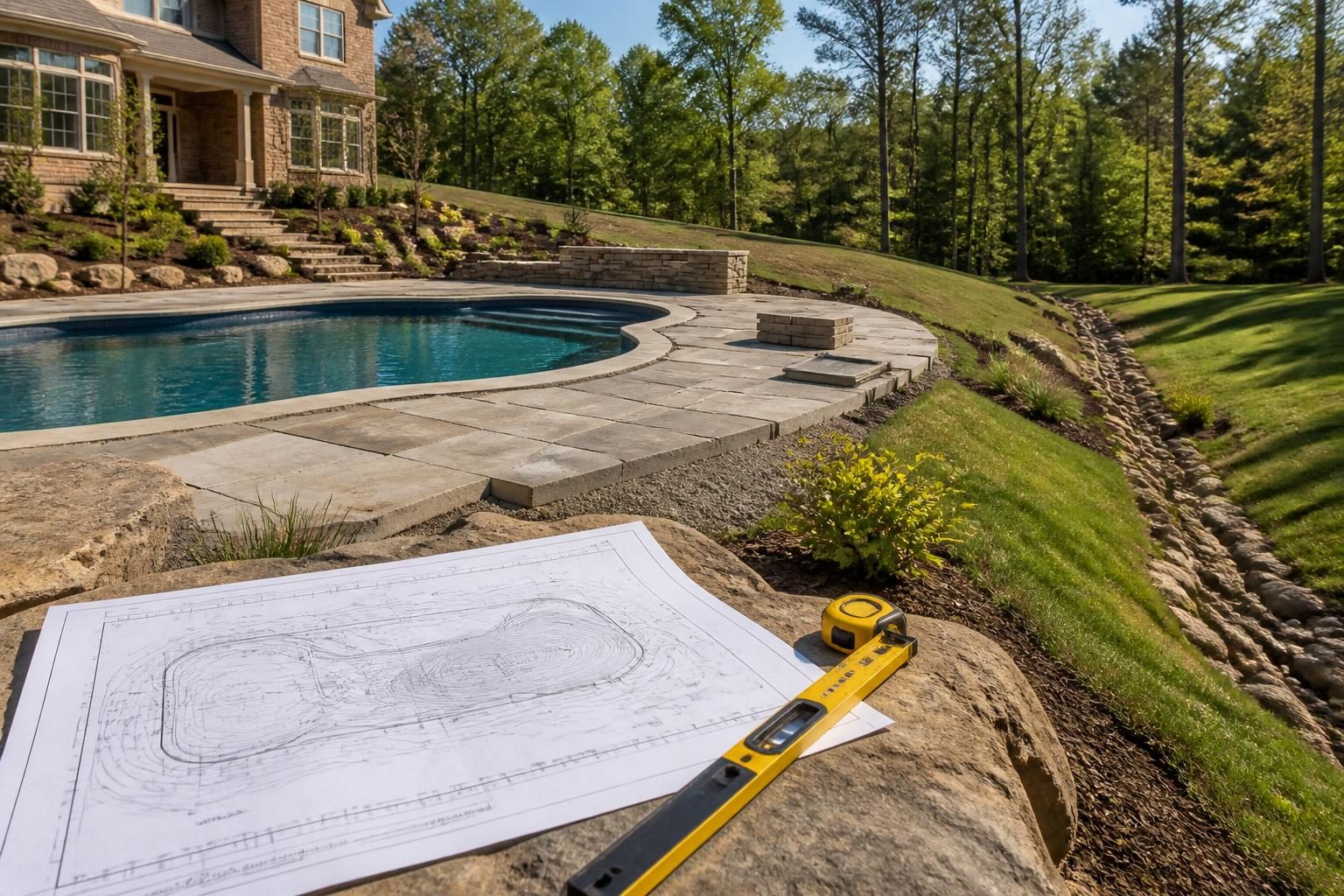
Learn how to review pool grading drawings, finished elevations, runoff arrows, retaining features, drainage outlets, and possible impacts on neighboring property.
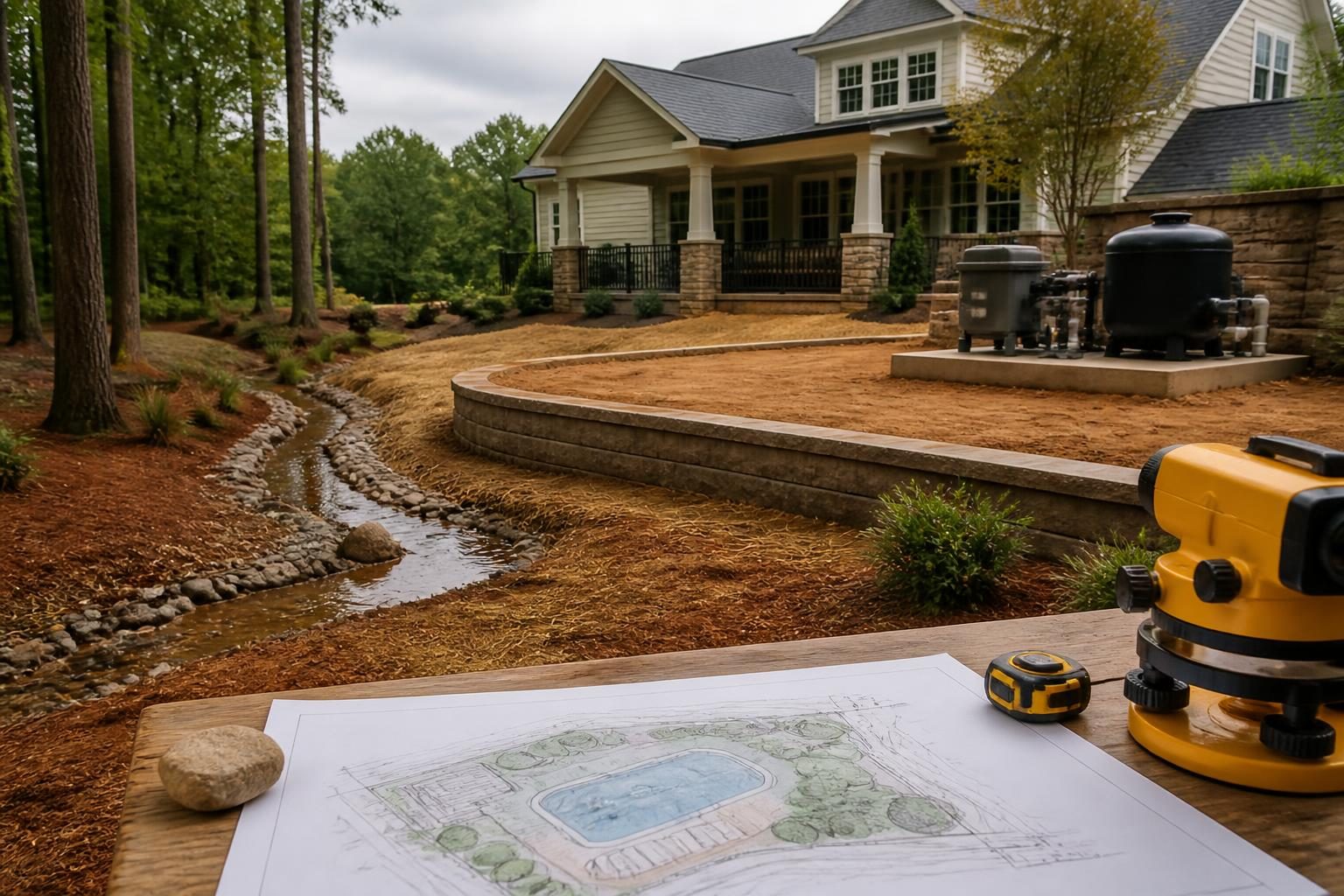
Flood risk can affect pool location, equipment elevation, drainage, excavation, insurance discussions, and professional design. Learn what North Carolina homeowners should review before construction.
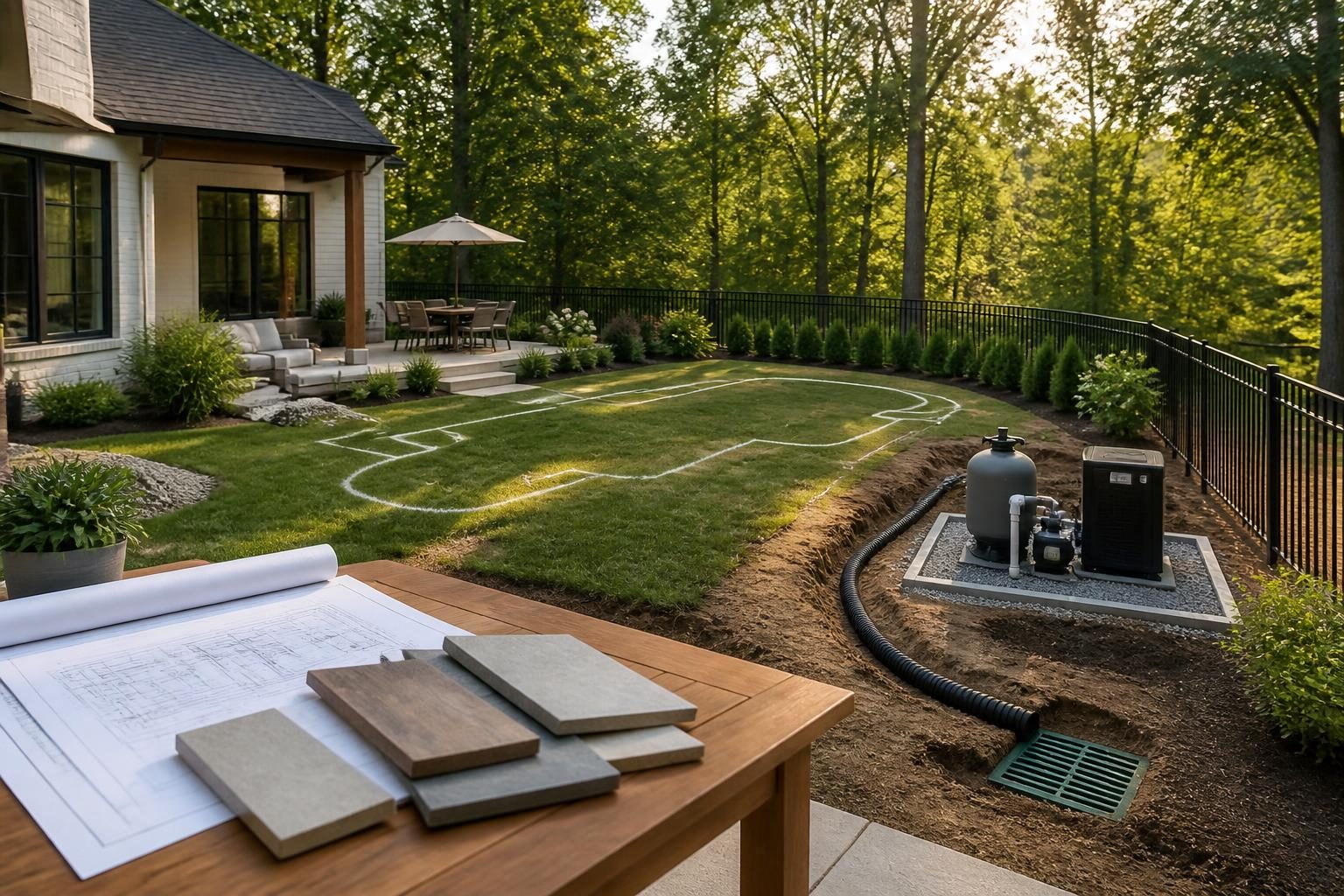
Create a more useful pool budget for North Carolina by separating base scope, site conditions, permits, utilities, finishes, contingencies, and long-term ownership costs.
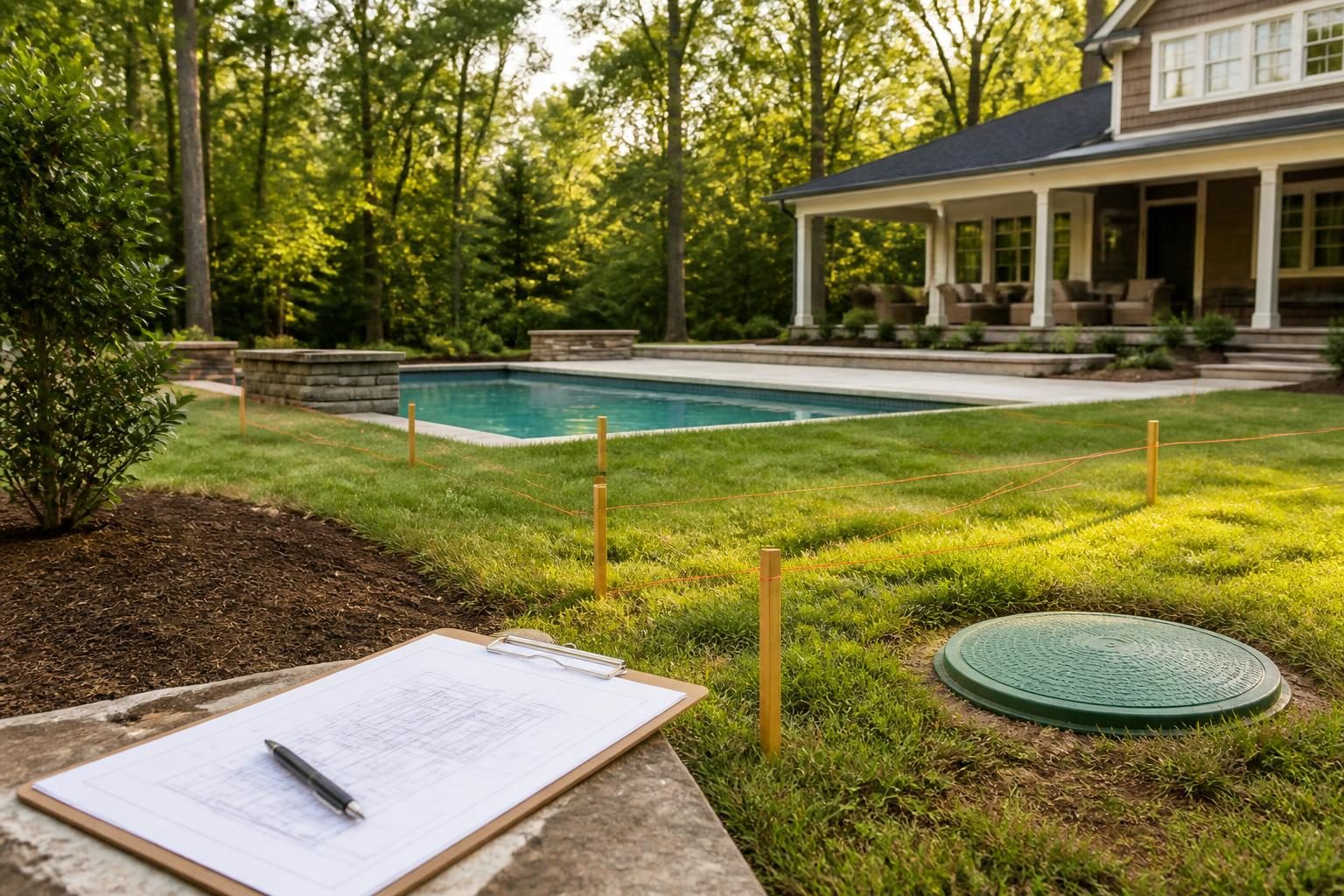
Learn how a proposed pool can affect septic tanks, drain fields, repair areas, access, drainage, and heavy-equipment planning in North Carolina.
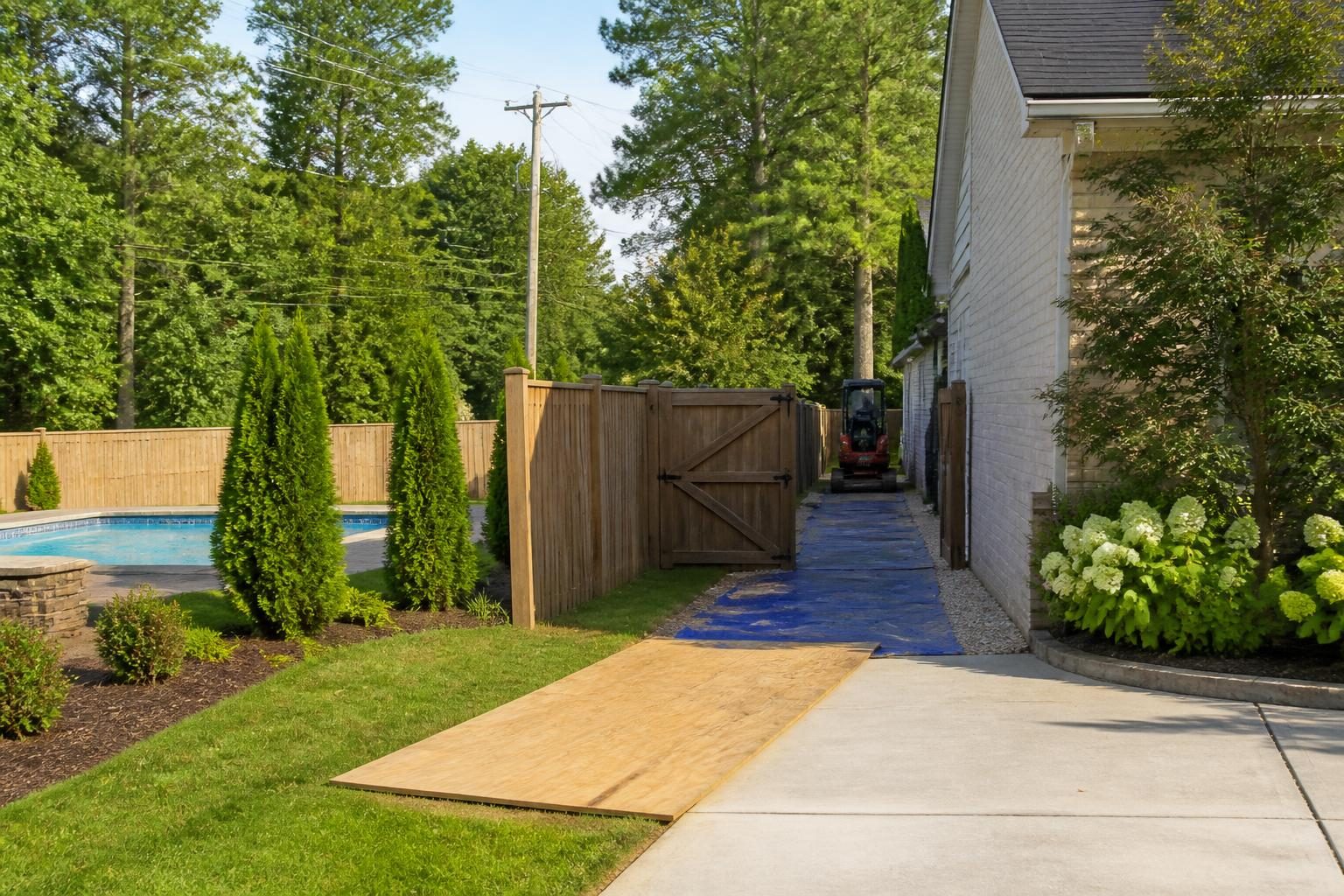
Backyard access can shape pool design, excavation, deliveries, costs, safety, and restoration. Learn what to measure and confirm before work begins.
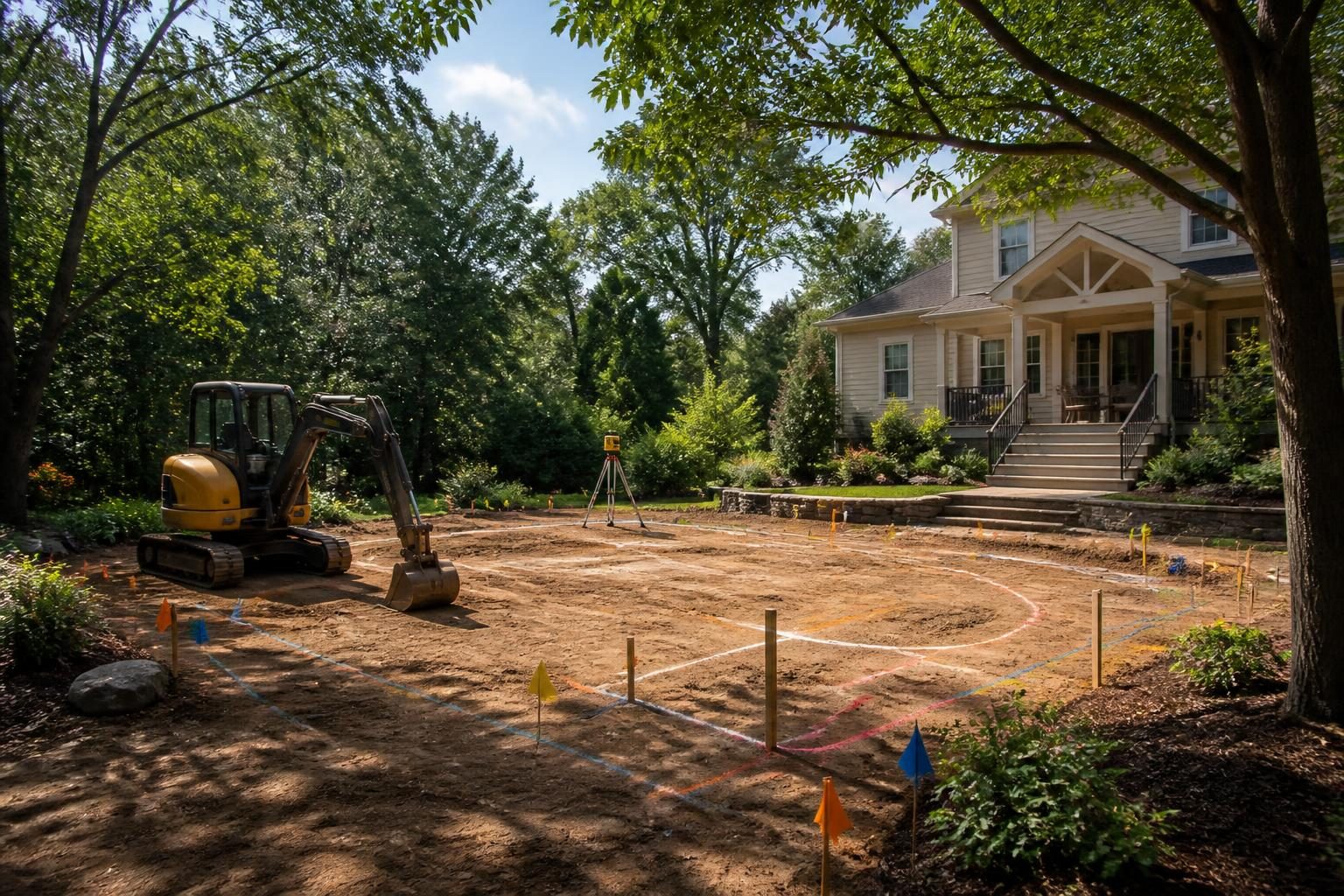
Before a pool crew breaks ground, learn how North Carolina 811 utility locating works, what it does not cover, and how to prepare for safe excavation.