
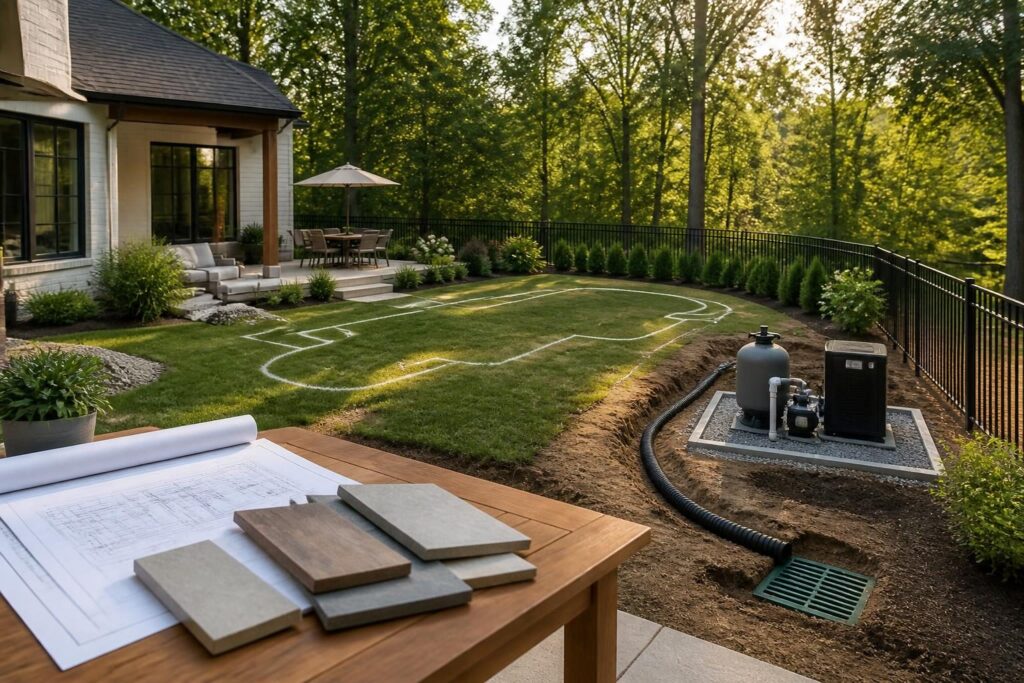
Pool budget planning North Carolina homeowners can trust should do more than display one attractive project number. A pool proposal helps only when you can see what the number includes, what remains uncertain, and which choices may change the total.
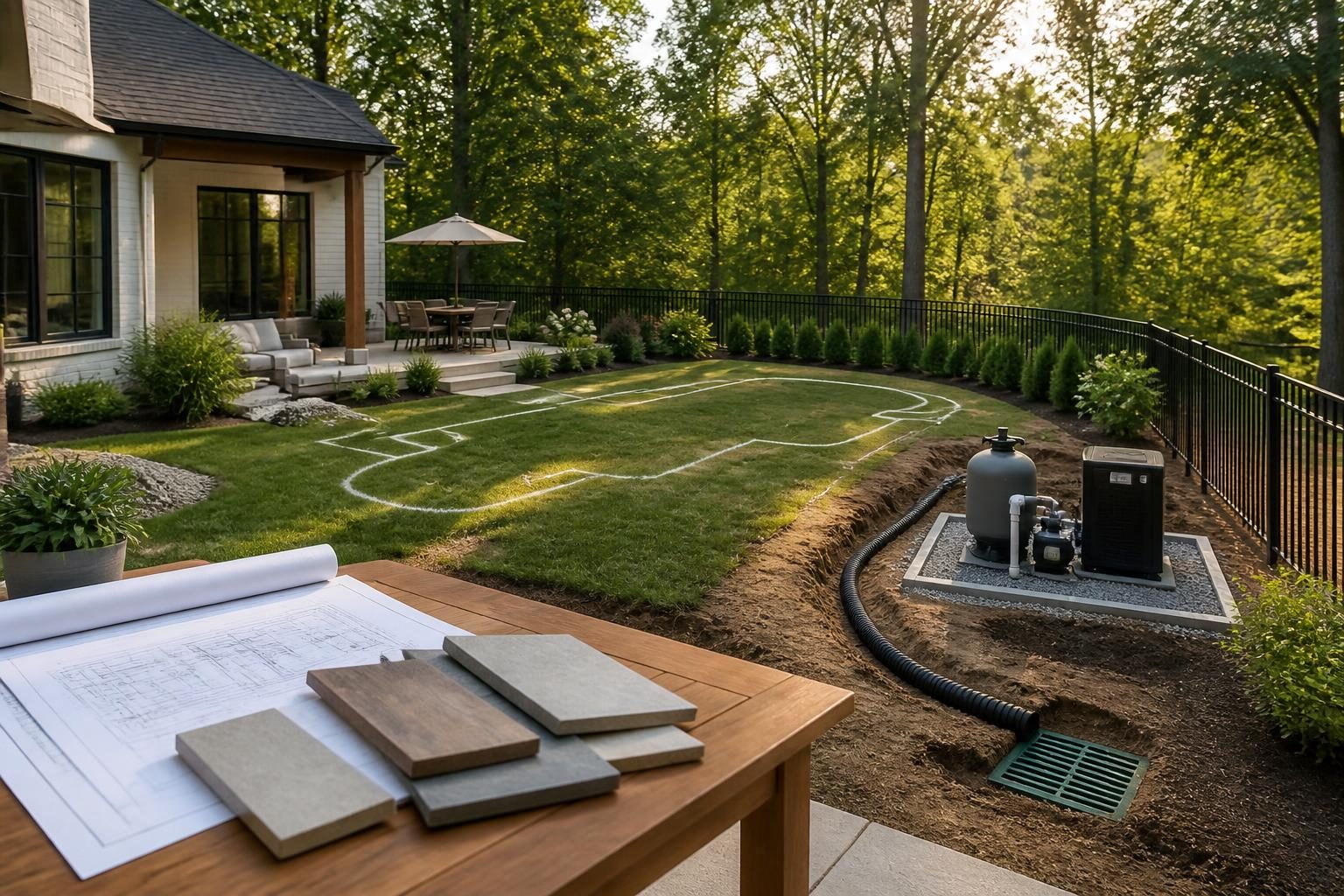
Construction conditions vary across North Carolina. Soil, slope, access, drainage, utilities, septic components, local requirements, and project scope can all affect planning. Good pool budget planning North Carolina separates those variables without relying on current price quotes or treating a general estimate as a guaranteed cost.
Start with a written base scope
The base scope describes the pool itself. It should identify the pool type, dimensions, shape, depth profile, finish, circulation system, interior features, and equipment package. Ask whether the proposal covers excavation, structural work, plumbing, electrical coordination, startup, cleanup, and basic commissioning.
Do not assume that a familiar term means the same thing in every proposal. “Complete pool” may describe the vessel and equipment while excluding the surrounding deck, fence, grading, or final landscaping. Request an itemized scope that separates included work from allowances, exclusions, and items requiring later selection.
Questions for the base proposal
- Which pool dimensions and depths form the basis of the proposal?
- Which equipment models or performance categories does the proposal cover?
- Does the proposal cover coping, decking, steps, benches, covers, and lighting?
- Who coordinates electrical work, inspections, and utility connections?
- What work does the proposal exclude because the site has not received a full evaluation?
- Which selections could change the allowance or require a written change?
For broader planning context, review the guide to planning an in-ground pool in North Carolina. Use it to build questions before comparing proposals, not as a substitute for a site-specific design.
Separate site work from the pool package
Site work often creates the greatest uncertainty. Excavation may involve ordinary soil, dense clay, rock, groundwater, buried debris, or difficult spoil removal. A sloped yard may need retaining features, engineered drainage, additional grading, or soil stabilization. These conditions require site-specific review before anyone can define the work responsibly.
Access matters as well. A narrow gate, steep route, landscaping, walls, overhead lines, or limited staging space can affect equipment movement and material delivery. Ask how the contractor evaluated access and where excavated material will go. If the proposal assumes homeowner-provided access or disposal, document that assumption.
North Carolina yards also differ in runoff patterns. Include a separate line for grading, roof-water management, deck drainage, erosion control, and final soil placement. The North Carolina pool drainage planning guide can help you identify questions before construction begins. Careful pool budget planning North Carolina should show these items separately instead of hiding them inside a broad site-work allowance.
For excavation, utility locating remains a separate safety step. North Carolina 811 provides the official process for notifying participating utility operators before digging. Start with the North Carolina 811 resource, then confirm project-specific responsibilities with the appropriate professionals.
Account for utilities, septic, and permits
Utilities deserve their own budget category. A pool may require electrical work, bonding, equipment connections, lighting circuits, water access, or changes near existing services. The proposal should state whether a licensed electrician handles this work and whether the electrical scope covers panels, trenching, disconnects, and inspection coordination.
Septic systems need careful attention. A pool layout may conflict with a tank, drain field, repair area, access route, or future maintenance needs. Include the cost of any required evaluation or professional documentation as a planning item. Do not move, cover, or disturb septic components based only on a sales sketch.
Permits and inspections also vary by jurisdiction and project scope. Allow for application fees, plan revisions, surveys, inspections, and professional services when applicable. Current building-code documents and local interpretations may change, so review the North Carolina Office of State Fire Marshal documents and contact the local inspections department.
Budget the spaces around the pool
A pool is rarely finished when the shell and equipment are complete. Decking, coping, steps, walkways, drainage structures, fencing, gates, retaining features, planting, irrigation changes, lighting, and outdoor electrical work can represent major portions of the overall project.
Decking allowances deserve special attention. Material, layout, edge details, expansion planning, color, surface texture, drainage, and transitions can change both installation work and future maintenance. Compare proposals by area and specification rather than by the word “decking” alone.
Safety barriers should enter the plan early. A fence or other barrier may affect the pool location, access, gates, landscaping, and usable yard. Ask which barrier work the proposal covers and who verifies the current local requirements. The U.S. Consumer Product Safety Commission’s Pool Safely guidance also explains why multiple layers of protection matter.
Landscaping may include demolition, grading, topsoil, seed or sod, plants, irrigation repairs, erosion control, and cleanup. Decide whether you want this work completed under the pool contract or separately. Either way, define protection responsibilities and final drainage expectations in writing.
Compare equipment by ownership, not just purchase price
Equipment affects installation, energy use, maintenance, noise, access, and replacement planning. Compare the pump, filter, heater, sanitation system, controls, valves, cover, and equipment pad as a complete operating system.
Ask for the expected operating requirements rather than a promise of a particular monthly bill. Electricity rates, run time, weather, water temperature, pool size, and user habits all affect consumption. ENERGY STAR offers information on certified pool pumps and efficiency considerations at its pool pump resource.
- Is the equipment sized for the planned pool and features?
- Can each major component be serviced without removing unrelated equipment?
- Will the pad remain protected from runoff and accessible after landscaping?
- Do controls, automation, heating, and covers come with the proposal or require separate selection?
- What routine maintenance does each system require?
- Will the contractor provide manufacturer registration and operating documents at handover?
Use the equipment category to compare long-term value. A lower initial allowance may omit controls, heating, protection, or service access that you later consider important.
Use allowances and contingencies carefully
An allowance is a placeholder for an item not yet selected or fully defined. Examples include finish materials, decking, fencing, landscaping, electrical upgrades, or site repairs. Ask who sets the allowance, whether installation falls within it, and how the final amount is reconciled.
A contingency is different. It recognizes uncertainty, such as hidden site conditions or design decisions that are not fully resolved. It should not hide broad exclusions. Ask the contractor to identify the risks behind the contingency and explain how unused or additional funds are handled.
A simple budget worksheet
- Base pool structure and circulation system
- Excavation, hauling, grading, and soil management
- Access preparation and property protection
- Utilities, electrical work, water, and equipment connections
- Septic, survey, engineering, or other professional evaluations
- Permits, applications, inspections, and required documentation
- Decking, coping, drainage, fencing, and gates
- Landscaping, irrigation changes, lighting, and cleanup
- Allowances for unselected materials or features
- Contingency for unresolved site or scope conditions
Keep the worksheet beside each proposal. Mark every line as included, excluded, allowance, owner-provided, or needing verification. This makes comparison more useful than choosing the lowest headline number.
Include lifecycle costs from the beginning
Construction is only one part of ownership. Plan for electricity, water, chemicals, testing supplies, cleaning, filter care, seasonal service, repairs, replacement parts, heating, covers, and eventual equipment replacement. Actual costs depend on design, climate, usage, equipment, maintenance habits, and local utility rates.
Ask each contractor to describe routine care without presenting an unsupported annual total. You can then compare expected tasks, service access, equipment complexity, and available documentation. Include time as well as money. A system that requires more frequent attention may not suit your household.
For long-term decisions, pool budget planning North Carolina should include future service, replacement, and energy questions alongside construction costs. Will you add a heater, cover, outdoor kitchen, landscape lighting, or a larger deck? Conduit, equipment space, drainage routes, and access may prove easier to address before construction. Future planning does not require buying every feature now.
Turn proposals into an informed decision
When proposals differ, create a side-by-side comparison. Match dimensions, materials, equipment categories, site assumptions, exclusions, allowances, permit responsibilities, and cleanup obligations. Ask for written clarification before treating a difference as a savings. This is the practical purpose of pool budget planning North Carolina: compare scope and risk, not just the headline figure.
Before signing, confirm the following:
- The design reflects the surveyed property and known site constraints.
- Drainage, access, excavation, utilities, and septic assumptions are visible.
- Decking, fencing, landscaping, permits, and inspections have clearly assigned responsibilities.
- Allowances identify selection limits and adjustment procedures.
- Changes require written approval and describe cost effects before work proceeds.
- Equipment documents, maintenance information, and completion records are identified.
Build a Pool in North Carolina encourages homeowners to treat the budget as a planning document, not a sales headline. A clear comparison helps you decide which features matter, which risks need professional review, and which costs should remain outside the initial pool package.
Because requirements and conditions vary, consult the local inspections department, a licensed pool contractor, licensed electrician, engineer, surveyor, septic professional, or other qualified specialist when your project involves permits, barriers, excavation, drainage, utilities, septic systems, flood exposure, or structural questions.