
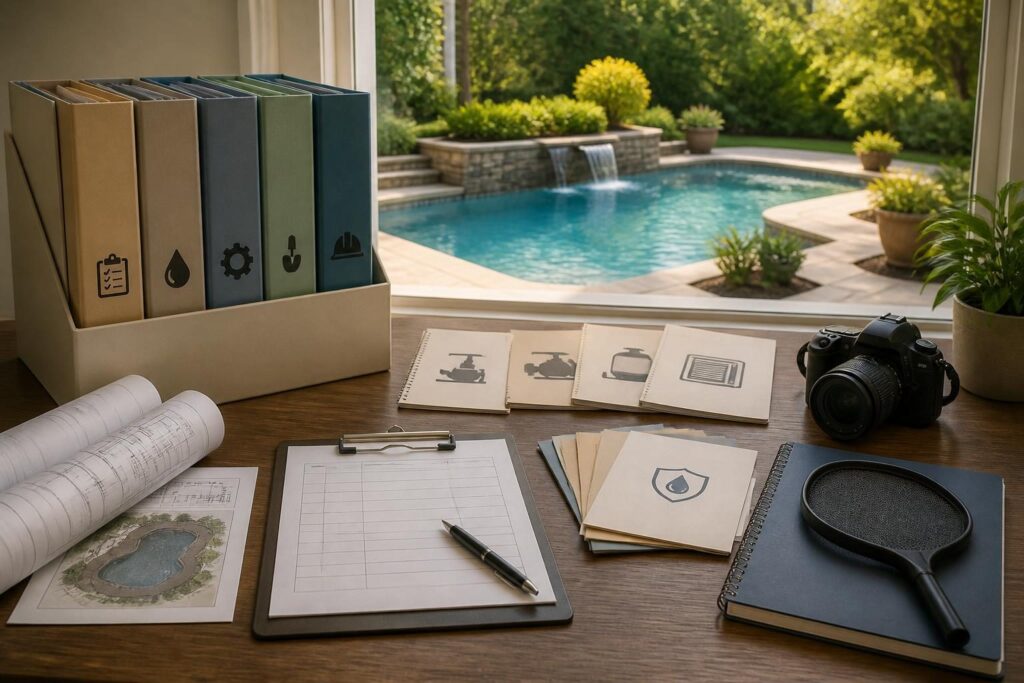
Knowing which pool project records to keep can make ownership easier long after construction ends. A well-organized file helps you operate equipment, schedule service, explain the property to future buyers, and answer questions when a repair or improvement becomes necessary.
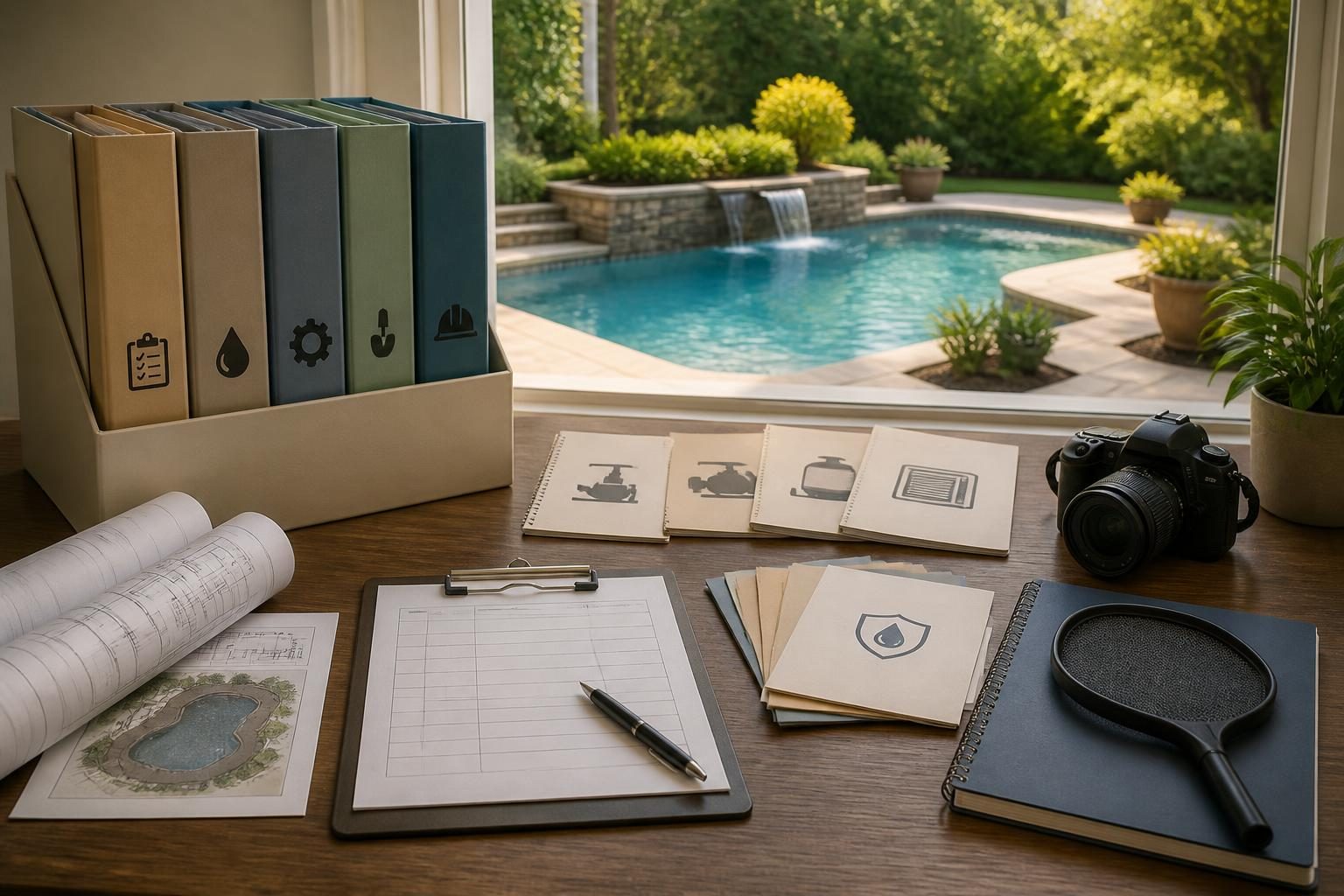
Do not treat the closing folder as a box to store and forget. Pool information can become difficult to reconstruct once contractors leave, labels fade, or landscaping hides access points. North Carolina requirements and project documents can also vary by local jurisdiction, property conditions, adopted code, utilities, septic systems, flood zones, and project scope.
Creating a complete set of pool project records to keep while information is still easy to collect can save time later. Start with records that explain approval, installation, operation, and ongoing care.
Start with permits, inspections, and approved plans
Keep copies of the permit application, issued permits, approved drawings, inspection records, correction notices, and final approval documents. These records show what the project included in its approved design and permit file. They may also help a qualified professional understand the installation later.
Ask the local inspections department how it provides these records. Some offices use paper files, online portals, or contractor-submitted documents. Keep the complete record, not only a permit number written on a receipt.
- Building, electrical, plumbing, or other applicable permits.
- Approved site plans, pool plans, equipment layouts, and detail drawings.
- Inspection dates, results, approvals, and correction documentation.
- Survey, grading, drainage, easement, and setback information supplied for the project.
- Septic or well-related documents, where those systems affected the work.
Code and permit questions require local confirmation. The North Carolina Office of State Fire Marshal documents page provides state building-code materials, but the current adopted code and local interpretation remain important.
Preserve contracts and scope decisions
The signed contract is one of the most useful items among the pool project records to keep. It identifies the agreed scope, materials, equipment, responsibilities, exclusions, payment terms, and completion language. Store every page, attachment, specification, allowance, and referenced exhibit together.
Change orders deserve the same attention. A change order is a written modification to the original agreement. Keep the request, revised drawing, price, schedule effect, material description, approval, and related invoice. If a change was discussed by phone, save any later written confirmation that explains what the parties decided.
Build a simple project index
- Contract and specifications.
- Approved selections and color schedules.
- Signed change orders.
- Invoices, receipts, payment confirmations, and credits.
- Written completion notes and outstanding-item lists.
- Important project emails and dated messages.
Use neutral file names such as “2026-08-14-change-order-decking.pdf.” A consistent date-first system makes files easier to sort. You can also maintain a one-page index with the document name, date, provider, and storage location.
For additional organization ideas, review this pool change order documentation guide. It can help you identify the details worth preserving without replacing your contract or professional advice.
Save surveys, drawings, and location information
Plans and surveys can answer questions that are hard to solve after construction. Keep the site survey, plot plan, grading plan, drainage details, pool dimensions, elevations, equipment layout, and utility information supplied for the project.
Ask whether the final drawings differ from the original plans. A final drawing, sometimes called an as-built drawing, shows installed conditions rather than only the proposed design. If the project team did not prepare one, keep marked-up plans and clear photos showing important concealed locations.
- Pool shell dimensions, depths, steps, benches, and ledges.
- Skimmer, return, drain, light, valve, and equipment locations.
- Conduit, water lines, gas lines, and underground utility information supplied to you.
- Drainage features, retaining elements, cleanouts, and access points.
- Septic tank, drainfield, well, easement, or property-boundary information relevant to future work.
Do not rely on memory for buried or covered work. A licensed surveyor, engineer, septic professional, or other qualified specialist may need to verify locations before later excavation or changes.
Use photos as a visual record
Construction photos can be valuable when they are dated, labeled, and tied to a location. Take wide views and close views before trenches, conduits, plumbing, drainage, reinforcing steel, and other work become covered.
Keep original files when possible. Phone images may contain useful date and location data, but do not assume those details always survive file transfers. Add a written description to each group of images.
Photograph more than the finished surface
- Equipment labels and control-panel settings.
- Pipe runs, valve arrangements, and access locations before covering.
- Electrical equipment and visible identification labels.
- Drainage paths, cleanouts, sleeves, and penetrations.
- Fence gates, latches, alarms, covers, and other safety features.
- Any areas that future landscaping, paving, or soil may conceal.
Pair photos with a simple sketch. Mark the direction of view and approximate location. A future service provider may understand a labeled photo more quickly than a large plan with no field notes.
Organize equipment manuals, warranties, and serial numbers
Keep the operating manual for every pump, filter, heater, salt system, automation controller, light, cleaner, cover, alarm, and other installed component. Include startup instructions, programming notes, replacement-part information, and maintenance schedules.
Record each item’s manufacturer, model, serial number, installation date, and service contact. A clear equipment schedule can prevent confusion when several components look similar. Photograph the label before dirt, weather, or replacement parts make it difficult to read.
Warranties often apply to individual components rather than the entire pool. Keep the warranty document, registration confirmation, start date, proof of purchase, installer details, exclusions, and instructions for requesting service. Avoid assuming that a warranty covers labor, related damage, water chemistry, or every part of an installation.
This pool warranty records guide offers a way to separate manufacturer documents from project and service records. Read the actual terms and ask the manufacturer or qualified provider when coverage is unclear.
Keep receipts, test results, and service history
Receipts help establish what was purchased, installed, replaced, or serviced. Save equipment invoices, replacement-part receipts, chemical purchases when useful, cover purchases, repair bills, and payment confirmations. Note the item, date, provider, and reason for the work.
Water-care records can reveal patterns over time. Record test date, water temperature when relevant, sanitizer, pH, alkalinity, and other results your testing method provides. Also note adjustments, unusual weather, heavy use, water additions, and professional testing.
The CDC guidance on home pool water treatment and testing explains general residential testing considerations. It does not replace product instructions, local guidance, or advice from a qualified pool professional.
Service history should tell a short, factual story. Include the date, equipment serviced, observed condition, work completed, parts installed, settings changed, and recommended follow-up. Keep service invoices with your own maintenance log. These details belong among the pool project records to keep because they can help explain recurring maintenance needs.
A useful maintenance log can include
- Filter cleaning or replacement dates.
- Pump, heater, cleaner, light, and automation service.
- Water tests and chemical additions.
- Leak observations or unusual noises.
- Winter, storm, or extended-closure preparations.
- Professional visits and unresolved questions.
Store the records so you can find them
Digital storage is convenient, but one location is not enough. Keep a structured cloud folder and a local backup. Store critical paper originals in a dry, secure place away from pool chemicals, heat, and moisture.
Use folders such as “Permits,” “Plans,” “Contract,” “Equipment,” “Warranties,” “Receipts,” “Photos,” and “Service.” Do not store passwords or sensitive financial information in an unsecured shared folder.
Review the collection once or twice each year. Add new serial numbers, receipts, repairs, and test records. Replace unreadable scans and confirm that important files open. A current archive is more useful than a large archive filled with unmarked documents. Regular reviews keep your pool project records to keep organized as ownership continues.
Know when a record needs professional verification
Records support good decisions, but they do not prove that a later change is safe or permitted. Before moving equipment, excavating, altering drainage, changing electrical components, modifying barriers, or working near septic or well systems, verify current requirements with the appropriate local authority and a qualified professional.
Consult the local inspections department, licensed pool contractor, electrician, engineer, surveyor, septic professional, or another appropriate specialist when the project involves technical work or uncertain site conditions. Build a Pool in North Carolina can help homeowners organize questions, but your local authorities and qualified professionals must address site-specific requirements.