
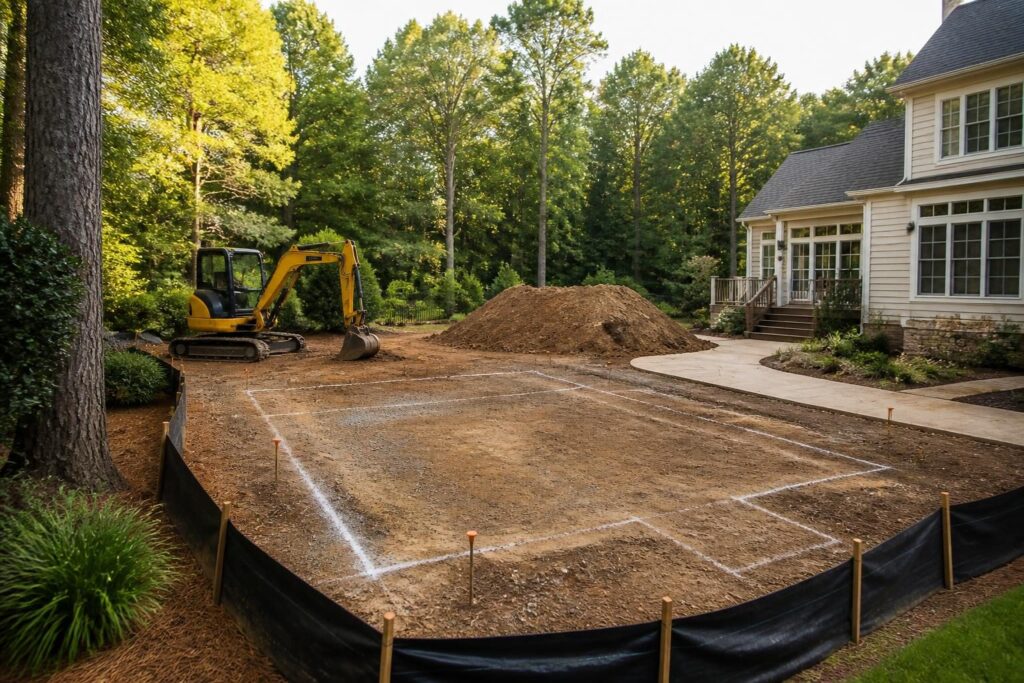
When you compare pool proposals, pool excavation spoil removal North Carolina planning deserves more attention than a single line called “haul-off.” Excavation creates soil, rock, clay, roots, and other material that crews must handle safely and lawfully. The answer can affect access, truck movement, temporary storage, drainage, landscaping, and the final project cost.
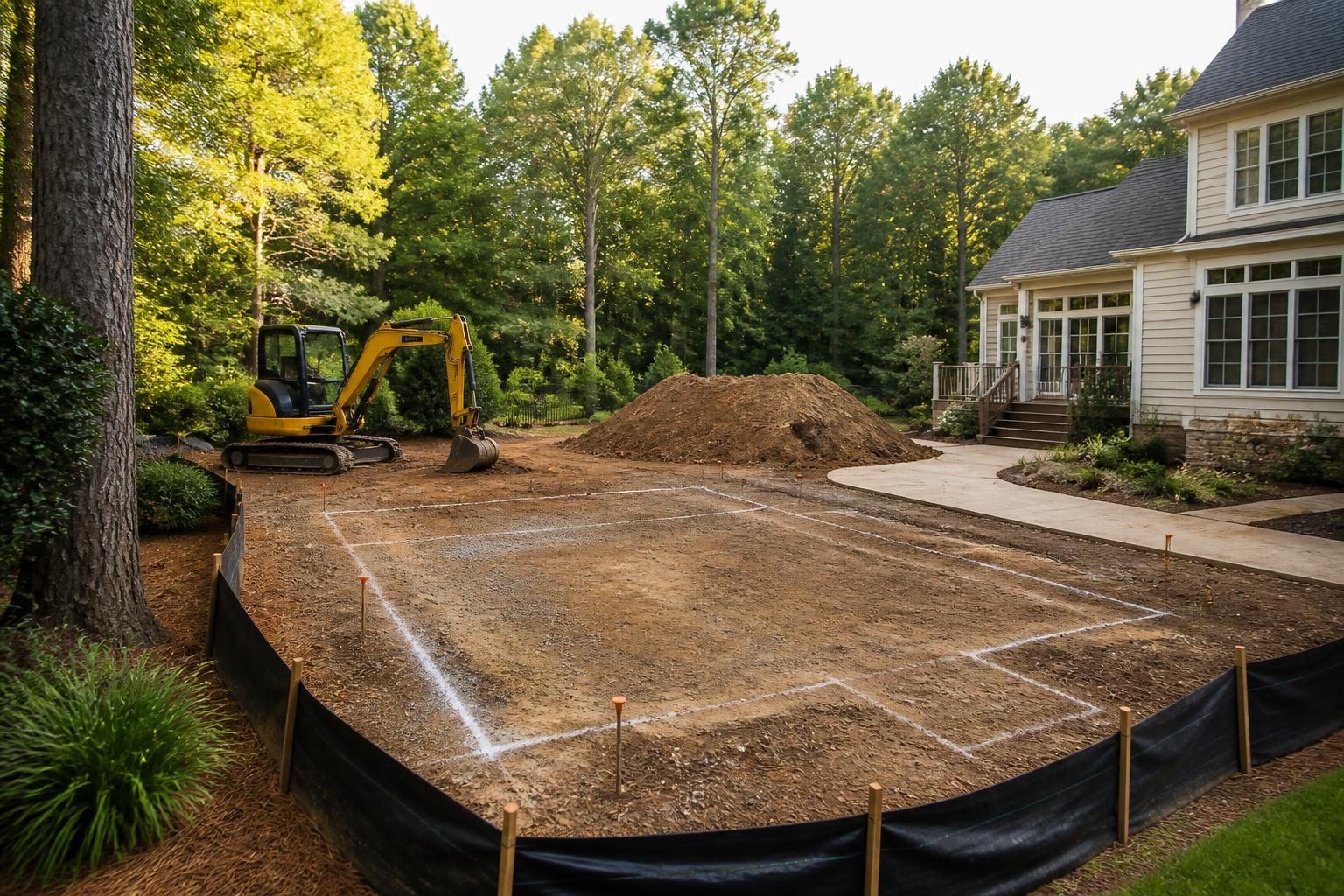
Do not assume all excavated material will leave the property. Some soil may suit grading, while other material may need transport. Your pool contractor should explain the approach before digging. North Carolina requirements can vary by local jurisdiction, property conditions, project scope, and environmental constraints. Use the questions below to turn a vague allowance into a clear plan.
Start with the basic spoil-removal question
In excavation language, “spoil” means material removed from the ground. It may include ordinary soil, dense clay, rock, broken concrete, roots, or wet material. Each type can affect loading, hauling, disposal, and site cleanup differently.
Ask the contractor to describe the anticipated material and the assumptions behind the proposal. A visual site visit may not reveal subsurface conditions. Soil information, prior construction, groundwater, buried debris, and rock can change the excavation plan.
- What material does the excavation allowance include?
- Does the proposal assume soil remains on site, or does it include hauling surplus material away?
- How will unsuitable, wet, rocky, or contaminated-looking material be handled?
- Who decides whether soil can support grading?
- What event requires written approval before additional hauling starts?
These questions do not replace a site investigation or professional evaluation. They help you identify assumptions that deserve review before construction. For related background, read when to ask about soil testing before pool construction.
Clarify where the excavated soil will go
A contractor may propose several destinations. Crews could spread soil on the lot, use it for approved grading, load it into trucks, take it to a receiving location, or stockpile it temporarily. Soil type, available space, site grade, drainage, and local requirements shape that choice.
Ask for a plain-language explanation of the proposed destination. You may not need a facility name before work starts, but the contract should identify who controls the decision and who pays for ordinary handling. Clear pool excavation spoil removal North Carolina documents should also explain what happens when the actual soil differs from the estimate.
Questions about on-site placement
- Where will temporary stockpiles sit?
- Will crews place soil near a property line, drainage feature, septic area, well, foundation, or utility area?
- What final elevations or grading goals support keeping soil on the lot?
- How will crews spread, shape, and stabilize placed soil?
- Could on-site placement change water flow toward the house or a neighboring property?
Do not approve a soil mound simply because it is convenient. Grading changes can affect runoff and future landscaping. A contractor, engineer, surveyor, or other qualified professional may need to evaluate proposed grades and drainage. Local officials may also set requirements for land-disturbing work.
Questions about off-site hauling
Off-site removal involves more than loading a truck. Someone must arrange transportation, select a receiving location, manage truck access, and clean affected areas. Ask whether the proposal includes loading, trucking, receiving fees, and final cleanup.
Also ask whether the price assumes a certain number of truckloads or a particular soil condition. If excavation produces more material than expected, the contract should explain how crews will measure and approve the difference.
Put soil removal in the contract and estimate
Clear documents reduce uncertainty. A proposal should distinguish excavation from spoil handling rather than combining every task under “site work.” The wording should make sense to a homeowner comparing bids.
Review whether the documents identify quantities, included services, exclusions, and change-order triggers. Exact quantities may remain unknown before digging, so look for a measurement method instead of an unsupported promise.
- Included work: excavation, loading, hauling, receiving or disposal, and cleanup.
- Material assumptions: ordinary soil, clay, rock, wet soil, debris, or mixed material.
- Quantity method: estimated volume, truckload count, measured excess, or another stated method.
- Destination responsibility: who selects the receiving location and confirms acceptance.
- Price treatment: fixed allowance, included quantity, unit price, or separate charge.
- Change process: when written approval applies and what records support the adjustment.
- Restoration: who repairs ruts, removes remaining piles, restores disturbed areas, and addresses washout.
Compare the full scope, not only the base pool price. One proposal may include hauling while another assumes surplus soil stays on your property. The difference can make bids appear more comparable than they are.
For a broader review of contract language, use this North Carolina pool builder contract checklist. If the design or grades change, record the revision and ask whether it changes excavation or hauling assumptions.
Understand how hauling affects property access
Removing soil may require equipment to travel between the excavation and a truck. Trucks may need a safe position near the street or driveway. Turning space, overhead clearance, gates, slopes, retaining features, and neighboring boundaries can all affect the plan.
Ask the contractor to walk through the route before excavation. Identify where machines will enter, where trucks will wait, and how vehicles will exit. A narrow route may require smaller equipment, staged loading, temporary removal of an obstruction, or a different work sequence.
- Which access point will equipment use?
- Will trucks enter the driveway, street, side yard, or another area?
- Who obtains permission for work outside your property?
- How will crews keep traffic, pedestrians, children, pets, and neighbors away from moving equipment?
- What happens if rain makes the route soft or unsafe?
- Who documents and repairs damage to driveways, curbs, landscaping, or other surfaces?
Take current photographs of the planned route for your own records. This does not replace the contractor’s protection plan or determine responsibility for later damage. It gives everyone a shared reference for the areas discussed.
For more on route planning, see how clay soil and limited access can affect pool excavation. Soil conditions can influence whether a loaded truck can safely use the intended path.
Ask about drainage, erosion, and temporary stockpiles
Freshly disturbed soil can move during heavy rain. A stockpile can block an existing drainage path or send muddy runoff toward a structure. The contractor should explain how crews will manage exposed soil and temporary piles during excavation.
Ask what erosion and sediment controls the plan includes. “Sediment” means soil carried by water. Controls may include temporary barriers, stabilized access, covered or shaped stockpiles, inlet protection, or other site-specific measures.
- Where will rainwater flow while the excavation remains open?
- How will stockpiles stay out of drainage paths?
- Who checks the site after significant rain?
- What happens to muddy material that leaves the work area?
- Who removes temporary controls and restores the area?
Review official guidance before work begins, but do not treat general guidance as a site-specific compliance determination. The North Carolina Erosion and Sediment Control Manual is a useful starting point. Confirm current local requirements with the appropriate authority or qualified professional.
Coordinate utilities, septic areas, and property limits
Hauling routes and stockpiles must respect more than the pool footprint. Underground utilities, easements, septic components, wells, drainage features, and property lines may limit equipment or soil placement.
Before excavation, confirm that utility-notification steps are planned. North Carolina 811 provides the state’s official utility-notification resource. Marking utilities does not answer every site-planning question. Private lines and property-specific features may require additional verification.
Ask who will confirm septic and well constraints if they apply. A septic professional or local environmental-health office may need to address the system and its protection area. Do not use a septic field, repair area, or well protection area for soil placement unless the appropriate professional confirms the plan.
Property boundaries also matter. A truck, soil pile, or temporary access path should not cross a boundary without permission. Easements may have separate conditions. Review the site plan and local requirements before approving the excavation route.
Build a homeowner spoil-removal checklist
Use a short written checklist during proposal review. Ask the contractor to answer each item in the estimate, contract, plan, or written clarification. Keep every answer with the project records.
- What material does the excavation allowance include?
- How much soil removal is included, and how will crews measure excess?
- Where will usable soil go?
- Where will unsuitable or surplus material go?
- Who pays receiving, hauling, and additional loading costs?
- What access route will trucks use?
- What surfaces and features need protection?
- How will rain, erosion, and stockpiles be managed?
- What written approval applies to extra work?
- What cleanup and restoration are included?
Pause if answers conflict with the drawings or proposal. Request a revised document rather than relying on a conversation. If a later design revision changes the pool location, elevations, deck, or access route, ask the contractor to review the excavation and hauling assumptions again. This is a practical point to confirm in your pool excavation spoil removal North Carolina records.
Keep records through excavation and cleanup
Save the signed proposal, contract, site plan, grading information, change orders, invoices, photographs, and written messages about soil. During work, note the excavation date, visible material conditions, stockpile locations, truck activity, and final cleanup. Avoid making technical conclusions from photographs alone.
Ask for documentation of every approved change. Useful records may include the reason for additional hauling, the agreed measurement, the price basis, and the updated scope. Keep receiving records or disposal documentation if the contractor provides them.
When work ends, compare the site with the agreed restoration scope. Check for remaining piles, blocked drainage paths, ruts, muddy areas, damaged surfaces, or unfinished grading. Raise questions promptly and in writing without assuming the cause or assigning responsibility before reviewing the facts.
Pool excavation spoil removal North Carolina homeowners can understand begins with specific questions, written assumptions, and a realistic access plan. Before signing, ask the local inspections department about applicable requirements. Consult a licensed pool contractor, electrician, engineer, surveyor, septic professional, or other qualified specialist when site conditions call for technical judgment. Build a Pool in North Carolina offers homeowner education, not a substitute for local or professional decisions.