
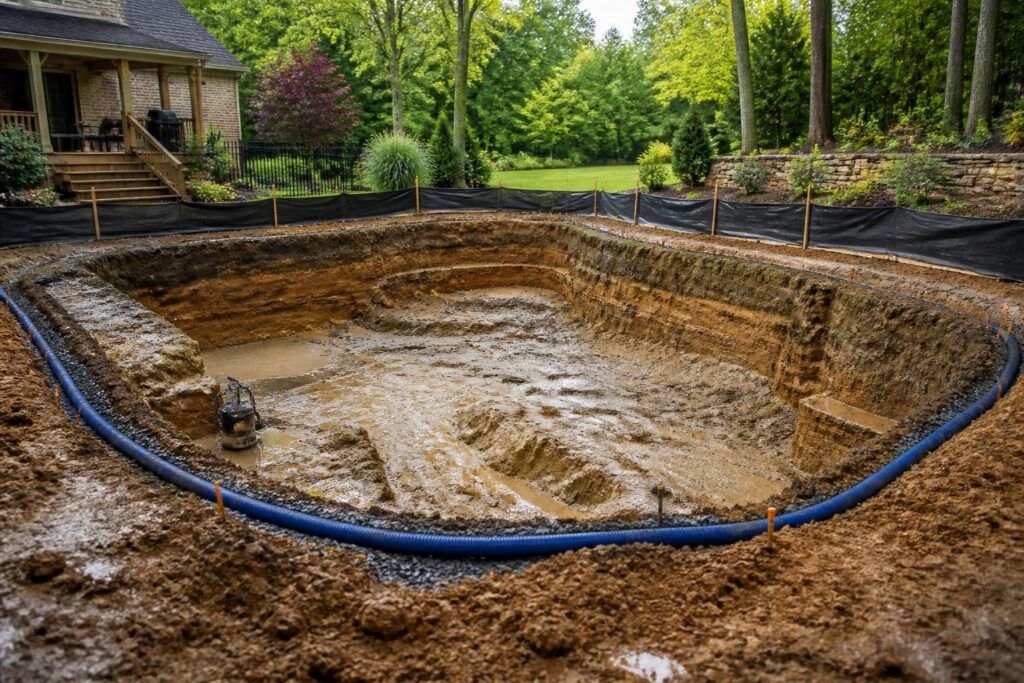
Pool groundwater hydrostatic pressure North Carolina concerns deserve attention before an excavator arrives. Water below or around an excavation can change what the crew observes, how the site operates, and which professionals need to review conditions. It does not automatically mean a project cannot proceed. It does mean homeowners should ask clear questions and avoid assuming that one solution fits every property.
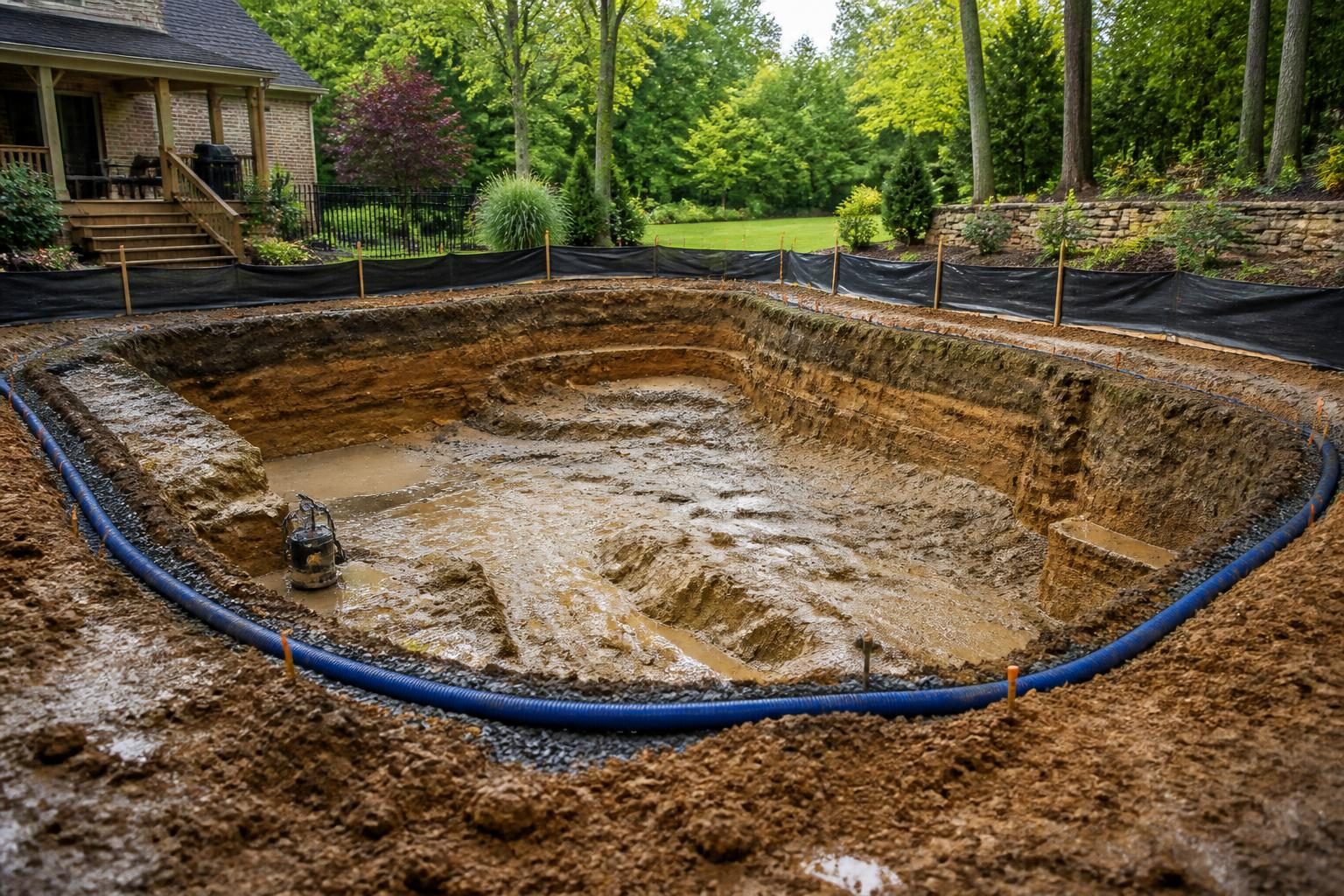
Groundwater is water held in soil or rock below the surface. It may appear after rain, move through soil layers, or rise from a seasonal water table. A water table is the level below which soil spaces commonly remain saturated. These conditions can vary across North Carolina, even between nearby properties.
Why pool groundwater hydrostatic pressure North Carolina concerns matter during excavation
Excavation creates an open space below the surrounding ground. If water enters that space, the site may become muddy, unstable, or difficult to inspect. Water can arrive from several sources:
- Rain flowing into the excavation or across exposed soil.
- Groundwater moving through sandy layers, fill, fractures, or seams.
- Seasonal saturation after extended wet weather.
- Broken or poorly mapped irrigation, drainage, water, or sewer lines.
- Runoff from roofs, driveways, slopes, or neighboring areas.
Clay soils may hold water differently from sandy or gravelly soils. A sloping lot may also direct water toward the proposed pool area. Existing grading, nearby foundations, septic features, wells, streams, and stormwater paths can affect the evaluation.
Separate observations from conclusions. Seeing water in a trench does not identify its source by itself. Likewise, a dry excavation on one day does not prove that the area will remain dry throughout construction. Ask the pool contractor and appropriate specialists how they will investigate and document the condition.
Understand hydrostatic pressure without assuming a universal fix
Hydrostatic pressure describes the force that water exerts. Around an in-ground pool, water outside the shell can push against the structure when surrounding soil becomes saturated. The significance depends on the pool design, shell condition, surrounding materials, water levels, drainage, construction stage, and professional calculations.
This topic matters especially when a pool sits empty or partly filled. The balance between water inside the shell and water outside it can change during excavation, construction, pumping, heavy rain, or draining. Homeowners should not decide on their own whether to drain a pool, add water, pump groundwater, or alter a drainage system.
A licensed pool contractor, engineer, or other qualified professional may need to evaluate the site and proposed response. The correct approach depends on the pool system and local conditions. Ask who will make that determination, what information supports it, and where the team will record the decision.
Observe the site before excavation
Useful observations can help the project team investigate the property. They do not replace a site evaluation. Walk the proposed pool area after different weather conditions, if practical, and note changes without entering unsafe areas.
What to look for
- Standing water, soft ground, muddy patches, or areas that stay wet.
- Springs, seepage, damp soil, or water emerging near slopes.
- Downspouts, swales, trench drains, cleanouts, and low points.
- Recent grading, fill, buried features, or areas where soil has settled.
- Water movement toward the house, pool location, septic area, or property line.
- Cracks, leaning features, erosion, or exposed soil near existing structures.
Photographs should include the date, general location, weather context, and a wide view. Do not treat a photograph as proof of cause. A simple site log can show whether a condition appears after rain, remains during dry weather, or changes when nearby systems operate.
Review available property records and prior project information. Ask whether the proposed pool area contains fill or has been regraded. If soil behavior remains uncertain, read soil testing questions for pool construction and ask whether a qualified professional should assess the site.
Questions to ask before digging
Put pool groundwater hydrostatic pressure North Carolina questions in writing before approving the excavation plan. Answers may identify missing scope, specialist review, or decisions that should appear in the contract.
- What site observations suggest that groundwater or perched water could be present?
- How will the team distinguish groundwater from rainwater, runoff, or a damaged utility?
- Who will evaluate water conditions if they appear during excavation?
- What temporary measures cover safe access, pumping, or weather protection?
- Where will collected water go, and who will confirm that discharge is appropriate?
- Could pumping affect nearby soil, slopes, foundations, septic features, wells, or landscaping?
- What work is included if the excavation cannot remain dry for the planned phase?
- Which conditions would require a pause, revised plan, engineer review, or change order?
- How will the crew protect the excavation from stormwater entering from higher ground?
- What records will the team provide if conditions differ from original assumptions?
Ask for plain-language explanations. A responsible answer may remain conditional because the actual soil and water conditions may not become clear until work exposes them. Be cautious of guarantees that ignore weather, soil layers, drainage paths, or professional review.
Coordinate drainage and excavation water management
Water management has two parts. One keeps unwanted water away from the excavation. Another handles water that enters it. Depending on the site, the project team may consider temporary berms, diversion paths, pumps, covered soil, erosion controls, or other measures. The suitable method depends on the site and approved construction approach.
Do not direct pumped or diverted water toward a neighbor, foundation, septic area, public walkway, or unstable slope without proper review. Discharge can carry sediment and change drainage patterns. North Carolina’s Erosion and Sediment Control Manual provides official guidance for reducing erosion during land-disturbing work. The NC DEQ Construction Stormwater Program can help homeowners identify questions about construction stormwater applicability.
Ask the contractor to show the temporary drainage plan on a sketch or site plan. Confirm who will inspect it after heavy rain and who will correct blocked, eroded, or overwhelmed measures. Keep copies of emails, drawings, photographs, and approved changes.
Review nearby features before the excavator arrives
Groundwater concerns rarely stand alone. Nearby features can affect both the investigation and the response. A pool near a private well needs coordinated review of the well location and any applicable protection area. Read private well planning questions before finalizing the layout.
Septic systems, repair areas, utility easements, retaining walls, crawl spaces, basements, and neighboring structures also deserve attention. Property records may not show every buried line or drainage feature. Utility notification remains separate from private-site investigation. Before excavation, review the official North Carolina 811 resource and confirm which marking and private utility questions apply to your project.
Flood exposure can add another layer of review. A flood map cannot answer every site-specific drainage question, but it can support an early discussion about location and equipment. The FEMA Flood Map Service Center offers an official starting point for available flood-hazard information.
Questions to ask during excavation
Stay out of the excavation unless the contractor identifies a safe viewing area. Open excavations, equipment, unstable soil, and water can create serious hazards. Instead, agree on a communication process before work begins.
- Who will contact you if water appears or soil conditions change?
- What photographs will show the excavation before water management begins?
- Will the team record the source, depth, weather, and response?
- Who decides whether work continues, pauses, or needs specialist input?
- How will the team protect the excavation overnight and during storms?
- Will any temporary pump, hose, trench, or discharge path remain in place?
- Does the observed condition affect design, schedule, cost, or sequence?
- Which changes require written approval before additional work proceeds?
Request a written summary when conditions change. It should describe the observation, proposed response, responsible decision-maker, and any effect on the agreed scope. Avoid approving technical changes based only on a rushed phone conversation.
Keep a groundwater decision record
A short record can prevent confusion later. Create one section in your project folder for groundwater, drainage, and excavation observations. Include:
- Weather and recent rainfall notes.
- Dated photographs or videos from safe locations.
- Contractor messages and site meeting notes.
- Drawings showing temporary or permanent drainage measures.
- Reports or recommendations from qualified professionals.
- Written approvals, revised scope, and change-order documents.
- Receipts or records for permitted pumping, hauling, or restoration work.
Keep the record factual. Write “water observed at the east excavation edge after rain” rather than assigning a cause without supporting evaluation. This approach helps the contractor, designer, and specialists focus on the condition that needs review.
Make decisions carefully when conditions change
Unexpected water can create pressure to decide quickly. Slow down enough to identify the question that needs an answer. Is the issue source, safety, discharge, structural design, scheduling, or cost? Several may apply at once.
Ask whether the proposed response is temporary or permanent. A temporary pump may help manage active construction water, while permanent drainage may address a different condition. Neither option suits every pool or property automatically.
Review the project documents before approving additional work. Confirm the changed scope, responsible professional, assumptions, price treatment, schedule effect, restoration responsibilities, and required approvals. If the issue involves soil stability, structural behavior, electrical equipment, septic systems, or drainage design, request review by the appropriate licensed professional.
A practical homeowner checklist
- Walk the site and record wet areas, low points, slopes, and drainage paths.
- Ask whether prior fill, grading, wells, septic features, or buried systems affect the area.
- Confirm utility-notification and private-line questions before digging.
- Ask how the team will identify and document water entering the excavation.
- Review temporary runoff, erosion, pumping, and discharge plans.
- Define who can pause work and who must approve technical changes.
- Keep dated records of observations, decisions, drawings, and costs.
- Do not enter an excavation or change water levels without professional direction.
Groundwater does not provide a simple pass-or-fail answer for a pool site. Careful observations and early questions can reveal where the project needs more investigation. For property-specific decisions, consult the local inspections department, a licensed pool contractor, electrician, engineer, surveyor, septic professional, or other qualified specialist as appropriate. Requirements can vary by jurisdiction, adopted code, utilities, flood conditions, septic systems, soil, and project scope. Build a Pool in North Carolina offers homeowner education, not a substitute for that review. When reviewing pool groundwater hydrostatic pressure North Carolina conditions, use qualified local guidance rather than a universal assumption.