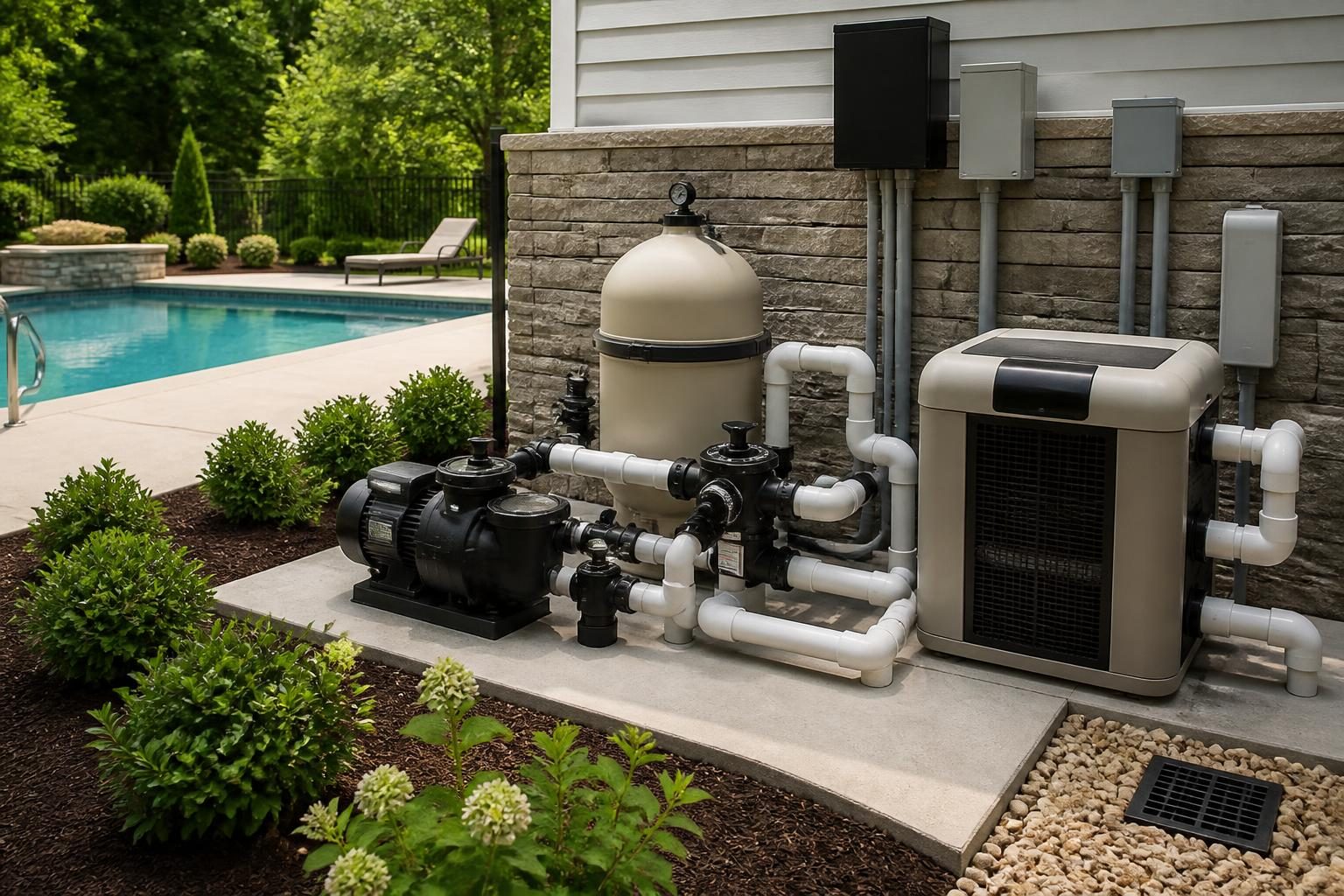
Use this handover-focused checklist to learn your pool equipment, collect startup records, and confirm safe operating instructions before taking ownership.
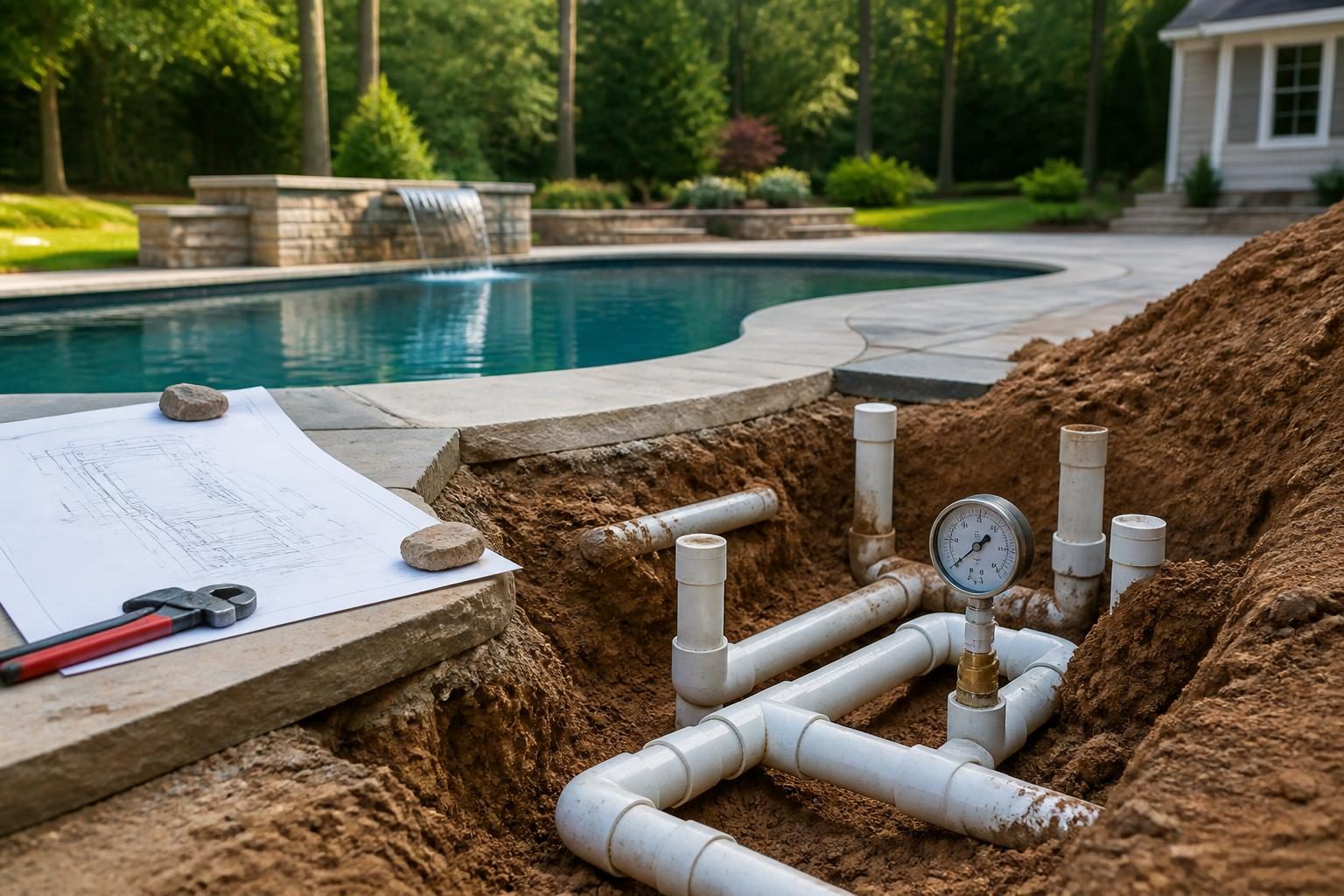
Learn when pool plumbing pressure testing matters, what records to request, and how to document underground plumbing before it is concealed.
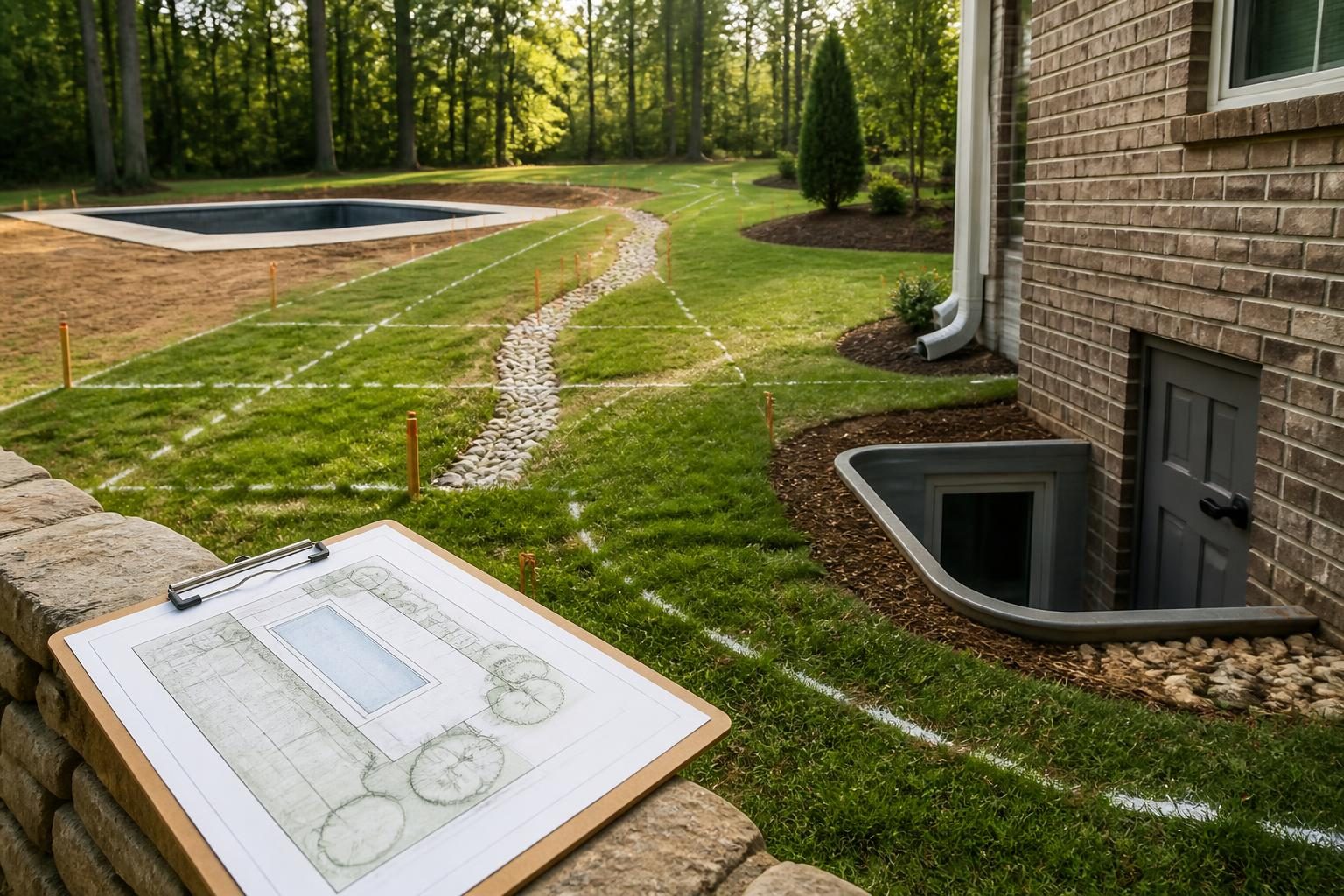
Planning a pool near a basement or crawl space requires careful review of water flow, excavation distance, grading, and foundation conditions.
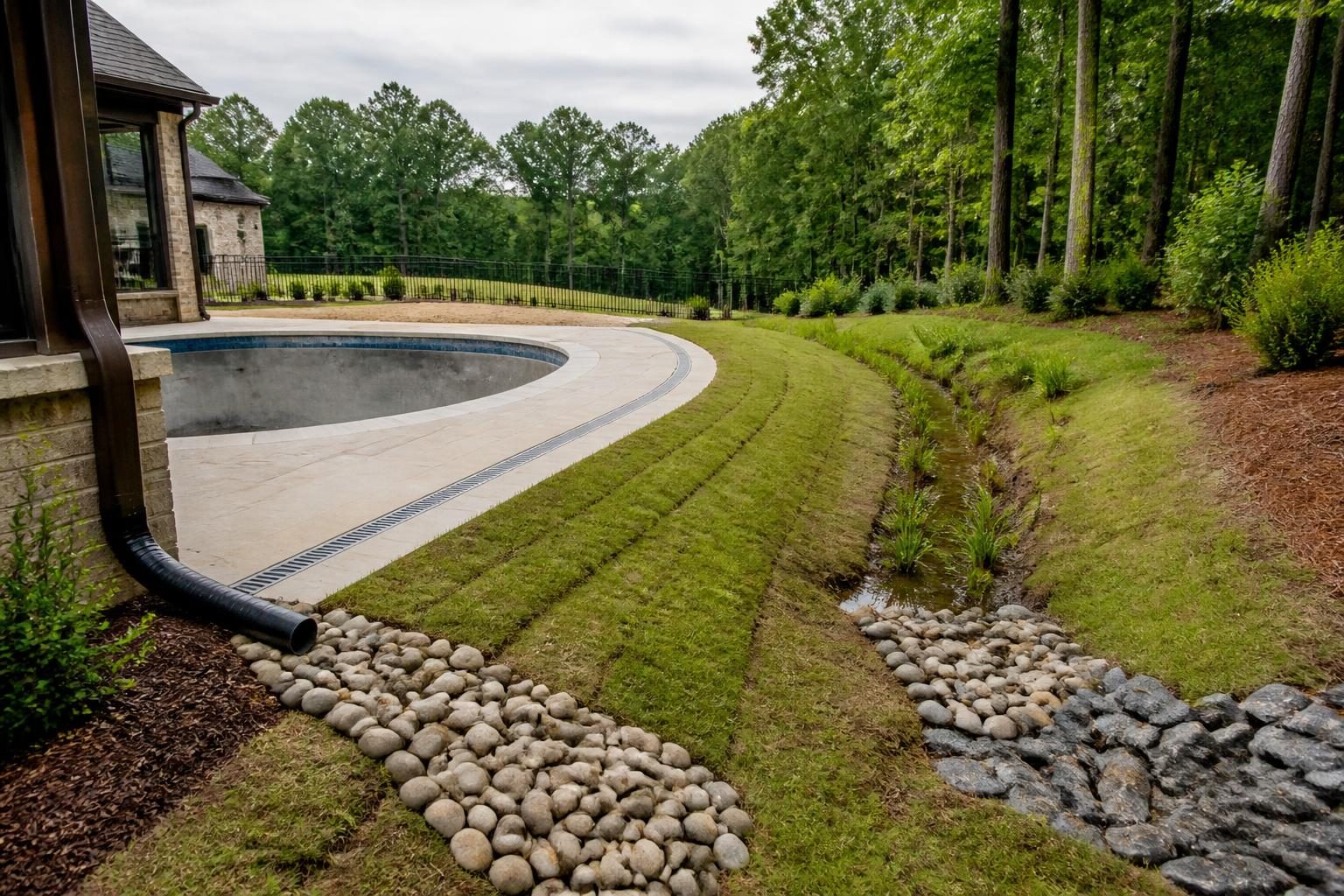
Plan pool drainage discharge with grading, roof water, deck runoff, property lines, erosion control, and local North Carolina requirements in mind.
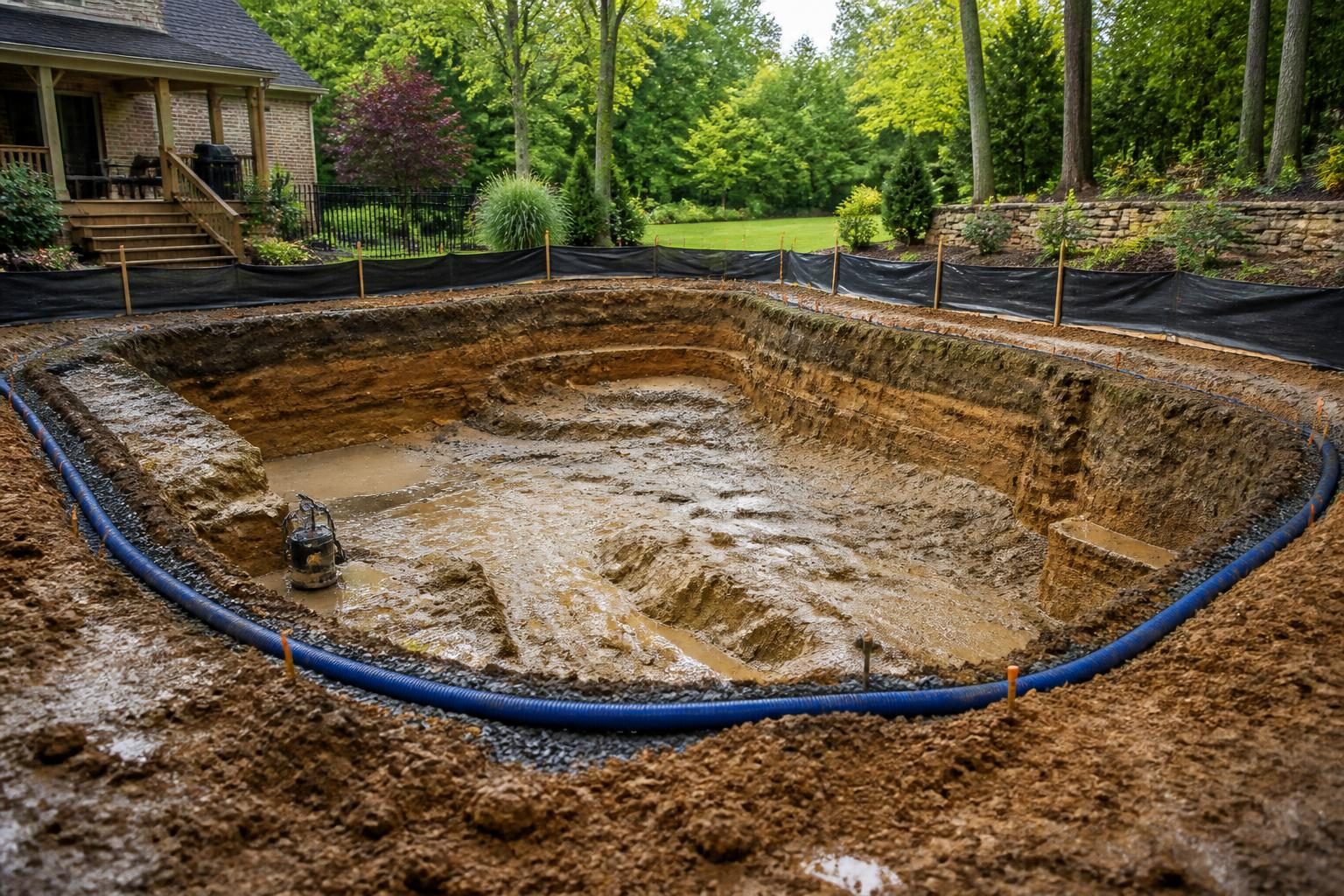
Groundwater can affect excavation, drainage, scheduling, and construction decisions. Learn what to observe and ask before work begins on a North Carolina pool.
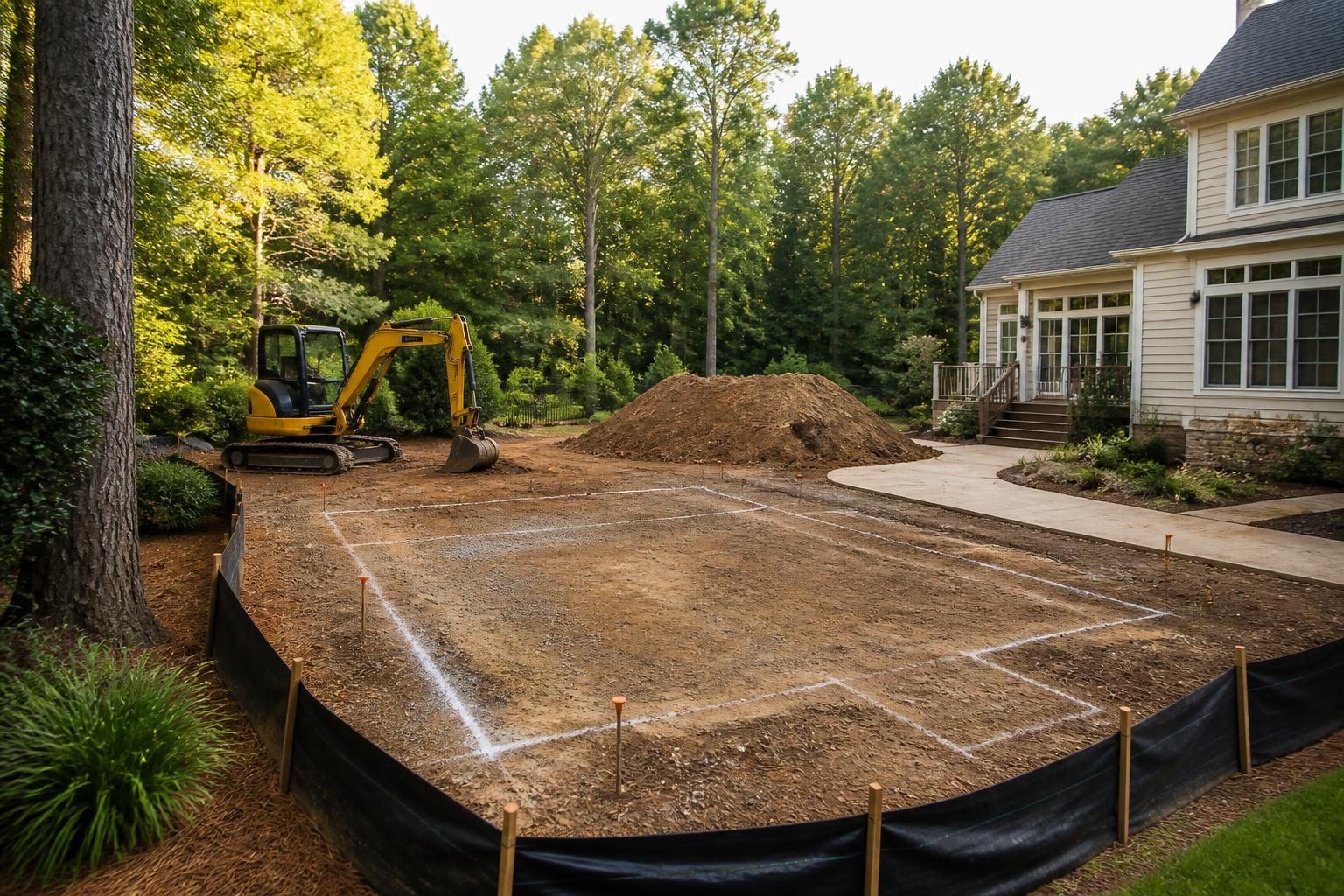
Before excavation begins, clarify where surplus soil will go, how hauling affects access, and how removal responsibilities appear in your pool documents.
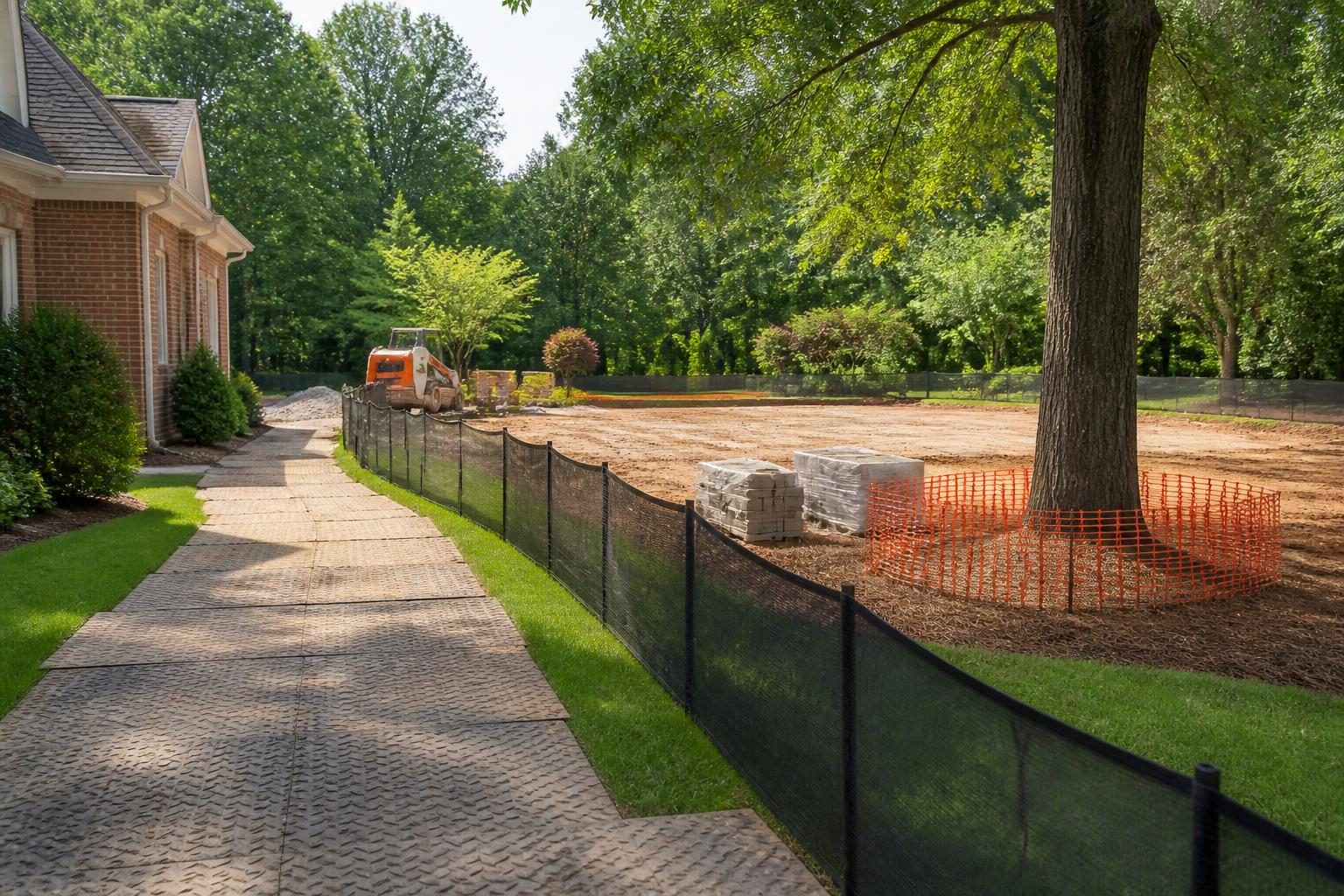
Plan temporary fencing, driveway protection, tree safeguards, material staging, pedestrian routes, and restoration records before pool work begins.
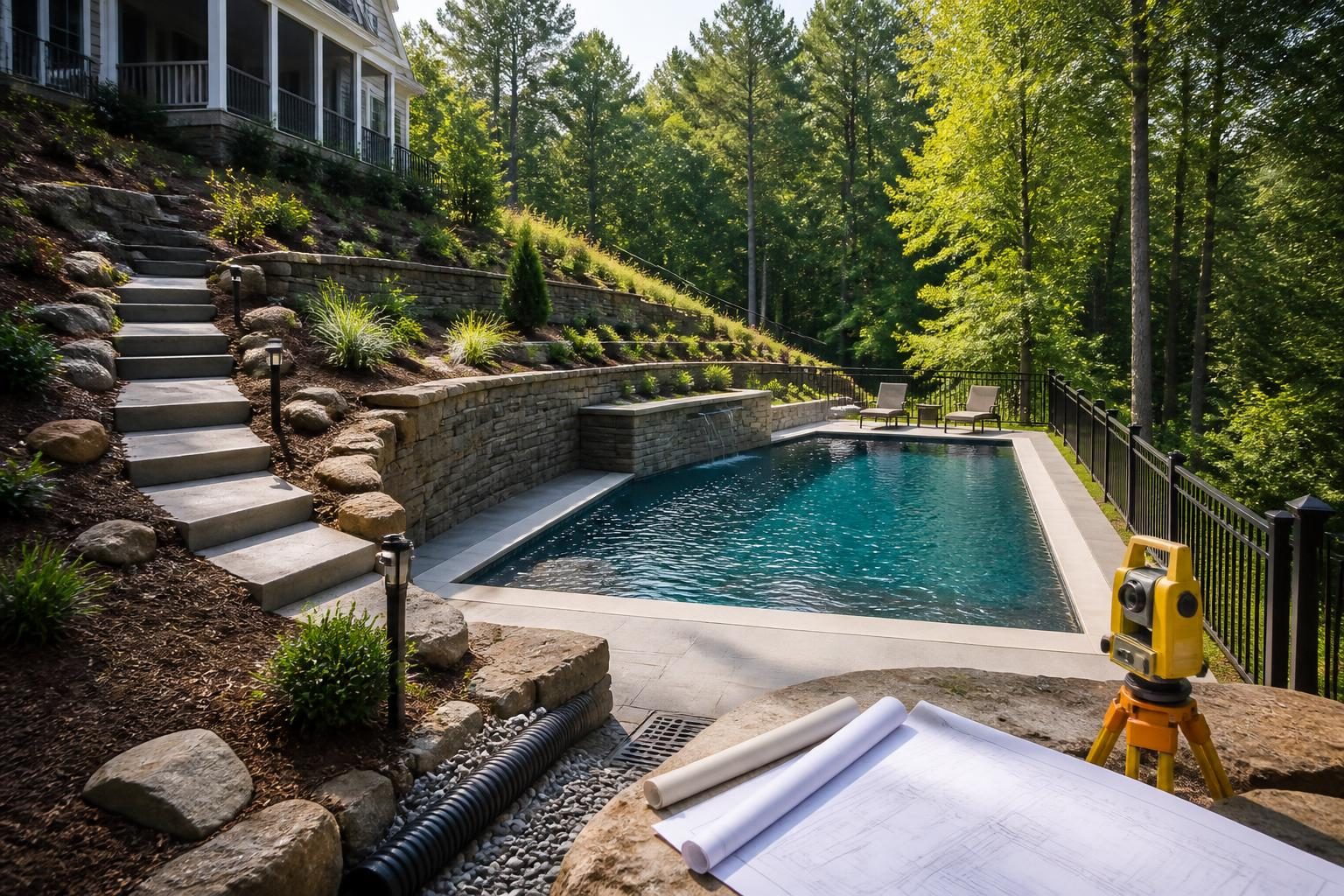
A steep lot can support a well-designed pool, but slope, grading, retaining structures, drainage, access, and safety must be resolved before construction.
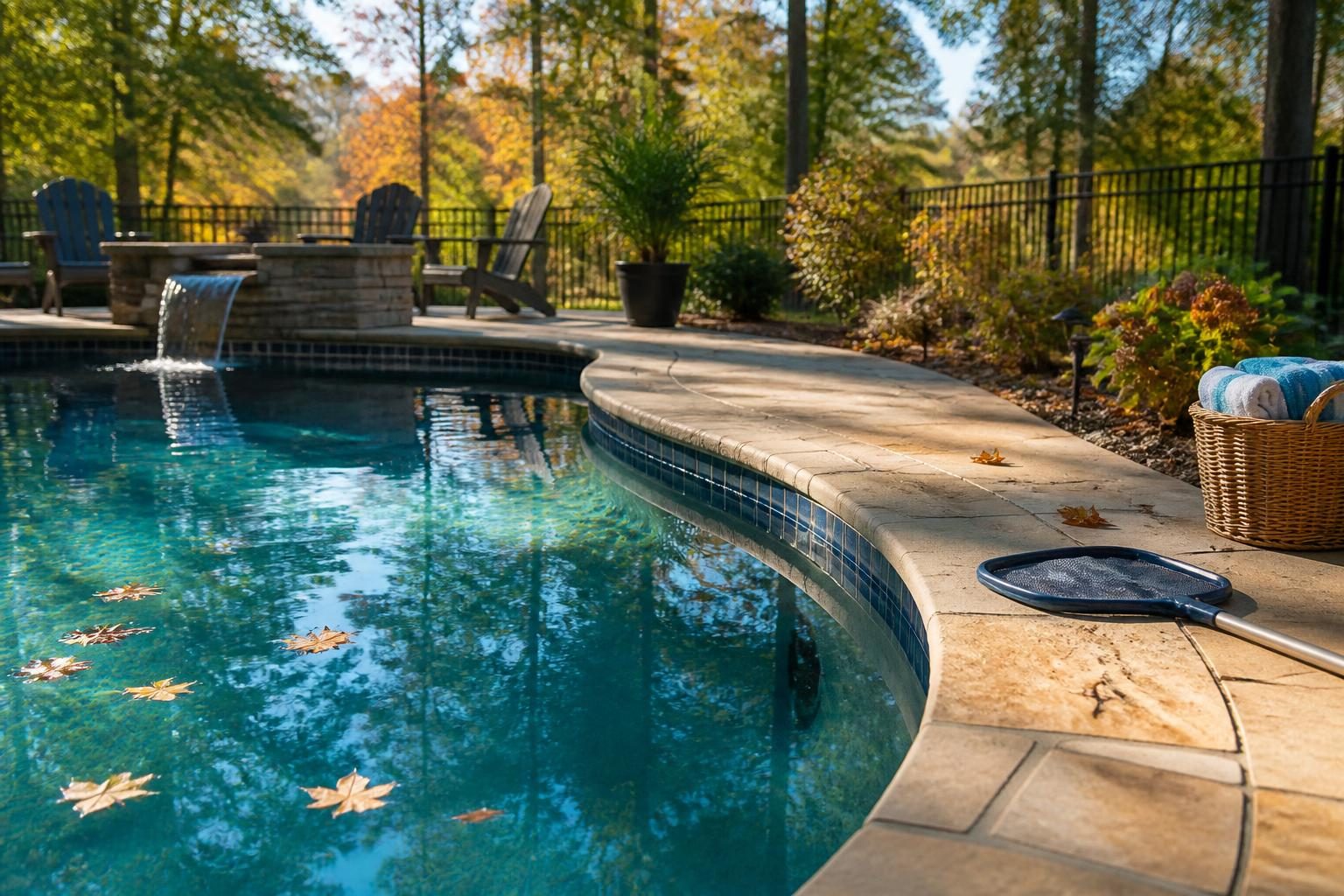
Use a practical seasonal routine to inspect pool tile, grout, coping joints, stains, movement, freeze concerns, and waterline buildup in North Carolina.
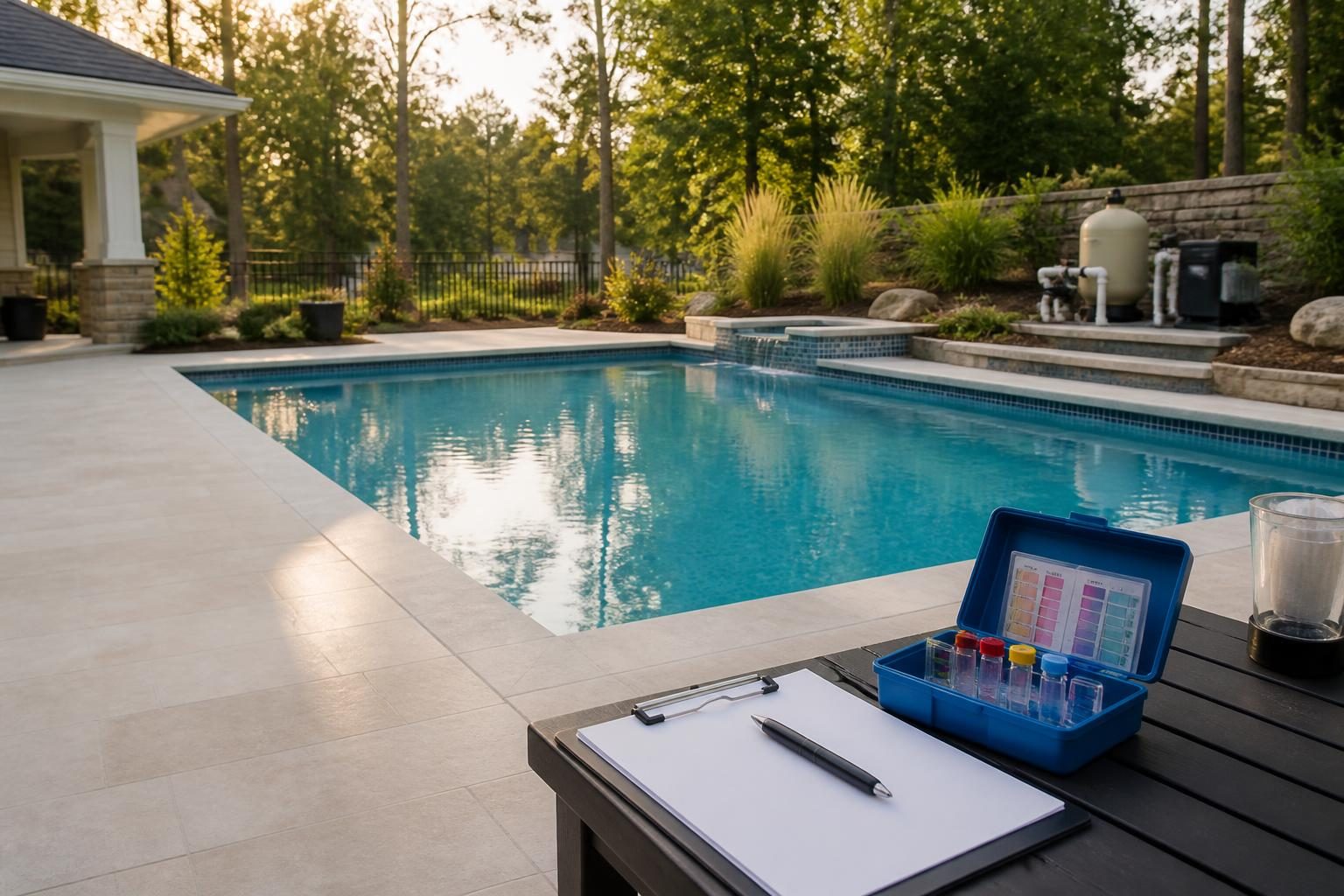
Use this practical checklist to manage water testing, balancing, circulation, brushing, cleaning, and records after a newly built pool is filled.