
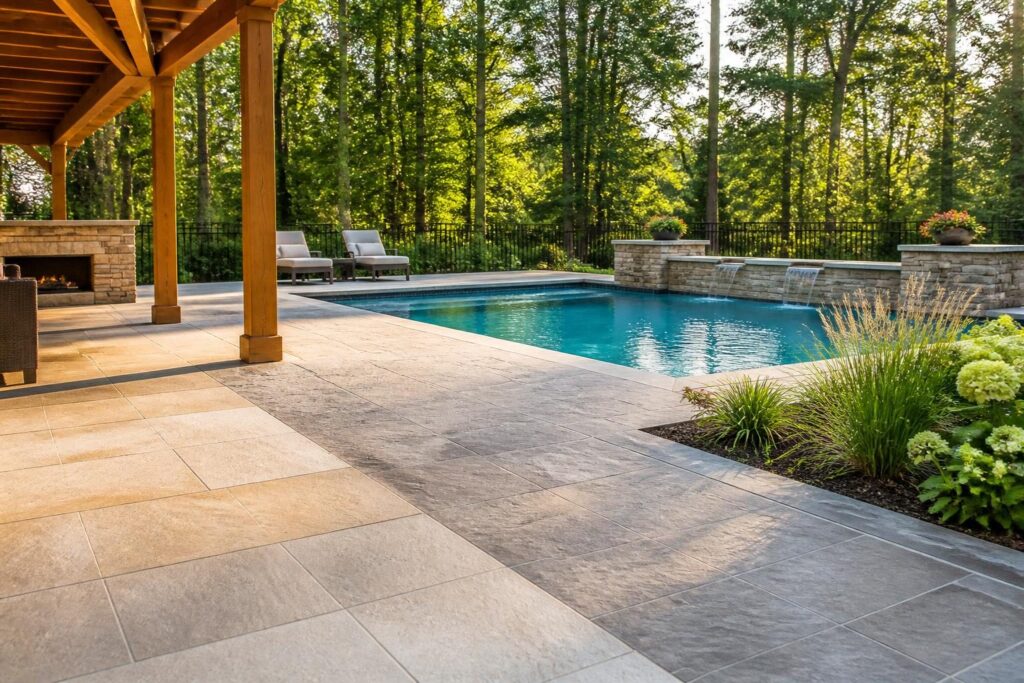
Pool deck surface temperature planning North Carolina homeowners can use starts before material samples are approved. A deck may look attractive in a showroom yet feel uncomfortable after hours of direct summer sun. Shade, color, texture, orientation, and material all affect how the finished surface feels under bare feet.

No single product stays cool in every yard. Air movement, humidity, recent rain, surface aging, nearby walls, and daily sun exposure also matter. The goal is not to promise a specific temperature. Instead, compare the conditions around your pool and ask your designer or qualified pool contractor how each proposed finish may perform there. That comparison is central to pool deck surface temperature planning North Carolina homeowners should complete before choosing a finish.
Why pool deck surfaces heat differently
Sunlight warms outdoor surfaces through radiant energy. Darker or denser materials can absorb and hold more heat than lighter surfaces, although color alone does not determine comfort. A pale surface in full afternoon sun may still feel hot. A shaded surface with the same finish may feel much more comfortable.
Texture changes the contact between skin and the deck. A textured finish can improve traction when wet, but sharp or aggressive texture may be unpleasant for children and adults walking barefoot. Smooth finishes may feel easier underfoot, yet they require careful review for wet-weather slip resistance and maintenance.
Moisture can provide short-term cooling as it evaporates. That effect may disappear quickly during a hot, humid afternoon. Water left on a deck can also create slipping concerns or leave mineral deposits, so comfort should never be evaluated separately from drainage and safety.
- Solar exposure: Identify where direct sun reaches the deck during the hours your household usually swims.
- Surface color: Compare light, medium, and dark samples outdoors rather than relying only on indoor displays.
- Thermal mass: Ask how the material stores and releases heat after the sun moves away.
- Texture: Balance barefoot comfort, cleaning, traction, and the feel of the finish when wet.
- Nearby surfaces: Consider heat reflected from walls, fences, stone, glass, and outdoor structures.
Use shade as part of the deck design
Shade is often the most direct way to reduce the amount of solar energy reaching a deck. It may come from a roof extension, pergola, shade sail, screened structure, umbrellas, or carefully selected trees. Each option affects views, wind, maintenance, drainage, and the amount of usable sunlight around the pool.
Permanent shade structures need coordinated design. Their posts, footings, roof edges, and runoff should not interfere with the pool shell, deck joints, equipment access, or required walking areas. An umbrella provides flexibility, but it may need a stable base and a storage plan during storms.
Trees can help create a cooler microclimate, but their leaves, pollen, roots, and pruning needs deserve equal attention. Review pool tree canopy and leaf-load questions before treating a mature or planned tree as a simple shade solution.
Map useful shade without repeating a sun study
Focus on the deck zones people use most. Mark the entry steps, shallow lounging area, seating, outdoor shower route, and paths to the house. Then ask which zones need relief during midday and late afternoon use. A partly shaded seating area may provide more practical comfort than shading every square foot.
Shade can also change water temperature, evaporation, algae growth, and lighting conditions. Your pool professional can help coordinate those effects with circulation and maintenance plans. A landscape professional may be useful when tree placement, roots, irrigation, or structural shade elements are involved.
Compare color, finish, and texture samples outdoors
Request physical samples of the actual proposed finish. Place them on a representative part of the property during different times of day. A sample on a shaded table does not show how it will feel on an exposed deck beside a reflective house wall.
Compare samples after direct exposure and after a short cooling period. You can note which surfaces feel more comfortable, but avoid treating a brief hand or foot test as a performance guarantee. The installed substrate, finish thickness, age, cleaning, and weather will affect the result.
Color variation may help disguise leaves, dust, and minor water marks. Very light finishes can show dirt, algae, rust, or mineral residue. Dark finishes may create stronger visual contrast with water and coping, but they can make heat more noticeable in exposed areas.
- Ask whether the sample represents the installed finish, not only a printed color card.
- Review how the surface changes when wet, dry, clean, dusty, or weathered.
- Check whether the texture is comfortable for barefoot traffic and easy to clean.
- Ask how repairs or additions may appear if the finish batch changes later.
- Confirm which areas will use the same material and which will use coping, tile, or another transition.
Transitions deserve attention because feet notice abrupt changes. A pool edge, step, drain cover, control joint, or coping detail can feel different from the main deck. Review edge details with the proposed materials. This guide to coping overhang details can help organize questions about edges, drainage, comfort, and maintenance.
Understand material choices without relying on labels
Concrete, pavers, natural stone, tile, and other outdoor finishes each offer different combinations of color, texture, thermal behavior, maintenance, and repair options. Product names such as “cool,” “slip-resistant,” or “heat-reducing” should prompt questions rather than end the comparison.
Ask the supplier or installer what those terms mean for the specific product and installation method. Request care instructions, limitations, and any available test information. A claim about one surface in one climate or test setup may not predict your yard’s experience.
Concrete and decorative finishes
Concrete offers broad choices in color, texture, pattern, and edge treatment. Decorative coatings or overlays may create a particular appearance, but homeowners should ask about surface preparation, future recoating, cleaning, and how repairs will blend.
Stamped or textured concrete can provide visual interest and traction. Deep texture may hold dirt or make furniture less stable. Ask how the selected pattern affects barefoot use, pressure washing, furniture movement, and replacement work.
Pavers and stone
Pavers allow individual units to be repaired or replaced, subject to product availability and proper installation. Their color, density, joint material, and surface texture influence how they feel in the sun. Natural stone varies considerably, even within the same general stone type.
Request samples from the intended product line. Discuss sealing, color change, joint maintenance, and the possibility of uneven transitions over time. For any material, installation quality and site conditions remain important parts of the comfort discussion.
Review orientation, reflected heat, and daily use
Pool orientation affects which deck areas receive morning, midday, and afternoon sun. The same material can feel different on the north, south, east, and west sides of a pool. Nearby rooflines, retaining walls, fences, and windows may reflect additional heat into sitting or walking areas.
Draw a simple plan showing the pool, house, walls, trees, proposed shade, and major deck zones. Add the times your family expects to swim. This does not replace professional design analysis, but it gives your contractor a practical basis for discussing comfort. For pool deck surface temperature planning North Carolina homeowners can use, include the paths people actually walk, not only the largest lounging area.
Think about movement patterns as well as lounging. The path from the back door to the steps may receive intense afternoon sun. A narrow route beside a wall may become uncomfortable even when the central deck has shade. An outdoor shower route may need a surface that remains comfortable and drains well.
Drainage and comfort also connect. Standing water can temporarily cool a surface, but it can create slip, staining, and maintenance concerns. Review deck channels and discharge routes with the broader plan. See pool deck drain channel planning questions before finalizing material transitions near doors or walkways.
Questions to ask before approving the finish
Bring specific questions to the design meeting. Written answers can make later comparisons easier, especially when several samples look similar.
- Which deck areas will receive direct afternoon sun in midsummer?
- Can we review the actual finish samples outdoors at different times?
- What does the product’s “cool” or “heat-reducing” description specifically measure?
- How does the finish feel when wet, and what maintenance supports traction?
- Will the selected color or texture change with sealing, cleaning, or weathering?
- How will coping, drains, steps, control joints, and door thresholds feel underfoot?
- What shade options fit the layout without blocking service access or creating runoff problems?
- How will the material be repaired if a section is damaged or changed later?
- Which parts of the plan require a landscape designer, engineer, or other specialist?
Create a comfort record for the completed deck
After installation, keep the product name, color, texture, sealer, installation details, and care instructions with your pool records. Photograph the deck in representative conditions. Note the date, approximate time, weather, whether the surface was wet, and which areas felt comfortable or uncomfortable.
These observations can help guide future shade, furniture, planting, or maintenance decisions. They can also help a qualified professional understand site-specific conditions if the surface develops cracking, discoloration, roughness, or drainage concerns.
Do not alter a deck, add a structure, plant large trees, or change drainage based only on a comfort observation. Review the proposed change with the appropriate professional. North Carolina requirements can vary by jurisdiction, property conditions, adopted code, utilities, flood exposure, and project scope. For current building and inspection information, consult the North Carolina Office of State Fire Marshal documents and interpretations and confirm local requirements with your inspections department.
Good pool deck surface temperature planning North Carolina decisions combine comfort with drainage, safety, access, appearance, and maintenance. Consult a local inspections department, licensed pool contractor, landscape professional, electrician, engineer, surveyor, or other qualified specialist when the decision involves their area of expertise.