
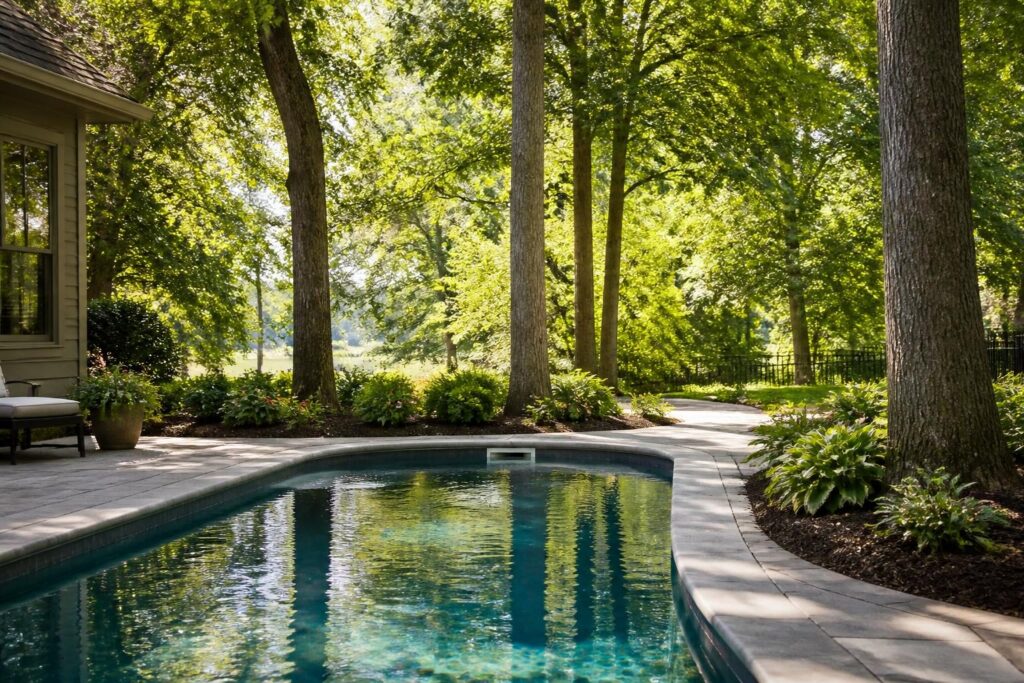
Thoughtful pool tree canopy leaf load planning North Carolina decisions begin before a tree is planted or retained. A mature canopy can make a pool area more comfortable, but it can also increase leaves, pollen, twigs, shade, roots, and cleaning work.

Use pool tree canopy leaf load planning North Carolina as a written decision process, not just a planting-day choice. The right question is not whether a tree looks attractive beside the pool. Consider its mature size, seasonal behavior, root zone, pruning needs, and access requirements. A landscape designer, arborist, pool contractor, or other qualified professional can help evaluate site-specific conditions.
Start with the canopy, not the planting container
Young trees often look harmless because their branches and roots occupy little space. Planning should account for the tree’s expected mature form. Ask how wide the canopy may become, how high branches may extend, and whether growth could reach the pool, deck, equipment area, house, or barrier.
Canopy density matters as much as width. A dense crown may provide useful shade, yet reduce sunlight reaching the water and nearby paving. Less sun may affect comfort, drying, algae-control routines, and the appeal of the pool during cooler parts of the season. Those effects depend on the site, tree, pool orientation, and maintenance program.
Map the sun at different times of day and during different seasons. An afternoon shade pattern may be desirable. A tree that blocks the only warm, sunny area may not fit your priorities.
- Mark the pool, deck, house, equipment, barrier, and access paths.
- Sketch the likely mature canopy rather than the tree’s current nursery size.
- Note views from the home, seating areas, and sight lines toward the water.
- Identify branches that may require periodic clearance over the pool or walking surfaces.
- Ask how pruning equipment could reach the tree without crossing the pool or damaging the deck.
For broader layout considerations, review pool landscaping planning without creating safety or maintenance problems. Connect planting choices with drainage, barriers, sight lines, and water-care needs.
Estimate seasonal leaf and pollen demands
Leaf load means the amount of leaves and other organic debris that reaches the pool during a period. It varies with tree type, canopy size, wind exposure, storms, and the distance between branches and water. A nearby tree does not need to overhang the pool to create a substantial maintenance burden.
For pool tree canopy leaf load planning North Carolina, consider the full calendar rather than one visit to a nursery. Deciduous trees may create a concentrated cleanup period when leaves fall. Evergreen trees can shed needles, scales, flowers, or small branches throughout the year. Some trees also produce pollen, fruit, seed pods, or sticky material that collects on the water and deck.
Organic debris can fill skimmer baskets, load filters, stain surfaces, and consume homeowner attention. It can also add material that affects water care. For basic guidance about testing and treatment, consult the CDC’s home pool water treatment and testing guidance. A qualified pool professional can explain how equipment and water-care routines should respond to local conditions.
Questions about seasonal debris
- When do leaves, pollen, flowers, or seed pods typically fall in this part of North Carolina?
- Will prevailing wind carry debris toward the pool, skimmers, automatic cover, or equipment?
- Does the tree shed after storms or during several separate seasons?
- Could fruit or branches create slipping, staining, or walkway-cleaning concerns?
- How often would the homeowner realistically remove debris during the heaviest period?
Plan for the routine you can sustain. A tree may be manageable when the pool is used occasionally, but burdensome when the pool must remain clean for frequent family use, rentals, gatherings, or accessibility needs.
Review roots and the planting area carefully
Roots need water, air, and space. Their future growth can interact with paving, walls, drainage features, irrigation, utilities, and other landscape elements. The outcome depends on the species, soil, available space, existing construction, and site conditions.
Do not assume a root problem will appear quickly. Long-term planning matters because trees and pool structures may remain in place for many years. Ask a qualified arborist, landscape professional, engineer, or pool contractor to review the relationship where conditions are tight or uncertain.
Keep planting beds defined and maintainable. Soil, mulch, and irrigation should not wash or blow into the pool. Root-management options may deserve discussion when hardscape edges, narrow beds, or sensitive utilities limit available space. See pool landscaping root barrier planning for questions to raise before planting.
- Where are existing roots, utilities, drains, irrigation lines, and pool structures?
- How much usable soil volume will the tree have as it matures?
- Could roots lift or crowd nearby paving, coping, walls, or edging?
- Will future roots complicate equipment or drainage access?
- Who will confirm planting locations when drawings, surveys, or utility information conflict?
Local soil and property conditions vary across North Carolina. Clay, fill, slopes, wet areas, compacted soil, and existing construction can change what is practical. General planting advice cannot replace a site-specific review.
Protect pruning access and pool service access
Tree care requires more than choosing a location. Branches may need inspection, selective pruning, storm cleanup, or removal. Workers may need to bring equipment into the yard. Pool service workers also need clear access to skimmers, filters, pumps, covers, controls, and the deck.
Do not plant a tree where mature growth makes routine pruning dependent on unsafe work over the water. Ask how professionals would reach the tree and where cut branches would be placed. Confirm that gates, walkways, and temporary routes can support the intended work without damaging the pool area.
Document access expectations before installation. The pool site access agreement checklist offers prompts for routes, gates, protection, and restoration. Tree maintenance after construction deserves the same attention.
Build an access review into the plan
- Keep service paths open to pool equipment and water-care storage.
- Identify where a ladder, lift, chipper, or branch-handling tools could safely operate.
- Protect the pool, cover, coping, deck, irrigation, and lighting during pruning work.
- Set expectations for cleanup, branch removal, and temporary access after storms.
- Record planting restrictions near barriers, gates, drains, or equipment.
Balance shade benefits with water and surface care
Shade can reduce heat exposure for swimmers and make nearby seating more comfortable. It may also protect some furnishings from direct sun. However, shade changes the pool environment rather than eliminating maintenance.
Leaves and pollen may collect where wind and circulation carry them. Damp debris can remain on decks or beneath furniture. Shaded surfaces may dry more slowly after rain. A cover can reduce some debris, but it still requires correct use, inspection, and cleaning.
Consider skimmer and return locations during design or renovation. Their placement should support circulation and routine debris removal, subject to the pool professional’s design. Keep trees and planting beds from blocking access to these components.
Ask for a realistic maintenance description rather than a broad promise that a plant is “low maintenance.” That phrase can mean different things to different homeowners.
Use a homeowner decision checklist
Before retaining or planting a tree near the pool, compare the landscape benefit with the work it may create. In pool tree canopy leaf load planning North Carolina, putting the decision in writing can help future owners, landscape workers, and pool service providers understand the reasoning.
- Shade: Where will shade fall in the morning, afternoon, and during cooler months?
- Canopy: What are the expected mature height, width, density, and branch structure?
- Debris: What leaves, pollen, flowers, fruit, needles, or branches may reach the pool?
- Roots: What sensitive structures, utilities, drainage features, or paving are nearby?
- Pruning: How will qualified workers access the tree and remove debris?
- Safety: Could branches, planters, soil, or furniture affect barrier visibility or create climbable conditions?
- Water care: How could organic debris change skimmer, filter, cleaning, or testing routines?
- Long term: Who will maintain the tree, and what happens if it outgrows the space?
Take dated photographs before planting. Keep the landscape plan, plant list, expected mature dimensions, pruning notes, irrigation layout, and professional recommendations with the pool records. Revisit the plan after major storms, construction changes, or tree growth.
Plan for changing conditions
North Carolina yards experience changing weather, growth, and maintenance needs. A tree may suffer storm damage, develop dead limbs, or respond differently as nearby structures alter wind and sunlight. New construction, grading, fences, walls, or irrigation can also change the planting area.
Inspect the relationship between trees and the pool at least seasonally. Look for new branch contact, blocked access, exposed roots, soil movement, drainage changes, and debris patterns. Avoid climbing, cutting large limbs, working near electrical equipment, or making structural changes without appropriate professional guidance.
If a tree is close to a pool structure, retaining wall, utility, septic feature, or house, use the relevant qualified specialist. Local permitting, property restrictions, utility information, and adopted requirements can vary by jurisdiction and project scope. Verify current requirements with the local inspections department or other responsible authority when work involves construction, removal, barriers, drainage, or utilities.
Build a Pool in North Carolina helps homeowners organize questions before they commit to a landscape arrangement. The goal is not to remove every tree. It is to choose a relationship between trees and the pool that remains practical as both mature.
Consult a licensed pool contractor, arborist, landscape professional, electrician, engineer, surveyor, septic professional, or local inspections department when site conditions or project scope require specialized review. Their advice should be based on your property, current requirements, and the work being proposed.