
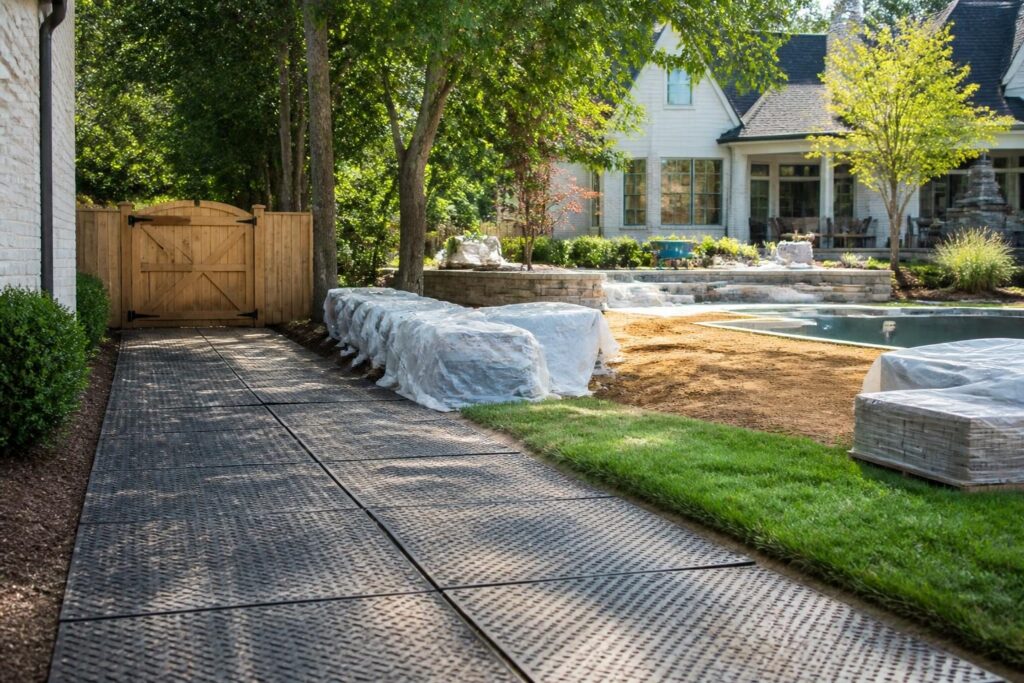
A pool site access agreement checklist North Carolina homeowners can use should do more than identify a driveway. It should record how workers, machinery, materials, and deliveries will reach the backyard, what property needs protection, and who handles restoration after construction.

Access details often seem informal at the beginning. Later, however, several decisions may affect driveways, gates, fences, irrigation, plantings, lawn areas, drainage, and neighboring property. A clear written record helps everyone work from the same plan. This pool site access agreement checklist North Carolina homeowners prepare can also document route changes before they affect the property.
Why document access before pool construction?
Pool construction may require more than workers carrying materials through a gate. Excavation equipment, concrete trucks, gravel, steel, plumbing materials, cranes, pumps, and waste containers may need different routes. The best route can also change because of slope, wet ground, overhead clearance, utilities, septic components, or limited turning space.
Do not assume that a contractor’s general proposal describes every access responsibility. Review the written scope, exclusions, and site notes together. The contract should identify which areas the crew may use and what protection or restoration the contractor includes. You can compare this record with the residential pool construction contract scope before signing.
North Carolina requirements can vary by jurisdiction, property conditions, adopted codes, utilities, septic systems, flood zones, and project scope. This article is a planning guide, not legal, engineering, permitting, or code-compliance advice. Ask the local inspections department and qualified project professionals which approvals or protections apply.
Pool site access agreement checklist North Carolina: map the route
Start with a simple marked site plan or aerial photograph. Show the proposed entry point, travel path, staging areas, delivery locations, and exit route. Mark fixed features that equipment could damage or that could restrict movement.
- Driveway edges, curbs, pavers, walls, steps, and drainage structures
- Front, side, and backyard gates, including hinges, latches, and removable sections
- Fences, hedges, trees, planting beds, irrigation heads, lighting, and outdoor equipment
- Overhead branches, wires, roof edges, low bridges, and narrow turns
- Septic tanks, drainfields, wells, utility features, and marked easements
- Neighboring property lines and any shared driveway or access area
Record the route’s intended width and clearance using the project team’s measurements. A homeowner should not guess whether a machine can safely pass. Ask the contractor to confirm equipment dimensions, turning needs, ground-bearing concerns, and any temporary work needed to protect the route.
Utility notification is a separate safety step. Before excavation or other digging, review current guidance from North Carolina 811. Private lines, irrigation, low-voltage wiring, and other features may require additional identification by the appropriate owner or professional.
Questions about the proposed route
- Which equipment will use the route, and how often?
- Where will trucks stop while loading or unloading?
- Will vehicles cross a sidewalk, curb, drainage feature, or neighboring area?
- What happens if the agreed route becomes muddy, blocked, or unsafe?
- Who must approve a route change, and how will that approval be recorded?
Driveway, gate, and temporary route protections
Photograph the driveway and access areas before work begins. Take wide images that show context, then closer images of existing cracks, settled areas, stains, loose pavers, gate damage, fence conditions, and landscape edges. Add the date and location to your project file.
Ask the contractor to describe proposed protection in writing. Depending on the site, that may include ground mats, plywood, temporary stone, corner guards, dust controls, fencing, or other measures. The correct method depends on the equipment, surface, soil, weather, and route. A qualified contractor should select appropriate protection rather than relying on a generic promise.
Access protection should not create a new hazard. Confirm how temporary ramps, mats, barriers, and fencing will remain stable. Keep pedestrian paths separate from machinery where practical. Ask who will inspect the route after rain or other conditions that could affect ground stability.
For a broader planning reference, see pool construction site access protection. The article covers temporary fencing, driveway safeguards, material staging, pedestrian routes, and restoration records.
Gates, fences, landscaping, and irrigation
List every gate that workers may open, remove, widen, or temporarily relocate. Include the gate’s owner, expected condition, hardware, storage location, and reinstallation responsibility. If a fence section must come down, document its location and the method for securing the opening.
Existing landscaping deserves the same attention. Identify plants, trees, lawn areas, edging, mulch, raised beds, lighting, irrigation heads, hose bibs, and decorative features near the route. Mark items that will remain, move temporarily, or leave the site. Do not rely on verbal labels such as “protect the plants.” Name the area or attach photographs.
Irrigation can be difficult to see and easy to damage. Ask whether the contractor will locate, cap, reroute, test, and restore irrigation components. If a separate landscaping or irrigation company joins the project, decide which party coordinates the work. Keep written confirmation of any changes.
Pool landscaping may come later, but existing vegetation still affects access. If trees or roots are near the route, ask an appropriate professional about protection or removal decisions. Avoid directing excavation, cutting, pruning, or root work without qualified input.
Deliveries, staging, and material storage
Document where materials may be unloaded and stored. A staging area might occupy part of a driveway, lawn, side yard, or street-facing area. The agreement should identify expected use, access hours if relevant, protection measures, and cleanup duties.
- Concrete, gravel, soil, steel, pipe, decking materials, and equipment
- Temporary dumpsters, trailers, pumps, generators, and portable toilets
- Delivery vehicle parking and turning locations
- Protection for mailboxes, sidewalks, curbs, street trees, and drainage inlets
- Temporary storage limits and removal expectations
Ask who contacts you before a delivery requiring unusual access. You may need time to move vehicles, secure pets, unlock a gate, or protect personal property. If a delivery requires public-road use, sidewalk occupation, traffic control, or another public-space arrangement, verify the applicable local process rather than assuming the contractor’s plan is sufficient.
Weather can change whether a route remains usable. Record decisions about postponing deliveries, adding protection, or moving materials after rain. A separate rain delay documentation guide can help organize site-condition notes without assuming a fixed completion date.
Restoration responsibilities and acceptance records
Restoration language should be specific. “Restore the yard” may mean different things to different people. Ask the contract or written agreement to identify the work included after access ends.
- Remove temporary stone, mats, fencing, barriers, and stored materials
- Repair or replace damaged gates, fence sections, pavers, edging, or curbs
- Repair ruts, compacted soil, settlement, mud, and disturbed lawn areas
- Reconnect, test, or coordinate irrigation repairs
- Replace or relocate plants, mulch, soil, and landscape features
- Remove construction debris and sweep or clean affected hard surfaces
- Coordinate repairs to shared or neighboring areas when applicable
Clarify whether restoration includes matching existing materials, installing new seed or sod, correcting drainage changes, or only removing debris. The answer may depend on the contract, site conditions, and the specialist performing the work.
Use photographs and a short completion checklist when the route is released. Note unresolved items, responsible parties, and expected follow-up. Do not sign an acceptance document that does not accurately describe the work or remaining items. Consider asking a qualified professional to review disputed technical conditions.
How to keep the agreement useful during construction
Store the access map, photographs, contract pages, change orders, delivery notes, and restoration records in one project folder. Use consistent file names, such as “2026-04-10 driveway north edge.” Keep original images when possible.
Review the route before major equipment arrives. Confirm that gates open as expected, pets and children remain away from work areas, and temporary protections are in place. Never enter an active excavation or approach operating machinery to take a photograph.
If the route changes, record the reason, affected area, protection plan, and restoration responsibility. A brief written confirmation is better than relying on memory. Changes may also affect drainage, utilities, septic features, landscaping, or the construction schedule.
Before construction starts, ask:
- What is the approved access route?
- Which areas must the crew avoid during construction traffic?
- Who protects and restores each gate, surface, plant, and irrigation component?
- Where will deliveries and waste containers go?
- What conditions require a route review or written change?
- What records will show the property’s condition before and after access?
Final review before equipment arrives
A pool site access agreement checklist North Carolina homeowners prepare should connect the map, contract, photographs, protection plan, delivery plan, and restoration duties. Each item should identify the responsible party and the record that confirms completion.
Review the final plan with the licensed pool contractor and any relevant specialists. Contact the local inspections department for current permitting or local requirements. For utilities, excavation, electrical work, septic systems, drainage, public access, or structural concerns, use the appropriate qualified professional. Build a Pool in North Carolina can serve as a homeowner education resource, but property-specific decisions belong with the professionals responsible for the work.