
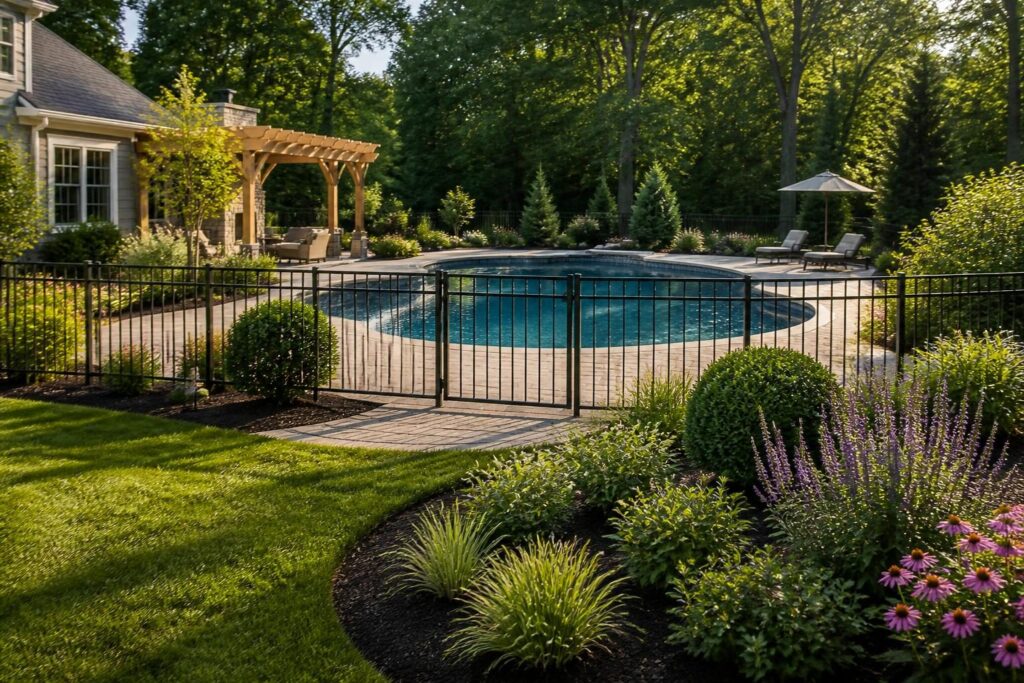
Good pool landscaping planning does more than make a backyard look finished. Plant placement can affect visibility, barrier access, deck surfaces, drainage, irrigation, water quality, and the amount of debris you remove each week. North Carolina homeowners should review the landscape as part of the pool system, not as decoration added after construction.

The best plan balances appearance with daily use. It leaves safety features visible and usable. It also considers mature plant size, seasonal leaf drop, summer storms, clay or sandy soil, slopes, and the needs of bees and butterflies. Because site conditions and local requirements vary, treat this article as a planning guide rather than a code, engineering, or horticultural prescription.
Start with sight lines and barrier access
A clear view helps adults supervise swimmers and notice an open gate, a wet deck, or an object near the water. Landscaping should not create visual tunnels or hidden pockets beside the pool. Before choosing plants, stand in the locations where people will supervise. Check the view from the house, patio, seating areas, and common paths.
Keep planting beds from narrowing walkways or forcing people through the gate area. Avoid arrangements that make the barrier difficult to inspect, clean, repair, or approach. A mature shrub can occupy much more space than its nursery container suggests. Ask the designer or qualified installer to show expected mature height and spread on the plan.
- Can an adult see most of the pool from the usual supervision points?
- Can someone reach and operate the gate without brushing against thorny or dense plants?
- Will branches, vines, trellises, boulders, or raised beds create climbable features near the barrier?
- Can the barrier, latch, gate swing, and surrounding ground be inspected after planting?
- Will future growth reduce visibility or push against the fence?
Plants are not a substitute for supervision, a properly maintained barrier, or other safety layers. The U.S. Consumer Product Safety Commission’s Pool Safely safety tips can help families think about barriers, alarms, covers, and supervision. Local requirements remain controlling, so confirm current rules with the local inspections department.
Use pool landscaping planning to manage roots, canopies, and mature size
Roots can lift or disturb nearby paving, compete with other plants, enter drainage areas, or complicate later repairs. A broad canopy may shade the water, but it can also drop leaves, flowers, pollen, pods, or small branches. These effects depend on the species, soil, irrigation, climate, and distance from the pool.
Do not judge a plant by its current size. Record the expected mature height, width, root behavior, pruning needs, and seasonal debris. A landscape professional, arborist, or nursery familiar with the site can help evaluate choices. If existing trees are close to the proposed pool or deck, review the relationship before finalizing the layout. Our guide to pool construction near trees in North Carolina covers questions about roots, canopy, shade, and removal decisions.
Use a plant information sheet
For each tree, shrub, groundcover, or vine, keep a short record. Include the common and botanical name, mature dimensions, sun needs, water needs, pruning frequency, thorns or irritants, fruit or seed drop, and likely wildlife value. This record helps the household make consistent replacements later.
Place larger trees where their mature canopy does not overhang the pool or block a needed sight line. Use caution with vigorous vines and spreading groundcovers. They can cover fence components, invade joints, or create damp areas that need frequent trimming. Never rely on pruning alone to correct a poor location.
Choose plants that support pollinators without crowding the pool
Pollinator-friendly landscaping can add seasonal color and habitat. It can also attract bees, butterflies, wasps, and other insects near a busy swimming area. The goal is not to remove beneficial plants. Instead, create a thoughtful separation between concentrated flowering areas and the pool’s main entry, seating, and walking zones.
Place flowering plants where visitors can enjoy them without brushing through them on the way to the water. Avoid plants with sharp spines, irritating sap, loose berries, or heavy seed drop beside the deck. Consider bloom periods and whether a plant attracts many insects during the hours your family normally swims.
- Group pollinator plants in a defined bed away from the gate and primary deck route.
- Use stable edging that will not become a trip hazard or collect loose soil.
- Leave enough working room for pruning, watering, weeding, and inspection.
- Remove spent blooms and fallen material before it reaches the pool or skimmer.
- Tell household members which areas may contain bees or other beneficial insects.
A qualified landscape professional can help match plants to sun, soil, moisture, and wildlife goals. Ask for options that provide habitat without relying on frequent pesticide use near the pool. If anyone in the household has a serious insect allergy, discuss the planting plan with an appropriate medical professional as well.
Control irrigation and drainage before planting
Water moving through a planting bed can carry soil, mulch, fertilizer, and plant debris toward the pool. Overspray can wet the deck, increase slipping concerns, stain surfaces, or add unnecessary water to the pool. Irrigation also affects root growth and can expose weak spots in soil or edging.
Map irrigation zones before installation. Identify spray heads, drip lines, valves, hose connections, downspouts, and low areas. Then test the system during normal operation. Look for spray crossing the deck, pooling at the barrier, washing soil toward drains, or reaching the equipment area.
Good pool landscaping planning also maps irrigation and drainage before plants go into the ground. For more detail, review pool landscaping irrigation planning for North Carolina homeowners. The article explains how zones, spray patterns, drainage, soil protection, and equipment safeguards fit together.
Questions for the drainage review
- Where does roof water enter the yard during a strong storm?
- Does the finished grade direct water toward the pool, deck, house, or equipment pad?
- Will a raised bed interrupt an existing drainage path?
- Can irrigation water reach the barrier footing, deck joints, or electrical equipment?
- Who will inspect drainage after planting and after the first major rain?
Landscape changes should not be used to solve a grading or drainage problem without proper evaluation. For land-disturbing work, North Carolina homeowners can review the NC DEQ Erosion and Sediment Control Manual. Confirm whether local review or other requirements apply to your project.
Reduce debris and routine maintenance
Every plant near a pool creates some maintenance demand. Leaves, pollen, petals, bark, berries, and insects can enter the water or collect in skimmers. Dense foliage can also hide wet spots, loose edging, damaged irrigation, or barrier components.
Build a maintenance map rather than choosing plants one bed at a time. Mark areas that require weekly cleanup, seasonal pruning, irrigation checks, mulch replacement, or access for equipment. Leave practical paths for a leaf net, hose, pressure washer, mower, and service worker. Do not place decorative gravel where it can scatter onto the deck or damage equipment.
Low-debris plants may still shed during storms or seasonal changes. No plant list eliminates cleaning. Homeowners can learn safe removal practices in How to Remove Pool Debris Safely.
Keep a simple seasonal routine
- Weekly: Check sight lines, gate access, irrigation spray, standing water, and loose material.
- After storms: Look for broken branches, displaced edging, washout, blocked drains, and debris in the pool.
- During growing season: Trim growth before it reaches the barrier, deck, lights, or equipment.
- During leaf drop: Increase inspection frequency and remove material before it accumulates.
- Before replacements: Compare the plant’s mature size and maintenance needs with the original plan.
Make pool landscaping planning part of the project record
Keep the final planting plan with your pool drawings and maintenance information. Mark plant locations, irrigation lines, drainage features, barrier routes, lighting, equipment access, and any areas that should not be disturbed. Take photographs after installation, including the gate area and drainage paths.
Ask the pool contractor and landscape professional to identify interfaces between their work. Examples include deck edges, drains, sleeves, electrical routes, equipment access, irrigation rerouting, and soil transitions. Written coordination reduces guesswork when a plant dies, a drain clogs, or a future service visit requires temporary removal.
Before approving the finished landscape, walk the site in daylight and after irrigation runs. Look for blocked views, climbable objects, slippery surfaces, overspray, standing water, loose mulch, and branches that may fall into the pool. Correct concerns before the landscape becomes difficult to change.
A practical decision checklist
Use these questions during design, planting, and follow-up visits. This pool landscaping planning review can help catch problems before they become routine maintenance burdens:
- Does the plan preserve clear supervision views from normal household locations?
- Are barriers, gates, latches, and inspection areas free from climbable landscape features?
- Will roots, mature canopies, or dense growth interfere with paving, drains, utilities, or service access?
- Are pollinator plants located where insects and swimmers are less likely to conflict?
- Does irrigation avoid the pool, deck, barrier, house, and equipment area?
- Does the finished landscape preserve intended drainage paths?
- Can the household maintain the beds without stepping into unsafe areas?
- Are plant names, mature dimensions, irrigation changes, and drainage details recorded?
Well-planned landscaping should make the pool easier to observe, use, clean, and maintain. For property-specific decisions about barriers, drainage, excavation, irrigation, electrical equipment, roots, or local approvals, consult the local inspections department, a licensed pool contractor, electrician, engineer, surveyor, arborist, landscape professional, or other qualified specialist as appropriate. Build a Pool in North Carolina provides homeowner education, not a substitute for that project-specific review.