
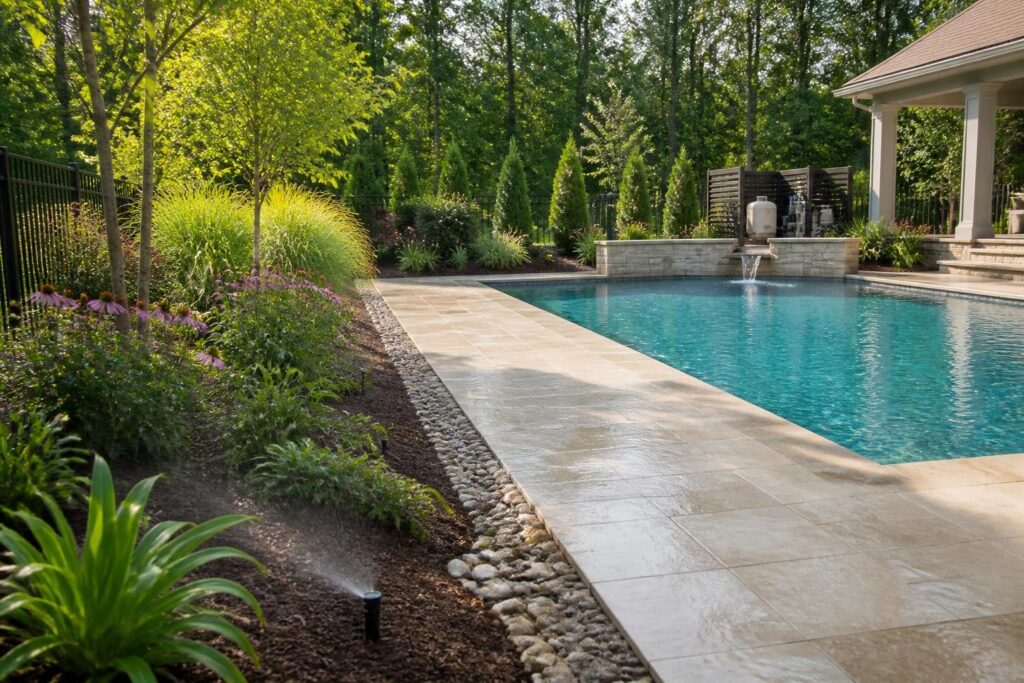
Pool landscaping irrigation planning North Carolina homeowners can use should begin before plants, mulch, and irrigation lines surround the pool. Water that lands on a deck, wall, equipment pad, or property edge can create more than a wet walkway. Repeated overspray may stain surfaces, wash soil into joints, encourage settlement, and expose equipment to unnecessary moisture.
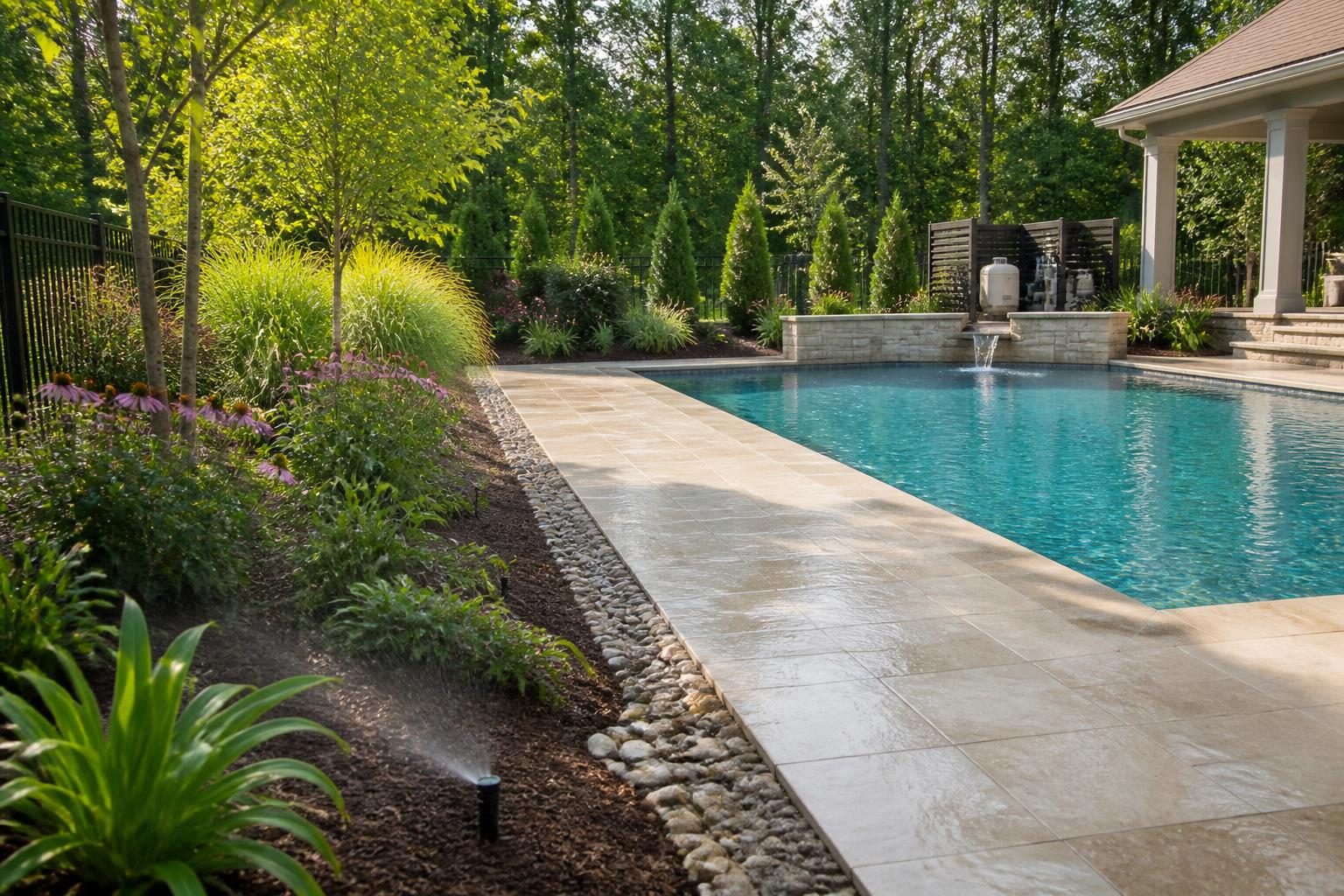
A finished pool area works best when irrigation, grading, planting, hardscape, and equipment locations support one another. The goal is not to eliminate water from the landscape. Instead, direct the right amount of water to the right planting area while keeping the pool structure and walking surfaces dry.
Start pool landscaping irrigation planning North Carolina homeowners can document
Begin with a simple site sketch or use the latest landscape plan. Mark the pool shell, coping, deck, steps, outdoor kitchen, retaining features, planting beds, property lines, downspouts, drains, septic components, wells, and pool equipment. Include slopes and areas where water already collects after rain.
Ask the landscape and pool professionals to coordinate their drawings. An irrigation line that looks reasonable on a planting plan may conflict with a buried pool pipe, electrical route, drainage feature, or equipment service area. The final plan should show more than sprinkler head locations. It should also identify zones, controls, pipe routes, shutoff access, and areas that need hand watering.
- Which surfaces must remain free of routine spray?
- Where will roof water and irrigation water travel during a heavy storm?
- Can each planting bed receive water without spraying the pool or deck?
- Will mature plants change the spray pattern or block access?
- Where can a technician isolate irrigation without entering the pool equipment area?
North Carolina properties vary widely. Clay soil, sandy soil, slopes, compacted construction soil, flood exposure, and local drainage conditions can change the design. For broader site questions, review the North Carolina pool site evaluation checklist.
Divide irrigation zones by plant needs and spray risk
An irrigation zone is a group of outlets controlled by the same valve and schedule. Good zoning prevents one area from receiving too much water simply because another area needs more. It also makes it easier to keep spray away from pool surfaces and equipment.
Separate turf, shrubs, trees, containers, and densely planted beds when their water needs differ. A sunny lawn may dry faster than a shaded bed. New plants may need closer monitoring than established plants. Drip lines may suit some beds, while matched spray heads or rotors may suit open turf. The appropriate system depends on the landscape design and professional assessment.
Keep high-spray zones away from the pool coping, deck edges, outdoor furniture, gates, and equipment pad. If a zone must cross a narrow side yard, ask whether a different outlet type or a shorter spray radius can serve the plants. Avoid assuming that an adjustable nozzle will solve every problem. Wind, pressure, slope, and plant growth can still move water beyond its intended area.
Use a zone map and seasonal notes
Keep a labeled map with valve locations, controller settings, shutoffs, and photos of buried-line routes before soil covers them. Record which zones serve new plants and which serve established areas. These notes help with troubleshooting and future landscape changes.
Controllers may use schedules that change with the season or weather. Homeowners should still inspect the results. A schedule that worked during a dry month may create runoff after rain. A newly shaded bed may need less water after plants mature. Check local recommendations and ask a qualified irrigation professional about system adjustments.
Control spray direction around pool decks and hardscape joints
Overspray is water that lands outside the intended planting area. Near a pool, it can wet walking surfaces, carry fertilizer or mulch toward the water, and leave mineral deposits when it evaporates. It may also reach expansion joints, control joints, pavers, masonry, or sealants that were not intended for constant wetting.
Set heads so their spray ends inside the planting bed whenever practical. Avoid aiming across the deck toward the pool. Use the system’s pressure and nozzle settings as designed by the installer rather than modifying them casually. A head that sprays too far may signal a pressure, nozzle, alignment, or maintenance issue.
Inspect the system after installation and after landscape work. Look for tilted heads, broken risers, clogged nozzles, damaged lines, and plants that deflect spray. Watch one full cycle from several locations. Mark puddles and wet strips on the deck. The pattern may look different once shrubs fill out or mulch settles.
Keep a maintenance record for adjustments. Note the date, zone, observed problem, repair, and person who completed the work. If hardscape begins to discolor or joints open, photograph the condition and ask the relevant qualified professional to evaluate the cause. Do not assume irrigation caused every surface problem.
Coordinate irrigation with grading, drainage, and erosion control
Runoff is water that moves across the ground instead of soaking in where it lands. Pool landscaping irrigation planning North Carolina projects should account for both routine irrigation and intense rain. A gentle slope may carry water toward a deck edge, planting bed, neighbor’s property, septic area, or pool equipment.
Keep irrigation from creating a new flow path. Shorten cycles if water begins running off before the soil absorbs it, but confirm the adjustment with the installer or irrigation specialist. On slopes, multiple shorter applications may reduce surface flow compared with one long application. The correct approach depends on soil, plantings, slope, and system type.
Protect exposed soil during the transition from construction to finished landscaping. Temporary stabilization, mulch, groundcover, drainage features, and properly placed downspouts may all play a role. Irrigation should not be used to compensate for missing grading or an unresolved drainage path.
Construction disturbance can make erosion more likely, especially before plants establish. The NC DEQ Erosion and Sediment Control Manual provides official guidance for land-disturbing work. Project-specific requirements and design decisions should be confirmed with the applicable local authority and qualified professionals.
For a broader review of roof water, deck drainage, runoff, and discharge paths, see pool drainage planning for North Carolina yards. After installation, monitor changes with the guidance in pool deck drainage maintenance for North Carolina.
Protect soil, planting beds, and hardscape transitions
Water can expose weak transitions. Soil may wash from a bed onto the deck. Mulch may collect against coping. Repeated wetting can reveal low spots near pavers or compacted areas that drain slowly. These signs deserve attention before a small problem becomes a persistent maintenance issue.
Inspect the first several feet around the pool after irrigation and rain. Look for rills, bare soil, displaced mulch, muddy splash marks, standing water, and sediment at drains. Check whether water crosses a walkway or flows toward steps. Keep planting soil below hardscape surfaces as designed, and ask the landscape professional how the finished grades should be maintained.
Hardscape joints also need careful observation. Pavers, concrete sections, coping, and masonry may use different joint materials and drainage details. Do not fill, seal, or alter a joint without advice from the appropriate contractor. A joint may allow movement or drainage, and the correct repair depends on the material and installation.
Plant selection affects water movement too. Dense foliage can intercept spray, while roots may change soil stability over time. Avoid placing plants where mature growth will block drains, cover equipment clearances, or push irrigation toward the pool. Coordinate planting decisions with the landscape designer and pool professional.
Keep irrigation away from pool equipment and service areas
Pool pumps, filters, heaters, controls, and electrical components need a dry, accessible service environment. Irrigation should not spray directly onto the equipment pad or create puddles beside it. Water may also carry soil, mulch, and leaves into spaces that technicians need to access.
Confirm the equipment footprint before finalizing nearby planting and irrigation. Mark service clearances shown by the equipment manufacturer or specified by the installer. Keep valve boxes and irrigation controls reachable without stepping through planted beds or placing tools on the equipment.
- Use low-spray or drip methods near the equipment area when appropriate.
- Angle nearby heads away from equipment, electrical components, and service paths.
- Check that runoff cannot collect against the pad or flow beneath equipment.
- Keep mulch and soil from covering drains, vents, labels, or access panels.
- Photograph the finished arrangement for future service and landscape changes.
If equipment becomes wet, shuts off, makes unusual sounds, or shows damage, stop and contact the appropriate licensed professional. Do not open electrical equipment or attempt repairs beyond your training.
A homeowner inspection routine for the finished pool landscape
Walk the area during a normal irrigation cycle, after a strong rain, and several hours after watering stops. Use the same route each time. This makes gradual changes easier to notice. Pool landscaping irrigation planning North Carolina homeowners can maintain also depends on these repeated visual checks.
- Confirm each zone waters only its intended area.
- Look for spray on coping, deck surfaces, walls, furniture, and equipment.
- Check for runoff, puddles, muddy edges, and displaced mulch.
- Inspect drains and joints for sediment or debris.
- Review plants for blocked heads, broken lines, or changed spray direction.
- Record observations with dates and photographs.
Ask the installer to explain seasonal controller changes, manual shutoffs, freeze precautions, and what to do before landscape renovation. Keep the irrigation plan with pool drawings, equipment information, drainage records, and landscape notes. Build a Pool in North Carolina can help homeowners organize questions, but site-specific decisions belong with the professionals responsible for the work.
Consult the local inspections or planning department when land disturbance, drainage, flood exposure, or property changes may affect local review. For design and field conditions, involve a licensed pool contractor, irrigation professional, electrician, engineer, surveyor, septic professional, or other qualified specialist as appropriate. North Carolina requirements can vary by jurisdiction, adopted code, utilities, septic systems, flood zones, property conditions, and project scope.