
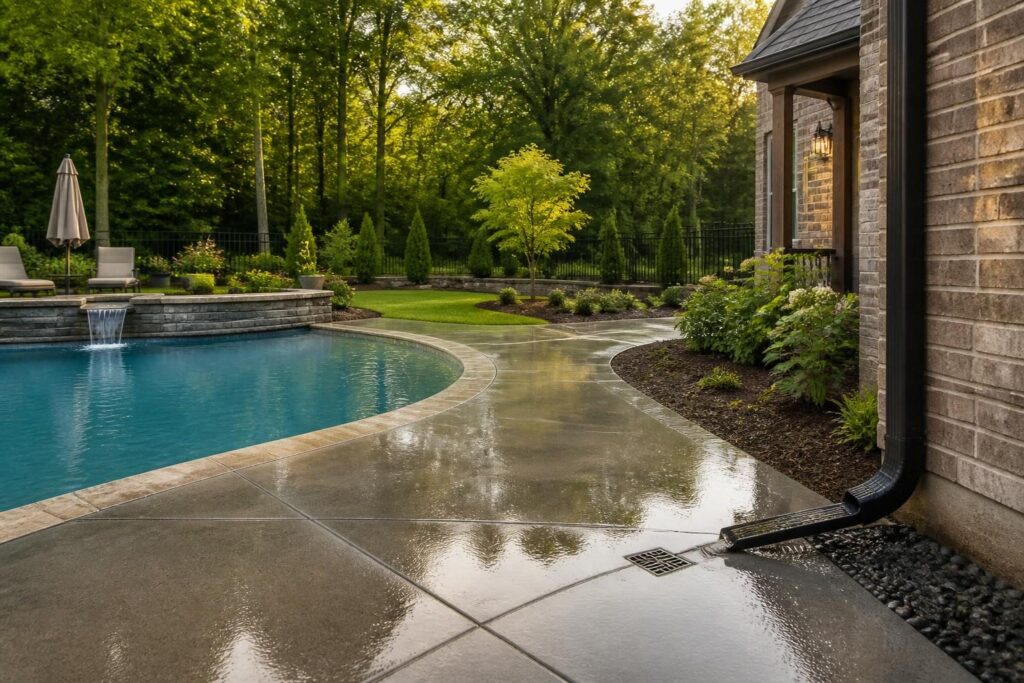
Good pool deck drainage maintenance North Carolina homeowners can perform starts with observation. A deck may look finished and level, yet small changes in slope, joints, soil, drains, or roof runoff can send water toward the pool or foundation.
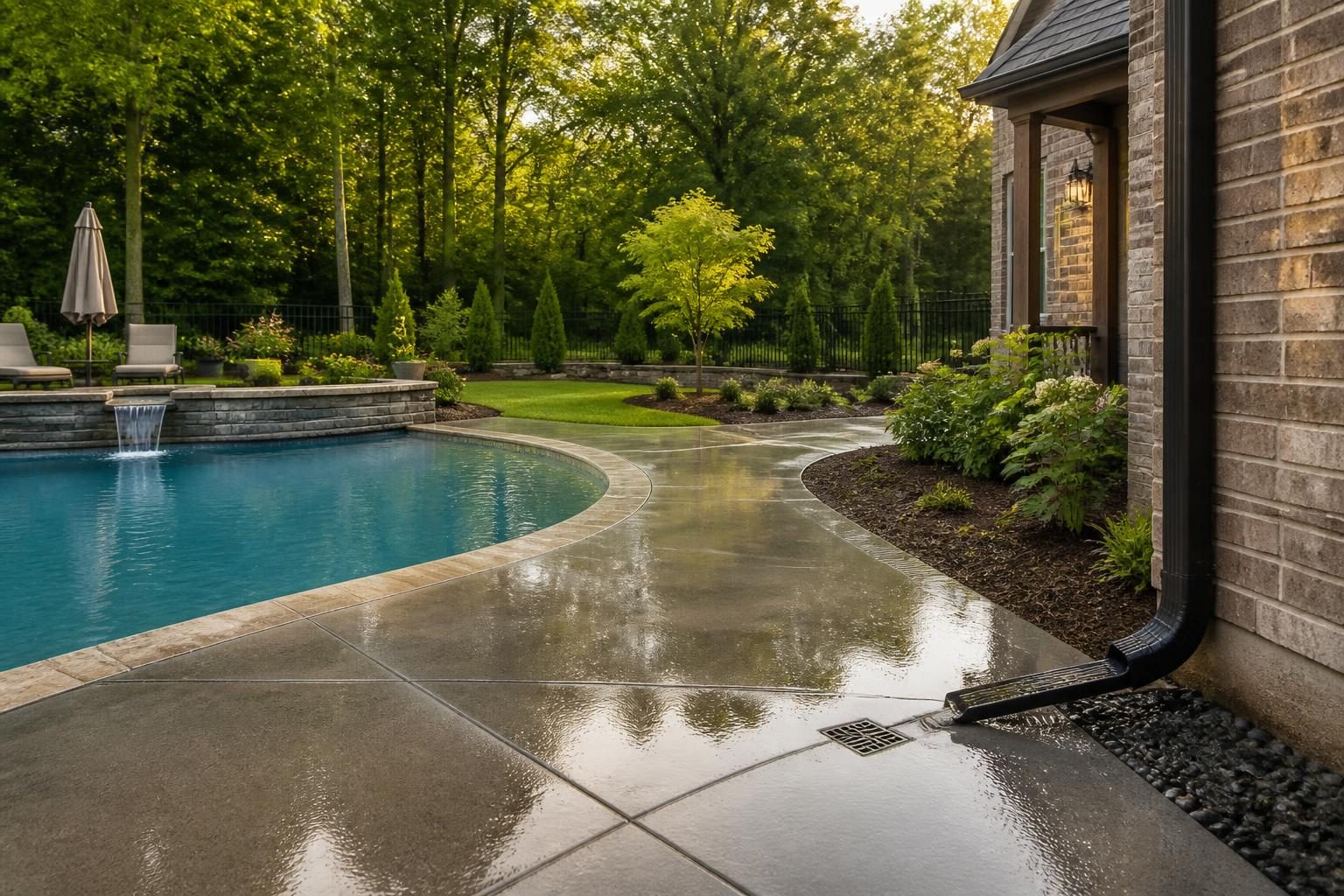
Post-installation drainage care does not mean redesigning the property yourself. It means noticing changes early, keeping clear records, and asking the right professional to evaluate conditions when water stops following its intended path. North Carolina weather can bring intense rain, summer storms, freeze-thaw cycles, and long periods of wet soil. Those conditions make routine observation worthwhile.
This guide covers the areas homeowners can monitor safely. Local requirements and suitable repairs can vary with property conditions, adopted codes, easements, flood zones, septic systems, and project scope. Consistent pool deck drainage maintenance North Carolina homeowners perform can also reveal whether a drainage concern is isolated or recurring.
Start with the deck’s intended water path
Before judging a problem, learn how the finished pool area was supposed to drain. Ask for the final grading information, deck layout, drain locations, discharge points, and any drainage details included in the project records. A grading plan shows how surfaces are shaped to move water. It does not replace a field evaluation after construction.
Walk the area during or soon after ordinary rain. Watch where water travels across the deck, around coping, beside steps, and near doors or walls. Do not enter standing water near electrical equipment. Keep children away from slick surfaces while you inspect.
- Does water move away from the pool edge?
- Does runoff approach the house, foundation, crawlspace, or basement entrance?
- Do drains receive water without overflowing?
- Does water leave the property through a planned route?
- Does soil or mulch wash onto the deck?
Take wide photographs from the same locations after similar rainfall. Add close photographs of stains, cracks, blocked grates, exposed soil, and eroded channels. A simple dated log can help you compare conditions across seasons.
For broader design questions, review pool drainage planning for North Carolina homeowners. That article addresses grading, roof water, runoff, erosion, and discharge planning before and around a pool project.
Monitor pool deck slopes and low spots
A deck slope is the gradual fall that helps surface water flow toward a drain or approved discharge area. Homeowners should monitor how the surface performs rather than assume it remains unchanged. New low spots may appear after soil settles, nearby landscaping changes, or heavy equipment crosses an area.
Look for shallow puddles after rain. A darkened patch that remains wet after surrounding concrete dries can signal a low area, poor drainage, or water entering from another source. Water beside the pool may also carry dirt, leaves, or lawn chemicals into the water.
Questions to record during a slope check
- Where does the first visible water appear?
- How long does the puddle remain after nearby areas dry?
- Has the location changed since the last storm?
- Is the low spot beside a joint, drain, wall, or downspout?
- Does the issue occur only during extreme rain?
A homeowner can document these observations without trying to measure or correct the slope. Avoid grinding, cutting, drilling, filling, or applying a patch until the source is understood. A surface repair may hide a settlement, discharge, or subgrade problem.
Inspect joints, edges, and signs of settlement
Concrete and other deck materials use joints to manage movement and separate sections. Joints can open, shrink, collect soil, or lose sealant over time. These changes do not automatically prove a defect, but they deserve a record when water begins collecting nearby.
Inspect the joint between the deck and pool coping. Also check joints near steps, walls, expansion gaps, drains, and transitions to walkways. Note widening gaps, uneven edges, rocking sections, cracked sealant, or areas where one surface appears higher than another.
Soil settlement occurs when supporting soil compresses or shifts. Possible signs include a sinking deck section, a separated walkway, a tilted drain grate, or a new gap beside a foundation. Settlement can also change the direction of runoff without causing an obvious crack.
A practical documentation routine
- Photograph the full area from several angles.
- Place a ruler or familiar object beside a visible gap for scale.
- Write down the date, recent weather, and exact location.
- Mark the location on a simple site sketch.
- Ask a qualified pool contractor, concrete professional, or engineer which evaluation fits the condition.
Do not assume that adding soil against the deck will solve settlement. Extra fill can change water flow and may direct runoff toward the pool or structure.
Keep deck drains open and observable
Deck drains collect surface water and move it through a pipe or channel. Leaves, mulch, grass clippings, sediment, and insects can reduce their capacity. A drain that looks clear at the top may still have a blocked outlet or damaged connection. Regular pool deck drainage maintenance North Carolina homeowners perform should include these visible checks.
Remove loose debris from grates with ordinary hand tools when you can do so safely. Do not lift heavy covers, enter a drain, use powered equipment, or work near electrical components without appropriate guidance. Never remove a grate and leave the opening unprotected.
- Check grates before forecast rain and after major storms.
- Confirm that grates sit level and do not rock.
- Look for cracking, sinking, or soil washing around the drain.
- Watch whether water disappears or backs up during rainfall.
- Record overflow, odors, sediment, or repeated blockage.
If a drain repeatedly backs up, the problem may involve its outlet, pipe, grade, or connection. A qualified drainage professional or pool contractor can identify the proper next step. Do not discharge cleaning water or sediment into a neighbor’s property, roadway, storm drain, or watercourse without confirming local requirements.
Check downspouts and roof runoff separately
Roof water can overwhelm a pool deck even when the deck itself was installed correctly. Downspouts may discharge onto the deck, beside the pool, near a foundation, or into soil that later settles. Landscaping can also redirect a downspout after installation.
During rain, watch each downspout from the roof outlet to its final discharge point. Look for splashing, erosion, mulch movement, exposed roots, and channels that run toward the deck. Make sure extensions or other components remain connected and stable.
Do not connect, bury, reroute, or extend a downspout based only on appearance. Local rules, easements, soil conditions, neighboring properties, and existing drainage systems may affect a suitable discharge route. Ask a qualified drainage professional when roof water reaches the pool area or foundation.
Keep roof runoff separate from pool overflow and deck drainage unless the design was specifically evaluated for that arrangement. Separate sources make inspection easier and can reduce the chance that one blocked route affects the others.
Watch soil, mulch, and landscaping changes
Planting beds often change after a pool project. Fresh soil, mulch, edging, irrigation, shrubs, and retaining features can alter runoff. Loose soil may wash onto the deck, while dense planting can hide a low spot or blocked inlet.
After storms, inspect the edge where the deck meets lawn or planting beds. Look for exposed aggregate, rills in the soil, mulch piles against the deck, or a new channel beside the foundation. Keep soil and mulch from covering drain grates or raising the surrounding grade without professional review.
Irrigation can create a drainage problem that rain does not reveal. Check whether spray reaches the deck, coping, house wall, or equipment area. A licensed irrigation professional can help correct spray patterns without disturbing required clearances or other systems.
For background on soil conditions and drainage questions, see soil testing before pool construction in North Carolina. Existing homeowners can use the same principle: soil behavior matters when evaluating settlement and runoff.
Create a seasonal monitoring checklist
A short routine is easier to maintain than an occasional major inspection. Check the pool deck at the start of the rainy season, after unusually heavy storms, after landscaping work, and whenever you notice a new puddle or crack. This simple approach makes pool deck drainage maintenance North Carolina homeowners can manage more consistent.
- Monthly: clear visible debris and photograph recurring wet areas.
- After heavy rain: inspect drains, downspouts, erosion, and foundation-adjacent soil.
- After landscaping: confirm that soil, mulch, edging, and irrigation did not change runoff.
- Before winter: note cracks, open joints, loose grates, and areas that may hold water.
- After freezing weather: look for movement, lifted edges, and new separations.
Keep the project’s drainage drawings, photographs, repair receipts, professional reports, and maintenance notes together. The new pool handover checklist can help you gather records and maintenance information when the project is completed.
Know when a drainage concern needs review
Prompt professional attention is sensible when water repeatedly reaches the foundation, a deck section sinks, a drain overflows, or erosion exposes soil near the pool structure. Seek help sooner if water affects electrical equipment, creates a slip hazard, enters a crawlspace or basement, or appears to undermine a wall.
Keep people away from unstable surfaces and standing water near electrical components. Do not pump or redirect water onto another property without understanding the discharge path and local requirements. If a storm creates widespread flooding, prioritize personal safety and follow local emergency guidance.
North Carolina construction stormwater rules may apply to land-disturbing work, and requirements can depend on the project and jurisdiction. The NC DEQ Construction Stormwater Program is an official starting point for current state information. Verify local requirements before changing grades, drainage routes, or discharge systems.
Routine observation cannot replace design or code review. Consult the local inspections department, a licensed pool contractor, drainage professional, electrician, engineer, surveyor, septic professional, or other qualified specialist when the condition involves their area of expertise. Build a Pool in North Carolina offers homeowner education, but your property-specific evaluation should come from the appropriate professional.