
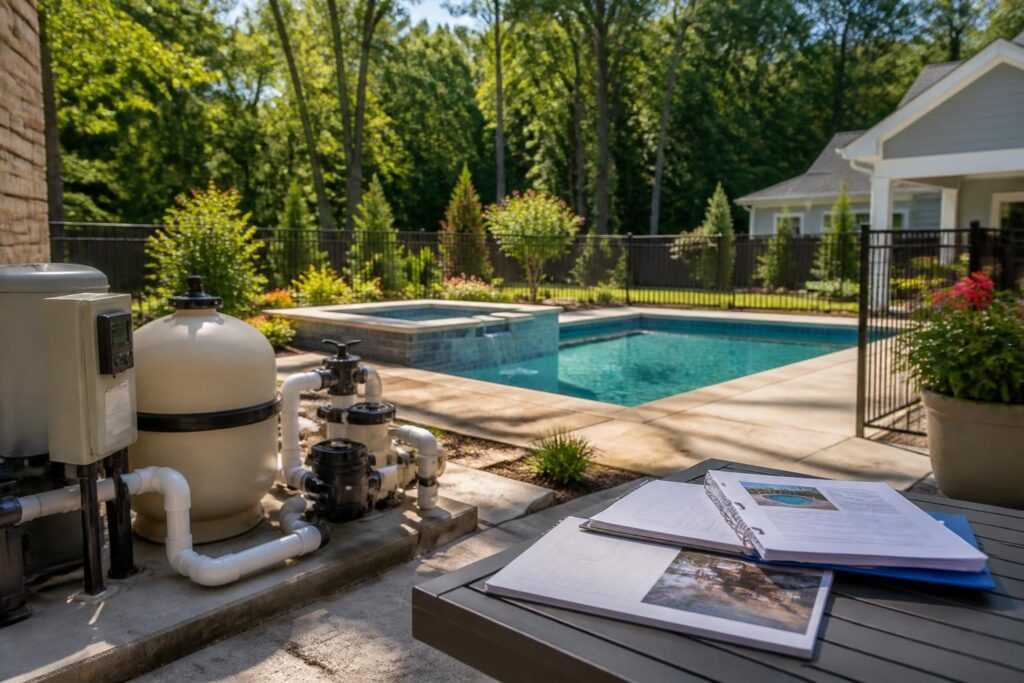
A new pool handover checklist helps you move from construction to confident ownership. Before the crew leaves, collect the documents, access details, operating instructions, and safety information needed to run the pool properly.
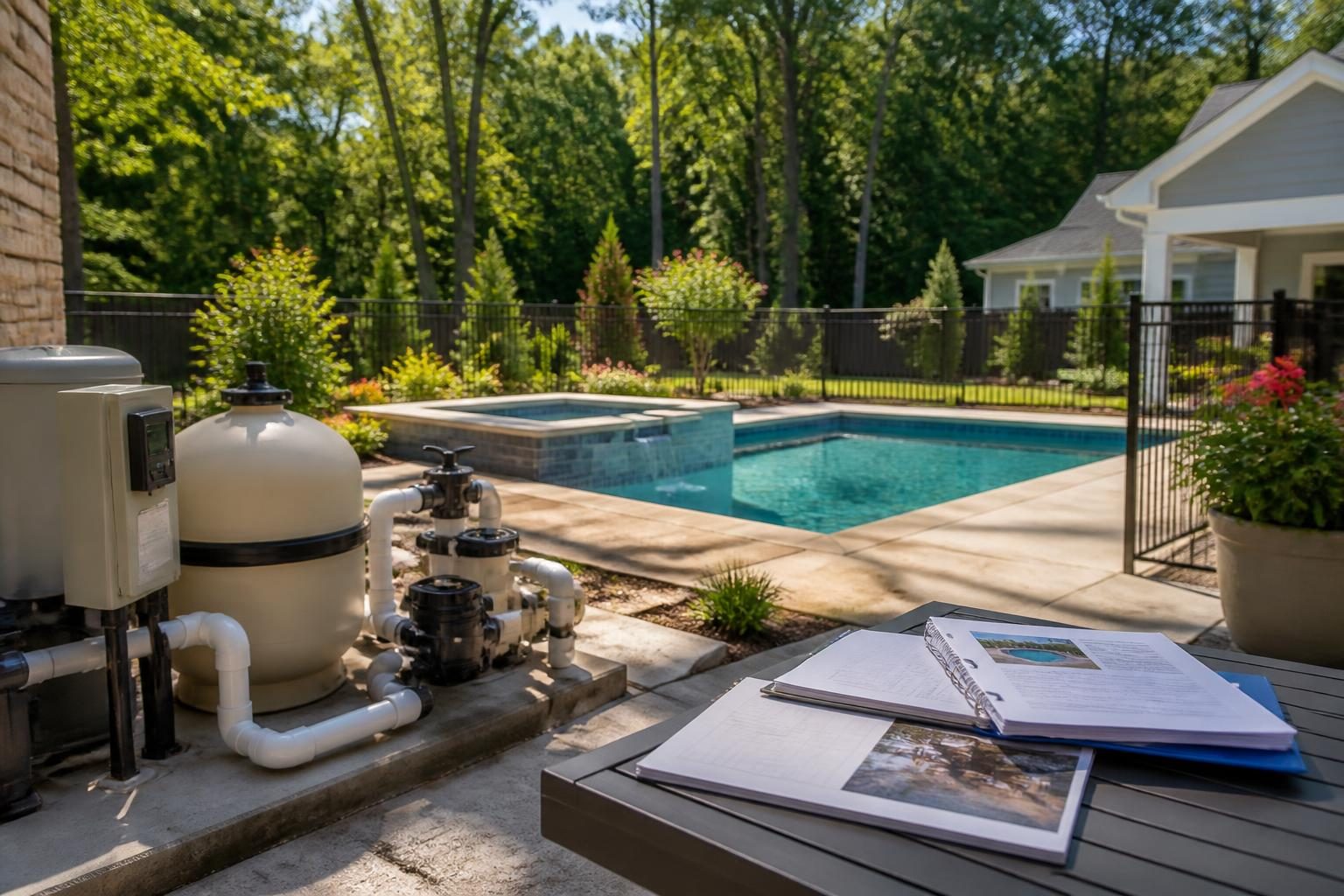
Handover is more than a final conversation beside the equipment pad. It is a transfer of knowledge and records. You should know what was installed, how it operates, what requires routine attention, and which questions still need an answer. Keep the new pool handover checklist with your permanent pool records.
North Carolina requirements can vary by jurisdiction, adopted code, property conditions, utilities, flood zones, septic systems, and project scope. Treat this guide as an organizing tool, not a substitute for the local inspections department or a qualified professional.
Start with a complete handover folder
Create one digital folder and one physical folder. Keep copies of everything you receive. File documents by category so a future service technician can understand the installation without relying on memory.
- Approved plans, revisions, and equipment schedules.
- Permit records and available inspection documentation.
- Final invoices, payment records, and signed completion documents.
- Manufacturer manuals and installation instructions.
- Serial numbers, model numbers, and equipment photographs.
- Warranties, registration instructions, and warranty contacts.
- Water-test results and startup instructions.
- Training notes, valve diagrams, and automation details.
- Photos of concealed plumbing, conduits, drains, and utility routes.
Use a simple file name for each record. Include the equipment name, model, serial number, and date when practical. Back up the folder to a secure cloud location.
For related documentation practices, see this guide to documenting pool changes. Any approved change can affect the records you receive at completion.
Record every piece of pool equipment
Walk the equipment area slowly. Photograph each label before dirt, weather, or later service makes it harder to read. Record the manufacturer, model, serial number, installation date, and power source when shown.
Your equipment list may include the circulation pump, filter, heater, salt system or chemical feeder, automation controller, booster pump, air blower, pool lights, transformers, and water features. Include the valves and controllers that operate each feature.
Ask for manuals and service information
- Which manual covers normal homeowner operation?
- Which tasks require a service professional?
- What filter-cleaning method and replacement parts apply?
- Which alerts require shutting equipment off?
- Where are replacement fuses, cartridges, seals, or lids identified?
- What seasonal steps apply to this specific installation?
Do not assume a similar-looking part is interchangeable. Use the recorded model number when ordering supplies or asking for support.
If the equipment is in a tight, wet, or flood-prone location, ask how service access and drainage should remain clear. A previous guide on pool equipment location explains why access matters after construction.
Confirm warranties and registration steps
Collect every warranty document separately from the sales agreement. A manufacturer warranty may have different coverage, registration rules, exclusions, and service procedures than a contractor warranty.
Ask who must register each product and whether the homeowner, installer, or another party completes that step. Save confirmation numbers and screenshots after registration.
- List the covered product and serial number.
- Note the warranty start date and stated duration.
- Record exclusions and required maintenance records.
- Identify the process for requesting service.
- Keep receipts, water-test records, and maintenance logs.
- Ask whether replacement parts affect coverage.
Do not promise yourself that a warranty covers every pool problem. Read the actual terms and ask the manufacturer or qualified service provider when wording is unclear.
Keep a separate log for repairs and adjustments. Include the date, equipment involved, observed symptom, action taken, and supporting invoice or photograph.
Review startup chemistry and water care
Startup chemistry is the first controlled stage of water care. The exact steps depend on the surface, water source, sanitizer system, equipment, and instructions supplied for the pool.
Ask the builder or startup professional to explain the opening test results. Request the current readings for pH, sanitizer, alkalinity, calcium hardness, and any other values relevant to the installed system.
Learn which test method to use at home. A test kit or meter should match the instructions for your water-care program. The CDC provides general guidance on residential pool water treatment and testing, including chlorine and pH: Home Pool Water Treatment and Testing.
Get a written first-week routine
- When should circulation run?
- When should the first water test occur?
- Which chemicals are used, and in what order?
- What should you do after heavy rain or high bather use?
- When can the heater, cleaner, water feature, or cover operate?
- Which readings should prompt a call for help?
Never mix pool chemicals. Follow product labels and seek qualified advice when the instructions conflict with your equipment manual or water-care plan.
Learn the valves, controls, and automation
A valve map turns a confusing equipment pad into a usable system. Ask for a drawing that identifies each valve, pipe, return, drain, water feature, cleaner line, and waste or backwash path, if present.
Have the valves labeled physically as well. Labels should remain readable after rain, sun exposure, and cleaning. Take a photograph of the normal operating position.
Test automation access before handover
- Confirm the controller model and app name.
- Change temporary passwords and recovery details.
- Confirm which household members have access.
- Identify schedules for circulation, heating, lighting, and features.
- Learn how to operate equipment manually if internet access fails.
- Record Wi-Fi, control-panel, and service-mode instructions without sharing them publicly.
Ask what happens after a power interruption. Also learn which settings should not be changed without professional guidance. Save a screenshot of normal schedules and setpoints.
For electrical questions, use a licensed electrician. Electrical controls, bonding, grounding, and protection depend on the installation and applicable requirements. You can also review these questions for your licensed electrician.
Confirm inspections, safety, and final records
Before treating the project as complete, ask which inspections were required, which the authority completed, and where the records are stored. The local inspections department controls the applicable process and interpretation.
Do not rely only on a verbal statement that everything passed. Request copies of available approvals, correction records, and final documentation. The North Carolina Office of State Fire Marshal publishes building-code documents and interpretations, but homeowners should confirm the current local requirements with the appropriate authority: Documents and Interpretations.
Walk the safety features with the responsible adult who will use the pool. Review gates, latches, alarms, covers, access doors, lighting, and emergency equipment. Local requirements and the installed design may differ, so verify details locally.
- Locate the main equipment shutoff and water shutoff.
- Identify emergency contact information and service contacts.
- Confirm that safety controls are understood before children use the pool.
- Ask how the cover, anchors, alarms, and gates should be checked.
- Keep safety instructions where household members can find them.
A useful inspection record should show the date, authority or professional involved, work reviewed, result provided, and any follow-up item. See the related guide on preparing for pool inspections.
Collect spare materials and maintenance supplies
Ask which spare items came with the installation. Store them in a dry, labeled container rather than loose beside the pump.
- Replacement filter elements or cartridges, if supplied.
- O-rings, gaskets, lids, plugs, and small seals.
- Light lenses, niche parts, or manufacturer-approved components.
- Extra valve labels and equipment identification notes.
- Cleaning tools, brushes, nets, and vacuum accessories.
- Water-test supplies with expiration dates recorded.
- Product information for approved chemicals and treatments.
Do not stock chemicals casually. Keep them in their original containers, follow label storage instructions, and separate incompatible products. Ask a qualified pool professional about safe storage for your specific setup.
Use a final walk-through and open-item list
Schedule a calm walk-through in daylight. Bring the handover folder, a phone or camera, and a written list of questions. Have the person providing training demonstrate each task instead of only describing it.
Ask them to show you how to start and stop circulation, read pressure, clean the filter, empty baskets, adjust valves, use the controls, test water, and respond to common alerts. Record the demonstration with permission, or write clear notes.
At the end, create an open-item list. Each item should include a description, responsible party, supporting photograph or document, and expected next step. Avoid adding new work from memory later. If the scope changes, document the change in writing using a process both parties understand.
Before signing a completion or acceptance document, read it carefully. Make sure the records you received and any remaining items appear accurately. Build a Pool in North Carolina encourages homeowners to keep this file for the life of the pool.
Final new pool handover checklist
Use this new pool handover checklist during the final meeting, then save the completed copy with your permanent pool records.
- File manuals, model numbers, and serial numbers.
- Understand warranties and register them where required.
- Record startup readings and water-care instructions.
- Label every valve and document its normal position.
- Test automation accounts, schedules, and backup controls.
- Identify spare materials and maintenance tools.
- Collect inspection and permit records.
- Demonstrate safety features and emergency shutoffs.
- Back up concealed-work photographs and final plans.
- Give each open item an owner and documented next step.
This new pool handover checklist cannot replace site-specific review. Consult the local inspections department about permits, inspections, barriers, and current requirements. Use a licensed pool contractor, electrician, engineer, surveyor, septic professional, or other qualified specialist when the question involves their field or site-specific conditions.