
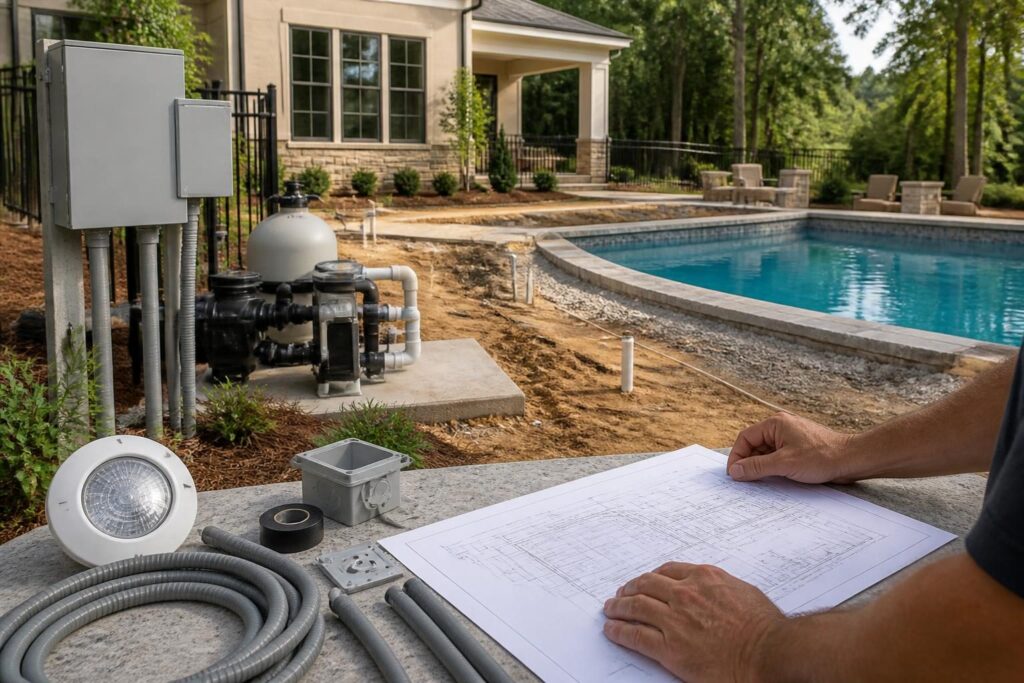
Asking the right pool electrical safety questions can help you understand the electrical scope before construction begins. A residential pool may involve pumps, heaters, lights, automation controls, receptacles, panels, and other equipment. Each item deserves a clear plan from a qualified electrician.
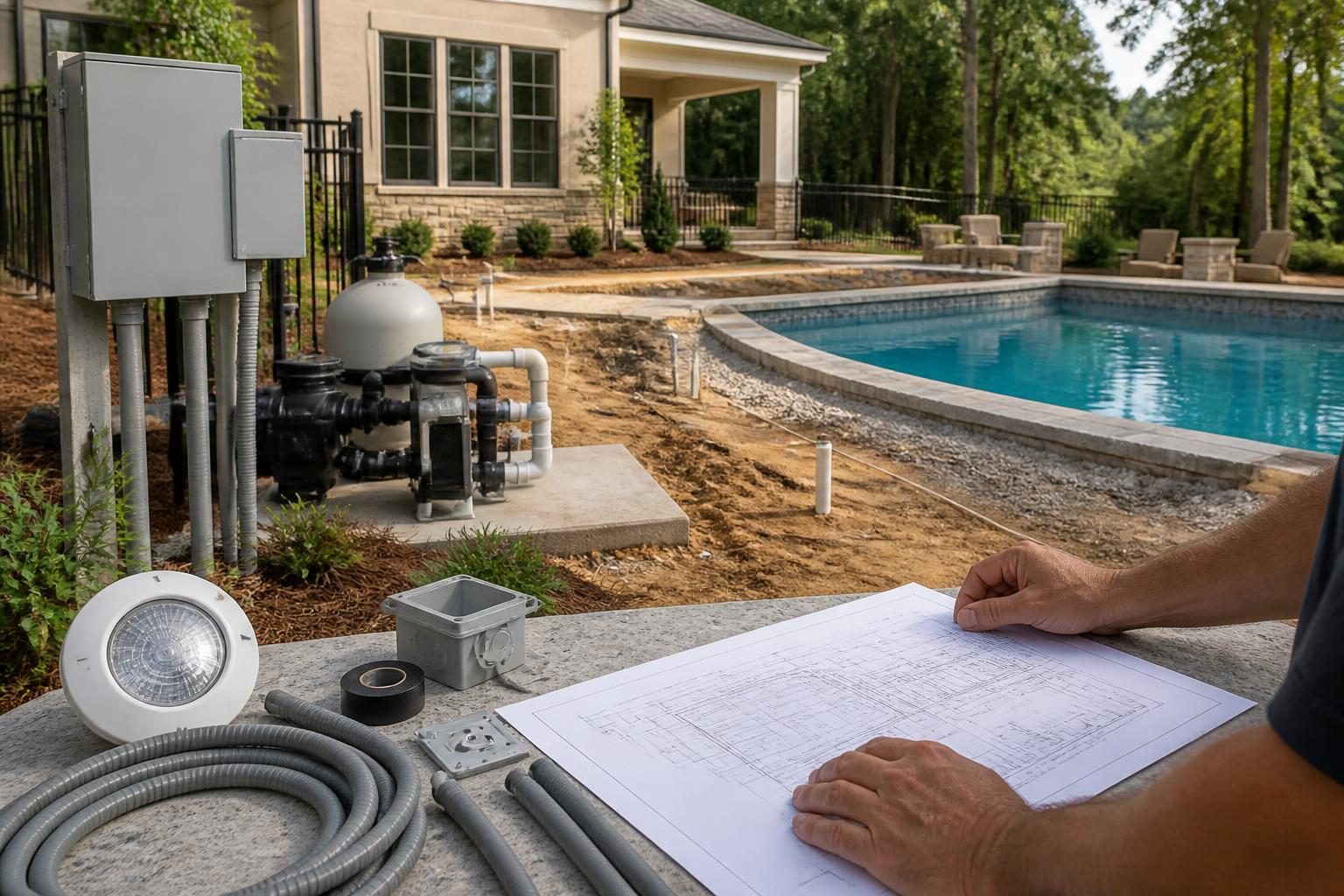
This article is an owner’s discussion guide, not wiring instructions. Electrical work around water requires professional design, installation, testing, and inspection. North Carolina requirements may vary by jurisdiction, adopted code, property conditions, utility arrangements, and project scope. Ask your local inspections department and licensed professionals to confirm current requirements.
Start with the electrical scope
Electrical decisions often appear in several parts of a pool plan. The pool contractor may specify equipment, while an electrician evaluates circuits, disconnects, bonding, grounding, controls, and the home’s available capacity. These pool electrical safety questions can help clarify how those responsibilities will work together.
- Which pool components require electrical power?
- Who will select the equipment and confirm its electrical requirements?
- Which work will the licensed electrician perform?
- Will the proposed equipment fit the existing service and panel capacity?
- Are future additions, such as a heater, automation system, or water feature, included or only planned for?
- What information does the electrician need from the pool contractor, equipment supplier, or designer?
Request a written scope that names the major equipment and identifies exclusions. For example, a proposal might exclude a panel upgrade, trenching, conduit beyond a certain point, landscape lighting, or electrical work for a detached structure. Clear boundaries reduce confusion later.
Ask about bonding and grounding
Bonding and grounding are related but different safety concepts. Bonding connects certain conductive parts so they can remain at a similar electrical potential. Grounding provides a path for electrical fault current through the grounding system. Homeowners should not decide how professionals install these systems, but they should ask how the electrician will address them.
Questions about pool bonding
- Which conductive parts around the pool must be bonded for this design?
- How will the professional evaluate the pool shell, reinforcing steel, deck components, ladders, handrails, light niches, and equipment?
- Does the proposed deck material or construction method change the bonding discussion?
- How will the electrician test and document bonding continuity?
- Who will coordinate bonding work when several trades install metal components?
Do not accept a vague statement that “the pool is grounded” as a complete explanation. Ask the electrician to explain the difference between bonding and grounding in plain language. The answer should also identify who verifies the completed work.
Questions about grounding
- How will the pool equipment and related circuits connect to the home’s grounding system?
- Does the existing service or panel require evaluation before work begins?
- Are separate structures, subpanels, or long equipment runs part of the review?
- What testing will occur before the system enters service?
These questions matter when the equipment pad sits far from the house. Soil conditions, detached buildings, existing wiring, and planned trench routes can affect the professional’s design. Ask for a site-specific answer rather than relying on a generic pool diagram.
Discuss GFCI protection and disconnects
Ground-fault circuit-interrupter, or GFCI, protection interrupts power when it detects a potentially dangerous difference in current. Pool-related circuits and equipment may require specific protective measures. The exact application depends on the equipment, location, installation, and currently adopted requirements.
Ask your electrician:
- Which circuits and devices will have GFCI protection?
- Where will protective devices go?
- How will the electrician test each protective device?
- What should a homeowner do if a GFCI trips repeatedly?
- Which disconnects will the project include, and how will the electrician select their locations?
- Can the homeowner safely de-energize equipment for service?
- Will labels identify each breaker, disconnect, pump, light, heater, and control component?
Never bypass a tripped protective device or keep resetting it without finding the cause. Turn off equipment as directed and contact a qualified professional if a fault continues. Keep children and swimmers away from equipment areas during service.
For current North Carolina code documents and interpretations, review the North Carolina Office of State Fire Marshal document resources. Confirm the applicable requirements with the local inspections department and your electrician because local administration and adopted code versions matter.
Plan equipment location carefully
The equipment pad is more than a place to set the pump. Its location affects service access, noise, drainage, water exposure, conduit routes, controls, and the distance between equipment and the pool. It may also affect the appearance and future use of the yard.
Use these pool electrical safety questions when reviewing the equipment area:
- Will the location protect equipment from avoidable flooding, splash, and roof runoff?
- Is there enough working space for maintenance and replacement?
- Can service personnel reach disconnects without entering an unsafe area?
- How will water drain away from the equipment?
- Could future landscaping, grading, irrigation, or a fence block access?
- Will equipment noise affect bedrooms, neighbors, patios, or outdoor gathering areas?
- Does the route from the home to the equipment require coordination with utilities or other site features?
Do not place equipment based only on the shortest route. Ask for a marked site plan showing the pool, equipment, panel, proposed conduits, access path, and nearby structures. If the property has flood exposure, steep grades, drainage concerns, or a septic system, involve the appropriate specialist before finalizing the location.
For related site coordination, homeowners can review how backyard access affects a pool project and how pool construction near septic system components can affect a property.
Review pool lighting and controls
Lighting can improve visibility, but it adds another electrical design question. Ask how the electrician and pool professional will address light type, placement, controls, protection, servicing, and the relationship between lighting and the pool’s other systems.
- What type of pool lighting is proposed, and what equipment supports it?
- How will the location and direction of lights affect visibility and glare?
- How will the electrician control the lights?
- Can lighting controls operate separately from pumps and other equipment?
- How will a service professional safely handle a failed light or control component?
- What information will the electrician provide for replacement parts and future service?
Automation systems may control pumps, heaters, sanitation equipment, valves, lighting, and schedules. Ask which controls the project includes, which require internet access, and what happens if the network or control app becomes unavailable. Request a basic manual operating method when practical.
Do not assume that a phone app replaces physical safety controls or professional maintenance. Ask who will configure the system, test it, explain it, and provide the final settings.
Clarify inspections, testing, and handover
Inspections provide a verification step, but they do not replace careful planning. Ask which inspections apply, who schedules them, and which documents the team will give you when work ends. The local inspections department can explain its process for the project.
Useful questions include:
- Which electrical inspections are expected for this project?
- At what stages must work remain visible for inspection?
- Who contacts the inspections department?
- What testing will the electrician complete before requesting inspection?
- How will the team record and resolve any corrections?
- Will the homeowner receive inspection results or approval records?
- What final documents will the team provide before handover?
Ask for documentation that identifies installed equipment, circuit labels, control settings, protective devices, warranties, manuals, and service contacts. These records are an important part of your pool electrical safety questions because they help confirm what was installed and how it should be serviced. Keep them with your pool permit materials and other project documents.
Build a homeowner electrical record
A good handover file helps you maintain the pool and explain the system to a future service professional. Store digital copies in a secure location, then keep a printed emergency summary near the home’s household records.
- Electrical scope and approved revisions
- Equipment model and serial information
- Panel and disconnect labeling details
- Bonding and grounding verification records, when the electrician supplies them
- GFCI testing or commissioning records, when available
- Inspection results and permit documents
- Equipment manuals and control instructions
- Service contacts and recommended maintenance information
- Photos of concealed work, where the project team permits photography before covering
Photographs can help document locations before soil, concrete, decking, or landscaping hides them. They do not prove that an installation is safe or code-compliant. Keep them as project records alongside professional documentation.
A practical meeting checklist
Before the meeting, gather the pool plan, equipment schedule, panel information, site plan, permit materials, and proposed changes. Mark questions that need an answer from another professional. For example, the electrician may need the pool contractor or engineer to confirm a design detail.
During the meeting, ask the electrician to identify decisions that are fixed, flexible, or unresolved. Confirm who owns each next step and when the answer is needed. These pool electrical safety questions also create a useful written agenda for the discussion. Afterward, send a short written summary and ask the appropriate professionals to correct misunderstandings.
Most importantly, do not perform wiring, alter bonding, open energized equipment, install lights, or modify protective devices based on online instructions. Electrical systems near water deserve hands-on evaluation by a qualified professional.
For broader planning, the North Carolina pool permit questions guide can help you organize discussions with the local inspections department. Consult that department, a licensed pool contractor, licensed electrician, engineer, surveyor, septic professional, or other qualified specialist when the project involves their area of expertise. Build a Pool in North Carolina provides homeowner education, but local professionals must confirm the requirements and safe design for your property.