
A new pool startup process is the first organized period of care after a pool is filled or placed into service. It is not simply a matter of adding chemicals and turning on the pump. The correct steps depend on the interior surface, water source, equipment, climate, and instructions from the surface and equipment manufacturers.
North Carolina homeowners should ask for written startup instructions before the pool is filled. A plaster, quartz, pebble, tile, vinyl, or fiberglass finish may require different handling. Your pool professional should explain the sequence, testing schedule, circulation settings, cleaning limits, and signs that require attention. This new pool startup process should be specific to your installation.
Why the new pool startup process depends on the surface
The pool interior is not just a decorative finish. It is part of the water-contact system, and its early care can affect appearance, texture, and long-term maintenance. Fresh cement-based finishes may release materials into the water as they cure. Other surfaces may have different restrictions on brushing, chemical balance, or initial cleaning.
Because product formulations vary, general internet advice cannot replace the finish manufacturer’s instructions. Ask the builder or finish installer to identify the exact product used. Request the product name, care sheet, warranty information, and recommended startup method for your records.
Questions to ask about the finish
- What exact interior surface did you install?
- When may I fill, brush, vacuum, or use the pool?
- Which chemicals may I use during the first days and weeks?
- Should the initial fill use a particular water treatment method?
- What water levels and circulation settings do you recommend?
- Which appearance changes are normal during curing, and which require a call?
Do not assume that a routine weekly maintenance schedule applies immediately after construction. A new surface may need more frequent observation and different cleaning methods. The responsible professional should explain what to do and what to avoid.
What happens when the pool is filled
Filling is a significant step because the water begins interacting with the interior surface and plumbing system. Before filling, confirm that the work area is ready, the water source is suitable, and the equipment plan is clear. If a professional manages the fill, ask who will monitor the pool and when the circulation system will begin.
Keep the water level within the range recommended for the skimmers and other equipment. Do not stop a fill early or drain a new pool because of a concern without professional direction. Changes in water level can affect the surface and equipment, especially during the early curing period.
Once the pool contains enough water, start the pump and filtration system according to the equipment instructions. Check that water moves through the intended outlets and returns. Learn the location of the pump basket, filter pressure gauge, valves, drains, and shutoffs before the first operating cycle.
Avoid changing valve positions or opening equipment housings while the system runs unless the equipment instructions and a qualified professional support that action. Water pressure, electricity, and moving parts create hazards. Turn to a licensed professional for electrical or equipment concerns.
Testing and balancing new pool water
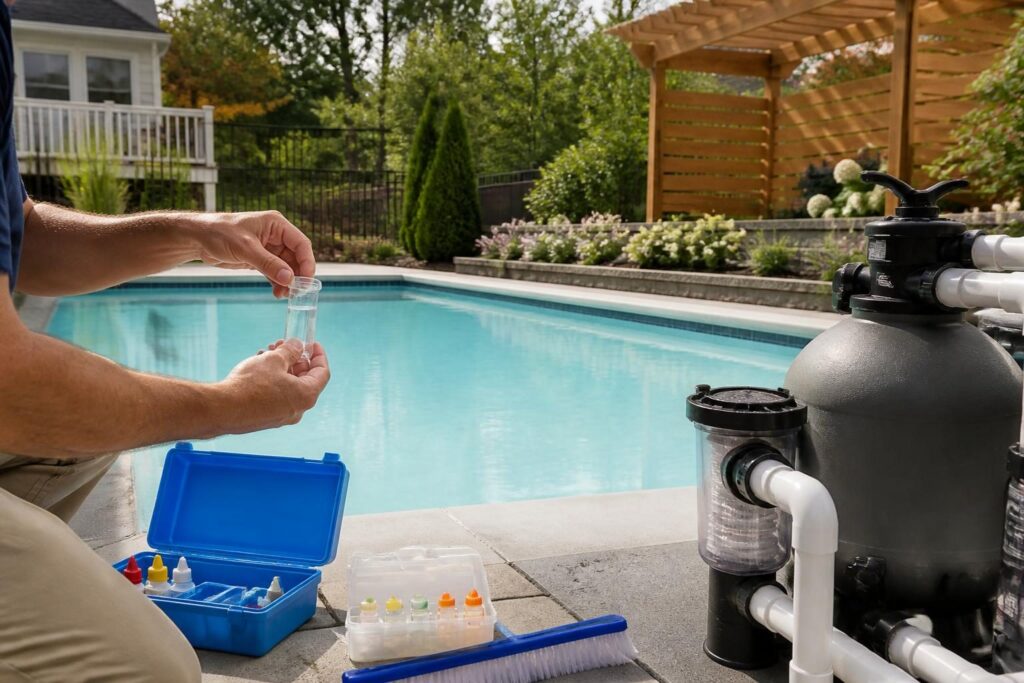
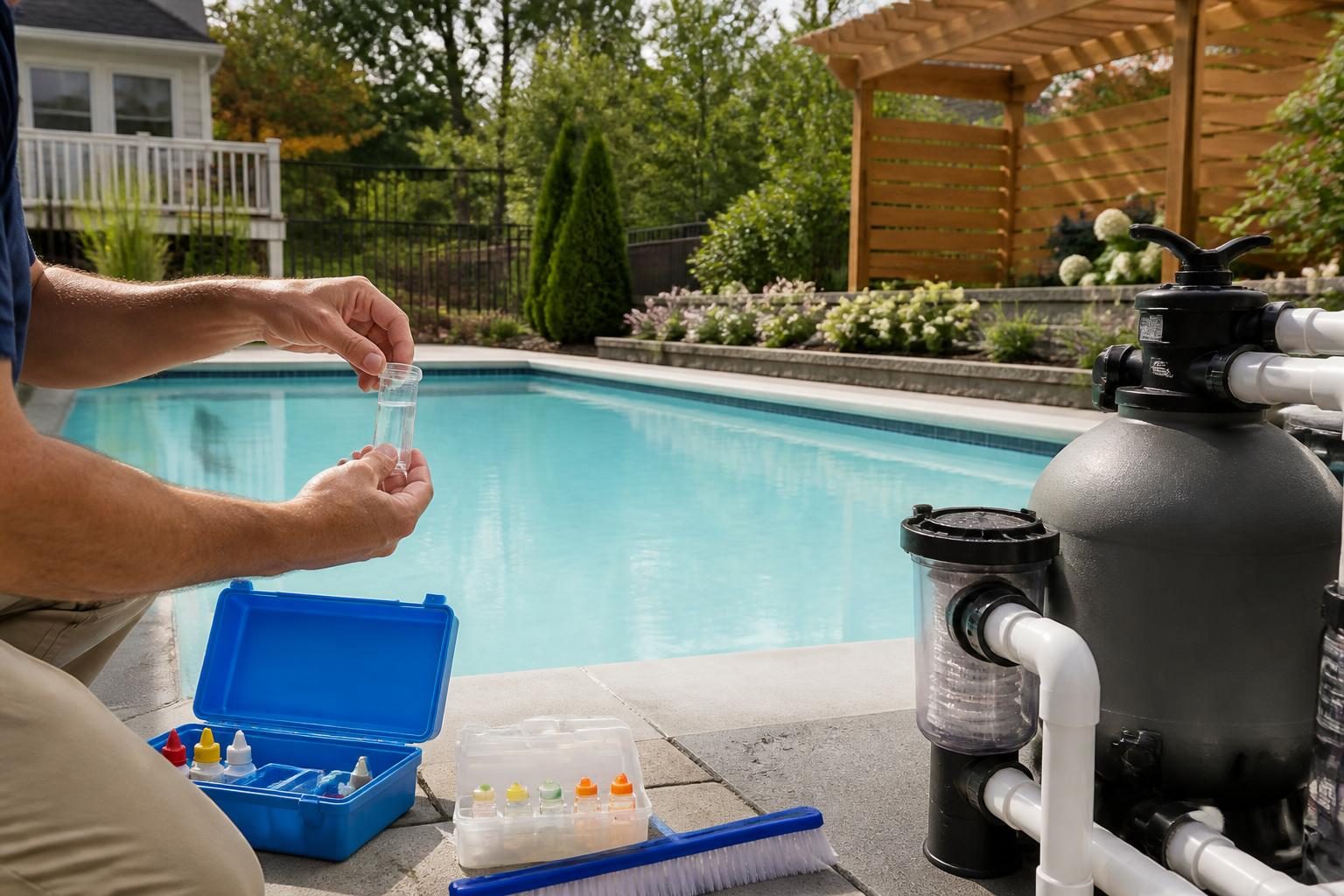
Water testing helps the startup team understand how the fill water reacts with the new surface. Common measurements include pH, sanitizer, alkalinity, calcium hardness, and other values that the surface and treatment system require. The correct targets depend on the pool design, finish, sanitizer, and manufacturer guidance.
Testing too infrequently can allow conditions to move outside the intended range. Testing incorrectly can create a false sense of security. Use a reliable test method and follow its instructions. Keep a dated record of each result, the water temperature if requested, and any treatment added.
The CDC’s home pool water treatment and testing guidance provides general information about residential testing, chlorine, and pH. It does not replace the surface manufacturer’s startup requirements or advice from a qualified pool professional.
Build a simple water log
- Date and time of each test
- pH and sanitizer results
- Other readings requested by the startup professional
- Product names and amounts added
- Pump and filtration operating hours
- Water appearance, surface appearance, and unusual sounds
- Name or role of the person providing instructions
Do not add several products at once simply because the water looks cloudy or discolored. Different chemicals can interact, and the correct response depends on the readings and surface. Ask the startup professional for a written adjustment plan.
Brushing, circulation, and early cleaning
Brushing may help remove materials from a new cement-based surface and move them toward the filtration system. However, the surface instructions should specify the timing, brush type, direction, and frequency. A brush that suits one finish may be unsuitable for another.
Use only the cleaning tools approved for your surface. Ask whether automatic cleaners, wheeled vacuums, pressure-side cleaners, or robotic cleaners should wait. Early use of the wrong tool may create avoidable damage or interfere with curing.
Circulation is also part of startup care. The pump moves water through the skimmer, filter, heater, sanitizer equipment, and return lines. The required schedule may differ from normal seasonal operation. Follow the written plan rather than copying a neighbor’s timer settings. Pump selection and operating controls also affect this part of the new pool startup process; homeowners can review related equipment questions in the variable-speed pool pump comparison.
During operation, observe the equipment without placing hands near moving parts. Note filter pressure, flow changes, leaks, air in the pump basket, alarms, and unusual noise. A small observation can help a professional identify the correct next step.
Early operating checklist
- Confirm the pump starts and stops as instructed.
- Check that water returns from the expected outlets.
- Look for visible leaks around accessible equipment connections.
- Record filter pressure under the stated operating conditions.
- Keep the equipment area dry, orderly, and accessible.
- Do not bypass alarms, safety controls, or manufacturer instructions.
- Call for help if flow stops, the pump runs dry, or equipment behaves unexpectedly.
Documenting the startup before normal use
Good documentation turns verbal instructions into a usable maintenance record. Save the surface identification, fill date, initial test results, chemical log, equipment settings, and names of manuals provided. Photograph equipment labels and control screens, but avoid opening energized equipment or removing protective covers.
Ask the builder to identify the point when startup ends and routine maintenance begins. That point may depend on the surface and the manufacturer’s care requirements. It may also involve a follow-up water test or review by the startup technician. This record helps you manage the new pool startup process and establish a useful baseline.
Keep records with the rest of your ownership documents. The new pool handover checklist can help you organize manuals, access information, safety details, and maintenance supplies.
Useful records include:
- Interior finish name, installer, and installation date
- Startup instructions and product care sheets
- Equipment model and serial numbers
- Water test results and treatment history
- Photos of the equipment pad and visible plumbing
- Service visits, questions, and written answers
- Warranty documents and required maintenance conditions
If instructions change, ask for the updated guidance in writing. Keep the original version too. Clear records can prevent confusion when a different technician services the pool later.
When to pause and request professional guidance
Some startup concerns need prompt attention. These include a sudden loss of circulation, an empty pump basket, a persistent leak, an equipment alarm, unusual electrical behavior, or a surface condition that differs from the written expectations. Stop using affected equipment when instructed, and keep people away from unsafe areas.
Do not drain a newly filled pool, alter electrical connections, remove equipment guards, or apply aggressive chemicals based only on a social-media suggestion. Those decisions can affect the surface, equipment, warranty, and safety of people nearby.
Ask the pool professional to explain the reason for each adjustment. A useful answer should identify the reading or observation, the proposed action, the product or setting involved, and the next check. If the issue concerns electrical work, structural conditions, water quality, drainage, or a manufacturer warranty, involve the appropriate licensed or qualified specialist.
Preparing for the transition to routine maintenance
Startup is easier when routine care is planned before the first swim. Learn how to test the water, clean baskets, inspect the filter, adjust the schedule, and protect the equipment during storms or power interruptions. Ask which tasks you may perform and which require service personnel.
North Carolina conditions can affect maintenance. Heat, heavy rain, pollen, leaves, and periods of low use may change water demand and debris levels. Your maintenance plan should respond to test results and the pool’s condition, not to a fixed calendar alone.
Review safety arrangements before anyone uses the pool. Confirm that barriers, gates, alarms, covers, and access controls operate as intended. Federal safety guidance is useful background, but local requirements and the currently adopted North Carolina code must be verified with the appropriate inspections department.
Build a Pool in North Carolina encourages homeowners to treat startup as a documented commissioning period. A careful process gives you a clearer baseline for future testing, service, warranty questions, and maintenance.
For surface-specific instructions, water-quality concerns, equipment faults, electrical work, barriers, or local requirements, consult the pool builder, finish manufacturer, local inspections department, licensed electrician, engineer, surveyor, septic professional, or another qualified specialist as appropriate.