
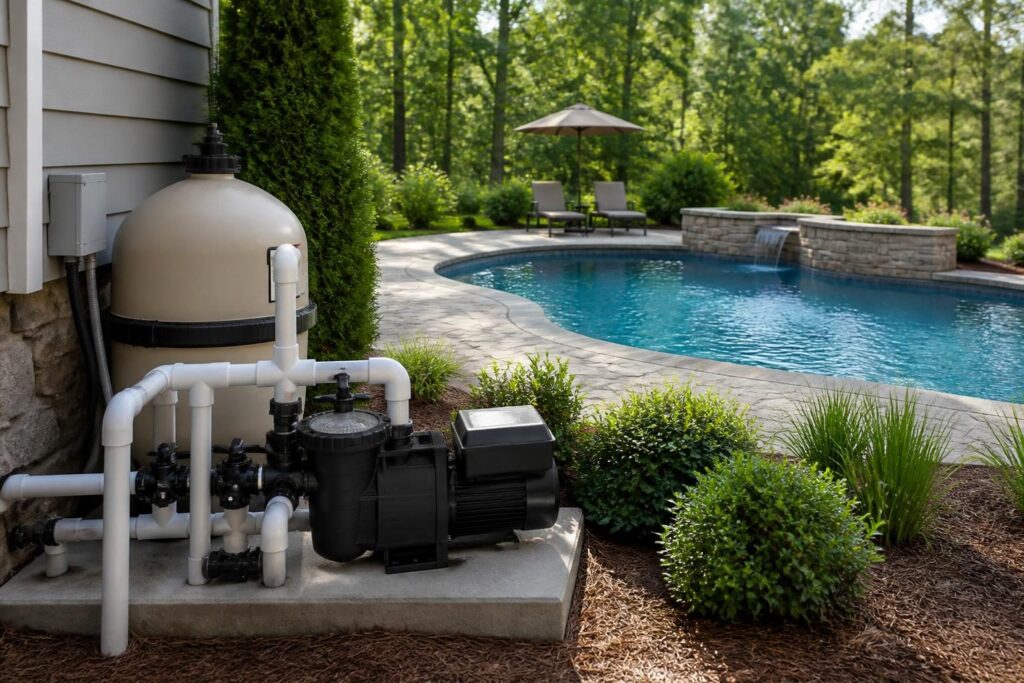
A variable-speed pool pump comparison helps North Carolina homeowners look beyond the pump’s label and purchase price. The right choice depends on the pool’s circulation needs, plumbing layout, filter, heater, water features, controls, and service plan.
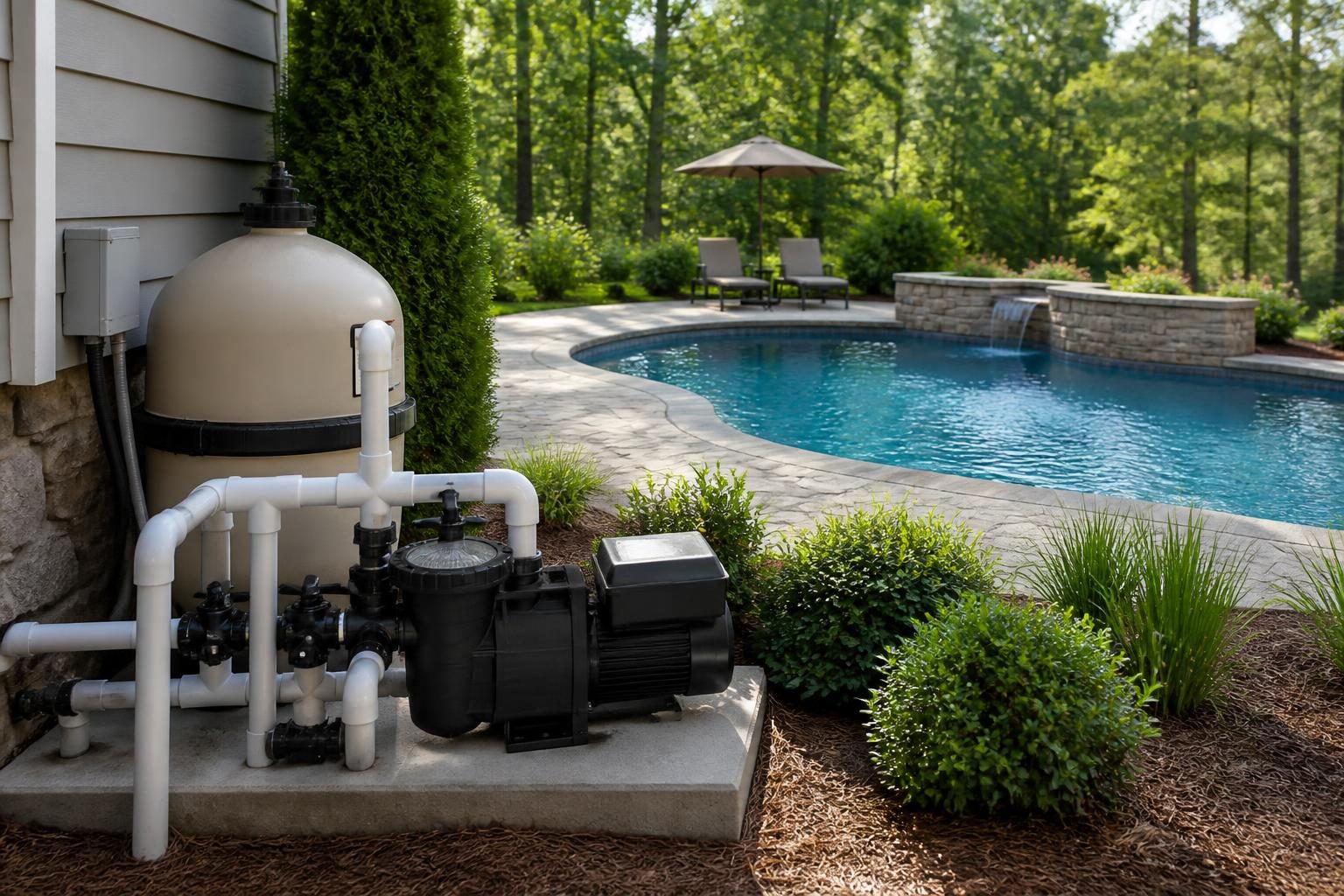
Variable-speed pumps use a motor that can operate at different speeds. Lower speeds may support routine circulation, while higher speeds can help with certain cleaning, heating, or water-feature demands. A lower setting is not automatically better, and a larger motor is not automatically the best choice.
Start with professional pump sizing
Pump sizing should begin with the complete circulation system, not a catalog horsepower number. A licensed pool professional can review the pool volume, plumbing diameter and length, fittings, filter, heater, sanitizer equipment, automatic cleaner, and water features.
These components create resistance to water movement. Professionals often describe that resistance as total dynamic head, meaning the pressure the pump must overcome while moving water through the system. The pump curve then shows how much water the pump can deliver at different speeds and resistance levels.
Ask the designer or installer to explain the intended flow rates and operating points in writing. You may not need a detailed engineering report, but you should understand why the proposed pump fits the system.
- What pool volume and turnover goal did you use?
- What plumbing sizes and equipment create resistance?
- Will the pump serve a heater, spa, cleaner, or water feature?
- Which tasks require a higher speed?
- Could the pump be oversized for the filter or plumbing?
Oversizing can increase purchase cost, operating noise, and energy use. It may also push water through equipment faster than the manufacturer’s recommended range. Only a qualified professional should confirm the final design for your specific system.
Compare energy ratings and expected operation
Energy performance matters because the pump may run many hours during the swimming season. A variable-speed motor can reduce energy use when it runs at a lower speed for longer periods, but actual results depend on the system and schedule.
Look for a recognized efficiency certification rather than relying only on sales language. The ENERGY STAR pool pump resource explains certification and energy-performance considerations for qualifying products.
During your variable-speed pool pump comparison, record the model number and review its published efficiency information. Compare like with like. A pump designed for a smaller system should not share a direct comparison with a larger pump serving a spa, heater, or water feature.
Ask for a realistic operating example. It should identify the proposed speed, hours per day, seasonal changes, and tasks that require temporary high speed. Avoid treating an estimated annual savings figure as a guarantee. Electricity rates, water temperature, weather, filtration needs, and equipment condition all affect results.
Understand turnover without chasing a single number
Turnover is the time needed to circulate a volume of water equal to the pool’s capacity. It does not mean every drop passes through the filter once, and it does not alone determine water quality.
Water chemistry, sanitizer levels, bather load, filtration, temperature, debris, and circulation patterns also matter. Your pool professional should balance the turnover goal with the equipment manufacturer’s flow limits and your maintenance routine.
Review controls, automation, and compatibility
Controls can matter as much as the motor. Basic models may use a built-in display and scheduled settings. Other pumps can communicate with an automation system that coordinates the pump, heater, lights, valves, and water features.
Before choosing a model, identify who will control it and how. A convenient control system helps only when the pump, automation panel, wiring, and other equipment work together.
- Does the pump work with the planned automation platform?
- Can you change schedules without special software?
- Does the display show speed, flow, faults, and run time?
- What happens after a power interruption?
- Can a service professional access settings and diagnostic information?
Ask whether the quoted installation includes programming. Request a written handover that lists normal circulation, heating, cleaning, and water-feature settings. Keep the model, serial number, manuals, and configuration details with your pool records.
Compare hydraulics, noise, and equipment placement
Hydraulics describe how water moves through the pool system. Poorly matched plumbing, restrictive fittings, dirty filters, closed valves, or an unsuitable equipment layout can reduce performance. The pump cannot correct every hydraulic limitation.
During the comparison, ask the professional to explain suction and return lines, valve positions, filter pressure, and the effect of added features. A proposed pump should work with the complete system, including future equipment named in the design.
Noise deserves attention when the equipment pad sits near a bedroom, patio, property line, or outdoor living area. Manufacturer sound information may help, but installation conditions also matter. Vibration, rigid plumbing, enclosure design, and the surface under the equipment can change what you hear.
Equipment placement affects service access and ventilation as well. The pump should not sit crowded behind landscaping or where standing water can damage components. For related planning questions, see equipment location and service access.
North Carolina yards can also involve slopes, heavy rainfall, flood concerns, wells, septic systems, and restrictive easements. Confirm the site conditions before finalizing the pad. A drainage plan for the pool area can help identify water-management questions that affect equipment placement.
Check serviceability and replacement parts
A pump is easier to own when routine service does not require unnecessary disassembly. Ask where the strainer basket, lid, drain plugs, seals, controller, and motor electronics sit. Confirm that a technician can reach them safely.
Serviceability also includes parts availability. Electronic controls and variable-speed drives may be specific to a model. Ask how replacement parts reach your service provider and whether the manufacturer supports the model for your expected ownership period.
- Who provides startup and basic owner instruction?
- Which maintenance tasks can the homeowner perform?
- Which tasks require a qualified technician?
- Can you obtain replacement drive, seal, lid, and basket parts?
- What symptoms require you to switch off the pump?
Do not open electrical compartments or change wiring unless a properly qualified professional handles the work. If the installation includes new circuits, controls, bonding, grounding, or protective devices, verify the design and current requirements with the local authority and licensed electrician.
Read warranty terms before selecting a pump
Warranty length represents only one part of the decision. Read who provides the warranty, what registration requires, which parts receive coverage, and whether the manufacturer excludes labor, diagnosis, shipping, or removal.
Some warranties can depend on approved installation, authorized service, or documented maintenance. Those conditions may differ by manufacturer and product. Do not assume that the pool builder’s workmanship coverage matches the pump manufacturer’s product warranty.
Include the following in your project file:
- Manufacturer and complete model number
- Serial number and purchase date
- Warranty registration confirmation
- Installer information and startup record
- Manuals, settings, receipts, and service notes
Clarify who handles a warranty question after handover. Put that responsibility in the contract or written proposal. The pool contract checklist can help you identify equipment, documentation, and responsibility questions before signing.
Compare operating schedules by task
A practical schedule usually separates everyday circulation from temporary demand. Low-speed operation may suit routine filtration, while higher speed may help with heating, a cleaner, or a water feature. The correct settings depend on the equipment and professional design.
Ask for a task-based schedule instead of one unexplained runtime. Your handover notes should show when to use each speed, how to coordinate the heater, and what to check after changing a setting.
| Task | Question to ask | Record to keep |
|---|---|---|
| Routine circulation | What speed and schedule support normal filtration? | Daily setting and seasonal adjustment |
| Heating | What flow does the heater require? | Minimum flow and control sequence |
| Cleaning | Does the cleaner need a separate speed? | Cleaner schedule and valve position |
| Water features | What speed provides the intended effect? | Feature setting and run time |
Monitor the system after startup. Note filter pressure, visible flow, unusual sounds, fault messages, water clarity, and electricity-use changes if you have a reliable way to measure them. A change in pressure or sound may indicate a dirty filter, air leak, blocked basket, valve issue, or another condition that needs professional attention.
Use a written comparison before you buy
Put each proposal on the same worksheet. Include the complete pump model, motor rating, controls, compatibility, installation scope, expected settings, warranty, and service contact. Also list what each proposal excludes.
A written variable-speed pool pump comparison should identify assumptions about future equipment, plumbing, electrical work, automation, drainage, and access. If the design changes, request an updated written proposal before approving the change.
For broader site and project coordination, review North Carolina pool planning considerations. Requirements can vary by jurisdiction, property conditions, adopted codes, utilities, septic systems, flood zones, and project scope.
The best variable-speed pool pump comparison is not a contest between the biggest motor and the lowest advertised wattage. It is a system-level review that connects sizing, hydraulics, controls, noise, service, warranty, and daily use.
Use this variable-speed pool pump comparison alongside the equipment proposal, manufacturer documents, and professional sizing review. Before purchase or installation, consult the local inspections department about applicable requirements. Use a licensed pool professional for system sizing, a qualified electrician for electrical work, and an engineer, surveyor, septic professional, or drainage specialist when site conditions require one. Build a Pool in North Carolina offers homeowner-focused planning information, but local authorities and qualified professionals must confirm project-specific decisions.
Keep the completed worksheet with your equipment records so future service providers can understand the original comparison and operating assumptions.