
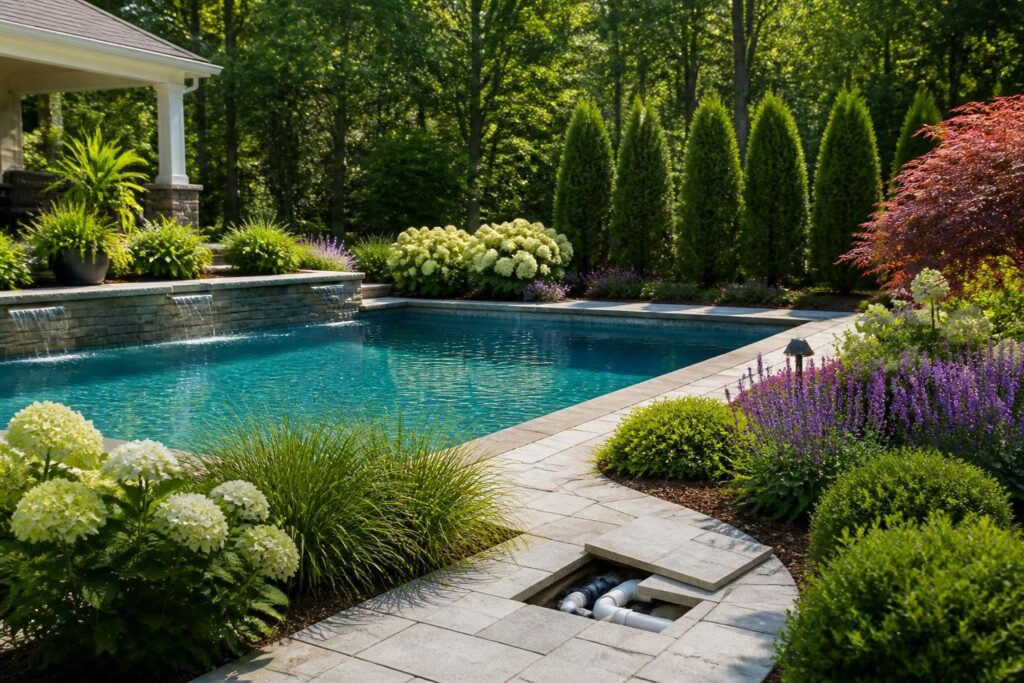
Choosing poolside landscaping plants for North Carolina yards involves more than matching colors to your patio. Plants must handle local heat, humidity, heavy rain, occasional drought, foot traffic, and the conditions created by pool water and equipment.
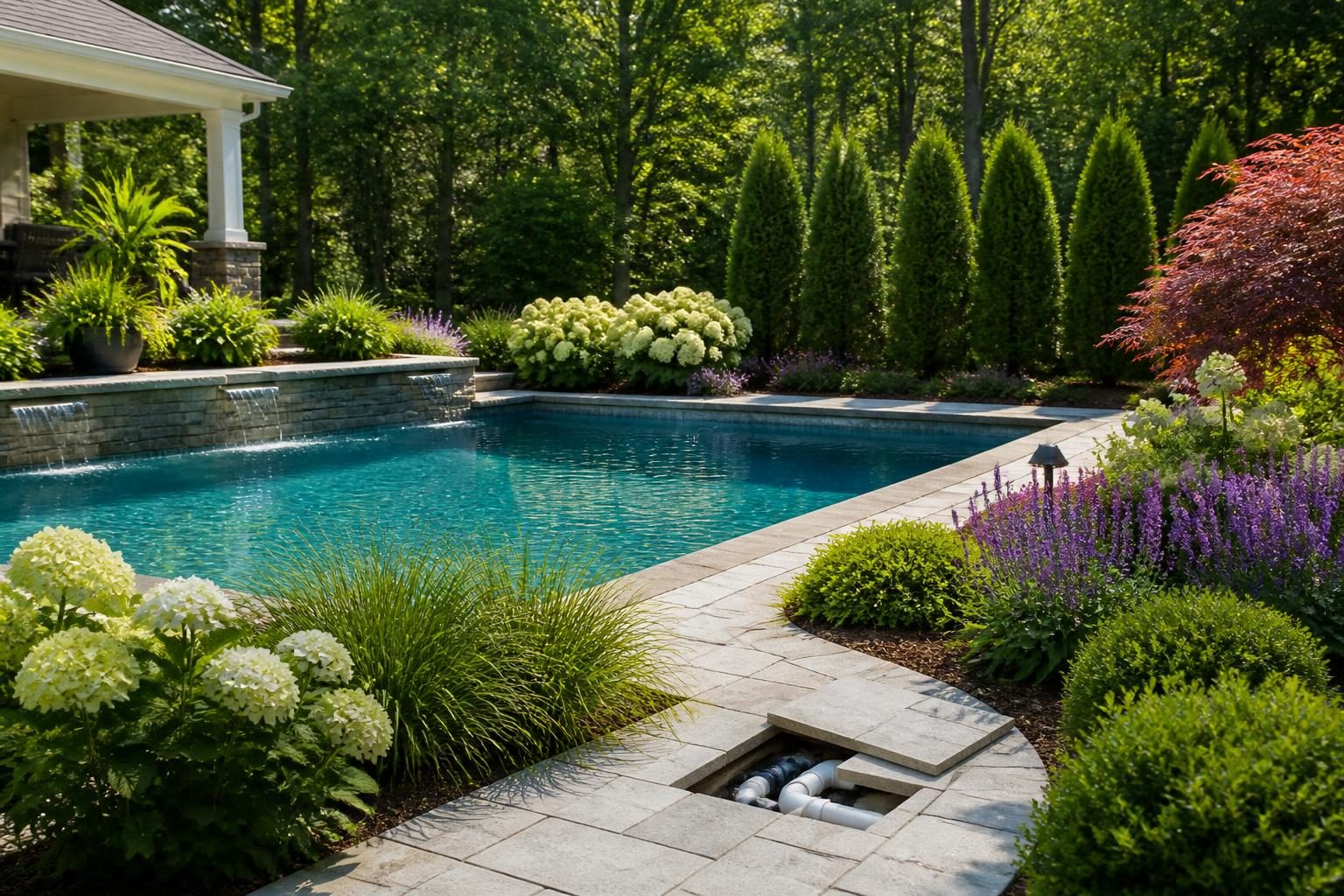
A good planting plan also protects maintenance access. It limits debris in the water, avoids sharp or irritating foliage, and keeps roots away from structures and buried systems. The right choices depend on your site, pool design, soil, sunlight, irrigation, and preferred upkeep. Thoughtful poolside landscaping plants for North Carolina yards can support those goals when selected for the actual site.
Start with the poolside conditions
North Carolina includes coastal, Piedmont, and mountain conditions. A plant that thrives in a sunny coastal yard may perform differently in a shaded foothills setting. Before choosing species, document the conditions around each planting area.
- Sunlight: Track full sun, afternoon shade, reflected heat, and seasonal shade from the house or trees.
- Soil and drainage: Note compacted soil, clay, sandy areas, low spots, and places where irrigation or rainwater collects.
- Wind exposure: Open yards and elevated sites may need plants that tolerate drying wind and storm conditions.
- Water access: Identify hose bibs, irrigation zones, downspouts, and areas that stay dry beneath an overhang.
- Maintenance routes: Mark paths for skimmers, service technicians, lawn equipment, furniture, and future repairs.
Do not assume a narrow planting bed can support a mature tree or large shrub. Measure the available width and check the expected mature size from a reliable nursery, extension resource, or landscape professional.
Site constraints should be reviewed alongside the pool layout. The North Carolina pool site evaluation checklist can help you organize questions about access, utilities, grading, drainage, and usable yard space.
Evaluate roots before planting near the pool
Roots are not automatically a pool problem. However, vigorous or poorly placed roots can lift hardscape, compete with other plants, interfere with buried lines, or make future repairs more difficult. Root behavior depends on the species, soil, irrigation, tree maturity, and available space.
Keep large trees and aggressive shrubs away from the pool shell, deck, retaining structures, equipment pad, and underground utilities unless a qualified professional confirms the proposed location is suitable. A root barrier is not a universal solution. Its design, depth, placement, and long-term performance require site-specific advice.
Questions for the nursery or landscape designer
- What is the plant’s mature height and spread?
- Does it develop surface roots or a spreading root system?
- How might its roots behave in compacted clay or limited planting soil?
- Will the plant require frequent irrigation near the pool structure?
- Could its mature size block equipment access, sightlines, or safety features?
Small ornamental trees, clumping grasses, and restrained shrubs may fit some pool borders better than fast-growing shade trees. Still, confirm each plant’s mature characteristics rather than relying on its container size at installation.
Control leaves, flowers, fruit, and other debris
Every plant near a pool adds some level of cleanup. Leaves and flowers can collect in skimmer baskets and filters. Fruit may stain decking or attract insects. Fine debris can also increase cleaning demands and affect water-care routines.
Evergreen does not mean debris-free. Evergreen plants shed older foliage, pollen, flowers, or seed material at different times. Deciduous trees may create a heavier seasonal cleanup period. Wind can carry debris from plants farther away, so the entire yard matters.
When comparing poolside landscaping plants for North Carolina yards, consider the timing of shedding as well as the total amount. Ask whether a plant drops material during your main swimming season. Also consider whether the debris is sticky, heavy, thorny, colorful, or difficult to remove from textured surfaces.
- Place high-litter plants outside prevailing wind paths when possible.
- Use cleanable mulch or hardscape edges where leaves tend to collect.
- Avoid planting directly over skimmer lids, drains, or equipment access panels.
- Leave room to sweep, blow, prune, and remove debris without stepping into beds.
- Plan for seasonal pruning before branches reach the water or obstruct lighting.
Pool water care remains part of the overall landscape plan. For testing and treatment information, consult the CDC guidance on home pool water treatment and testing.
Screen for thorns, irritants, and foot-traffic hazards
Pool areas are walking spaces. Bare feet, wet hands, children, guests, and pets may come into contact with plants that seem harmless from a distance. Thorny branches, stiff leaves, spines, irritating sap, and brittle stems deserve careful review.
Keep prickly plants away from steps, ladders, gates, seating, outdoor showers, and narrow paths. Even a plant that stays compact may become hazardous when wind or growth pushes it into a walkway.
Ask about skin irritation and toxicity before planting. Common names can be confusing, and plant safety may vary by species. A local nursery, horticulture professional, or veterinarian can help you evaluate choices for your household and pets.
Soft foliage is not the only consideration. Some low plants can hide stones, irrigation heads, insects, or uneven edges. Maintain a visible transition between planting beds and walking surfaces.
Match plants to sun, shade, and drought conditions
Pool decks often create reflected heat. Pale concrete, stone, and masonry can make nearby beds hotter and drier than the surrounding yard. On the other hand, a north-facing wall or tall screen may create deep shade and slow drying.
Choose plants for the actual microclimate, not just the regional climate label. A drought-tolerant plant still needs establishment watering. It may also decline if the soil stays wet or if reflected heat exceeds its tolerance.
Build separate planting zones
A practical design often divides the yard into zones:
- Hot, sunny edges: Consider plants adapted to heat and periodic dryness.
- Partly shaded borders: Select plants that tolerate lower light without stretching into paths.
- Moist areas: Use species suited to the soil rather than trying to force dry-site plants into wet ground.
- Screening areas: Balance privacy goals with mature width, root behavior, litter, and pruning access.
Group plants with similar water needs. This reduces overwatering and makes irrigation zones easier to manage. Keep irrigation spray from hitting the pool, deck, walls, and equipment whenever practical.
Consider chemicals, salt, and splash exposure
Pool water contains treated chemicals. Splashing is normal, but repeated exposure can stress sensitive plants and damage some foliage. Saltwater systems still use water with dissolved salt, and that water can affect plants when it regularly reaches the soil.
Do not treat a “saltwater pool” as chemical-free. Plant tolerance varies by species, soil drainage, rainfall, irrigation, and exposure frequency. Place sensitive plants farther from the water or outside common splash paths.
Prevent fertilizer, mulch, soil, and plant residue from washing into the pool. Runoff can add nutrients and debris that increase cleaning and water-care demands. Use targeted irrigation and keep soil covered without creating a loose material path toward drains or the pool.
If you plan a substantial planting bed beside the pool, ask a landscape professional how drainage, irrigation, grading, and plant selection should work together. Existing drainage details can also matter; review the guide to pool deck drainage maintenance in North Carolina for monitoring points after installation.
Manage wildlife attraction and maintenance access
Flowers, fruit, dense cover, and standing water can attract bees, birds, butterflies, rodents, or other wildlife. Wildlife is part of a healthy landscape, but its location matters around a swimming pool.
Place highly attractive flowering plants away from the busiest walking routes and pool entry points. Avoid creating dense, inaccessible growth beside equipment or fences. Select plants that support your goals without forcing frequent pruning during the swimming season.
Maintenance access should appear on the planting plan. Leave clear working space around pumps, filters, heaters, electrical equipment, valves, cleanouts, and inspection points. Do not hide service covers beneath shrubs or allow vines to attach to equipment or fences.
- Can a technician reach each serviceable component?
- Can you inspect the pool edge and deck after storms?
- Will pruning require ladders over wet or slippery surfaces?
- Can fallen fruit or leaves be removed without damaging the planting bed?
- Will mature plants block a gate, barrier, light, camera, or sightline?
Document the mature plant list, locations, irrigation zones, pruning expectations, and replacement preferences. These records help future owners and maintenance providers understand the design.
Create a plant-selection checklist
Before buying, compare each candidate against the same criteria. A simple worksheet can prevent attractive but unsuitable choices from dominating the design. This process makes poolside landscaping plants for North Carolina yards easier to compare on performance, not appearance alone.
- Record the plant’s mature height, width, root behavior, and growth rate.
- Note its sun, shade, soil, moisture, and temperature preferences.
- Check for thorns, irritating sap, sharp leaves, fruit, pollen, and heavy litter.
- Assess likely exposure to splash, treated water, salt, fertilizer, and runoff.
- Confirm pruning frequency and whether the plant can be maintained from a safe surface.
- Mark its distance from the pool, deck, equipment, utilities, barriers, and access routes.
- Ask how the plant performs during North Carolina storms, heat, and dry periods.
Use layers rather than a single hedge or row. Groundcovers, restrained shrubs, ornamental grasses, and selected accents can create structure while spreading maintenance across the yard. Avoid overcrowding plants at installation; mature growth needs air, light, and working space.
For a commercial planting project, ask for a written plant schedule, installation scope, irrigation details, replacement terms, and maintenance expectations. Comparing these details helps you evaluate the whole landscape rather than choosing from photographs alone.
Coordinate landscaping with the pool project
Planting should follow the approved pool layout, grading plan, utility information, septic constraints, and access plan. Construction traffic can compact soil and damage roots, irrigation, decks, and newly installed plants.
Before work begins, confirm which trees and beds will remain, which areas need protection, and where soil or equipment may be placed. The guide on protecting a pool during landscaping work covers sediment, fertilizers, irrigation, access, and cleanup considerations.
Keep landscaping changes out of drainage paths unless the revised design has been reviewed. Adding soil, edging, walls, or dense planting can change where water flows. Sloped properties may also need coordinated drainage and structural review.
Build a Pool in North Carolina can help homeowners organize planning questions, but plant performance and site design remain property-specific. Local requirements may vary by jurisdiction, adopted code, utilities, septic systems, flood conditions, and project scope.
Make the final choice with professional input
The best poolside planting plan balances appearance with roots, debris, safety, water exposure, wildlife, climate, and access. A plant that looks excellent at installation may become difficult when it reaches mature size.
Before ordering plants or changing grades, consult a qualified landscape designer, horticulture professional, pool contractor, surveyor, engineer, electrician, septic professional, or local inspections department when the issue falls within that specialist’s work. Verify current local requirements and property-specific conditions rather than relying on a universal planting rule.