
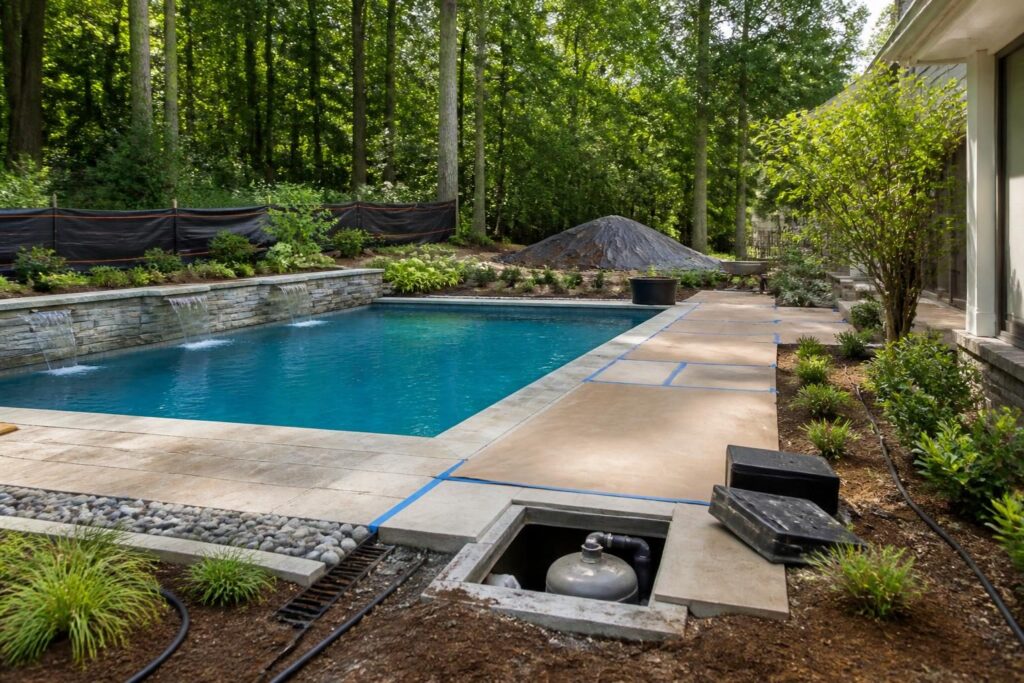
When planting, grading, mulching, or installing irrigation near an existing pool, homeowners need a clear plan to protect pool during landscaping work. Even a small yard project can move soil, spread fertilizer, block equipment access, or send runoff toward the water.
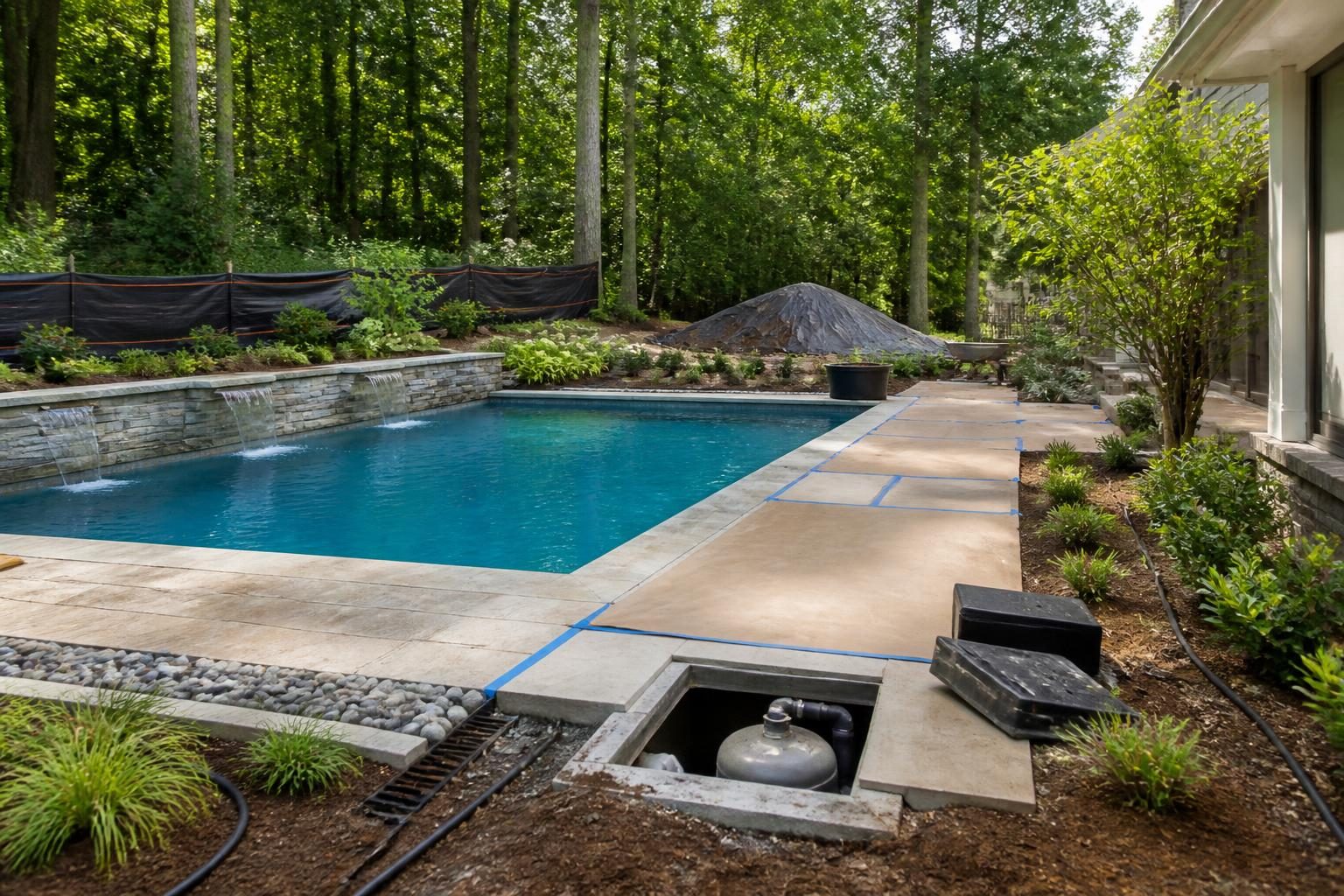
The goal is not to stop every landscape improvement. Instead, separate the work area from the pool, protect surfaces and equipment, control water movement, and define the cleanup standard before work starts. Conditions vary across North Carolina, so the right approach depends on soil, slope, weather, drainage, septic features, utilities, and the project’s size.
Start with a written protection plan
Walk the property before materials arrive. Mark the pool shell, coping, deck, skimmers, drains, lights, equipment pad, irrigation controls, planting beds, gates, and delivery route. Take dated photos of the pool and nearby surfaces. These records can help everyone understand the starting condition.
Ask the landscaper to show you where workers will stage soil, plants, stone, mulch, tools, and machines. A staging area beside the pool can create dust, scratches, staining, and blocked service access. Keep heavy materials away from the deck unless a qualified professional confirms that the surface can handle the planned loads.
- Identify the pool’s clean-water and runoff paths.
- Mark equipment doors, valves, breakers, controls, and service clearances.
- Confirm which gates and paths must remain open.
- Choose a location for soil, compost, fertilizer, and mulch.
- Set a daily stopping point for tools and loose materials.
- Write down who will inspect the pool after rain or work activities.
For broader project planning, review the North Carolina pool planning guide. It can help connect landscaping choices with access, drainage, equipment, and other project decisions.
Control sediment before it reaches the pool
Sediment is loose soil carried by water or wind. It can cloud the pool, clog baskets, load the filter, stain surfaces, and settle in drains or low areas. The best protection starts uphill from the pool, before soil is disturbed.
Use a defined work boundary. Keep exposed soil as small as practical, and stabilize completed areas promptly with an appropriate ground cover or other method selected for the site. Temporary controls may include protection at the edge of the work zone, but a landscaper or erosion-control professional should choose methods suited to the soil and slope.
Do not rely on a pool cover as the main sediment-control measure. A cover may reduce debris entering the water, but it does not stop muddy runoff from crossing the deck or reaching equipment. It can also make cleanup harder if soil collects on top. A defined work boundary helps protect pool during landscaping when weather changes quickly.
North Carolina’s Department of Environmental Quality provides an erosion and sediment control manual. Use it as a starting point, then verify whether the project needs local or state review. Larger land-disturbing work may involve stormwater requirements that do not apply to a small planting job.
Questions about soil and rain
- Where will rainwater flow if a storm arrives during the work?
- What happens if the soil becomes saturated?
- Will trucks or wheelbarrows cross areas that drain toward the pool?
- Who will inspect temporary controls after heavy rain?
- What is the plan for muddy water already on the deck?
Keep fertilizers, mulch, and soil amendments out of the water
Fertilizer, compost, lime, herbicides, and some mulch products can affect pool water when wind or runoff carries them into the basin. They may add nutrients, cloud the water, alter chemistry, or leave organic debris that increases maintenance.
Store bags and bulk materials on a stable surface away from the pool. Keep them covered, dry, and secured from wind. Do not place them beside skimmers, deck drains, or equipment intakes. Ask workers to sweep or collect material instead of washing it toward the pool or storm drains.
Plan application for calm, dry conditions. Follow the product label, and keep workers from spreading material near open water. If a product enters the pool, pause and ask the pool professional or product manufacturer how to respond. Avoid adding corrective chemicals based on guesswork.
Maintain a simple record of products used, application areas, dates, and weather. That information can help a water-care professional evaluate an unexpected change. It also helps distinguish a landscaping event from ordinary seasonal water changes.
Coordinate irrigation and drainage before planting
New irrigation can send water toward the pool, deck, equipment pad, or foundation. Overspray may also wet coping, fencing, electrical areas, or walking surfaces. Before installation, map spray patterns and check them after the system runs.
Ask for separate zones when planting areas have different water needs. Keep spray away from the pool whenever practical. Drip irrigation may reduce overspray in suitable beds, but it is not automatically right for every plant or soil condition.
Watch for low spots created by grading or new edging. A planting bed can trap water against the deck. Conversely, a new slope may direct runoff across the deck and into the pool. The pool drainage planning guide explains why grading, roof water, deck drains, and discharge paths deserve attention together.
Do not change a drainage route, swale, retaining feature, or discharge point without checking the property’s conditions and local requirements. Septic areas, easements, flood hazards, neighboring properties, and existing drainage systems can limit options. Coordinated grading and irrigation are central to efforts to protect pool during landscaping.
Protect roots, pipes, and pool equipment
Plant selection affects the pool long after the landscaping crew leaves. Roots can lift paving, interfere with drainage, enter vulnerable spaces, or make future access difficult. Falling leaves and fruit can also increase cleaning and water-care demands.
Ask a qualified landscape professional to consider mature plant size, root behavior, moisture needs, canopy spread, and maintenance. Do not assume a small nursery plant will remain small. Keep required service paths clear around pumps, filters, heaters, electrical equipment, and valves.
Before digging, identify known utility lines, irrigation pipes, drainage lines, septic components, and pool plumbing. North Carolina 811 is the official utility-notification resource, but a utility locate does not identify every private line or pool-related pipe. Confirm what additional locating is appropriate for the project.
Use temporary barriers around equipment. Prevent soil, mulch, leaves, and wash water from entering vents, motors, filter housings, or electrical enclosures. Never cover operating equipment in a way that blocks ventilation. If equipment must be moved or disconnected, use the appropriate licensed professional.
For access and service-space questions, see pool equipment location planning. Landscaping should improve the yard without making routine maintenance unnecessarily difficult.
Prevent deck, coping, and finish damage
Decks and coping can be damaged by dropped stone, tracked soil, sharp tools, machine tires, and careless storage. The correct protection depends on the surface material and the work being performed. Ask the installer what protective system they will use and whether it needs approval from the deck or pool contractor.
- Define a no-storage zone beside the pool.
- Use clean, stable walk paths for wheelbarrows and carts.
- Keep metal tools, pallets, stone, and edging away from coping.
- Prevent soil from being shoveled across the deck.
- Use temporary protection that does not trap moisture or create trip hazards.
- Inspect for cracks, chips, stains, and movement before removing protection.
Do not pressure-wash dirt toward the pool or deck drains. That can move sediment into places it is harder to remove. Ask a qualified surface-care professional about cleaning methods when the deck finish, sealant, grout, or stone type is uncertain.
Plan equipment access and daily cleanup
Landscaping work often lasts several days, while pool equipment may need daily observation. Keep access to the pump, filter, heater, sanitizer, valves, and electrical components clear. Do not allow hoses, extension cords, soil piles, or temporary fencing to block a safe service route.
Agree on an end-of-day checklist. Workers should collect loose materials, secure tools, close gates, check irrigation settings, and leave the pool area free of avoidable debris. The homeowner should inspect the waterline, skimmers, baskets, deck drains, equipment pad, and nearby ground after work.
Use photos to record conditions after major steps, especially grading, irrigation installation, and planting. Note whether the pool is clear, whether equipment is accessible, and whether water is flowing as expected after rain.
What to do if runoff or material enters the pool
First, stop the source if it is safe to do so. Keep people away from slippery or contaminated areas. Do not operate equipment if mud, water, or debris has entered an electrical area or if the equipment appears damaged.
Remove large debris with equipment intended for pool use. Avoid stirring settled material unnecessarily. If fertilizer, pesticide, fuel, cement, or an unknown substance entered the water, contact the product manufacturer and a qualified pool professional before swimming or adjusting chemistry.
Record the date, weather, work underway, visible material, photos, and steps taken. Ask whether the filter, pump, drains, deck, or water chemistry needs professional inspection. A normal-looking surface does not confirm that hidden equipment or plumbing is unaffected.
A practical landscaping protection checklist
- Photograph the pool, deck, coping, equipment, and drainage paths.
- Mark the work zone, staging area, service routes, and no-entry areas.
- Confirm sediment and stormwater controls before soil is disturbed.
- Store fertilizer, mulch, soil, and chemicals away from the pool.
- Review irrigation spray direction and drainage after installation.
- Check mature plant size and root considerations with a qualified landscape professional.
- Verify utilities and private lines before digging.
- Protect the deck with a method suitable for its material.
- Keep equipment ventilation and service access open.
- Inspect after rain and at the end of each workday.
- Keep product labels, invoices, plans, photos, and cleanup notes.
Careful coordination helps protect pool during landscaping work without treating the pool as an isolated feature. The landscape, deck, equipment, drainage, irrigation, and pool water all interact. Build a Pool in North Carolina encourages homeowners to make those connections before work begins.
A written daily plan can also help protect pool during landscaping by keeping access, cleanup, and weather decisions clear.
When the project involves grading, retaining structures, drainage changes, septic areas, excavation, electrical equipment, contaminated material, or uncertain soil movement, consult the local inspections or stormwater authority and the appropriate licensed pool contractor, electrician, engineer, surveyor, septic professional, or landscape specialist. Confirm current North Carolina and local requirements before proceeding.