
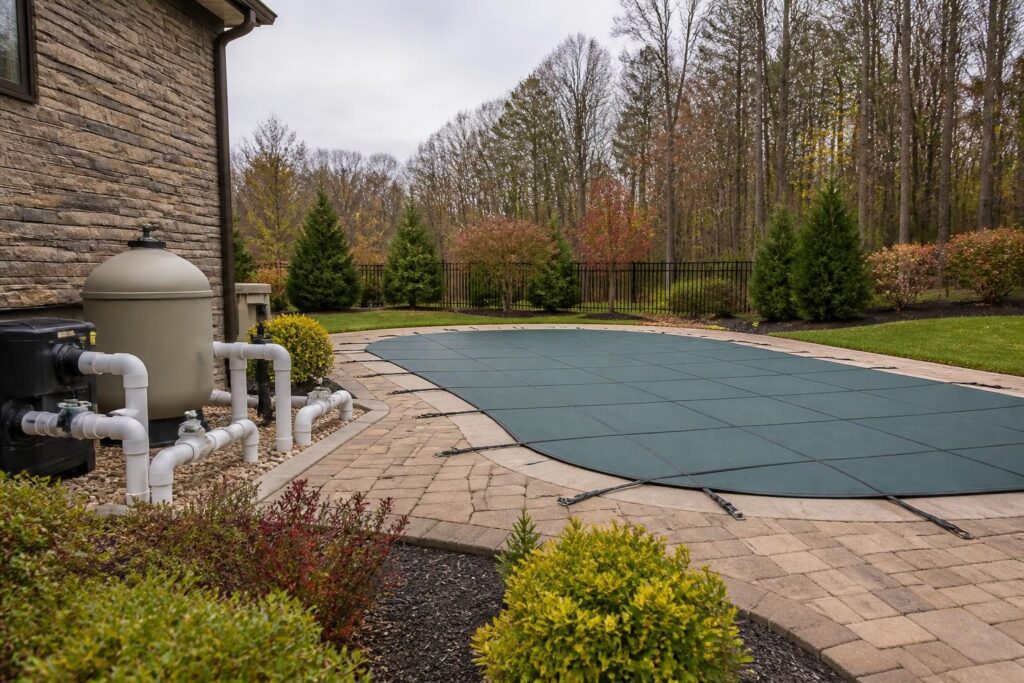
Pool winterization North Carolina planning should begin with your property, equipment, and expected winter use. North Carolina does not have one uniform winter pattern. Mountain communities may face longer freezes, while the Piedmont and coastal areas often see shorter cold snaps mixed with mild weather.
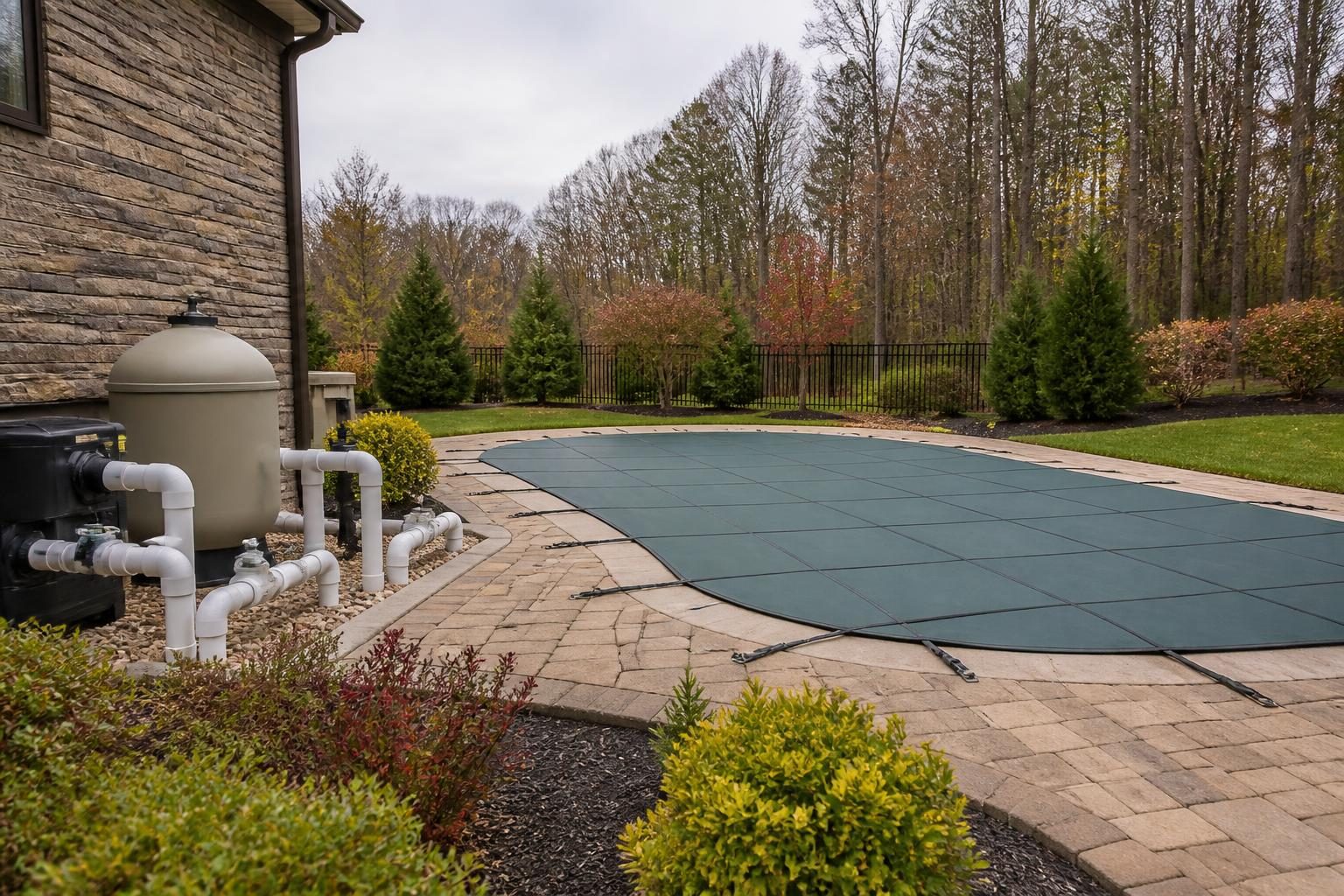
That variation affects the right approach. Some homeowners keep a pool operating through winter. Others reduce circulation, close the pool, or follow a contractor-designed procedure. The safest choice depends on the pool surface, plumbing layout, equipment, cover, water chemistry, and manufacturer instructions.
Start by identifying your local winter risks
Before changing settings or draining equipment, consider how cold weather behaves at your home. A brief overnight freeze creates different concerns than several days below freezing. Shade, wind, elevation, exposed pipes, and power reliability also matter.
Regional labels are useful, but they do not replace property-specific review. A pool near the Blue Ridge may need more attention to repeated freezing. A coastal pool may face salt air, storms, and sudden temperature changes. Piedmont owners may need a flexible plan because mild days can interrupt a cold spell.
- Which components are outside, exposed, or poorly insulated?
- Could a power outage stop circulation during freezing weather?
- Does the equipment pad drain properly after rain?
- Will anyone use the pool during winter?
- Who will check the system if you travel?
- Does the property have a flood, drainage, septic, or well concern?
Also review local conditions before making changes. Flood hazards and runoff can affect equipment, covers, and water levels. The FEMA Flood Map Service Center can help you locate official flood-hazard information, but a map does not replace site-specific advice.
Choose between operating and closing the pool
An operating plan keeps circulation and treatment equipment in service during winter. A closing plan prepares the vessel, plumbing, equipment, and cover for reduced or suspended operation. Neither option automatically suits every North Carolina home.
Operating the pool may make sense when the system can provide reliable freeze protection and someone can monitor it. Closing may suit a pool that will not be used, lacks dependable winter supervision, or has equipment that requires a specific seasonal procedure.
Ask your pool professional to explain the decision in writing. The instructions should identify which equipment stays powered, what you shut off, which valves you change, and what happens during a power failure. Do not assume that switching off the pump is safe when water remains in exposed plumbing. A written pool winterization North Carolina plan can make those decisions easier to follow during a cold snap.
Questions for the pool professional
- Is the system designed to circulate automatically during a freeze?
- Which sensors, schedules, or alerts support that protection?
- What should happen if the pump stops or loses power?
- Should the heater operate during cold weather, and under what conditions?
- Which parts require manual draining or winter plugs?
- What signs mean the system should be turned off and serviced?
Keep the final instructions with your equipment records. A clear diagram can help a future homeowner, house sitter, or service professional understand the seasonal settings.
Review freeze protection for equipment and plumbing
Freeze damage often begins when water remains in a vulnerable section of the system. Pumps, filters, heaters, chlorinators, valves, exposed pipes, and fittings may each require different treatment. The equipment manual and installation instructions should control the procedure.
Automatic freeze protection does not guarantee protection. It may depend on electrical power, correct sensor readings, working controls, and adequate water movement. A system can also fail to protect plumbing if a valve is closed, a pump loses prime, or an alert goes unnoticed.
Do not open electrical equipment or alter wiring yourself. Ask a qualified electrician to review electrical service, bonding, grounding, and controls when needed. You can compare general questions with the guidance in Pool Electrical Safety Questions for Your Licensed Electrician. Include those electrical questions in your pool winterization North Carolina review when equipment must remain powered.
- Photograph the equipment pad before seasonal changes.
- Record normal pressure, water level, and control settings.
- Mark the location of shutoffs and valves.
- Ask which components must stay full of water.
- Ask which components must be drained, blown out, or protected.
- Confirm whether a heater, salt cell, or chemical feeder needs special care.
- Keep receipts, manuals, service notes, and winterization instructions together.
Never use a generic “drain everything” checklist without confirming the system design. Incorrect draining can damage some pool features, while trapped air can create other concerns. Ask a licensed or otherwise qualified professional to determine the proper method for your installation.
Protect water chemistry before covering the pool
Water chemistry remains important even when swimming stops. Poor balance can contribute to staining, scale, surface damage, algae growth, or unpleasant reopening work. The correct targets depend on the pool type, finish, sanitizer, and professional recommendations.
Test the water before a planned closure and follow product labels. The CDC provides general information about residential water treatment and testing, including chlorine and pH. Local conditions and your equipment may require additional guidance.
Avoid adding chemicals together or pouring products into the same area at once. Read the label, use the required protective equipment, and provide safe ventilation. Chemical storage also matters during winter. Keep containers in their original packaging, away from incompatible products, moisture, children, and unauthorized access.
Water-care records to keep
- Date and time of the final water test
- Sanitizer and pH readings
- Products added and the amounts shown on their labels
- Water level before installing the cover
- Any stains, cloudy water, leaks, or equipment warnings
- Professional instructions for reopening
Do not assume a cover eliminates testing. Rain, leaves, sunlight, debris, and temperature changes can affect the water. Ask how often the cover needs checking and whether occasional testing remains necessary during the closed season.
Evaluate the cover and surrounding safety measures
A pool cover has several possible roles. It may reduce debris, limit evaporation, support seasonal closure, or provide a safety function when a qualified professional installs it for that purpose. These roles are not interchangeable.
Ask whether your cover is a safety cover or a winter debris cover. Confirm its weight limits, attachment points, drainage features, and inspection needs. Keep people and pets off the cover unless its instructions specifically permit that use. Standing water can add weight and create a hazard.
Winterization does not replace barrier maintenance. Gates, latches, doors, alarms, and other layers should still work as intended. Review North Carolina pool barrier planning for a broader safety review, then verify current local requirements with the inspections department.
Check the area around the pool after strong weather. Fallen branches, displaced furniture, overflowing gutters, and runoff can affect the cover or create access hazards. Keep the pool area secured during periods when supervision is limited.
Plan winter monitoring instead of relying on one visit
A seasonal plan should explain who checks the pool and what they look for. Remote alerts can help, but they do not repair a failed pump, restore power, remove debris, or confirm that water is moving.
Create a simple monitoring schedule based on weather and system instructions. Increase attention before and during forecast freezes, after power interruptions, and after heavy rain. Record the visit rather than relying on memory. This monitoring step remains central to pool winterization North Carolina because regional weather can change quickly.
- Check whether circulation is running when it should.
- Look for unusual sounds, leaks, ice, or warning messages.
- Confirm that equipment has power without opening electrical enclosures.
- Inspect the cover for tears, loose anchors, debris, or standing water.
- Check the water level and visible water condition.
- Keep nearby drains and discharge paths clear.
- Contact a professional if a condition falls outside the written instructions.
If your pool depends on a pump during freezing weather, make a backup plan for outages. Ask whether the system has a safe manual procedure. Do not restart damaged equipment or handle frozen plumbing without professional direction.
Ask for professional instructions before the first freeze
The best winter plan is specific to the pool in front of you. Request written instructions that name your equipment, valves, plumbing sections, cover, chemistry steps, monitoring schedule, and reopening process.
Confirm who handles seasonal service and what information the service provider needs. Keep the contact details, manuals, photographs, and prior records in one accessible location. If you buy a home with an existing pool, request a system orientation before winter rather than guessing from labels.
For more general maintenance context, you can also review Home Pool Water Testing Basics. Use it as educational background, not as a substitute for instructions written for your pool and water-care system.
Pool winterization North Carolina decisions should account for regional weather, property conditions, equipment design, plumbing exposure, chemistry, cover type, and monitoring. Because requirements and safe procedures can vary, consult the local inspections department for applicable rules and a licensed pool contractor, electrician, engineer, surveyor, septic professional, or other qualified specialist when your situation calls for one.