
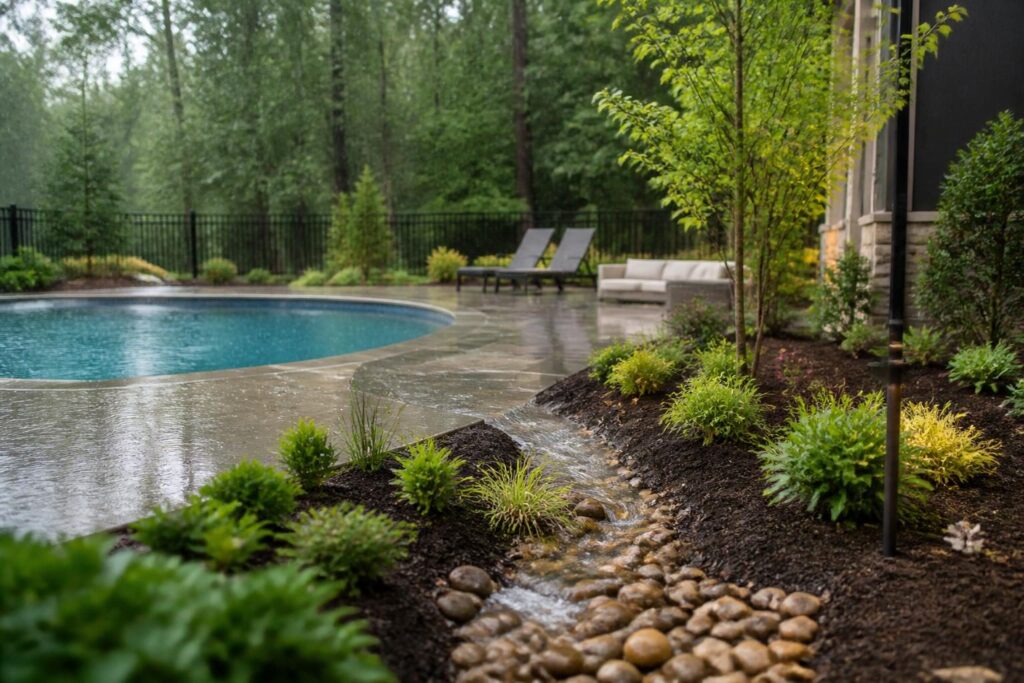
New plants can improve a pool area, but they also change the way water moves. A pool landscape drainage inspection after planting helps you see whether fresh soil, settled beds, irrigation, or mulch now directs runoff toward the pool or deck. Rain provides the clearest test because it reveals flow paths that may remain invisible during dry weather.

This inspection is an observation routine, not a substitute for a grading plan or professional evaluation. North Carolina conditions vary by soil, slope, rainfall, local drainage patterns, septic systems, flood zones, and property design. Focus on what changed, record what you see, and escalate concerns before a small flow path becomes erosion, ponding, staining, or a safety problem.
Why planting can change pool drainage
A planting bed is more than a collection of shrubs and flowers. It changes the surface shape, soil depth, ground cover, and water absorption around the pool. Workers may add soil to create a level bed, cut soil away for edging, or install borders that interrupt shallow flow. Each change can alter runoff.
New soil may settle after watering and rain. A low area can form beside the deck, while a raised edge can send water across a walkway. Dense mulch can slow surface flow in one spot but wash into another. Irrigation may also add water on a schedule that does not match the weather.
Before planting, review the intended drainage approach with the pool contractor or landscape professional. The existing pool grading after construction can provide useful context, but planting work may change finished conditions. If the property has unusual slopes, retaining features, drainage structures, or flood exposure, ask the appropriate qualified professional to review the site. A pool landscape drainage inspection after planting can help organize that discussion without diagnosing the cause.
What to watch during the first rain
Choose a safe viewing position. Do not walk through moving water, stand near an unstable edge, or approach electrical equipment in wet conditions. You can often inspect the flow from a covered area or after the rain stops.
Trace the first visible flow
Watch where water begins in the planting bed and where it leaves. Look for narrow channels, muddy streaks, displaced mulch, or water crossing the deck. A flow line may start near a downspout, slope, raised bed, hose connection, or irrigation head.
Notice whether water moves toward the pool, coping, steps, deck joints, doors, or equipment area. A small stream can carry soil and organic material even when the pool does not visibly overflow. Photograph the route from a consistent location, then take close images of the source and destination.
Check for ponding and slow release
Short-term puddling is not automatically a defect. The important questions are where water collects, how much soil it carries, and whether the area drains as expected. Persistent wet spots can affect plants, soil stability, walkways, or nearby structures.
Compare the planting bed with the surrounding surfaces. Water may disappear into loose soil at first, then return later as the bed becomes saturated. Look again after the rain. Delayed seepage can reveal a low pocket that was not obvious during the storm.
Look at the pool and deck edges
Inspect the coping, deck surface, drains, joints, and areas beside the planting bed. Watch for muddy deposits, mulch lodged against the edge, washed-out soil, or water that repeatedly reaches the pool. Keep organic debris from blocking drains, but avoid moving soil or changing grades until the cause is understood.
New landscaping can also hide a developing change in the deck. If you see a new low spot, crack, lifted edge, or drainage shift, create a dated record. The article on pool deck settlement monitoring explains how homeowners can build a useful photographic baseline without attempting a structural diagnosis.
How soil settlement redirects water
Fresh planting soil often changes shape as it becomes wet and compacted. The amount and speed of settlement depend on the soil, installation method, moisture, plant size, and local conditions. Do not assume a low spot will correct itself.
Use a simple comparison process:
- Photograph the bed before a major rain, if possible.
- Mark the general locations of visible depressions without placing stakes near buried utilities.
- Record whether water flows toward or away from the pool and deck.
- Note washed soil, exposed roots, leaning edging, or mulch movement.
- Compare observations after several rain events rather than relying on one storm.
Do not add soil casually beside the pool. Added material can cover drainage features, change surface elevations, affect barriers, or send water toward another part of the property. Ask a landscape professional, pool contractor, surveyor, engineer, or local authority which review is appropriate for the observed condition. Your pool landscape drainage inspection after planting record should show the condition before any adjustment.
Mulch, edging, and bed borders
Mulch helps protect soil, but loose material can travel during heavy rain. It may collect against coping, enter deck drains, or settle in the pool. Different mulch types also behave differently when dry, saturated, or placed on a slope.
Inspect the upper and lower edges of each bed. Look for a thin line where mulch has moved, a fan-shaped deposit below the bed, or exposed soil near plant stems. These clues show that water is moving faster than the surface can hold it.
Edging can create a helpful boundary or an unintended dam. A continuous border may trap water behind it. A gap may concentrate flow into one outlet. Discuss bed edges and soil levels before making changes. The guide to pool landscaping mulch runoff covers related concerns about erosion, debris, and runoff near a pool.
Irrigation can imitate or worsen a drainage problem
Rain is not the only source of unexpected water. Sprinklers, drip lines, hose bibs, and temporary watering can saturate new beds. Irrigation may run while the soil is already wet, producing runoff that looks like a grading failure.
After a rain event, check the irrigation controller and recent watering cycle. During a dry-day test, observe each zone from a safe location. Look for spray reaching the deck, coping, furniture, walls, doors, or pool water. Also check for broken heads, leaking fittings, tilted nozzles, and overspray from wind.
Adjustments may require irrigation knowledge or backflow review. Use the related pool landscape irrigation questions as a discussion list for the landscape or irrigation professional. Do not disconnect, cap, or reroute a system without understanding how the change affects the rest of the property.
A practical inspection record
A short record helps separate a one-time storm response from a repeating pattern. Include the date, weather, irrigation status, photographs, and exact location. Use the same camera angle when possible. This makes each pool landscape drainage inspection after planting easier to compare over time.
| Record | What to note |
|---|---|
| Rain | Approximate duration and whether the rain was light, steady, or intense. |
| Flow | Where water began, crossed, collected, and left the area. |
| Soil | Settlement, exposed roots, erosion, sediment, or soft ground. |
| Mulch | Movement, deposits at the pool edge, or blocked drainage points. |
| Irrigation | Recent watering, active zones, leaks, spray direction, or overspray. |
| Pool area | Debris, muddy deposits, standing water, or changed deck drainage. |
Keep the landscape plan, planting invoice, irrigation layout, drainage details, and before-and-after photos together. If land-disturbing work is still underway, North Carolina’s Erosion and Sediment Control Manual may provide useful background. It does not replace project-specific direction or local requirements.
When to request a professional review
Contact a qualified professional when water repeatedly reaches the pool or home, erosion is expanding, soil remains saturated, a drain appears blocked, or a retaining feature changes. Request help sooner if runoff approaches electrical equipment, undermines a walkway, exposes roots, or affects a septic area.
Ask the reviewer to examine the changed planting-bed elevations, soil settlement, irrigation operation, mulch movement, downspouts, drainage structures, and the intended discharge path. Share your photographs and records. A clear history can make the site review more efficient.
Requirements can vary by North Carolina jurisdiction, property conditions, adopted codes, utilities, septic systems, flood zones, and project scope. Consult the local inspections or permitting department when work may affect drainage, structures, grading, or required approvals. Use a licensed pool contractor, landscape professional, irrigation specialist, surveyor, engineer, septic professional, or electrician when the condition falls within that person’s expertise.