
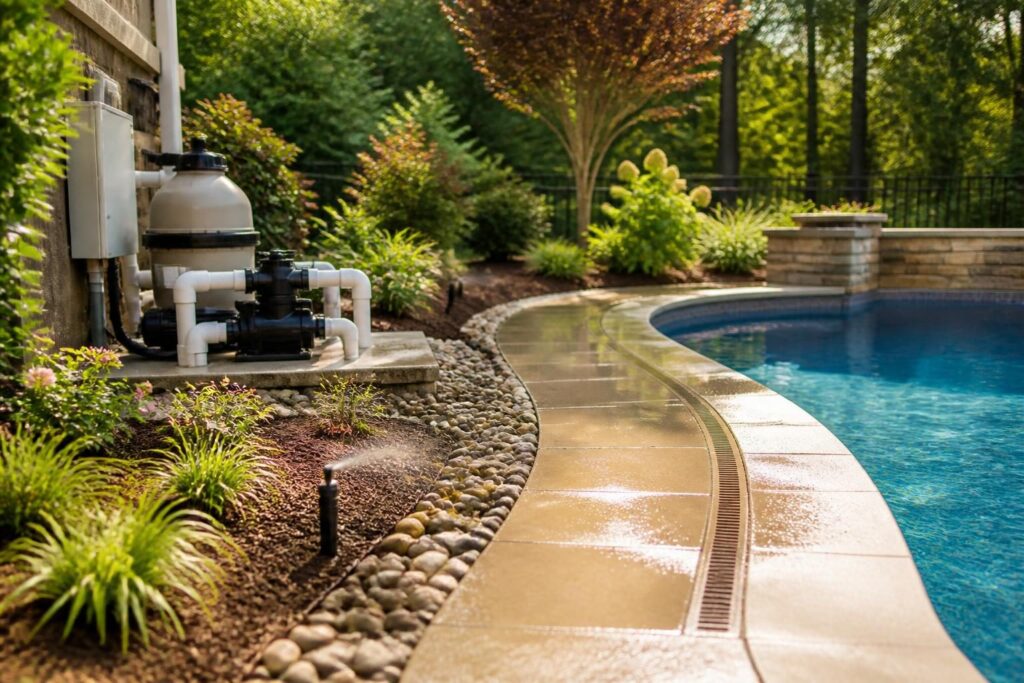
Well-planned irrigation can keep new planting healthy without sending spray across the pool, deck, equipment pad, or nearby home. These pool landscape irrigation overspray backflow questions help North Carolina homeowners review the design before installation or planting begins.

Irrigation is not only a landscaping issue. Sprinkler water can carry soil, mulch, fertilizer, and plant debris toward the pool. Poorly directed spray can also wet electrical equipment, stain hard surfaces, increase evaporation, or create slippery walking areas. Backflow is a separate water-supply concern that needs review by the appropriate irrigation or plumbing professional.
Requirements and best practices can vary by local water provider, property layout, water source, septic system, adopted code, and project scope. Treat this article as a planning guide, not as plumbing, electrical, environmental-health, engineering, or code-compliance advice.
Start with the irrigation zones around the pool
An irrigation zone groups sprinkler heads or drip lines under one valve and schedule. A pool project may change the yard’s zones, pressure, planting beds, and drainage paths. Review the plan as a whole instead of looking at each sprinkler head in isolation.
Ask the designer or installer to identify every head, nozzle, valve box, drip line, hose connection, and control wire near the pool. Mark the pool shell, deck, coping, steps, retaining features, equipment pad, doors, windows, and property boundaries on the same drawing. This makes conflicts easier to spot.
- Which heads can spray toward the pool, deck, house, or equipment?
- Where does each zone begin and end?
- Will a changed pool elevation alter the spray pattern or runoff path?
- Can a head be adjusted without stepping into a planted bed or crossing the pool barrier?
- Can mature shrubs block valve boxes or irrigation controls?
Spray patterns can change with water pressure, nozzle selection, wind, plant growth, and settlement. A design that looks acceptable on paper may need adjustment during commissioning. Request a zone-by-zone test after planting and hardscape work are complete.
Review sprinkler direction, overspray, and slippery surfaces
Overspray occurs when irrigation water lands outside its intended planting area. Near a pool, that may include the water surface, coping, deck, steps, furniture, fence, doors, or equipment. Repeated wetting can affect traction and may leave mineral or soil deposits as water dries.
Ask for heads that match the bed shape. Narrow strips may need compact spray patterns or drip irrigation rather than broad rotating arcs. Drip irrigation applies water slowly near plant roots. It may reduce airborne spray, but it still needs proper design, filtration, pressure control, and maintenance.
Questions about spray testing
- Did the installer test each zone with normal household water demand?
- Does wind carry spray onto the pool or walking surface?
- Do heads remain aimed correctly after mowing, pruning, or foot traffic?
- Can overspray wet pool covers, automatic controls, outlets, or service panels?
- Will irrigation run during times when the pool is being used?
Keep photos of the tested spray pattern and note any adjustments. A simple record can show which head the installer changed, why the installer changed it, and whether the issue returned after weather or landscaping work.
For broader planting, sight-line, drainage, and maintenance considerations, see pool landscaping planning guidance. Irrigation should support that plan, not work against it.
Understand runoff, soil movement, and chemical interaction
Runoff is water that moves over the ground or hardscape instead of soaking into the intended planting area. Irrigation can expose a drainage weakness even when rain has not caused a problem. Pool decks, slopes, compacted soil, mulch beds, and construction fill may direct water in unexpected ways.
Watch for water moving toward the pool, house, crawl space, deck joints, steps, equipment pad, or neighboring property. Soil and mulch carried by irrigation can cloud the pool, clog skimmer baskets, stain surfaces, or add maintenance work. Fertilizer and other landscape products may also move with runoff.
Chemical interaction needs a cautious, site-specific review. Fertilizer, lawn treatments, iron-rich soil, and other landscape materials can affect pool surfaces or water quality if they enter the pool. Pool chemicals can also damage plants if splash-out or backwash reaches planting beds. Use product labels and qualified advice for any treatment near the pool.
- Does the bed have stable edging that will not redirect water toward the pool?
- Could irrigation dissolve or move fertilizer into a drain, pool, or water feature?
- Where will overspray collect after it lands on concrete or pavers?
- Does the plan separate routine irrigation from pool equipment discharge?
- Will heavy rain combine with irrigation and overwhelm the intended drainage route?
NC DEQ provides state information about construction stormwater, land disturbance, erosion, and runoff. Review the NC DEQ Construction Stormwater Program when landscaping or pool work involves applicable land disturbance. Confirm project-specific requirements with the local authority.
For bed materials and soil movement near the pool, homeowners can also review mulch and runoff planning. The goal is to keep landscape material in place before irrigation exposes a weak edge.
Ask focused backflow protection questions
Backflow is the unwanted reversal of water flow. It can allow water from an irrigation system or connected source to move back toward the potable water supply. The correct protection depends on the connection, pressure conditions, water provider, and local requirements.
Do not select or install a backflow device based on a general online diagram. Ask the irrigation professional, plumber, or water supplier which device and testing process apply to the property. These pool landscape irrigation overspray backflow questions should cover the actual connection and water source, not a generic system.
- What is the irrigation system connected to: public water, a well, or another source?
- Which backflow protection does the professional propose, and who will verify its suitability?
- Does the local water provider require registration, testing, or records?
- Where will the device sit for inspection, winter protection, and repair?
- Could fertilizer injection, reclaimed water, chemicals, or other connections change the risk?
- Will pool filling, automatic makeup water, and irrigation share a connection?
Keep the device model, installation record, test reports, shutoff locations, and service instructions with the pool documents. If the home uses a private well, review the well location, access, pressure, and water-supply limits with appropriate professionals. Related site questions appear in this guide to pool construction near private well access.
Protect equipment and preserve service access
Irrigation should not turn the equipment pad into a regularly wet work area. Spray can reach pumps, heaters, automation panels, valves, wiring, and service surfaces. This does not mean every wet condition is dangerous, but water exposure and electrical safety require professional review.
Keep sprinkler arcs away from equipment wherever practical. Avoid placing valve boxes directly in walking paths or behind dense plantings. Leave enough access for a qualified technician to inspect, remove, or replace equipment. Do not use shrubs or decorative screens to hide a conflict that prevents service.
- Can each irrigation shutoff be reached without moving equipment?
- Will mature plants block the equipment pad or control valves?
- Does runoff collect beneath or beside the equipment?
- Do electrical components meet manufacturer instructions and local requirements for protection?
- Can irrigation repairs occur without crossing the pool barrier or damaging the deck?
Equipment placement, weather exposure, and access should be reviewed together. A related checklist covers safe placement and access for pool electrical equipment: pool electrical equipment location planning.
Account for property-specific irrigation conditions
North Carolina properties vary widely. Clay soil, sandy soil, slopes, wooded lots, flood-prone areas, septic systems, wells, easements, and compacted construction soil can all change irrigation performance. A standard residential layout may not fit the site.
Map irrigation lines before excavation or hardscape installation. Confirm underground utilities through North Carolina 811 before digging. Irrigation lines cannot substitute for utility locating, and older private lines may not appear in standard records.
Review the plan where the pool meets a slope, retaining feature, septic area, or flood-risk area. Flood maps can provide useful background, but they do not replace a site-specific evaluation. The FEMA Flood Map Service Center is an authoritative starting point for current map information.
Property questions to document
- Where are the septic tank, drainfield, well, easements, and utility routes?
- Which areas drain naturally, and which rely on constructed grading?
- Will the pool deck or new soil change irrigation pressure or drainage?
- Can the irrigation system be isolated during pool construction and service?
- Who will update the as-built drawing after lines or heads move?
Create a practical irrigation handover record
A useful handover file helps future owners and service providers understand the system without guessing. Save the irrigation plan, zone map, controller settings, head and nozzle information, valve locations, backflow records, and photos of concealed lines before final cover or planting.
Record the first operating test after the pool and landscape work finish. Note heads that the installer redirected, zones that the installer shortened, leaks that the installer repaired, and areas that still receive unwanted spray. Add seasonal changes only after confirming that the new schedule does not create runoff or overspray. These pool landscape irrigation overspray backflow questions can also guide the final handover review.
Include these practical items:
- Marked plan showing pool, deck, equipment, valves, and irrigation lines.
- Controller make, settings, and instructions.
- Backflow device information and required test records.
- Sprinkler head and nozzle locations.
- Photos showing shutoffs and access paths.
- Notes about well, septic, drainage, or flood-related constraints.
Build a Pool in North Carolina encourages homeowners to keep landscape and pool records together. A maintenance log can provide a convenient place for irrigation observations, weather notes, water-level changes, and service visits.
When to pause and seek qualified review
Pause the work if irrigation causes persistent wet surfaces, erosion, soil movement, equipment exposure, unexplained water loss, or suspected backflow. Do not disconnect, bypass, test, or alter plumbing or electrical protection without qualified guidance.
Consult the local inspections department or water provider about current requirements. Ask a licensed irrigation or plumbing professional to review backflow protection. A pool contractor, electrician, engineer, surveyor, septic professional, or drainage specialist may also be appropriate for property-specific conditions. Keep these pool landscape irrigation overspray backflow questions available when those specialists review the plan.