
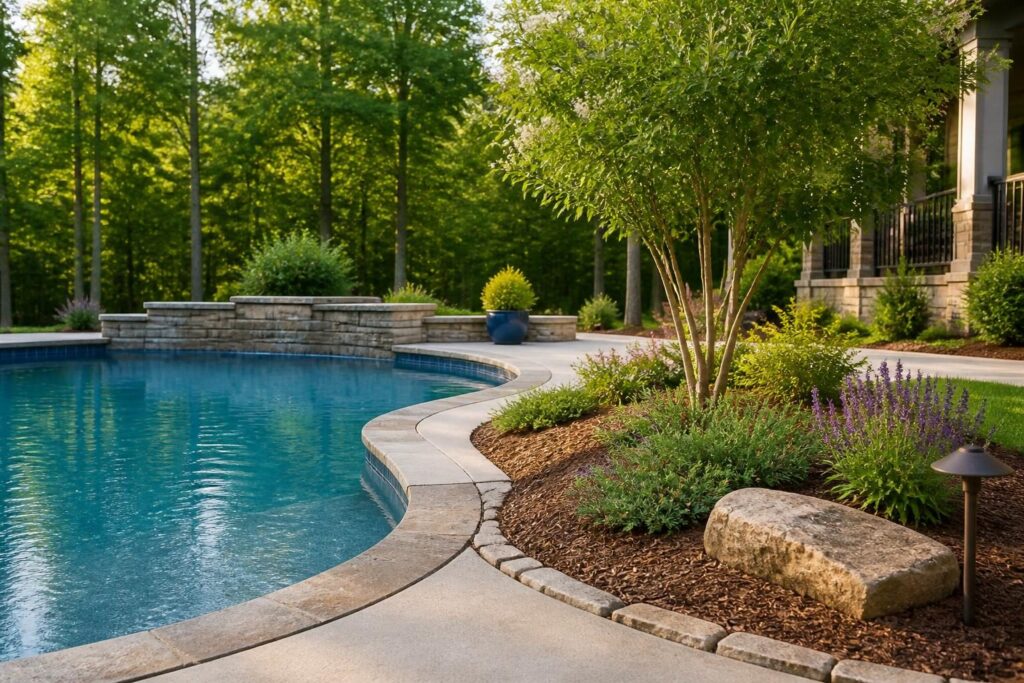
Pool landscaping mulch runoff North Carolina homeowners should plan around more than appearance. Planting-bed materials can affect how much soil, bark, fertilizer, and organic debris reach the water. A thoughtful landscape keeps beds stable, limits windblown material, and makes routine cleaning easier.

For pool landscaping mulch runoff North Carolina projects, the best choice depends on slope, rainfall, wind exposure, drainage, nearby plants, irrigation, and the pool’s finished edges. No single mulch works for every yard. Instead, evaluate how each material behaves during heavy rain and ordinary maintenance.
That comparison is the core of pool landscaping mulch runoff North Carolina planning. Select materials that fit the site rather than relying on appearance alone.
Start with the path from planting bed to pool
Before choosing mulch or topsoil, watch where water moves. Rain can travel across a bed, under an edging strip, or through a low point beside the deck. Irrigation can create the same problem on a smaller scale.
Look for the full route from roof downspouts, lawn, planting beds, and hardscape to the pool. A bed that appears level may still send muddy water toward the coping, which is the protective edge around the pool. Soil may then collect on the deck or enter through wind and splashing.
- Walk the yard during or soon after a substantial rain, where it is safe to do so.
- Mark places where soil splashes, ruts form, or mulch gathers.
- Check whether downspouts discharge toward beds or the pool area.
- Note low spots near steps, deck drains, gates, and equipment access routes.
- Ask whether planned grading will change after plants and mulch are installed.
For broader site questions, review pool drainage planning for North Carolina yards. The goal is not to make a landscape impermeable. It is to keep water moving in a controlled way and prevent loose material from reaching the pool.
Compare mulch materials near a pool
Mulch protects soil from direct rain impact and can slow surface water. It can also float, migrate, decompose, or shed particles. Compare the material’s behavior, not only its color and price.
Wood and bark mulch
Wood and bark products can provide a natural appearance and help retain soil moisture. Lightweight pieces may shift during storms or strong wind. Fine particles can wash onto the deck, while larger pieces can reach skimmers and baskets.
Keep these materials away from areas that drain directly toward the pool. A stable edge, suitable bed depth, and regular top-up may help, but maintenance cannot correct a poor slope. Ask the landscape professional how the selected product behaves on your specific grade.
Stone and gravel
Stone usually resists wind better than light bark. However, small pieces can move downhill, enter deck joints, or become uncomfortable and difficult to remove from the pool. Larger decorative stone may also create trip concerns or interfere with cleaning equipment.
Use care around the pool edge. Loose stone should not sit where swimmers, children, pets, or maintenance tools can easily push it into the water. Confirm the finished surface and transition with the pool contractor and landscape professional.
Compost and fine soil amendments
Compost and amended soil support plant growth, but fine particles can cloud runoff. Nutrients may also contribute to unwanted water-quality changes if they enter the pool or nearby drainage system. Avoid leaving loose soil exposed before plants establish.
Cover disturbed soil promptly with an appropriate erosion-control method. If the project involves substantial land disturbance, ask which requirements apply locally. The NC DEQ Erosion and Sediment Control Manual provides state guidance, but property-specific decisions belong with the appropriate authority or qualified professional.
Use soil and edging to reduce erosion
Mulch cannot compensate for unstable soil. Before installation, identify whether the bed contains compacted fill, clay, sand, exposed roots, or recently disturbed material. These conditions can change how quickly water soaks in or runs across the surface.
A landscape professional may recommend grading, groundcovers, plant density, erosion-control fabric, or another treatment. Do not assume that adding more soil is harmless. Extra soil can alter drainage, cover plant crowns, bury edging, or send water toward structures.
Edging helps define the boundary between a bed and lawn or deck. It does not automatically act as a drainage barrier. Flexible plastic edging may move, metal edging can create a sharp exposed edge, and rigid borders may redirect water in unexpected ways.
- Confirm the finished bed elevation beside the pool deck.
- Ask where runoff goes when the bed is fully saturated.
- Check that edging will not block a planned drain or swale.
- Keep soil and mulch below surfaces that must remain clear.
- Request a maintenance method for replacing displaced material.
For a more focused discussion of channels and planted areas, see pool landscaping swale drainage options. A swale is a shallow, designed depression that guides water. Its shape, outlet, and maintenance should be confirmed for the property.
Limit windblown debris and pool staining
Wind can carry leaves, bark, pollen, dust, and fine mulch into the water even when runoff remains well controlled. The risk increases beside open lawns, wooded edges, exposed ridges, and planting beds with loose material.
Choose plants and materials together. Dense, low-growing plants can hold soil, while groundcover may reduce exposed areas. Yet plants that shed heavily, produce small dry leaves, or attract fruit-eating wildlife can increase cleaning needs.
Dark organic material may stain light deck surfaces when it stays wet against them. Iron-rich soil can also leave orange or brown marks. Staining causes vary, so avoid treating every mark as a water-chemistry problem. Photograph recurring spots and ask a qualified pool professional before using a chemical treatment.
Keep a clean transition next to the pool. A narrow, maintainable strip of finished hardscape may be easier to sweep than mulch placed directly against the coping. The right width and material depend on the design, drainage, local requirements, and available space.
Control fertilizer, pesticide, and irrigation runoff
Planting beds can send more than soil toward the pool. Fertilizer, compost fines, and lawn or garden treatments may move with rain or overspray. These materials can affect water balance, clarity, algae growth, or nearby drainage.
Apply products only according to their labels and the advice of an appropriate lawn or landscape professional. Do not spread granular products before heavy rain. Sweep stray granules from hardscape instead of washing them toward the pool or a storm drain.
Irrigation deserves the same attention. Sprinklers aimed at the pool can add treated or untreated water, disturb mulch, and carry soil from beds. Drip irrigation may reduce overspray in some areas, but it still requires inspection for leaks and excessive flow.
- Adjust spray heads so water reaches plants, not the deck or pool.
- Inspect irrigation after planting and after seasonal changes.
- Keep fertilizer and chemicals in their original labeled containers.
- Pause applications when runoff could leave the property or enter the pool.
- Record unusual cloudiness, staining, or chemistry changes after landscape work.
For additional irrigation planning, read pool landscaping irrigation planning guidance. If runoff enters the pool, test the water using a reliable method and follow product instructions. CDC guidance covers home pool testing, chlorine, and pH, but it does not replace site-specific advice.
Build a practical maintenance routine
Even a well-designed bed needs attention after storms, planting, pruning, and seasonal leaf drop. Small corrections are easier before a worn path becomes an erosion channel.
After heavy rain
- Look for exposed roots, rills, gullies, and displaced mulch.
- Check whether soil reached the deck, coping, skimmer, or pool water.
- Do not rake muddy material into a drain or the pool.
- Photograph changes before repairing them.
- Ask a landscape or drainage professional about recurring movement.
During routine care
- Pull weeds without loosening large areas of soil.
- Keep mulch from covering plant stems, drains, valves, and cleanouts.
- Trim branches that drop directly into the pool.
- Replace missing material with the same product when practical.
- Use a pool net or other suitable method for floating debris.
When debris does enter the water, follow this guide on removing pool debris safely. Avoid using pool equipment to process material it was not designed to handle.
Questions to settle before landscaping begins
Written answers can prevent assumptions between the pool, drainage, irrigation, and landscape portions of a project. Keep the final plans, product information, and maintenance instructions with your pool records.
- Which areas will contain mulch, stone, compost, or exposed soil?
- What happens to each bed during a heavy rain?
- Where will roof and irrigation water flow?
- How will displaced mulch or stone be kept out of the pool?
- What products will be applied, and how should they be stored?
- Who will repair erosion or settle disturbed soil?
- Which surfaces need protection from staining or wet organic material?
- Will the finished landscape affect access to pool equipment, drains, or valves?
Take dated photographs after grading, after bed installation, and after the first major storm. Note changes in water clarity, filter pressure, staining, and debris. Those records help a qualified professional evaluate patterns without relying on memory.
Pool landscaping mulch runoff North Carolina planning works best when soil stability, water movement, plant selection, and maintenance work together. Consult the local inspections or stormwater authority when land disturbance or drainage may require review. Use a licensed pool contractor, landscape professional, electrician, engineer, surveyor, or septic professional when the project raises questions within that specialist’s field.