
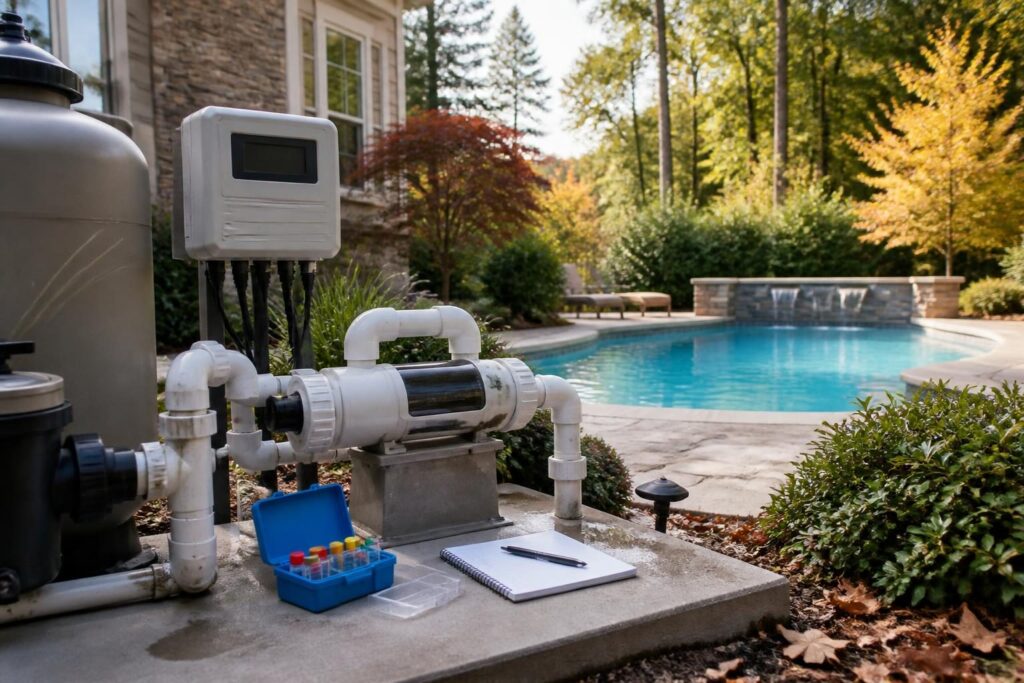
A saltwater pool still needs regular testing, cleaning, circulation, and equipment checks. This guide to saltwater pool system seasonal maintenance North Carolina homeowners can follow focuses on the salt cell, salinity, water balance, controller settings, cold-weather care, and records.

A salt system does not remove the need for chlorine. Instead, its salt cell uses electricity to generate chlorine from dissolved salt. The system works best when water chemistry, circulation, temperature, and equipment settings support one another.
Conditions vary across North Carolina. Coastal humidity, Piedmont heat, mountain cold, heavy rain, pollen, and different water sources can change maintenance needs. Use the equipment manual as the primary operating guide, then confirm unusual readings or service decisions with a qualified pool professional.
Start with a seasonal inspection routine
A seasonal check should compare what the system is doing with what your water tests show. Do not rely on a controller display alone. A display may report a setting or sensor reading, but it does not replace independent testing.
Record the starting condition
Before changing settings, write down the date, water temperature, salt reading, sanitizer reading, pH, total alkalinity, and displayed alerts. Note recent rainfall, heavy use, water additions, and filter cleaning. These details help you see patterns instead of reacting to one result.
- Photograph the controller screen when an alert appears.
- Record the salt brand and products added.
- Note whether the pump was running during the reading.
- Save home-test and pool-service results.
- List each adjustment and its date.
Keep this information with manuals, warranty documents, cell replacement records, and invoices. A simple log makes troubleshooting more orderly. For a useful structure, see this residential pool maintenance log template.
Inspect the salt cell and connected equipment
The salt cell generates chlorine. It usually sits in the return plumbing after the filter and heater, although layouts vary. Shut the system down according to the manufacturer’s instructions before inspecting it. Never open electrical enclosures or disconnect wiring unless you are qualified to do so.
Look for scale, debris, and physical damage
With the cell safely isolated, look through its housing if the design allows. White or crusty deposits may indicate calcium buildup on the plates. Leaves, dirt, and other debris can affect flow. Cracked housings, damaged connections, unusual discoloration, or loose fittings deserve professional attention.
Do not scrape plates with a sharp tool or use an unapproved chemical. Some manufacturers allow a specific cleaning solution. Others recommend limited cleaning or replacement. Follow the exact manual for your model.
After inspection, check that the cell is installed in the correct flow direction and that connections appear secure. Confirm that valves are in their normal positions. If the controller reports low flow, no flow, or a cell fault, ask a pool technician to diagnose the system.
Connect cell condition to water balance
Scale is not only an equipment issue. It can relate to pH, calcium hardness, water temperature, and other chemistry factors. A clean cell may scale again if the underlying water balance remains outside the manufacturer’s recommended range.
For general residential water-testing information, review the CDC guidance on home pool water treatment and testing. Local conditions and your equipment manual still control practical steps.
Test salinity and water balance before changing output
Salt level is not the same as chlorine level. Salinity measures dissolved salt. Free chlorine measures sanitizer available in the water. A salt system uses the first to help produce the second, but both readings matter.
Test salinity with a method suitable for your system. Compare the result with the salt range printed in the manual or shown on the controller. Do not add salt simply because the display seems low. First check the test method, water volume, recent rain, or a possible sensor issue.
Use a complete testing set
Along with salinity and free chlorine, track pH and total alkalinity. Depending on the pool surface, water source, and professional recommendations, you may also need calcium hardness, stabilizer, and metals.
- Test after major rain, substantial water replacement, or unusual use.
- Test before changing salt-cell output.
- Compare home results with an independent test when readings conflict.
- Allow circulation before treating an addition as fully mixed.
- Follow product labels and never mix chemicals in one container.
North Carolina rain can dilute salt and change water balance. Evaporation removes water but leaves dissolved salt behind. Topping off, draining, splash-out, and backwashing can shift concentration in different ways. Regular testing is more useful than a fixed calendar alone. This is a central part of saltwater pool system seasonal maintenance North Carolina homeowners should document.
Adjust controller settings with evidence
The controller may allow adjustments for chlorine output, operating hours, water temperature, salt level, and diagnostics. Menu names differ by manufacturer. Photograph the original settings before changing them so you can reverse a test adjustment.
Begin with the smallest change permitted by the manual. Then observe test results over a consistent period. Avoid changing output, pump schedule, and several chemistry factors at once. Otherwise, you may not know which change affected the result.
Review the conditions behind the setting
Chlorine demand changes with temperature, sunlight, swimmer load, rain, and debris. A controller percentage is not a universal chlorine target. Treat it as an operating setting that must be checked against measured chemistry.
Confirm that the pump runs whenever the cell is intended to generate chlorine. A cell cannot produce sanitizer correctly without adequate flow. Review pump schedules, flow indicators, and automation communications together. This North Carolina seasonal pool equipment schedule provides related context, but your manual and test results should guide final adjustments.
When an alert returns, capture the code and operating conditions. Record whether the filter was clean, valves were open, and the pump was running. Persistent alerts, unexplained low chlorine, or conflicting salt readings call for qualified service rather than repeated setting changes.
Plan saltwater pool system seasonal maintenance North Carolina homeowners can manage
Spring: inspect before demand rises
Spring brings pollen, rising temperatures, storms, and increased use. Inspect the cell before the pool becomes busy. Test salinity and water balance, clean the filter according to pressure and manufacturer instructions, and check for debris around equipment.
After pollen events, watch pressure, clarity, and sanitizer results. A clean-looking pool can still need closer testing. Avoid assuming that a high output percentage will solve every water problem. Circulation, filtration, and chemistry must work together.
Summer: monitor heat, use, and water loss
Summer often increases chlorine demand through heat, sunlight, and swimming. Test more often when weather or use changes. Check the cell for scale during routine service intervals, especially if pH tends to rise or water is hard.
Inspect the equipment area for blocked airflow, standing water, leaks, and damaged cables. Keep it accessible. Do not cover equipment in a way that traps heat or moisture. For debris-related care, see this guide to removing pool debris safely.
Fall: respond to leaves and changing temperatures
Fall leaves can increase filter loading and interfere with skimming. Remove debris before it reaches the pump or blocks circulation. Test after heavy rain and significant water replacement.
As water cools, review the manual’s temperature guidance for chlorine generation. Do not assume the summer setting remains appropriate. Write down the new setting, water temperature, and test results for next year.
Winter: protect the system without guessing
North Carolina winters vary widely. Some pools remain open with circulation. Others receive a seasonal shutdown. Your approach depends on the equipment, local exposure, pool cover, plumbing layout, and manufacturer instructions.
Ask a qualified pool professional how low-temperature operation affects your cell and controller. Confirm whether the cell should remain installed, be removed, or receive another approved treatment. Never bypass freeze protection or electrical safeguards without professional direction.
During cold weather, continue checking the pool when conditions require it. A cover does not eliminate inspection of water level, equipment, and visible damage. After a freeze, outage, or storm, document conditions before restarting equipment. Keep saltwater pool system seasonal maintenance North Carolina records even when the pool receives limited winter use.
Keep maintenance documentation useful
Good records explain what happened, not just that a task was completed. Use one entry for each test, adjustment, inspection, cleaning, alert, and service visit.
- Date and approximate time
- Weather, water temperature, and recent use
- Salinity, free chlorine, pH, and other values
- Controller output, pump schedule, and alerts
- Cell findings and cleaning method
- Products added, amounts, and label directions
- Filter pressure or cleaning observations
- Photos of unusual conditions or displays
- Questions sent to a professional and responses received
Keep model numbers and manuals together. Record cell installation dates and service details. If a component is replaced, note the reason given and new part information. These records can help a technician identify recurring conditions without relying on memory.
When to request qualified help
Arrange professional evaluation for repeated cell faults, damaged electrical parts, unexplained salinity differences, persistent low sanitizer, visible equipment leaks, or chemistry that will not stabilize. An electrician should handle electrical diagnosis and repairs. A pool professional can evaluate flow, cell condition, and compatibility.
North Carolina requirements and inspection needs can vary by jurisdiction and project scope. Verify current information with your local inspections department and appropriate state or local authority for construction-related electrical, barrier, or permit questions. Build a Pool in North Carolina offers homeowner education, not site-specific professional advice.