
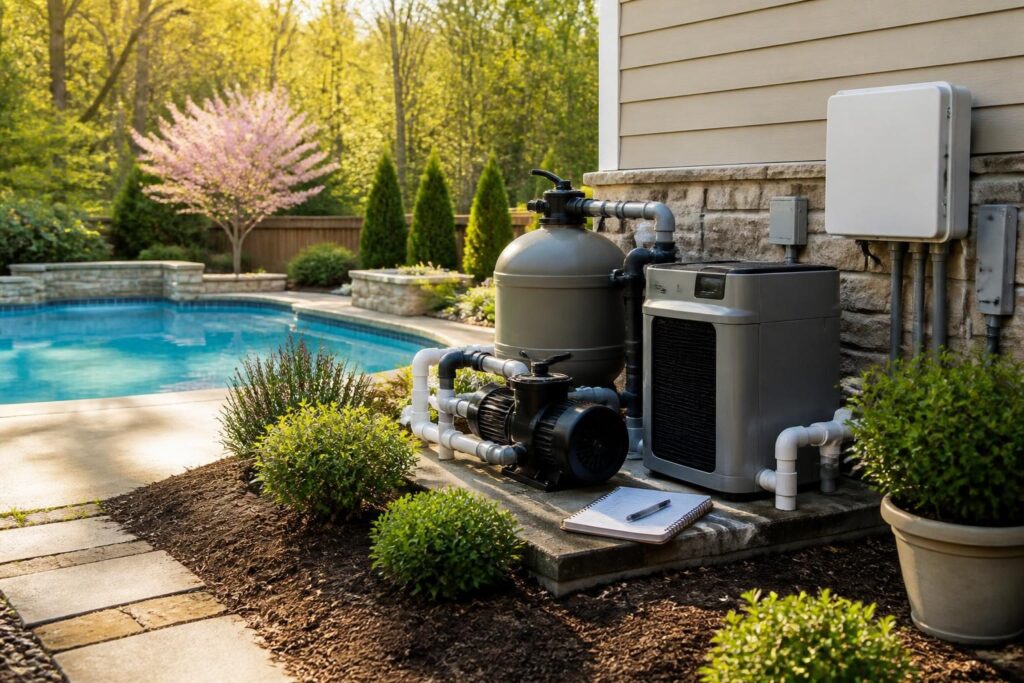
A North Carolina seasonal pool equipment schedule helps you adjust pump, filtration, heating, and sanitation around changing temperatures, storms, pool use, and water-test results. A fixed timer setting may work for one part of the year but perform poorly when conditions change.

The goal is not to run every piece of equipment constantly. Instead, create a repeatable routine, watch the water and equipment, and make measured adjustments. Your pool size, plumbing design, pump type, sanitizer, cover, heater, shade, and local weather all affect the right schedule.
Start with the equipment instructions and a baseline
Before changing a timer or automation setting, collect the operating information for your specific system. A pump’s speed, filter type, heater, salt system, chemical feeder, and controls may each have different limits.
Begin with a baseline schedule that reflects normal use. Record when the pump starts, when it stops, and which speed or flow setting it uses. Note the filter pressure, water clarity, sanitizer reading, pH, water level, and recent weather. This gives you something to compare after an adjustment. Your North Carolina seasonal pool equipment schedule should begin with this documented baseline.
- Write down the pump model, filter type, heater type, and sanitizer system.
- Record timer settings or take clear photos of the control panel.
- Mark the clean-filter pressure shown by your system’s gauge.
- Keep water-test results with the date, weather, and pool-use notes.
- Ask the installer or service professional which settings protect the equipment.
Do not assume a longer run time solves every water-quality problem. Poor circulation can result from a clogged filter, blocked skimmer, incorrect valve position, air entering the system, or another equipment issue. If flow changes suddenly, stop treating the timer as the only possible cause.
Build a North Carolina seasonal pool equipment schedule around conditions
North Carolina has varied weather across the coast, Piedmont, and mountains. Seasonal labels provide a useful starting point, but actual conditions should guide changes. A cool, rainy week and a hot week in the same month may require different attention.
Spring: account for pollen, rising temperatures, and increasing use
Spring often brings more debris and pollen. Those materials can load the skimmer and filter while warmer water increases biological activity. Check the water more often when the pool becomes cloudy, the filter pressure rises, or the surface collects heavy debris.
As temperatures and swimming activity increase, review circulation and sanitation settings. The sanitizer system may need enough operating time to produce or distribute the required sanitizer. Follow the equipment instructions and base chemical changes on current test results, not the calendar alone.
During heavy pollen periods, inspect baskets and the filter sooner. The North Carolina pollen pool maintenance guide can help you connect seasonal debris with water-care tasks.
Summer: balance heat, evaporation, storms, and frequent swimming
Summer usually brings the highest demand on circulation and sanitation. More swimmers add contaminants. Heat and sunlight can also change sanitizer demand, while storms can dilute or alter the water.
Run the circulation system during the portions of the day that best support your system’s design and operating instructions. Some homeowners use more than one daily run period. A split schedule may support skimming and filtration without requiring one long uninterrupted period, but your equipment professional should confirm suitable settings.
Heating should be scheduled only when the pool is uncovered and use is expected, unless the manufacturer gives different instructions. A cover can reduce evaporation and heat loss when it is appropriate and safe for your household. Review the pool cover energy savings comparison before relying on a cover as part of your operating plan.
After major rain, check the water level, clarity, sanitizer, pH, and equipment area. Do not add chemicals based on guesswork. Test first, then follow product directions or ask a qualified pool professional for help.
Fall: respond to cooling water and changing debris
Fall often reduces swimming demand but increases leaves and other debris. A shorter schedule may be reasonable when water temperature, usage, and test results support it. However, reducing circulation too quickly can leave debris and sanitizer demand unmanaged.
Empty baskets as needed and watch filter pressure. If the filter becomes loaded, the pump may work harder or circulation may fall. Use pressure and water conditions to decide when service is needed. For a more detailed approach, see how filter pressure and water conditions affect cleaning.
If you use a heater in fall, schedule heating around planned use instead of maintaining a preferred temperature continuously. A cover may help retain heat between swims, but it should never replace required barriers, supervision, or safe-use practices.
Winter: protect equipment while avoiding unnecessary operation
Winter operation depends on your location, equipment, water temperature, and the instructions for your system. Some homeowners continue limited circulation. Others use a qualified professional for seasonal service. Do not create a winter schedule that conflicts with freeze-protection instructions.
North Carolina weather can change quickly. Even a generally mild winter can include freezing conditions. Confirm how automatic freeze protection works, whether the controller must remain powered, and what alarms or notifications mean. The pool equipment winter protection checklist covers questions to review before cold weather arrives.
Coordinate pump, filtration, heating, and sanitation
A useful schedule treats the equipment as a system. Water moves through the pump. Suspended material is removed by the filter. Heat is added by the heater. A chlorine, salt, mineral, or other sanitation system manages water treatment. Each task depends on adequate circulation and correct settings.
Pump and filtration
Variable-speed pumps often use different speeds for normal circulation, cleaning, heating, or special features. The lowest setting is not automatically best if the system needs more flow for a heater, cleaner, salt cell, or water feature. Confirm minimum flow requirements with the manufacturer or a qualified pool professional.
Track pressure at a consistent pump setting. A pressure increase may indicate a loaded filter, while low pressure can have other causes. Shut off power before opening equipment, and never remove a filter lid or other pressurized component without following the manufacturer’s safe procedure.
Heating
Heating schedules should reflect the heater type, outdoor temperature, desired water temperature, cover use, and expected swim times. Heat pumps may perform differently as air temperatures fall. Gas heaters may have different operating considerations. The schedule should not hide a heater fault, inadequate flow, or an electrical concern.
For energy planning, compare operating habits with your equipment’s instructions. The pool heater energy-efficiency planning guide offers questions about covers, operating conditions, and energy use.
Sanitation
Sanitizer production and chemical additions should follow the product label, system manual, and test results. A longer pump run may help a system distribute sanitizer, but it does not correct every chemistry imbalance.
Test after unusual weather, heavy use, equipment changes, or visible water changes. The CDC guidance on home pool water treatment and testing explains the role of testing, chlorine, and pH. Local conditions and product instructions still control your routine.
Use a simple adjustment process
Change one major setting at a time when possible. Then observe the water and equipment for a reasonable period before making another change. This makes it easier to identify what helped or created a new problem.
- Check the cause: Look at weather, swimming activity, debris, water level, filter pressure, and test results.
- Choose one adjustment: Change a run period, pump speed, heating period, or sanitation setting according to the manual.
- Record the change: Note the date, old setting, new setting, and reason.
- Recheck: Review clarity, flow, pressure, temperature, and water-test results.
- Escalate when needed: Call a qualified professional if the issue continues or involves electrical, plumbing, pressure, or heater safety.
Watch for warning signs that need more than a schedule change. These include repeated cloudy water, weak returns, unusual noises, visible leaks, air in the pump basket, high pressure, low pressure, heater shutdowns, or control errors. Do not bypass alarms, interlocks, or protective devices to keep equipment running.
Keep seasonal records that support service
A short record can reveal patterns. Include the date, weather, pool use, water-test readings, pump settings, filter pressure, cleaning activity, heater use, and any alert. Add photos when a control screen or gauge shows an unusual condition.
Keep manuals, startup instructions, equipment tags, warranty documents, service notes, and revised settings together. If another person services the pool, the record helps them understand what changed. Build a Pool in North Carolina can also help homeowners organize practical equipment questions before a service visit.
Final checks before you change the schedule
- Does the new setting meet the pump, heater, cleaner, and sanitizer system requirements?
- Will freeze protection remain available during cold weather?
- Are the equipment controls, breakers, and disconnects accessible and labeled?
- Have you checked the filter pressure and water chemistry first?
- Will a cover, storm, shade, or increased use change the expected result?
- Can another household member understand the normal and emergency settings?
A North Carolina seasonal pool equipment schedule is a management tool, not a substitute for diagnosis or professional judgment. Requirements and safe operating methods vary by equipment, property, weather, and local conditions. Consult the local inspections department for applicable project questions, and contact a licensed pool contractor, electrician, engineer, or other qualified specialist when the issue involves equipment design, electrical work, pressure, heating, drainage, or code compliance.