
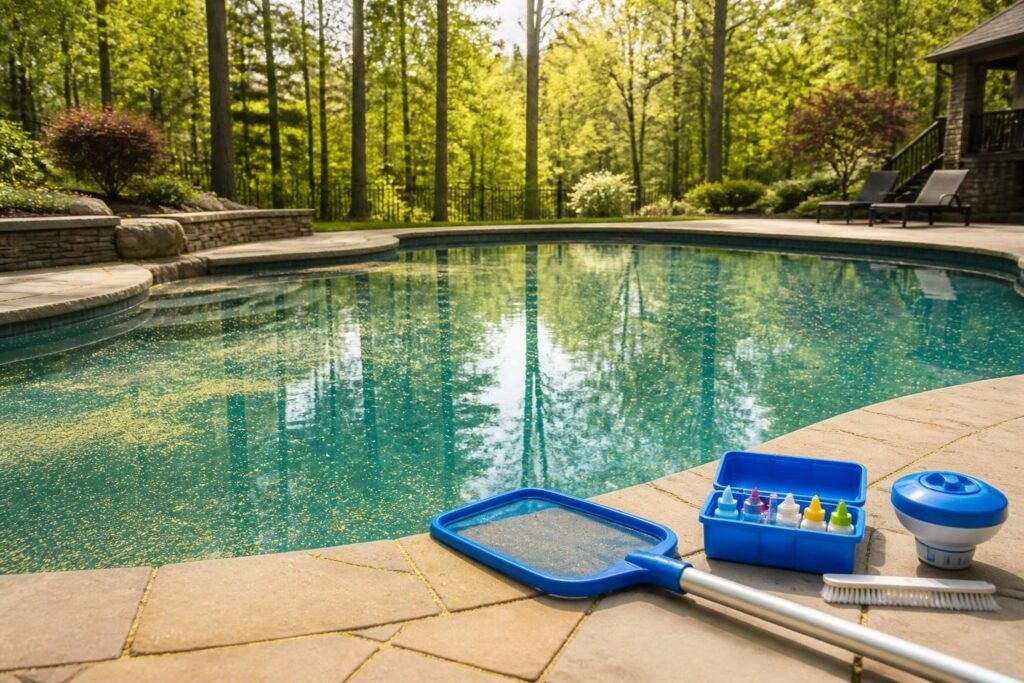
North Carolina pollen pool maintenance becomes especially important during spring, when yellow-green dust can collect on the water, deck, furniture, and nearby landscaping. Pollen is more than a cosmetic nuisance. It can increase skimming, filter cleaning, surface brushing, and water-testing needs.
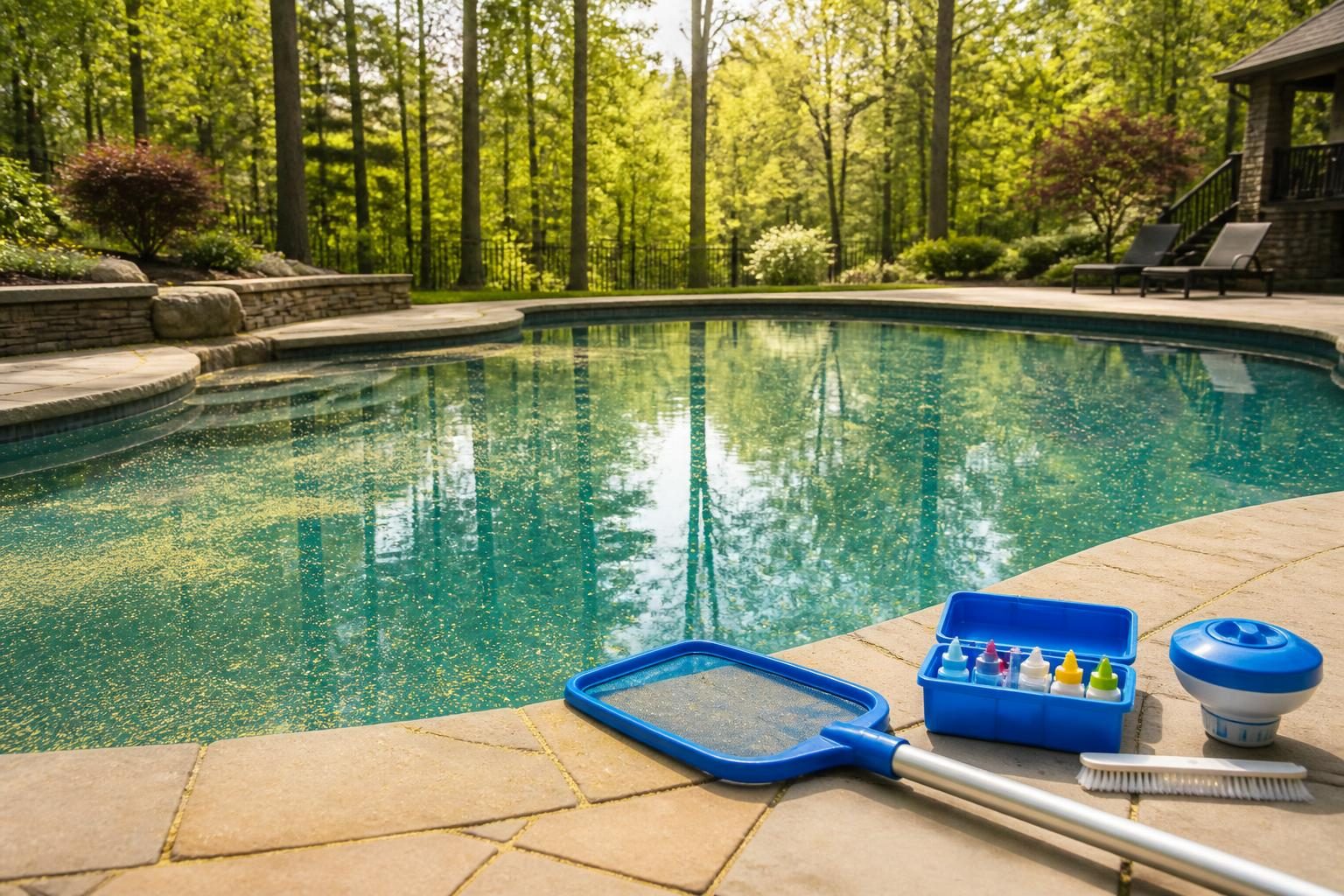
The right response is usually a consistent routine rather than a large chemical adjustment. Pollen loads vary by location, weather, tree cover, wind, and rainfall. Use the guidance below as a planning framework, then follow your equipment instructions and advice from a qualified pool professional.
Why pollen changes pool care
Pollen is light enough to travel through the air and settle across an entire yard. Wind can carry it directly into the pool. Trees and shrubs near the water can add more material, while dry weather may keep pollen circulating longer.
Some pollen floats at first. Wind, swimmers, rain, and circulation can push it toward skimmers, steps, benches, corners, and the pool floor. Organic debris also adds demand to the filtration system. That does not mean every pollen event requires extra chemicals, but it does mean your normal observations matter.
- Surface load: A visible film can return soon after skimming.
- Filter load: The filter may collect pollen and other fine debris faster.
- Water appearance: The pool can look dull or hazy if debris remains in circulation.
- Testing needs: Heavy debris, rain, and increased use can make results change more quickly.
- Cleaning needs: Waterline marks and settled pollen may need gentle brushing or vacuuming.
Pollen itself is not a substitute for an algae diagnosis. Cloudiness, unusual color, persistent slickness, or a strong chemical odor can have several causes. Avoid guessing when the condition does not improve with routine cleaning and normal water care.
Good North Carolina pollen pool maintenance starts with observing how quickly debris returns. That observation helps you adjust cleaning frequency without automatically changing chemical treatment.
Build a pollen-season skimming routine
Skimming removes floating debris before it sinks or reaches the circulation system. During a heavy pollen period, check the surface more often than you would during a quiet week. A short daily inspection may be more useful than waiting for a thick layer to accumulate.
Use the basket and skimmer together
Empty the skimmer basket when debris begins restricting flow or when your equipment instructions call for it. Turn equipment off before opening a basket if the manufacturer’s instructions require that step. Keep hands, tools, and clothing away from moving equipment.
Clean the surface with a suitable leaf net or skimmer. Work slowly so pollen does not spread across the pool. If wind is strong, skim from the downwind side when practical. Check the pool after storms because rain can move pollen, leaves, and soil into the water.
Do not leave a full basket in place for convenience. Reduced flow can affect circulation and may put avoidable strain on equipment. If the basket fills repeatedly, ask a pool professional whether the current cleaning schedule and equipment setup suit the debris load.
During peak weeks, North Carolina pollen pool maintenance may require more frequent surface checks than your normal weekly routine. Let the visible debris load guide the schedule.
Protect filtration without over-cleaning
Your filter is designed to remove suspended particles from circulating water. Pollen can make that job more noticeable. A rising pressure reading, reduced return flow, or visible debris around the system may indicate that the filter needs attention.
Use the filter manufacturer’s cleaning method and pressure guidance. Cartridge, sand, and diatomaceous earth filters do not receive the same care. Avoid opening a pressurized system unless you understand the shutdown and pressure-release procedure.
Record the normal clean-filter pressure after service. Then compare later readings with that baseline. A change can help you identify a cleaning need earlier, but a pressure reading alone does not diagnose every circulation problem.
- Inspect the skimmer basket and pump basket regularly.
- Watch for reduced return flow or unusual equipment sounds.
- Note filter pressure before and after cleaning.
- Follow the correct cleaning method for your filter type.
- Never mix filter chemicals or improvise a cleaning procedure.
A filter may need more frequent service during a heavy pollen event. Cleaning it too often can also waste water or shorten service life, depending on the system. Follow the equipment guidance and ask a qualified pool technician when readings change suddenly.
For broader seasonal planning, review this North Carolina humidity pool maintenance guide. Humidity, rain, heat, and organic debris can overlap with pollen-season concerns.
Keep testing tied to conditions
Testing helps you see how the water is responding to weather, debris, use, and treatment. Pollen does not create one universal chemical schedule. Instead, use visible conditions and test results to decide whether your routine needs attention.
Test according to your product instructions and the guidance for your pool system. Pay attention to sanitizer and pH, along with any other levels your pool professional has asked you to monitor. The CDC provides general guidance about home pool water treatment and testing.
Test after conditions that may change the water, such as heavy rain, unusually high use, or a long period with substantial debris. Record the date, weather, results, and actions taken. A simple log can show whether a problem is occasional or recurring.
Testing is an important part of North Carolina pollen pool maintenance because debris, rain, and swimmer use can overlap. Test before making chemical changes rather than relying on the water’s appearance alone.
- Test water before making chemical changes.
- Use a clean sample container and follow the test method.
- Do not add products based only on water color or smell.
- Keep chemicals away from children, pets, heat, and incompatible products.
- Ask a pool professional about results that remain outside the expected range.
When testing shows a significant imbalance, do not compensate by adding several products at once. Follow label directions and allow the system to circulate as instructed. If you are unsure about compatibility, dosage, or safe handling, pause and get professional guidance.
Clean pool surfaces before pollen settles
Floating pollen eventually collects at the waterline and on horizontal surfaces. A regular brushing and vacuuming routine can prevent a thin layer from becoming harder to remove. Use tools approved for your pool finish.
Brush steps, benches, corners, and other areas where circulation is weaker. Vacuum settled debris when needed, following your equipment instructions. Some systems can send debris through the filter, while others use a different removal setting. Do not change valve positions without understanding the system.
Waterline cleaning deserves care. Avoid abrasive pads, harsh household cleaners, and unapproved products. These can damage finishes, tile, grout, or coping. The pool surface and surrounding materials may require different cleaning methods.
For seasonal attention to the edge of the pool, see pool tile and coping maintenance in North Carolina. If you are planning a new pool, material choices can also affect future cleaning habits. This guide to comparing pool surface finishes for maintenance explains broader homeowner considerations.
Reduce pollen entering the pool
Maintenance begins beyond the water. Look at the areas that collect or direct debris toward the pool. Overhanging branches, open planting beds, blowing mulch, and uncovered outdoor furniture can all add to the cleanup routine.
Do not remove or heavily prune established plants without checking with an appropriate landscaping professional. Instead, identify practical changes that reduce debris while preserving access and plant health.
- Keep loose mulch and soil from washing onto the deck.
- Check that nearby irrigation does not spray the pool.
- Clear deck drains and surface channels of pollen and leaves.
- Use a pool cover only as directed and keep it clean.
- Store outdoor cushions and toys so they do not blow into the water.
A cover can reduce airborne debris when installed and handled correctly. It does not replace barriers, supervision, water testing, or routine equipment care. Keep safety as the first consideration whenever a cover is used.
Plant selection also affects long-term cleanup. Read poolside landscaping plants for North Carolina yards before adding or replacing plants near the pool.
A practical pollen-season checklist
Use this checklist during weeks when pollen is visibly heavy:
- Inspect the surface and remove floating pollen.
- Check and empty baskets as needed.
- Confirm normal circulation and look for unusual flow changes.
- Test water according to your routine and after major weather events.
- Brush steps, corners, and other low-circulation areas.
- Vacuum settled debris using the correct equipment setting.
- Inspect the waterline and clean it with an approved method.
- Review filter pressure against your clean baseline.
- Record weather, test results, filter service, and unusual observations.
Adjust the frequency to your property. A wooded lot, open field, construction nearby, or windy exposure may need more attention than a sheltered yard. Conversely, a light pollen week may not require extra work.
Keep the checklist flexible. Effective North Carolina pollen pool maintenance responds to weather, landscaping, equipment readings, and test results instead of following one rigid calendar.
Know when routine care is not enough
Contact a qualified pool professional when the water remains cloudy, circulation changes, filter pressure behaves unexpectedly, or the surface develops a stain that routine cleaning does not remove. Ask for a clear explanation of the observed condition and the recommended next step.
Keep product labels, test records, equipment manuals, and service notes together. These records can help a technician understand what changed and prevent conflicting treatments.
North Carolina weather and property conditions vary. Consult your pool contractor or pool-service professional for system-specific care. An electrician, landscape professional, or other qualified specialist may also be appropriate when pollen problems connect to equipment, drainage, irrigation, or plant conditions.