
A North Carolina humidity pool maintenance guide can help homeowners adjust routine care for heat, moisture, rainfall, debris, and long swimming seasons. Humid weather does not create one universal chemical schedule. Instead, it changes how quickly conditions can shift.
Warm water, storm runoff, leaves, pollen, and heavy use can all affect clarity and sanitizer demand. Evaporation can also concentrate some substances, while rain may dilute others. The practical goal is simple: observe the pool often, test consistently, remove debris promptly, and inspect equipment before a small change becomes a larger maintenance problem.
Why humidity changes pool water conditions
Humidity is moisture in the air. It affects the drying rate around the pool, but it does not replace water testing. Your pool responds to several conditions at once: water temperature, sunlight, rainfall, swimmer load, organic debris, circulation, and the type of sanitizer system installed.
Warm weather often increases swimmer use and can speed the breakdown of sanitizer. Sweat, sunscreen, grass, and dirt add contaminants. Trees and storms add leaves, pollen, soil, and other organic material. Those inputs can increase the work required from the filter and sanitizer.
Evaporation removes water, not every dissolved substance. As water leaves the pool, some materials can become more concentrated. Rain can have the opposite effect by adding water while changing the balance of the pool. After either condition, test before making major adjustments.
- Check water temperature and note unusual changes.
- Look for cloudiness, surface film, staining, or a strong chemical odor.
- Record heavy rain, high bather use, and visible debris.
- Confirm that return jets show normal circulation.
Build a humid-weather water care routine
The best North Carolina humidity pool maintenance guide is a routine you can repeat. A quick visual check each day can reveal problems before they spread. Testing frequency should follow your pool professional’s instructions, product labels, and the needs of your water and equipment.
Use a simple inspection sequence
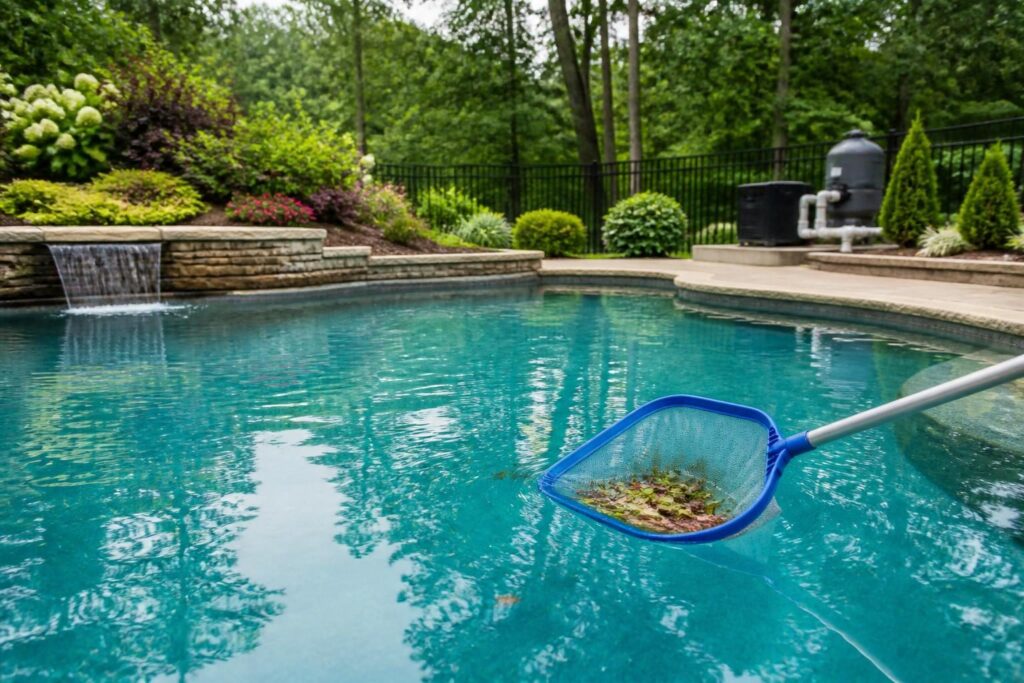
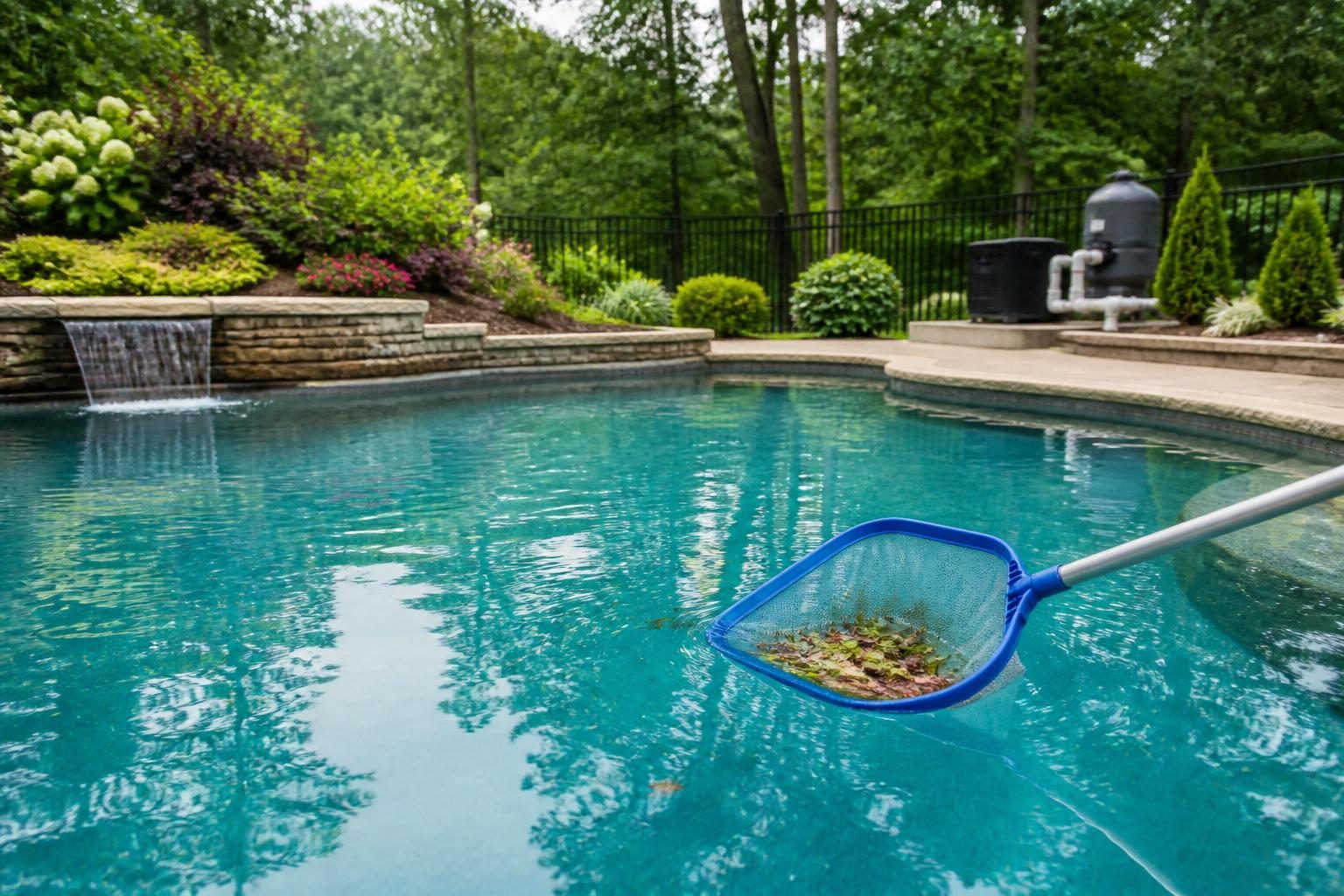
Start at the surface. Skim leaves, insects, pollen, and other debris before they sink or break down. Empty baskets when needed, but turn equipment off according to the manufacturer’s instructions before opening a pump basket or handling equipment.
Next, inspect the water. Note clarity, color, foam, and unusual odors. Test the key water conditions recommended for your system. The Centers for Disease Control and Prevention provides residential guidance on testing, chlorine, and pH in its home pool water treatment and testing guidance.
Do not add chemicals based only on smell or appearance. Follow the label, use compatible products, and avoid mixing chemicals. If test results seem inconsistent, pause and ask a qualified pool professional or water-care specialist for help.
Respond after rain and heavy use
Rain may introduce dirt and organic material. It can also raise the water level and affect drainage around the pool. Heavy swimming can add body oils and other contaminants. After either event, remove debris, check the water level, test the water, and confirm normal circulation.
For a focused review of water-level decisions after storms, see water level management after heavy rain. Avoid draining or adding large amounts of water without considering the pool structure, local conditions, and professional guidance.
Control algae risk without guessing
Algae risk rises when warm water, sunlight, nutrients, and weak circulation occur together. Humidity alone is not a diagnosis. Green, yellow, or cloudy water can have different causes, including chemistry, filtration, contamination, or equipment problems.
Brush surfaces as part of your normal care plan, especially in corners, steps, benches, and areas with limited circulation. Vacuum or use the cleaning method suited to your pool. Keep the water moving for the operating period recommended for your system and conditions.
Watch areas that collect pollen and leaves. Organic debris can consume sanitizer as it breaks down. Clean the skimmer and pump baskets, and check the filter pressure or other service indicator used by your equipment. A rising pressure reading may indicate that the filter needs attention, but use the manufacturer’s instructions rather than a generic rule.
- Clear water does not prove every parameter is balanced.
- Follow label directions instead of increasing chemical doses on your own.
- Recurring algae deserves attention after repeated cleaning.
- Ask a pool professional to investigate circulation or equipment concerns.
Recurring growth may point to a pattern rather than a single missed cleaning. Keep notes showing test results, weather, cleaning, filter service, and chemical additions. Those records can help a professional identify trends.
Protect equipment during heat, rain, and moisture
A North Carolina humidity pool maintenance guide should include the equipment area, not only the water. Pumps, filters, heaters, salt systems, controls, and electrical components operate outdoors in changing conditions. Moisture, flooding, poor ventilation, debris, and heat can affect service life and safe operation.
Keep the equipment area clear of leaves, grass clippings, stored items, and standing water. Do not block required airflow around a heater or enclose equipment without professional review. Check for unusual sounds, leaks, error messages, damaged covers, or exposed wiring from a safe distance.
Never open electrical equipment or remove panels unless you are qualified and authorized to do so. Turn off equipment and contact the appropriate licensed professional if you notice an electrical concern, burning smell, water intrusion, or repeated fault.
Review pump and filter conditions
Confirm that the pump starts normally and that water returns through the intended outlets. A change in sound, flow, pressure, or priming behavior deserves attention. Do not continue operating equipment that appears damaged or unsafe.
Filter cleaning intervals depend on filter type, debris load, water conditions, and manufacturer instructions. Humid, stormy weather can increase debris and shorten the interval. Record each cleaning and the condition you observed.
Energy use also matters during long warm-weather operating periods. When comparing pump choices or replacements, review certified performance information and professional sizing. ENERGY STAR offers information about certified pool pumps and energy considerations at ENERGY STAR pool pumps.
Adjust care through North Carolina seasons
Seasonal changes call for different attention, even when the pool remains open. Spring often brings pollen, storms, and increasing use. Summer combines heat, sunlight, humidity, and frequent swimming. Fall adds leaves and shorter daylight. Winter may reduce use without eliminating equipment or water-care needs.
In spring, inspect covers, baskets, circulation, surfaces, and drainage before regular use increases. Test the water and confirm that cleaning equipment works. Pollen can make the pool look dirty quickly, so frequent skimming may be more useful than occasional deep cleaning.
During summer, create a short daily check. Look at the water, skim debris, verify equipment operation, and note heavy use. Keep chemicals stored safely and follow product labels. A cover may reduce debris and evaporation when used correctly, but it must never replace required safety measures or proper water care.
In fall, remove leaves before they sink. Keep the filter and baskets from becoming overloaded. If you reduce operating hours or close the pool, obtain region- and system-specific instructions. North Carolina winter conditions differ by location, so review winter pool care questions for North Carolina before changing equipment settings.
Keep a practical maintenance record
A written record turns scattered observations into useful information. It does not need to be complicated. Use a notebook, spreadsheet, or maintenance app. Record the date, weather, water appearance, test results, cleaning tasks, filter service, and equipment observations.
Questions your records should answer
- When did the water first become cloudy or discolored?
- How much rain or debris occurred before the change?
- Were swimmers, parties, or landscaping work involved?
- Did circulation, pressure, or equipment sounds change?
- Which products were used, and were label directions followed?
- What happened after the pool was cleaned or tested?
Use the record to spot patterns. For example, repeated cloudiness after storms may require a professional review of drainage, filtration, circulation, or water-care practices. Avoid treating the same symptom repeatedly without identifying its likely cause.
A homeowner checklist for humid weather
Use this North Carolina humidity pool maintenance guide as a starting point, then adapt it to your pool system and professional instructions.
- Inspect the surface and remove debris.
- Check clarity, color, odors, and visible contamination.
- Test water using a suitable method and follow current guidance.
- Check water level without making major changes by guesswork.
- Confirm normal pump flow and inspect baskets.
- Review filter pressure or the manufacturer’s service indicator.
- Keep the equipment area dry, open, and free of debris.
- Note heavy rain, heat, high use, and unusual equipment behavior.
- Contact a qualified professional when conditions do not improve.
Weather creates changing conditions, not automatic instructions. If water remains unsafe or equipment behaves unusually, stop relying on trial and error. Consult a licensed pool contractor, water-care professional, electrician, or equipment technician as appropriate. For drainage, flooding, structural, or site concerns, ask a qualified engineer or other specialist. Verify any local permit, inspection, electrical, barrier, or environmental-health requirement with the local authority. Build a Pool in North Carolina offers homeowner education, but local professionals remain responsible for project-specific advice.