
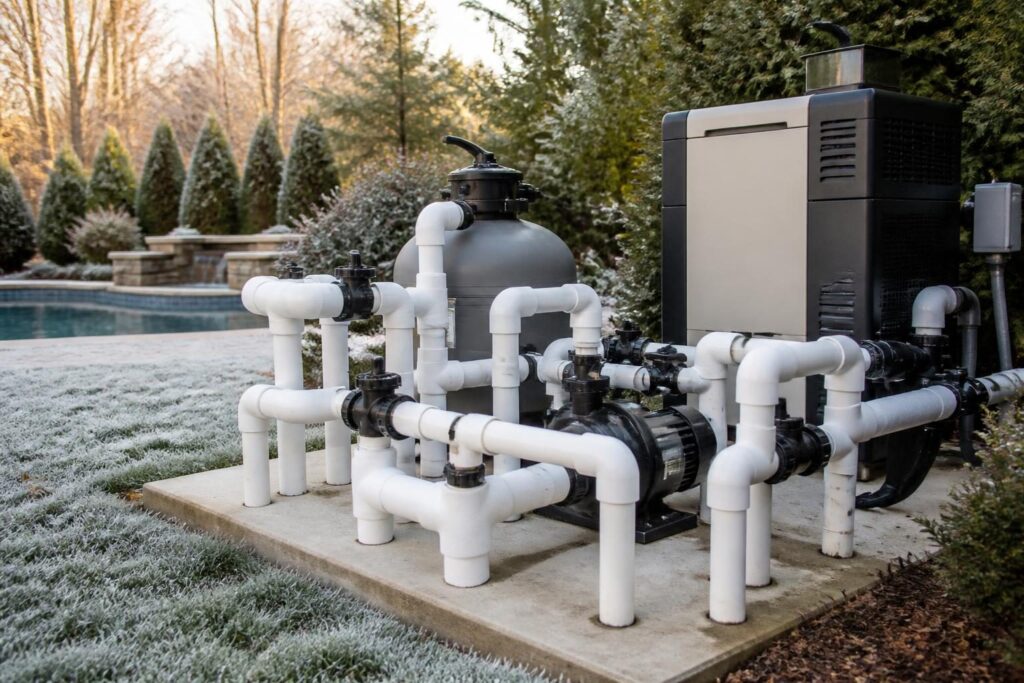
Pool plumbing freeze protection North Carolina homeowners can understand starts with one fact: water left in exposed plumbing may expand as it freezes. That expansion can stress pipes, fittings, valves, filters, pumps, heaters, and other equipment. A good plan combines the pool design, equipment controls, weather monitoring, circulation instructions, and a clear response plan.

North Carolina does not have one uniform winter pattern. Mountain areas, inland communities, the Piedmont, and the coast can experience different temperatures, wind, power conditions, and freeze duration. Your local conditions and pool system design matter. Use this guide to prepare questions, not to replace instructions from your pool professional or equipment manufacturer.
Why pool plumbing needs a freeze plan
Water expands when it freezes. A pipe does not need to split immediately for damage to occur. Pressure can build at a blocked section, closed valve, low point, or trapped pocket. A later thaw may reveal a leak that was not visible during the cold weather.
Freeze risk also depends on exposure. Plumbing above ground, equipment on an open pad, and lines near unheated spaces may lose heat faster than buried lines. Wind can increase heat loss around equipment. A short cold snap may affect one part of a system while a longer event affects several components.
Ask your installer to explain which parts rely on water movement, which parts have built-in sensors, and which parts need manual attention. Do not assume an automation feature protects every pipe. The protection method must match the pump, valves, heater, controls, plumbing layout, and available power.
Vulnerable pool plumbing components
A pool system has more freeze-sensitive parts than the visible pump and filter. During handover, ask for a labeled equipment diagram. The diagram should show flow direction, valves, drains, return lines, water features, and any separate circuits.
Equipment-pad components
- Pump housing and strainer pot: Water may remain inside the housing and lid area. The manual should explain normal operation and what to do during a power outage.
- Filter tank and valves: Filters can hold water after circulation stops. Multiport, cartridge, and other valve arrangements may have different service and draining instructions.
- Heater or heat-pump heat exchanger: These units may contain internal water passages. Only follow the specific draining or bypass instructions for that model.
- Check valves and automatic valves: A valve can trap water between closed sections. Its position may change how water drains or circulates.
- Salt systems, chemical feeders, and flow cells: These components can contain water and may have separate temperature, flow, or storage instructions.
Small fittings deserve attention too. Unions, plugs, gauges, pressure-relief components, sight glasses, and short exposed pipe sections can be vulnerable. A cover or enclosure may reduce weather exposure, but it must not block ventilation, service access, or manufacturer-required clearances.
Pool-side and buried plumbing
Return lines, cleaner lines, spa lines, water-feature lines, and autofill connections can all form part of the freeze discussion. Buried plumbing does not automatically avoid every cold-weather risk. Depth, soil conditions, pipe routing, slopes, low points, and connections near the equipment pad may affect how water remains in the system.
Ask whether any line can be isolated or drained. Request the location of cleanouts, drain points, plugs, and valves. Keep photographs before landscaping hides access points. If the pool includes a raised spa, spillway, fountain, bubbler, or slide plumbing, confirm whether each circuit needs a separate procedure.
Circulation during freezing weather
Many pool systems use circulation to reduce the chance of still water freezing in exposed plumbing. Some controls start the pump when a temperature sensor reaches a selected setting. Others use scheduled circulation or a programmed freeze-protection mode.
That feature only works when the system has power, the pump can operate, valves sit in the correct positions, and the sensor works as intended. A frozen or obstructed pump basket, closed valve, air leak, fault code, or tripped breaker can interrupt protection.
Pool plumbing freeze protection North Carolina plans should address the exact control sequence. Ask a qualified pool professional to explain:
- Which sensor measures the relevant air or equipment temperature.
- What starts circulation and what stops it.
- Whether the system rotates through spa, cleaner, or water-feature circuits.
- How the heater, chlorination equipment, and chemical feeders respond.
- What alerts appear when flow stops or power fails.
- How long backup power, if any, can support essential controls.
Circulation is not the same as heating. Running a heater during unusual conditions may create equipment, fuel, electrical, or water-flow concerns. Follow the equipment manual and the instructions provided for your specific installation.
Weather-response steps for homeowners
Build a simple response plan before the first cold forecast. Review it when temperatures may fall below the settings specified by your pool professional or equipment manufacturer. Regional forecasts can change quickly, so use current local weather information.
Before the freeze
- Confirm that the equipment pad has power and that the control panel shows normal operation.
- Check that valves sit in the normal operating positions shown in your system diagram.
- Remove leaves and debris that could restrict the pump basket or skimmer flow.
- Confirm that automation schedules and freeze settings have not changed accidentally.
- Check that equipment doors, covers, and enclosures remain secure but properly ventilated.
- Bring removable accessories indoors if the manufacturer recommends indoor storage.
- Keep chemical products dry and store them according to their labels.
During freezing conditions
Watch the system without placing yourself in danger. Look for normal circulation, expected control-panel status, and unusual alarms. Do not open pressurized equipment, remove plugs, or manipulate electrical components while standing in water or during unsafe weather.
A power interruption changes the plan. Contact the pool professional or electrician identified in your records for system-specific direction. Do not improvise with heaters, extension cords, space heaters, blankets, or temporary enclosures. Those actions can create fire, electrical, ventilation, or equipment risks.
After temperatures rise
Inspect the equipment pad and nearby ground before returning to normal operation if the system experienced a shutdown or suspected freeze. Look for dripping unions, cracked housings, displaced plugs, wet soil, air bubbles, low water level, error messages, or unusual pump sounds.
A thaw does not prove that the system remains undamaged. If you see a leak or lose normal flow, shut down equipment only as directed by the system manual or qualified professional. A licensed specialist can determine whether the system needs pressure testing, part replacement, electrical checks, or controlled restart.
Questions for the pool operating manual
A useful manual should explain your actual system. Generic winter advice is not enough when the pool has multiple circuits, automation, a heater, a spa, or water features. Ask for written answers and labeled photographs during handover.
- What equipment and plumbing sections face the greatest freezing exposure?
- Which parts must circulate during cold weather?
- What freeze-protection setting applies to this control system?
- Where are the temperature sensors, drain points, isolation valves, and plugs?
- Which circuits require separate circulation or draining?
- What should happen if the pump stops, a flow alarm appears, or power fails?
- Which components may the homeowner drain, and which require a professional?
- What manufacturer manuals cover the pump, filter, heater, valves, automation, and sanitizer?
- Who should be contacted for a leak, frozen component, power problem, or control fault?
- Which observations should be photographed and recorded after a cold-weather event?
Keep the instructions with equipment model numbers, warranty information, service contacts, and a plumbing diagram. A pool equipment startup checklist can help you identify missing handover information. You can also use a pool maintenance record to note weather, circulation status, alarms, water level, and service visits.
Design and handover questions to raise early
Pool plumbing freeze protection North Carolina planning begins before the pool is filled. During design and construction, ask how the plumbing layout supports access, drainage, isolation, and future service. Request confirmation of line locations before crews cover trenches, along with photographs and updated drawings.
At the equipment pad, review pipe supports, unions, valve labels, access space, drainage, and protection from roof runoff. If the pad is enclosed, confirm ventilation and service clearances. The equipment plan should also account for power reliability and safe access during storms or icy conditions.
For broader seasonal planning, review North Carolina pool winterization questions and the separate guide to protecting pool equipment during winter. These topics overlap, but plumbing protection still requires instructions for your particular system.
Water chemistry remains part of routine operation, not a substitute for freeze protection. For general residential testing information, consult the CDC guidance on home pool water treatment and testing. Follow product labels and your qualified professional’s instructions for your pool.
Records that make cold-weather service easier
Keep a dated record when freezing weather is expected or has occurred. Note the forecast, control settings, pump status, alarms, power interruptions, visible leaks, water level, and actions taken. Add photographs of the equipment pad and any unusual condition.
Store these records with the operating manual:
- Equipment model and serial numbers.
- Plumbing and valve diagrams.
- Freeze-protection settings and sensor locations.
- Manufacturer draining and restart instructions.
- Installer handover notes and service contacts.
- Photos of concealed plumbing routes and access points.
- Records of repairs, replacement parts, and professional inspections.
Pool plumbing freeze protection North Carolina planning works best when every household member knows the normal system status and the limits of safe homeowner action. Confirm current local requirements and system-specific instructions with the local inspections department when applicable, a licensed pool contractor, electrician, engineer, or other qualified specialist. Seek professional help for electrical faults, suspected pipe damage, pressure concerns, equipment leaks, or any condition you cannot safely evaluate.