
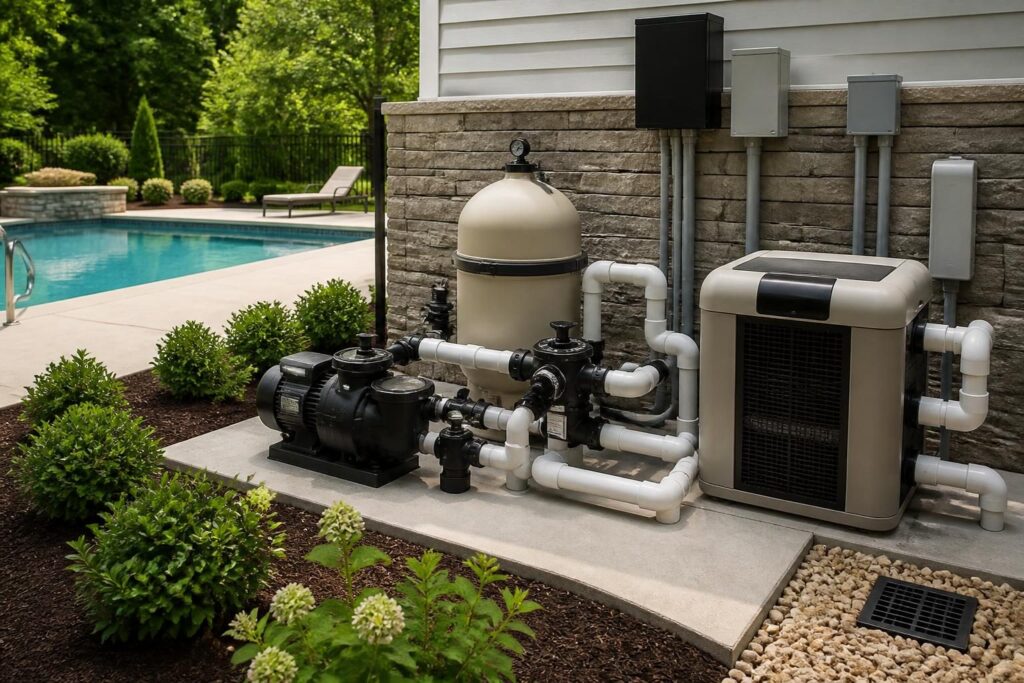
A pool equipment startup checklist North Carolina homeowners can use should do more than confirm that the pump turns on. Handover is your opportunity to learn each system, collect records, and understand what to do when an alarm or reading changes.
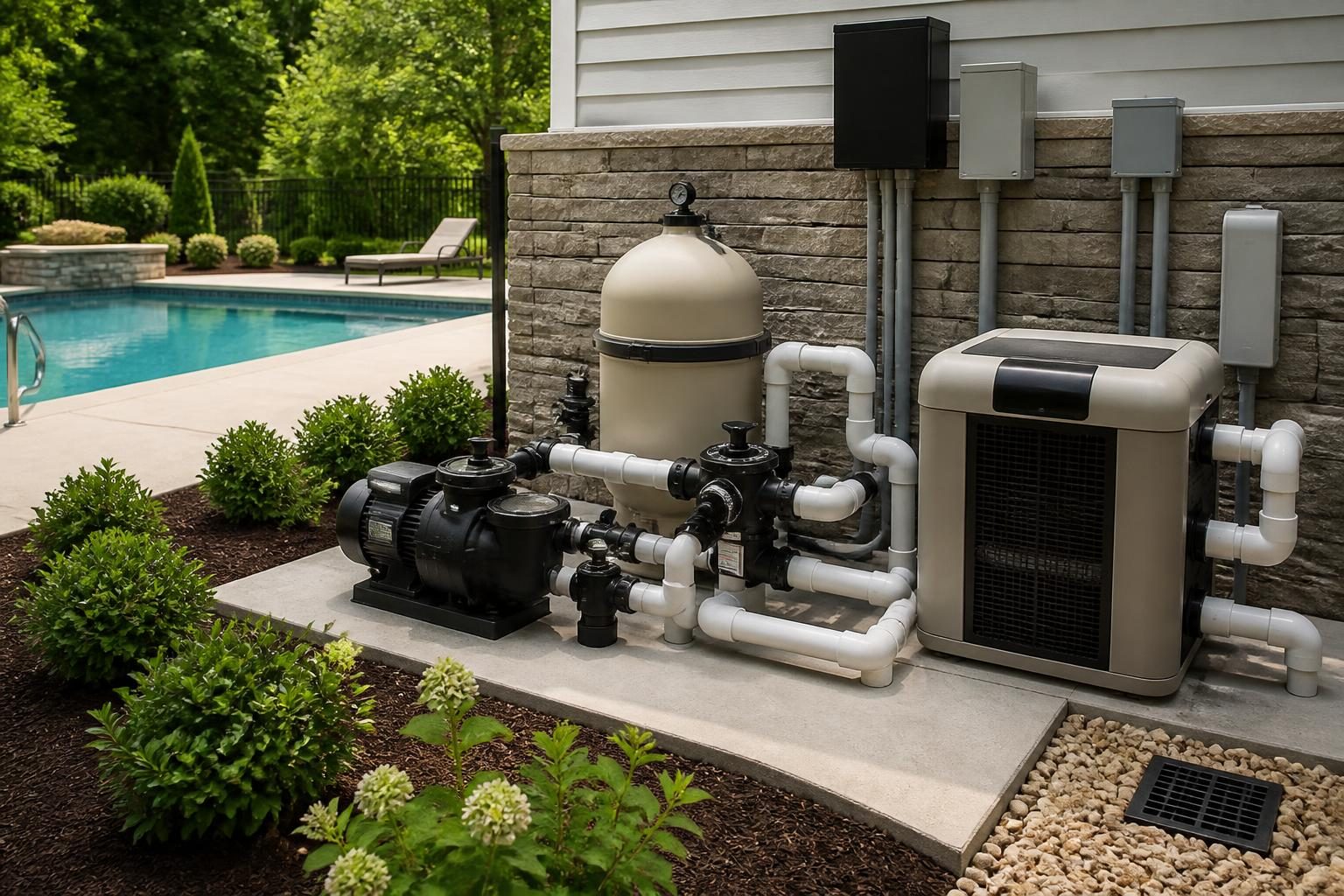
Equipment includes the circulation pump, filter, heater, sanitation system, valves, controls, lights, alarms, and related electrical components. The exact setup depends on the pool design, selected products, property conditions, and local requirements.
Start with a complete equipment handover
Ask the pool contractor to walk through the equipment while it operates. Do not rely only on a sales brochure or a quick demonstration. Request plain-language explanations, written instructions, and model-specific manuals.
Record the manufacturer, model, serial number, installation date, and warranty contact for every major component. Photograph labels and the overall equipment pad. Keep those files with your project records.
- Identify the pump, filter, heater, sanitizer, valves, controller, sensors, and breakers.
- Confirm which equipment is automatic and which steps require homeowner action.
- Ask which valves must remain open during normal circulation.
- Learn the normal pressure, flow, temperature, and display readings for your system.
- Request a written startup and shutdown sequence.
- Confirm who should handle service, warranty questions, and replacement parts.
A useful handover also explains what not to adjust. Valve positions, electrical connections, gas lines, and heater settings may require a qualified professional. Marking a valve with a small label can help, but do not alter the system without understanding its purpose.
For a broader records and ownership list, review the new pool handover checklist. Use the equipment list below as a focused companion during the demonstration.
Pool equipment startup checklist North Carolina owners should use at the pad
Pump and circulation
Start by learning the pump’s control panel or automation schedule. Ask how to select speeds, set run periods, read alerts, and place the pump in service mode. A variable-speed pump may use different settings for filtering, heating, cleaning, and water features.
- Check that the pump starts without unusual sounds, leaks, or visible vibration.
- Learn how to open the lid safely and inspect the pump basket.
- Ask when the basket should be emptied and how the lid seal is maintained.
- Confirm the normal water level needed for reliable skimmer operation.
- Record the programmed schedule and any seasonal changes.
Never reach into moving equipment or open a pressurized system. Turn off power according to the manufacturer’s instructions, and ask a qualified professional when the procedure is unclear. ENERGY STAR offers general information about certified pool pumps and energy performance; product instructions still control your specific equipment.
Read the ENERGY STAR pool pump guidance when comparing efficiency information or documenting your pump model.
Filter and pressure readings
Ask whether the system uses a cartridge, sand, or diatomaceous earth filter. Each type has different cleaning and media requirements. Your handover documents should identify the filter type and explain its normal maintenance cycle.
- Write down the clean-start pressure shown on the gauge.
- Learn what pressure change indicates cleaning or backwashing for your model.
- Confirm where replacement cartridges, filter media, or approved materials come from.
- Ask how to release pressure before opening the filter.
- Record any backwash, waste, or drainage connection and where it leads.
Do not treat a pressure number from another pool as your target. Plumbing layout, pump speed, filter size, water features, and elevation all affect readings. Use the contractor’s documented baseline and the manufacturer’s instructions.
Review heating, sanitation, and water-care controls
Heater startup and operating limits
Identify whether the pool uses a heat pump, gas heater, solar-assisted system, or another arrangement. Ask how the heater receives a call for heat, how it shuts down, and which conditions prevent operation.
- Record the heater model, fuel or electrical supply, and controller connection.
- Learn the normal startup display and the meaning of common fault codes.
- Ask whether the pump must run before the heater can operate.
- Confirm how to set a target temperature and return to the normal schedule.
- Learn the required clearance and access area around the heater.
Do not bypass a safety switch, reset a repeated fault without investigation, or adjust fuel and electrical connections yourself. Consult the licensed professional responsible for that work. For planning context, see pool heater energy efficiency planning.
Sanitation and chemistry
Sanitation controls help manage microorganisms, but they do not replace testing and routine care. Your system might use a salt chlorine generator, liquid chlorine, tablets, an automatic feeder, ultraviolet equipment, or a combination.
- Identify the sanitation method and the approved consumables.
- Record normal controller settings and any sensor calibration instructions.
- Ask how to inspect a salt cell, feeder, injector, or dosing line.
- Learn which chemicals must never be mixed.
- Confirm how chemicals should be stored, labeled, and kept away from children.
Use a test method suited to your pool and follow product directions. The CDC explains residential pool testing, chlorine, and pH in its home pool water treatment guidance. Local conditions and the equipment design may require advice from a qualified pool professional.
Understand valves, automation, alarms, and electrical interfaces
Valves control where water moves. A valve may direct flow to the skimmer, main drain, spa, heater, cleaner, or water feature. Ask the contractor to demonstrate each normal position and explain which combinations could restrict flow or damage equipment.
Automation may connect the pump, heater, lights, sanitizer, water features, temperature sensors, and phone application. Confirm the network login process without placing passwords in a public project file. Ask how to operate the system manually if the internet or app is unavailable.
- Save the final equipment schedule and control names.
- Record sensor locations and the meaning of each alert.
- Test remote controls while standing near the equipment.
- Confirm whether schedules use daylight saving or another time setting.
- Learn how to place equipment in service, maintenance, or vacation mode.
Safety alarms deserve a separate demonstration. Test door, gate, surface, or water-level alarms according to their instructions. An alarm is one layer of protection, not a substitute for supervision, compliant barriers, or safe behavior.
North Carolina requirements can vary by jurisdiction and adopted code. Confirm current barrier, electrical, and inspection questions with the local inspections department and the appropriate licensed professional. The North Carolina Office of State Fire Marshal documents can help you find current state-level code materials, but local interpretation remains important.
Build an operating record before you take ownership
Good records make routine maintenance easier and give service professionals useful information. Start with a one-page equipment register, then add readings and events over time.
| Record | What to capture |
|---|---|
| Equipment identity | Brand, model, serial number, installation date, and manual |
| Normal operation | Schedule, pump speed, filter pressure, valve positions, and temperature settings |
| Water care | Test results, chemical additions, sanitation settings, and unusual water conditions |
| Service history | Date, observed issue, person contacted, work performed, and parts used |
| Safety checks | Alarm tests, access review, and any follow-up needed |
Take a dated photo of the normal control screens and valve positions. Store digital copies in two places. Keep paper manuals in a dry location, and note any manufacturer registration deadlines.
Ask for written confirmation of unresolved items before the handover closes. Examples include a missing manual, an untested alarm, an unexplained alert, a damaged label, or a control that does not match the final plan.
Run a homeowner practice session
A final practice session should let you perform routine steps while the contractor observes. The goal is not to make you a technician. It is to help you operate the system safely and recognize when to stop.
- Start and stop normal circulation.
- Read the pump and filter displays.
- Check the skimmer and pump baskets.
- Review the filter cleaning procedure without opening a pressurized vessel.
- Set a temporary heating target, if applicable.
- Run the lights and water features.
- Test alarms using the approved method.
- Locate breakers, shutoffs, emergency contacts, and manuals.
Write down anything you cannot repeat confidently. Ask for a second demonstration rather than guessing. If an alarm, leak, electrical concern, gas odor, or pressure change appears, stop using the affected equipment and contact the appropriate qualified professional.
North Carolina handover questions to ask
Use these questions during the final walkthrough:
- What readings show that the system is operating normally?
- Which tasks belong in the weekly, monthly, and seasonal routine?
- What weather conditions require a different operating plan?
- What should happen during a power outage or heavy rain?
- Which repairs require a licensed electrician, gas professional, or other specialist?
- Where can I find current manuals, warranty terms, and service contacts?
- What work remains incomplete, and who will document its completion?
Heavy rain, flooding, and nearby landscaping can affect equipment access, water levels, drainage, and electrical safety. Keep the North Carolina pool hurricane preparation guidance with your seasonal records.
A careful pool equipment startup checklist North Carolina homeowners use should end with documents, demonstrations, baseline readings, and clear follow-up responsibilities. This pool equipment startup checklist North Carolina owners can print is a learning tool, not merely a final signature. Build a Pool in North Carolina encourages owners to treat handover as a learning step.
When a question involves permits, barriers, inspections, electrical work, fuel systems, drainage, structural conditions, or water treatment, consult the local inspections department, licensed pool contractor, electrician, engineer, surveyor, septic professional, or other qualified specialist as appropriate. Verify current North Carolina and local requirements before relying on any general checklist.