
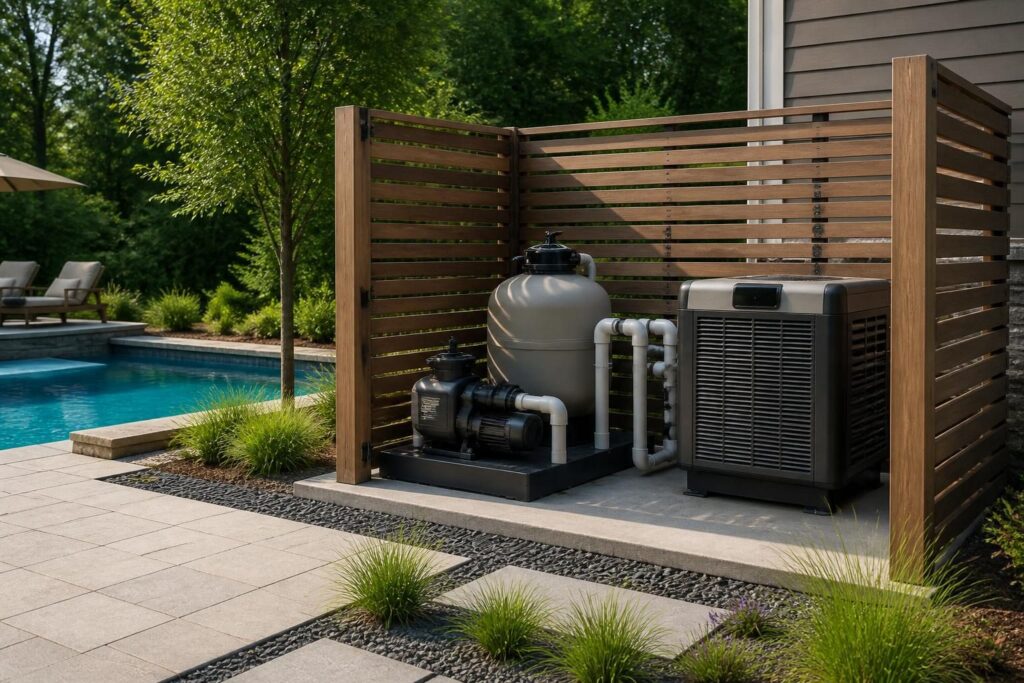
Homeowners often want to reduce residential pool equipment noise service access without creating a cramped enclosure that makes maintenance harder. The best solution usually combines equipment placement, pump selection, vibration control, screening, airflow, and clear working space.
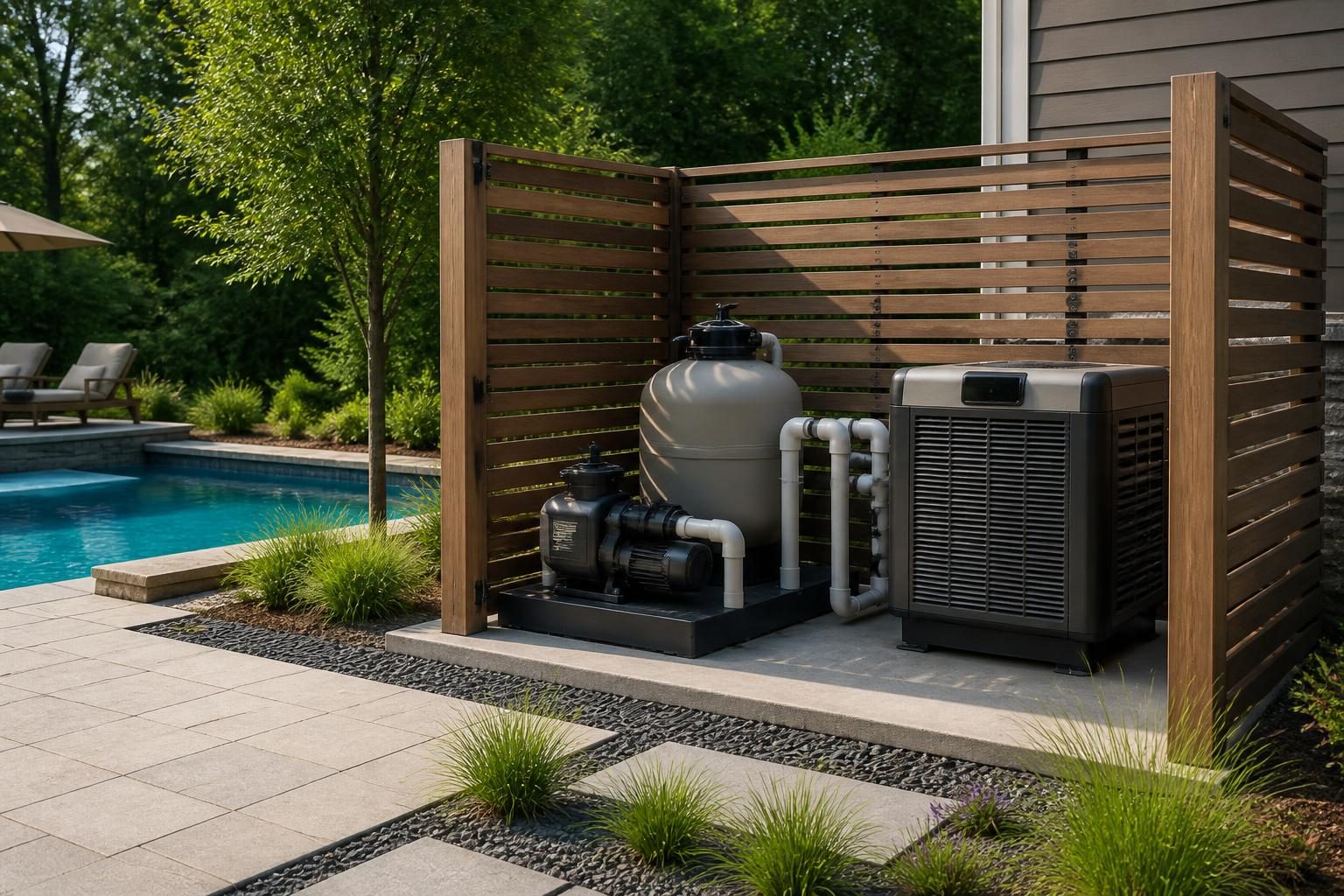
Noise can travel through air, hard surfaces, pipes, fences, and nearby walls. A screen may soften sound from one direction while doing little for vibration transmitted through the equipment pad. Moving equipment farther away can help, but it may affect plumbing, electrical work, drainage, access, or future repairs.
This guide compares the main strategies for a North Carolina residential yard. It does not replace local permitting guidance, manufacturer instructions, or advice from qualified pool, electrical, mechanical, or construction professionals.
Start with placement before adding screening
Placement is often the most durable noise-control decision. A pump or heater beside a bedroom, patio, screened porch, or property-line gathering area may be noticeable even when it operates normally. Consider where sound will travel at different times of day.
Use a site sketch to compare possible equipment locations. Mark the home, neighboring homes, patios, windows, fences, retaining walls, utility areas, and likely service routes. Include doors and gates that a technician may use.
- Place equipment away from frequently occupied rooms when the site allows.
- Avoid corners that reflect sound between two hard walls.
- Keep the route from the yard or driveway practical for replacement.
- Check for standing water, runoff, leaves, or roof drainage.
- Review plumbing length and elevation changes with the pool designer or contractor.
Do not choose a distant location based on sound alone. Longer plumbing runs can affect system design, and equipment still needs power, ventilation, drainage, and safe working space. A qualified pool professional can compare the tradeoffs.
For a broader layout review, see pool equipment location planning. The goal is a location that limits disturbance without turning future service into a special project.
Compare equipment choices and operating sound
Different equipment produces different sound patterns. A pump may create steady motor and water-flow sound. A heater can add fan or combustion-related noise, depending on its design. Automation equipment may be quiet but still needs access for controls, wiring, and troubleshooting.
Ask for exact model numbers before approving the equipment schedule. Review manufacturer information for sound-related details, clearances, airflow, mounting, and operating limits. Do not rely only on a product description or showroom demonstration.
Questions for the equipment proposal
- What sound information does the manufacturer publish?
- Does the pump use a variable-speed motor?
- At what speeds and schedules will it normally operate?
- Will the heater, booster pump, blower, or another accessory run at the same time?
- What clearance and ventilation conditions must the installer maintain?
- How will the system be reached for warranty work or replacement?
Variable-speed operation may allow lower-speed circulation during some periods, but the correct setting depends on the pool system and equipment design. Review sizing and operating schedules rather than assuming that a quieter motor solves every noise problem. The ENERGY STAR pool pump resource explains certified pump choices and energy-performance considerations.
A useful comparison should include sound, energy use, controls, service needs, equipment life, and plumbing compatibility. The quietest component may not produce the quietest complete system if another device or hard connection becomes the dominant source.
Use vibration control at the equipment pad
Vibration is movement from a motor or other operating component. It can travel into the pad, nearby wall, plumbing, conduit, or fence. This can make sound seem louder in another part of the yard or house.
The equipment pad should be stable, level, and suitable for the equipment. The installer may use approved mounting methods or isolation materials where the manufacturer permits them. Homeowners should not place improvised rubber, foam, wood, or masonry under equipment without professional approval.
Pipe connections deserve attention. Rigid piping that presses against a wall or frame can transmit vibration. Conduit and pipe supports can also create contact points. A pool professional should review connections, supports, valves, and equipment spacing.
What to document before installation
- Pad dimensions and location on the site plan.
- Equipment model numbers and mounting instructions.
- Proposed isolation pads or approved vibration-control components.
- Where pipes, conduit, and supports pass near walls or screens.
- How water will drain away from the pad during heavy rain.
- Which parts require access for cleaning, adjustment, or replacement.
For more detail, review equipment pad planning for homeowners. Keep the approved equipment plan with your project records. Field changes can affect both noise and service access.
Screening can reduce sound, but it must breathe
Screening may improve the appearance of equipment and reduce the direct path of sound toward a patio or window. Options include open fencing, slatted panels, masonry walls, planting, or a purpose-designed enclosure. Each affects airflow, moisture, leaves, access, and maintenance.
A solid enclosure is not automatically better. It may reflect sound toward the home, trap heat, restrict ventilation, or make controls difficult to reach. Pool heaters and fuel-burning equipment may have specific clearance and airflow requirements. Follow manufacturer instructions and obtain professional review before enclosing anything.
Open or partially open screening often offers a better balance for pump equipment. The design should block a direct line of sight where practical while leaving air paths around motors, vents, and service panels. It should also avoid creating a narrow tunnel for a technician.
Screening questions to ask
- Which sides need screening, and which must remain open?
- Will the screen reflect sound toward the house or a neighboring property?
- Can a technician remove equipment panels without dismantling it?
- Will leaves, vines, or irrigation spray collect around equipment?
- Can the screen withstand moisture, wind, and routine yard work?
- Does the structure require local review or approval?
Verify current local requirements with the appropriate inspections department before building a wall, enclosure, or structure near equipment. North Carolina requirements can vary by jurisdiction, adopted code, property conditions, and project scope. The North Carolina Office of State Fire Marshal documents page provides code materials and interpretations, but local officials remain the right source for project-specific direction.
Protect ventilation and service clearance
Service clearance is the working room needed to inspect, repair, clean, adjust, or replace equipment. It is not the same as the small gap needed for air circulation. A screen can preserve airflow yet block tools or access to a panel.
Ask the pool contractor to show service areas on the plan. Identify removable panels, filter lids, valves, electrical disconnects, plumbing unions, and heater access points. Confirm how large equipment could leave the area if replacement becomes necessary.
- Mark front, side, and top service zones for each component.
- Keep doors, gates, and screens from swinging into service space.
- Allow room to remove filter cartridges, lids, baskets, and panels.
- Keep plants and stored items outside the working area.
- Confirm that electrical components remain accessible to the electrician.
- Record access limitations in the proposal and final plan.
Do not reduce a required clearance to make the installation look neater. Manufacturer instructions, local rules, and professional judgment control the final arrangement.
Balance noise control with drainage, weather, and safety
North Carolina yards can experience heavy rain, humidity, leaves, and seasonal storms. An enclosure should not trap water or redirect runoff toward the pad, electrical components, foundation, or neighboring property.
Review nearby roof downspouts, slopes, irrigation, lawn drainage, and hard surfaces. Screening should not conceal a leak, standing water, or blocked drain. Plantings should preserve airflow and inspection space.
Electrical work near pool equipment requires qualified planning. Discuss bonding, grounding, protective devices, disconnect access, and inspection questions with a licensed electrician. A related resource is pool electrical safety questions for your licensed electrician.
Noise control should never compromise safe operation. Do not cover vents, store chemicals inside an unsuitable enclosure, or place combustible materials near equipment. Keep chemical storage separate and follow product labels and professional guidance.
A homeowner comparison checklist
Before approving the final equipment area, compare each strategy against the same practical criteria. This helps avoid choosing an attractive solution that creates service problems later.
| Strategy | Potential benefit | Questions to resolve |
|---|---|---|
| Move equipment farther away | Greater distance may reduce perceived noise. | How will plumbing, power, drainage, access, and replacement be handled? |
| Choose different equipment | A suitable model or schedule may reduce sound. | Is it correctly sized and compatible with the system? |
| Control vibration | May reduce sound transmitted through the pad and connections. | Are mounting and isolation methods approved? |
| Add screening | May block a direct sound path and improve appearance. | Will airflow, clearance, drainage, and access remain adequate? |
| Use landscaping | Can soften views and provide visual separation. | Will growth, roots, leaves, or irrigation interfere with service? |
The strongest plan usually combines moderate measures rather than relying on one barrier. To reduce residential pool equipment noise service access, ask for a drawing that shows equipment, screens, service zones, pathways, drainage, and nearby structures together.
Records to keep before and after installation
Keep the equipment schedule, model numbers, manufacturer instructions, site plan, enclosure details, electrical documents, change approvals, and final photographs. Photograph unobstructed service areas before landscaping or screening is installed.
After startup, note when noise is most noticeable and which equipment is operating. Describe whether the sound is airborne, rattling, humming, or transmitted through a wall or pipe. Avoid making repairs based only on a sound impression.
Use those observations when speaking with the pool contractor, equipment manufacturer, electrician, or other qualified specialist. A clear record helps identify whether the issue relates to placement, mounting, operation, airflow, or another condition.
For a commercial-style comparison of equipment proposals, include noise-control details in the written scope. Build a Pool in North Carolina encourages homeowners to treat quiet operation and future service as connected planning goals.
Planning to reduce residential pool equipment noise service access works best when the complete arrangement is reviewed before construction, not after screening or landscaping limits the available choices.
When to get help: Consult the local inspections department about permits and local requirements. Ask a licensed pool contractor to review equipment sizing, placement, ventilation, and service clearance. Use a licensed electrician for electrical work. A surveyor, engineer, drainage specialist, or other qualified professional may be appropriate when the site has slopes, walls, flood concerns, easements, or complex runoff. If the goal is to reduce residential pool equipment noise service access, have the complete arrangement reviewed before construction.