
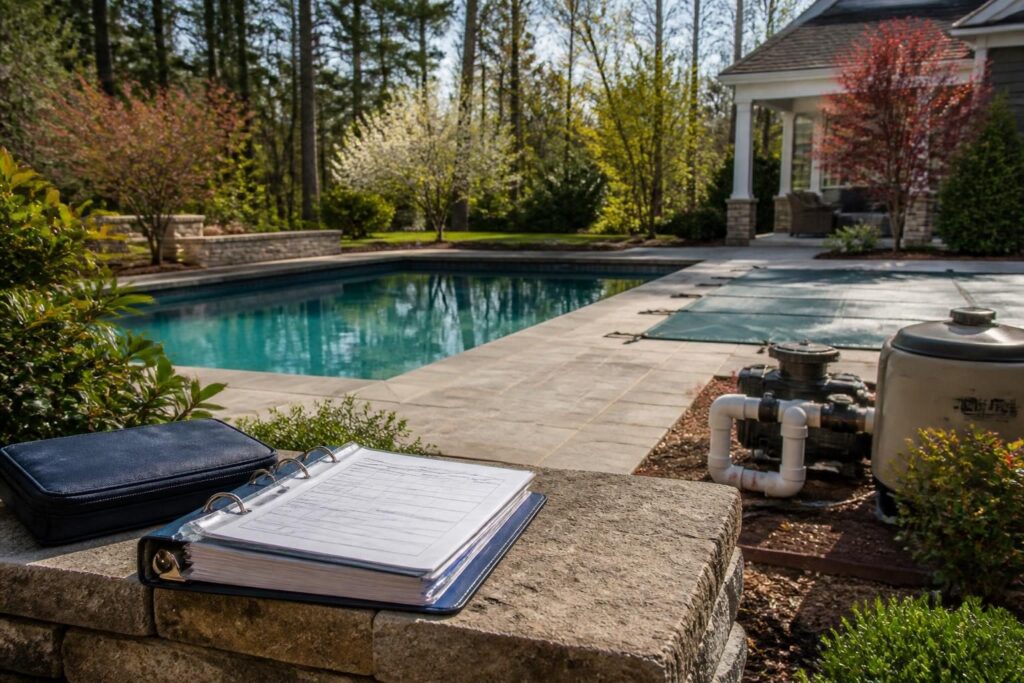
Pool opening closing records North Carolina homeowners create at the end and beginning of each season can prevent guesswork. A clear file shows what changed, which settings were used, what equipment was drained, and what needs attention before swimming resumes.

The goal is not to create paperwork for its own sake. Seasonal records help you compare conditions, communicate with a service professional, protect warranty information, and notice patterns before they become larger maintenance concerns. Keep the system simple enough to use every year.
Why a seasonal pool handover file matters
Closing a pool involves more than placing a cover over the water. Depending on the system and local conditions, the work may include water treatment, equipment adjustments, draining selected components, protecting plumbing, and securing access points. The exact process depends on the pool design, equipment, climate, cover, and advice from the responsible professional.
Opening reverses that process. You may need to inspect the cover, restore water level, remove winter protections, restart circulation, check equipment, and test the water before use. A record from the previous season gives you a baseline instead of relying on memory.
North Carolina weather varies across the mountains, Piedmont, and Coastal Plain. A mild winter, a freeze, heavy rain, pollen, or an extended warm period may change what you observe. Record facts rather than assuming that last year’s routine fits every season. That is the practical purpose of pool opening closing records North Carolina homeowners can review year after year.
Choose one home for the records
Use a labeled binder, cloud folder, or both. Store the current season at the front and retain older records by year. Photograph handwritten pages after important service visits if the file stays on paper.
- Use a consistent date format, such as year-month-day.
- Record the person or company who performed professional work.
- Save invoices, test reports, equipment notes, and receipts with the related entry.
- Use photos that show the whole component and a close view of the condition.
- Mark unknown information as “not recorded” instead of filling gaps from memory.
Build the closing record before winter service
Start the closing section while the pool still operates. Note the date, recent weather, water appearance, water level, cover type, and unusual sounds or leaks. A short observation can make spring troubleshooting easier.
Do not treat a recorded reading as proof that a system is safe or compliant. Use the manufacturer’s instructions and qualified advice for chemical handling, electrical work, freeze protection, and equipment service.
Water condition and treatment notes
Record the water test results supplied by your chosen testing method. Include the date and time, water temperature if available, sanitizer reading, pH, and other results relevant to your treatment system. Note recent additions, unusual water color, cloudiness, visible debris, or algae-like growth.
The CDC guidance on home pool water treatment and testing can help homeowners understand the relationship between testing, chlorine, and pH. It does not replace product directions or advice for your specific pool.
Add a short “before closing” note:
- Date and water condition
- Last cleaning or filter service
- Recent chemical additions and product labels
- Water level compared with the usual operating level
- Visible staining, scale, foam, or surface changes
- Weather concerns, including recent heavy rain or freezing temperatures
Equipment settings and drained components
Capture settings before they change. Depending on your equipment, these may include pump schedules, automation modes, heater settings, salt-system output, cleaner settings, valve positions, and controller programs. Photograph screens and labeled valves when practical.
For each drained component, record what happened and who performed the work. List the component, drain point or plug location, removed parts, storage location, and any part that proved difficult to remove. Do not guess about hidden plumbing or open electrical equipment.
| Record area | Useful details |
|---|---|
| Circulation | Pump schedule, controller mode, filter condition, and pressure observation |
| Heating | Heater status, selected setting, fuel or power type, and service notes |
| Water treatment | Chlorinator or salt-system setting, feeder condition, and recent service |
| Plumbing protection | Components drained, plugs removed, and parts stored |
| Controls | Automation settings, timers, freeze protection status, and access details |
For equipment-specific winter notes, see Pool Equipment Winter Drain-Down Records. Keep that information with your seasonal file so spring service can follow the documented sequence. Detailed pool opening closing records North Carolina homeowners keep should show both the action and the component involved.
Document the cover, barriers, and surrounding area
A cover record should describe its condition at closing, not simply state that it covers the pool. Note the cover type, visible tears or loose areas, water or debris on top, attachment points, storage parts, and any concern that needs review.
Take overview photographs from the same locations each year. Include the cover, coping, deck, equipment area, gates, doors that access the pool area, and nearby drainage paths. Consistent angles make changes easier to spot.
Barriers and covers are separate safety features with different functions. The Pool Safely safety guidance discusses layers of protection, including barriers, alarms, and supervision. Local requirements may vary, so verify current expectations with the local inspections department.
Use a cover and safety checklist
- Cover installed or stored, with date and responsible person recorded
- Cover condition photographed before and after installation
- Anchors, straps, springs, or other hardware noted without making unsupported repairs
- Gates and access doors observed for damage or changed conditions
- Alarms or other safety devices listed with their status
- Furniture, toys, branches, and loose objects removed from the surrounding area
- Outstanding safety questions assigned to a qualified professional
If a cover is damaged, displaced, or holding unexpected water, keep people away from the area until a qualified person assesses the condition. Never rely on a cover as a substitute for active supervision or a properly maintained barrier.
Keep repair and service records connected to the season
Repairs often happen between closing and opening. A separate receipt can lose its value if nobody knows which symptom led to the work. Link every service entry to the season and location of the issue.
For each repair, record the date, observed symptom, affected component, temporary action, professional evaluation, parts or materials identified, and recommended follow-up. Attach photos before work and after completion when the service provider permits it.
Use careful wording. “Wet area observed below filter connection” is more useful than “filter is defective.” “Pump did not start during scheduled cycle” records an observation without making a technical conclusion.
Questions for a service visit
- What condition prompted the service call?
- Which component was inspected?
- What was adjusted, cleaned, replaced, or left unchanged?
- Were any settings changed?
- What should be observed during the next opening?
- Which concern requires a licensed electrician, engineer, or another specialist?
- What documentation should be retained for warranty or future service?
For visible drips, wet spots, or connection concerns, the related pool equipment leak inspection routine offers a way to organize safe observations without attempting unsupported repairs.
Record spring startup observations in sequence
Opening records should begin before the cover comes off. Note the date, recent weather, cover condition, water level, and any debris or unusual odor. Photograph the pool before cleaning so the starting condition remains documented.
After the cover comes off, record what you observe before changing several variables at once. A simple sequence can show whether a concern appeared during storage, cover removal, equipment restart, or water treatment. This makes pool opening closing records North Carolina homeowners keep more useful during service conversations.
- Photograph the cover and surrounding area.
- Record water level and visible water condition.
- List plugs, drain fittings, baskets, lids, and other parts restored or removed.
- Record pump, filter, heater, cleaner, lighting, and automation status.
- Note any leaks, air, unusual noise, error message, or loss of circulation.
- Record test results before and after treatment, including the date and time.
- Document cleaning, filter service, water additions, and professional visits.
- Write down the conditions that remain unresolved before swimming.
Keep chemical additions tied to test results and product instructions. Do not combine products unless the label and a qualified professional support that action. If equipment involves electrical components, stop and consult a licensed electrician or qualified pool professional rather than opening or modifying it.
Make the first-use decision visible
Include a dated note about whether the pool was ready for normal use, awaiting water treatment, awaiting equipment review, or restricted for another documented reason. This is a household communication tool, not a substitute for required inspections or professional judgment.
Record follow-up items with an owner and target date. For example, “ask service professional about heater error shown on opening day” is clearer than “heater issue.” Update the item when someone resolves it, defers it, or refers it.
Use the file to compare seasons
After opening, review the closing and startup pages side by side. Look for recurring changes in water level, cover condition, filter pressure, equipment settings, debris, staining, or repair needs. Trends can guide questions about maintenance, but they do not establish the cause of a problem.
A useful annual summary fits on one page:
- Closing date and opening date
- Water condition at both handovers
- Equipment settings that changed
- Components drained and restored
- Cover condition at each inspection
- Repairs and service visits
- Unresolved observations
- Questions for the next professional visit
Keep manuals, serial numbers, model information, warranty documents, and service contacts in the same file. For heater details, the pool heater startup records guide can help you organize commissioning and later service information.
When to ask for qualified help
Consult the local inspections department when you have questions about current safety, barrier, permit, or inspection requirements. Ask a licensed pool contractor about winterization and startup steps for your exact system. Use a licensed electrician for electrical concerns, and consult an engineer, surveyor, septic professional, or other qualified specialist when property conditions affect their field.
Build a Pool in North Carolina focuses on practical homeowner records because good documentation supports safer decisions. A seasonal handover file cannot replace professional advice, but it can help the right person understand what happened between one season and the next.