
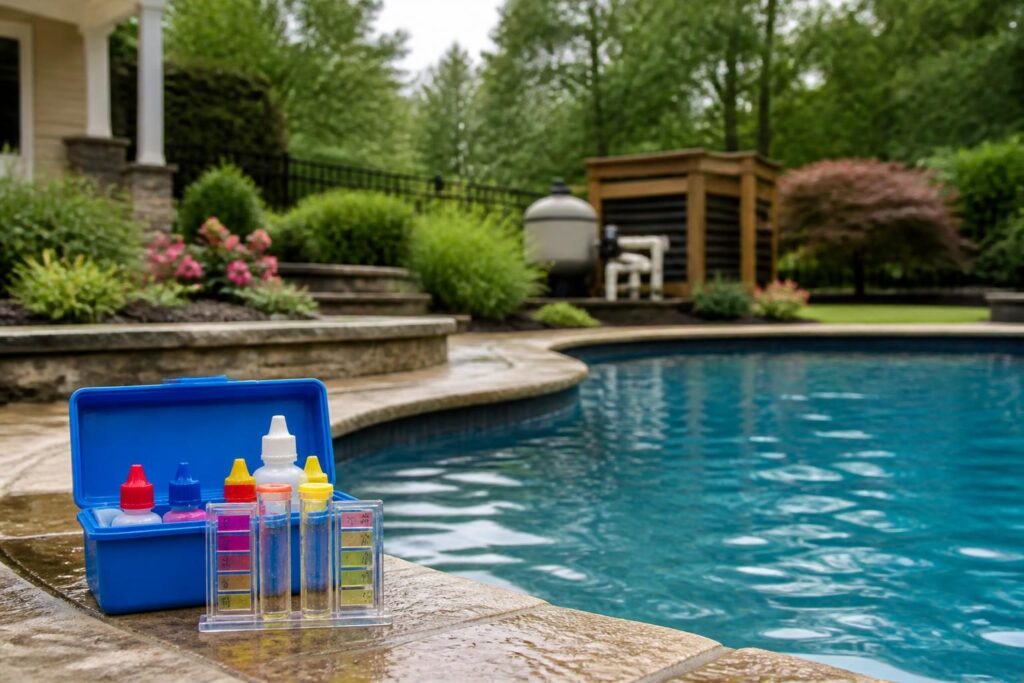
Pool water testing frequency North Carolina homeowners need is not one fixed calendar rule. Heat, rain, swimming activity, sanitizer type, water level changes, and equipment adjustments can all shift water conditions. A practical routine combines regular checks with extra testing after events that can change the water.

The goal is not to chase every small fluctuation. Instead, test often enough to notice trends before water becomes cloudy, irritating, corrosive, or difficult to manage. Use your test results with your pool’s instructions and advice from a qualified pool professional. Your pool water testing frequency North Carolina routine should reflect what your own readings show over time.
Start with a simple pool testing routine
Many homeowners benefit from a short visual check whenever they use the pool. Look at water clarity, surface debris, water level, circulation, and obvious equipment alerts. This check does not replace chemical testing. It helps you decide whether the water needs closer attention before anyone swims.
For routine care, choose a consistent testing schedule that fits your pool. A homeowner may test more frequently during active swimming periods and less frequently when the pool is covered and unused. In practice, pool water testing frequency North Carolina homeowners use should respond to changing conditions rather than follow a rigid calendar. The correct interval depends on the pool, sanitizer system, weather, and results over time.
- Record the date, time, weather, recent rainfall, and whether the pool was used.
- Note sanitizer type, test method, and the measured results.
- Record additions, equipment changes, filter cleaning, and unusual observations.
- Compare several readings instead of reacting to one number without context.
Use the same sampling approach each time. Take the sample from the pool water rather than from a skimmer or return. Follow the test kit instructions, protect reagents from heat and sunlight, and replace old or damaged supplies. If a result seems impossible, repeat the test with fresh materials before making a major adjustment.
Adjust testing for heat, sunlight, and North Carolina weather
Warm weather often brings more swimming, stronger sunlight, pollen, insects, and faster evaporation. Those conditions can increase the need for observation and testing. A pool that stays stable during a cool, covered period may need closer attention during a hot week.
Rain can dilute chemicals and introduce organic material. Heavy rain may also move soil, mulch, leaves, or runoff toward the pool. Test after substantial rainfall, especially when the water looks different or the pool level changes sharply. Inspect the surrounding area before restarting equipment if flooding or debris affected the pool.
North Carolina weather can change quickly. A useful seasonal routine includes extra checks during heat waves, long periods of rain, and the first busy weekends of the swimming season. After storms, follow a structured cleanup and inspection process rather than assuming the water is ready. See the pool maintenance after storms checklist for related observations.
- Heat: Check more closely when water warms, swimmers increase, or sanitizer demand changes.
- Rain: Test after significant rainfall and inspect for runoff, debris, and unusual dilution.
- Pollen: Watch for surface material, filter loading, and changes in clarity.
- Evaporation: Remember that adding water can alter the overall concentration of dissolved substances.
Let swimming activity guide your testing
Bather load means the amount of swimming activity placed on the water. More swimmers can add body oils, sweat, cosmetics, and other contaminants. Children’s play, parties, repeated entry and exit, and long swim sessions may all increase the need for follow-up testing.
Test after unusually heavy use, particularly if the water looks dull, smells different, feels irritating, or shows a sanitizer reading outside your normal range. Avoid relying on odor alone. A strong smell does not provide a complete picture of water condition.
Before a planned gathering, test so you know the starting condition. Afterward, record the approximate activity and test again according to your normal safety process. Do not add products simply because many people used the pool. Measure first, follow product directions, and allow any required waiting period.
For more detail on responding to busy swim periods, read pool water chemistry after heavy use. The article can complement your records without replacing product instructions or professional guidance.
Account for sanitizer type and stabilizer
Sanitizer type affects which measurements matter and how often you may need to review them. Chlorine-based systems, salt chlorine generators, and other systems have different operating instructions. A salt system still produces chlorine; it does not eliminate the need to measure sanitizer and related water conditions.
Read the equipment manual and chemical labels for the required testing and adjustment process. If you change sanitizer products, install a feeder, alter generator settings, or change operating hours, increase observation until the system shows a stable pattern.
Cyanuric acid, sometimes called stabilizer or conditioner, helps protect chlorine from sunlight. Its concentration can affect how homeowners interpret chlorine readings. Test it according to the needs of your system and local professional guidance. The cyanuric acid management guide explains why this measurement deserves separate attention.
Changes that deserve a closer look
- A new sanitizer, feeder, salt cell, controller, or dosing setting.
- A change in pump schedule, circulation pattern, or filtration equipment.
- Fresh fill water, substantial top-off water, or water removed during maintenance.
- A new cover, water feature, heater setting, or unusual source of splash-out.
Test after equipment or operating changes
Water chemistry depends partly on circulation and filtration. Equipment changes can alter how water moves, how long it circulates, or how sanitizer enters the pool. Testing becomes more useful when paired with operating records.
Write down the change and its date. Note pump operating hours, filter pressure observations, cleaning, water temperature, and any automation settings you changed. If results shift after a pump, filter, heater, feeder, or controller change, avoid assuming the chemical is the only cause.
Check simple clues first, such as a closed valve, blocked basket, low water level, air entering the system, or an alert on the controller. Do not open electrical enclosures or bypass safety devices. Ask a qualified pool professional or electrician to evaluate equipment concerns that require technical work.
Keep chemical trends separate from equipment trends. The pool water testing log guide can help connect results with circulation, weather, and maintenance records.
Use a response plan for unusual readings
An unusual reading calls for a pause and a repeatable process. First, keep people out of the water if clarity, chemical readings, or equipment conditions create uncertainty. Follow the test-kit instructions and repeat the measurement with a clean sample and properly stored reagents.
- Record the reading, time, weather, recent use, and recent chemical additions.
- Repeat the test if the result conflicts with the water’s appearance or recent trend.
- Check the product label and equipment manual before adding anything.
- Review circulation, filtration, water level, and visible contamination.
- Seek qualified help when readings remain unusual or the cause is unclear.
Do not mix chemicals together or combine products in a container. Follow label directions for handling, storage, sequencing, and waiting periods. Never make a large correction based on an uncertain test. If water is cloudy, discolored, contaminated, or otherwise unsafe-looking, obtain professional advice before swimming.
Build a record that helps you see patterns
A good log makes your testing schedule more useful. Paper, a spreadsheet, or a pool-management app can work. The important part is consistency and enough context to explain why a reading changed.
- Date and time of each test.
- Sanitizer, pH, and other measurements your system requires.
- Water temperature, rainfall, heat, and unusual weather.
- Swim activity, parties, debris, algae concerns, and water-level changes.
- Chemical additions, equipment adjustments, filter service, and professional visits.
Review the log weekly during active use. Look for repeated drift rather than isolated readings. A recurring pattern may point to testing technique, changing weather, sanitizer demand, circulation, filtration, or another condition that deserves investigation.
Pool water testing frequency North Carolina homeowners choose should remain flexible. Increase checks when conditions change, then return to a simpler schedule after the water and equipment stabilize. This approach supports safer decisions without turning maintenance into guesswork.
For current residential water-treatment guidance, review the CDC guidance on home pool water treatment and testing. Local conditions and product instructions still matter.
Consult a qualified pool professional when readings remain abnormal, and contact the appropriate specialist for equipment, electrical, drainage, contamination, or health concerns. Build a Pool in North Carolina offers homeowner education, but local professionals and current instructions should guide decisions about your specific pool.