
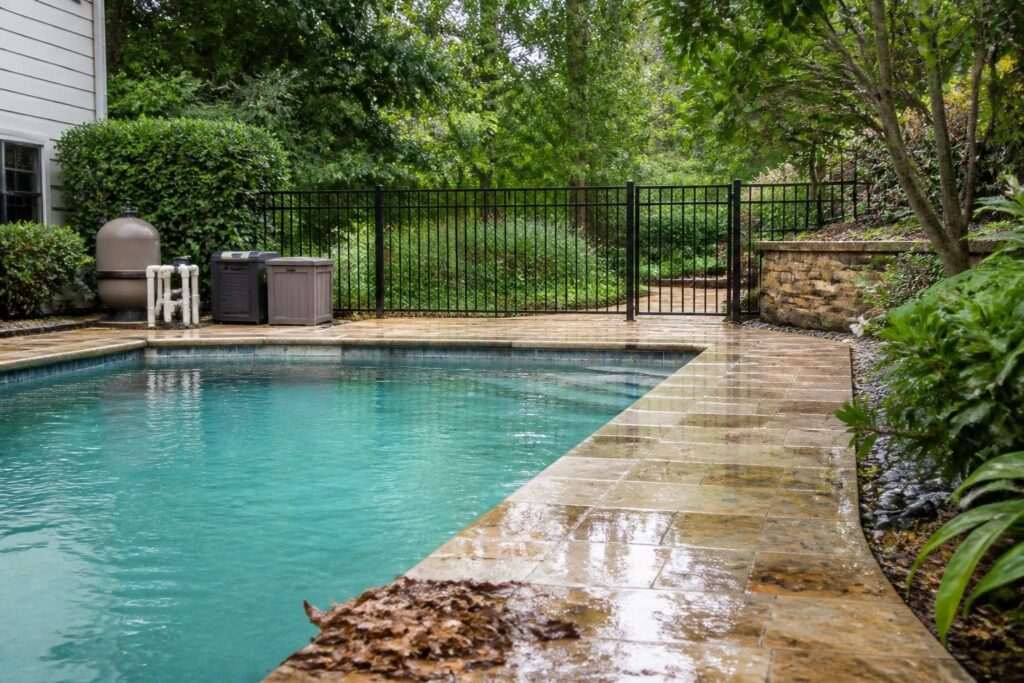
Storms can leave a residential pool with leaves, branches, muddy runoff, changed water levels, and unsafe equipment conditions. This pool maintenance after storms North Carolina checklist gives you a practical sequence. Work from personal safety to the pool basin, equipment, drainage, barriers, and water testing. Do not swim or restart equipment until the area is safe.

North Carolina storms vary by region and season. A short thunderstorm may mainly add debris and rainwater. A tropical system or flood event may also affect electrical equipment, soil, drainage paths, septic areas, and property access. If water has entered equipment, electrical components, or the home, pause the cleanup and contact the appropriate qualified professional.
Start with personal and electrical safety
Look across the property before approaching the pool. Downed lines, damaged service equipment, unstable trees, broken glass, exposed metal, and standing water can create hazards that are not obvious in poor light. Keep children and pets away from the pool area. A storm-damaged barrier may no longer limit access.
Never handle electrical equipment while standing in water. Do not open panels, reset breakers, remove covers, or test flooded components yourself. If the pump, heater, automation controller, lights, outlets, or wiring show water intrusion or physical damage, leave them off and ask a licensed electrician or qualified pool service professional for direction.
Rain itself does not tell you whether equipment is safe to operate. The decision depends on the equipment condition, electrical protection, installation, and the extent of flooding. If you are uncertain, keep people away from the pad and arrange a professional inspection.
Make a quick storm record
- Photograph the pool, deck, equipment pad, barrier, drainage routes, and visible damage.
- Note the date, storm conditions, approximate water level, and whether equipment was running.
- Record alarms, breaker trips, unusual sounds, leaks, cloudy water, or control-system messages.
- Save service calls, test results, receipts, and repair recommendations in your pool records.
Photos can help a service professional understand conditions before cleanup changes the evidence. They can also help you compare recurring drainage or barrier problems after future storms.
Check the water level and North Carolina storm drainage
Observe the water level before removing large amounts of water or adding more. Heavy rain can raise the pool level above its normal operating range. Floodwater may also enter from the yard, carrying soil, fertilizer, mulch, animal waste, or other contaminants. If the water looks contaminated or flooding has affected the property, keep swimmers out until a qualified water-care professional advises you.
Do not assume that a high pool level should be corrected immediately with a pump or hose. First consider where discharge water will go. Improper discharge may move water toward a foundation, crawl space, septic area, neighboring property, retaining wall, or erosion-prone slope. For a detailed rainwater sequence, see how to manage pool water after heavy rain.
Walk the deck and yard only when the ground is stable and safe. Look for standing water, new channels, washed-out soil, blocked drains, displaced downspouts, overflowing swales, and sediment deposits. Do not enter a damaged excavation, unstable slope, or flooded area to inspect a drain.
Drainage questions to document
- Did water flow toward the pool, house, equipment pad, or septic area?
- Are deck drains, channel drains, grates, or surface inlets blocked?
- Did soil settle, expose pipe, undermine paving, or collect against the pool shell?
- Does a downspout or yard swale now discharge in a different direction?
- Is any water entering the home, crawl space, basement, or equipment enclosure?
For persistent erosion or sediment movement, ask a drainage professional or other qualified specialist to assess the property. North Carolina land-disturbance and erosion concerns can depend on the site and project history. The NC DEQ erosion and sediment control manual provides background, but it does not replace a site-specific review.
Remove storm debris without overloading equipment
Turn off pool circulation before reaching into the water or working near drains, skimmers, and moving parts. If the system is already off, keep it off while you remove large debris. Branches, toys, fencing pieces, and storm material can damage baskets or become caught in an impeller.
Remove large objects with a suitable pool net or other tool. Do not pull heavy branches across a liner, finish, coping, or tile. Check the skimmer basket and pump basket only after you safely isolate the system. If a basket is cracked, a lid is damaged, or a fitting has shifted, stop and request service.
Fine sediment may require gradual cleaning and filtration. Avoid repeatedly forcing muddy water through equipment that cannot handle that load. A pool professional can help determine whether vacuuming to waste, filter cleaning, or another method suits your system. The related guide on safe storm debris removal covers tools and handling decisions in more detail.
Inspect equipment before normal operation
Look for standing water, mud, displaced covers, cracked housings, loose unions, damaged pipe, wet controls, and signs of overheating. Check the equipment pad and nearby ground for settlement or washout. Do not operate a pump that is empty, flooded, visibly damaged, or making an unfamiliar sound.
Keep heater vents and service areas clear of leaves and branches. Storm debris can block airflow or create a fire risk. Do not remove heater panels or attempt gas, electrical, or combustion repairs. A licensed professional should assess equipment that flooding has submerged or exposed to contaminated water.
After a qualified professional confirms safe equipment, restart it according to the manufacturer’s instructions and your service documentation. Watch for leaks, loss of prime, unusual vibration, error messages, and rapid pressure changes. Stop the system and request help if any warning appears.
Equipment review checklist
- Inspect the pump, filter, heater, salt system, automation controls, and lighting controls from a safe distance.
- Confirm that access covers and protective enclosures remain intact.
- Look for wet or damaged plugs, cords, outlets, switches, and conduit.
- Check visible plumbing for movement, cracks, leaks, or unsupported sections.
- Compare filter pressure with your normal recorded range after safe operation resumes.
- Record the professional’s findings and any parts that need replacement.
Equipment problems can be easier to identify when you have baseline records. Build a Pool in North Carolina recommends keeping manuals, labels, settings, and service notes together rather than relying on memory.
Review barriers, gates, covers, and access points
A storm can move a gate, loosen hardware, damage a fence panel, or place furniture and branches near a barrier. Do not reopen the pool area until access controls work as intended. Check that gates close and latch without being held, and look for new climbable objects near the barrier.
Inspect doors leading to the pool area, alarms, removable ladders, and covers. A cover may look intact while its anchors, straps, drainage, or support points have shifted. Keep people away from a damaged cover. It does not substitute for supervision or a properly maintained barrier.
Local requirements can vary by jurisdiction, adopted code, property conditions, and project scope. The North Carolina Office of State Fire Marshal provides building-code documents and interpretations; confirm current local requirements with the inspections department. For general consumer-safety principles, review the Pool Safely safety tips.
Test water before returning to normal maintenance
Stormwater can dilute chemicals and add organic material. Flooding can introduce contaminants that require more than routine adjustment. Begin with a reliable test of the water’s sanitizer and pH, then follow the product label, equipment instructions, and professional guidance for any treatment.
Do not add several chemicals at once or guess at a dose. Record the test method, results, products used, amount added, and time. Never mix concentrated pool chemicals together. Keep swimmers out until the water is clear, circulation is functioning, and test results fall within the range recommended for your specific system.
The CDC’s guidance on home pool water treatment and testing explains general testing and treatment concepts. Product labels and qualified local advice still matter because systems, water sources, and conditions differ.
After heavy debris or rain, filtration may need attention. Monitor clarity, surface deposits, filter pressure, and sanitizer demand over the next several checks. If the water remains cloudy, green, strongly discolored, or difficult to balance, stop normal use and contact a pool-water professional. This pool maintenance after storms North Carolina checklist works best when you record each result instead of relying on memory.
Use a return-to-operation decision list
Normal swimming and automatic schedules should wait until each item below has a clear answer. Use this pool maintenance after storms North Carolina checklist to document the decision:
- Have you resolved downed lines, unstable trees, broken materials, and standing-water hazards?
- Is the water level appropriate, with no unsafe discharge or active flooding concern?
- Have you cleared hazardous debris from the pool, deck, drains, and surrounding yard?
- Has equipment remained dry and passed any needed professional inspection?
- Are circulation, filtration, heating, and controls operating without warnings?
- Are the gate, fence, doors, alarms, cover, and access points secure?
- Is the water clear, tested, and treated for the actual post-storm condition?
- Have you recorded unresolved issues and scheduled the right specialist?
A simple inspection routine becomes more useful when you repeat it after each significant storm. Compare photos, water levels, filter pressure, and drainage observations. Patterns may reveal a recurring maintenance need that is not obvious during dry weather.
Know when to call a qualified professional
Contact the local inspections department for questions about applicable requirements or storm-related changes that may affect permitted work. Use a licensed electrician for electrical damage or water intrusion. Ask a pool contractor about equipment, circulation, surfaces, and water treatment. A drainage professional, engineer, surveyor, septic professional, or arborist may be appropriate when the storm affects slopes, structures, septic areas, foundations, or trees.
This pool maintenance after storms North Carolina checklist is general homeowner education, not code, electrical, engineering, environmental-health, or legal advice. When conditions are uncertain, keep the pool closed until the qualified person responsible for that issue confirms the next safe step.