
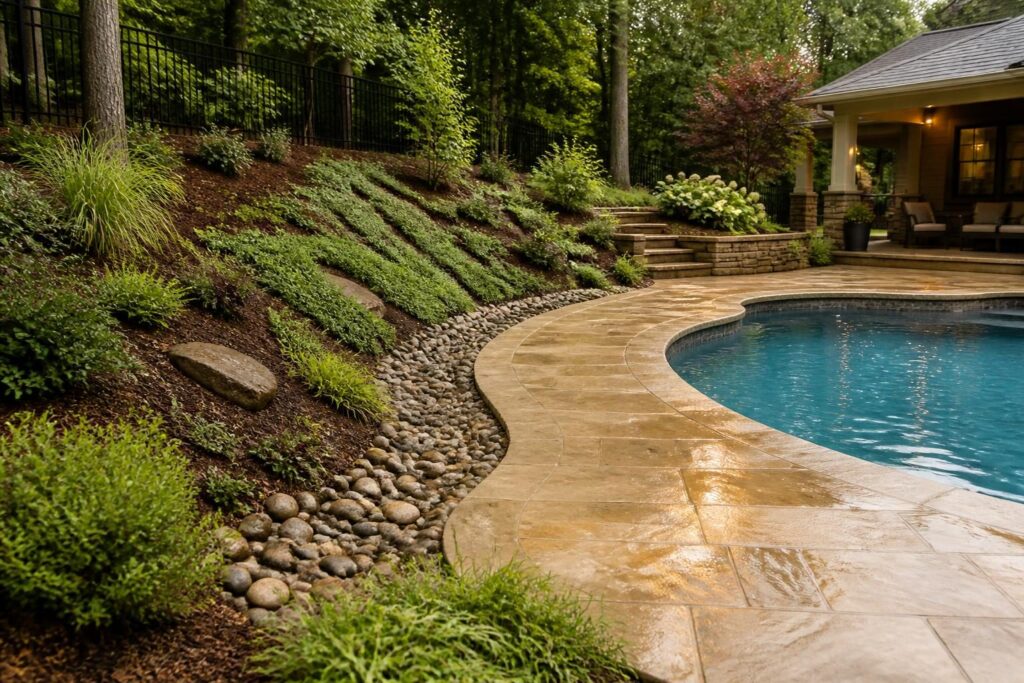
Pool landscaping soil erosion control North Carolina homeowners can plan around grading, planting, edging, and runoff paths. These choices help limit exposed soil, protect nearby slopes, and reduce sediment entering the pool after irrigation or rain.

Erosion moves soil through flowing water, concentrated runoff, wind, or repeated disturbance. A pool project can change how water travels across a yard. Excavation, compacted access paths, new decks, planting beds, and slope cuts may all create weak points.
The goal is not to block every drop of water. Instead, your landscape should slow runoff, keep soil covered, and guide water toward an appropriate outlet. Property conditions and local requirements vary, so treat this article as planning guidance rather than a design or compliance decision.
Start with grading and the existing runoff pattern
Grading describes the shape and slope of the ground. Good grading directs water away from structures and keeps concentrated flow from cutting channels through planting beds. Near a pool, it also helps prevent soil and mulch from washing over the deck or into the water.
Before changing the landscape, observe the yard during several weather conditions. Look for wet areas, small rills, muddy corners, standing water, and places where downspouts discharge. A shallow-looking path can become a powerful flow route during a North Carolina downpour. Pool landscaping soil erosion control North Carolina planning should start with these observed flow patterns, not only with a planting list.
- Mark where roof water leaves gutters and downspouts.
- Note whether neighboring yards send water toward the pool area.
- Photograph bare soil, settled edges, and existing drainage features.
- Record low spots that remain damp after ordinary rain.
- Ask how the proposed pool deck will change surface flow.
Do not assume that adding soil beside the pool will solve a drainage problem. Imported fill can settle, redirect water, or create a steeper slope. Ask the pool contractor or a qualified grading professional to explain the proposed finished elevations and runoff routes in plain language.
For broader site questions, review the North Carolina pool site evaluation checklist. It can help you organize questions about slope, access, soil, utilities, and drainage before landscape work begins.
Use groundcover to hold exposed soil
Plants protect soil by reducing the force of falling rain and helping roots hold the upper soil layer. Groundcover means low-growing plants that spread across open areas. It can work well on gentle slopes, between larger plants, or beside walkways where turf is difficult to maintain.
Choose plants for the actual conditions. Consider sunlight, shade, foot traffic, irrigation, mature size, root behavior, and leaf litter. A plant that thrives in one North Carolina yard may struggle in another because of soil, exposure, or drainage. Good pool landscaping soil erosion control North Carolina choices depend on the site, so confirm plant suitability with a qualified landscape professional.
Protect soil while plants establish
New planting areas remain vulnerable until roots develop. Temporary protection may include clean straw, erosion-control blankets, leaf-free compost, or another material recommended for the site. Keep loose materials from washing onto the pool deck.
Ask the landscape professional how the selected material should be anchored and removed. Some products suit slopes, while others can move during heavy rain. Follow product instructions and avoid placing any material where it could obstruct drains or create a trip hazard.
Groundcover cannot stabilize every slope. Steep grades, active gullies, saturated soil, or exposed roots may require review by a qualified landscape professional, engineer, or other specialist.
Control runoff with paths, swales, and edging
Runoff management works best when the landscape gives water a clear, controlled route. A swale is a shallow, shaped depression that guides water across a property. You can plant a swale or stabilize it with other approved materials. Swales need careful placement so they do not send water toward the pool, house, septic area, or neighboring property.
Edging can separate soil from the deck and help keep planting material in place. It may consist of stone, metal, concrete, brick, or another landscape product. The edge should remain stable, visible, and compatible with mowing, drainage, and walking surfaces.
- Keep bed soil from being piled against the pool coping or deck.
- Use transitions that do not create abrupt trip points.
- Check whether edging blocks a designed drainage route.
- Stabilize the bottom of any concentrated flow path.
- Make sure discharge does not undermine slopes or wash toward a property line.
Review related planning ideas in Pool Landscaping Swale Drainage North Carolina. The article focuses on how grading, swales, planting areas, hardscape, and downspouts can work together.
Drainage changes can affect more than the pool. They may influence a crawl space, foundation, septic system, easement, or neighboring lot. If a plan changes the direction or concentration of runoff, request site-specific advice before construction.
Manage exposed soil during construction
Construction creates temporary erosion risks. Excavation removes vegetation, equipment traffic compacts some areas, and stockpiled soil can erode before final grading. Even a finished pool may have unfinished shoulders, planting beds, or access routes that remain exposed.
Ask for a written plan describing how workers will protect disturbed soil and when they will complete final stabilization. The plan may include staged work, temporary covers, protected access, drainage controls, or prompt seeding and planting. The correct approach depends on the site and the scope of land disturbance.
- Identify where workers will place excavated soil.
- Keep soil piles away from pool edges, drains, and flow paths.
- Ask who will inspect temporary controls after rain.
- Confirm which areas workers will cover with topsoil, seed, sod, or planting.
- Photograph the yard before and after final grading.
North Carolina projects may face erosion and sediment-control or construction stormwater requirements, depending on land disturbance, location, and project details. Consult the NC DEQ Erosion and Sediment Control Manual and verify current requirements with the appropriate local or state authority.
Do not remove, move, or redesign a temporary control without asking the responsible professional. A small change can send water around a barrier and create a new erosion channel.
Choose poolside materials with runoff in mind
Landscaping materials affect how quickly water moves and how much soil remains available to wash away. Dense plantings and stable surfaces generally need less loose soil than a wide, uncovered bed. However, every material needs proper installation and maintenance.
Mulch can protect soil, but it can also float or migrate during intense rain. Keep it below the pool deck edge and use a depth and product suited to the bed. Avoid placing loose mulch in a direct flow path. The guide on pool landscaping mulch runoff in North Carolina covers bed choices and maintenance considerations.
Gravel may resist some surface movement, yet it can travel downhill and collect in drains or equipment areas. Large stones can also create uneven walking surfaces. Discuss the material’s behavior during heavy rain before approving it for a slope.
Irrigation deserves equal attention. Overspray can wet the deck, erode bed edges, and carry fine soil toward the pool. Adjust spray patterns, repair leaks, and use a qualified irrigation professional when zone changes could affect drainage. See this pool landscaping irrigation planning guide for related questions.
Build a maintenance routine that catches erosion early
Erosion control is an ongoing task. A short inspection after significant rain can reveal problems before they become expensive or difficult to correct. Walk the pool perimeter only when surfaces are safe, and keep children away from unstable slopes or work areas.
- Look for muddy water, soil fans, rills, and exposed roots.
- Check whether edging has shifted or separated.
- Inspect downspout outlets and swales for blockage or scour.
- Rake displaced mulch or gravel back only when conditions are safe.
- Replace dead groundcover and reseed bare areas promptly.
- Remove sediment from approved collection points before it reaches the pool.
- Record photos, dates, weather conditions, and corrective work.
Keep sediment out of the circulation system whenever possible. Fine soil can cloud water and increase filter loading. If muddy water enters the pool, follow your normal equipment and water-care procedures, and consult a pool professional when flow, pressure, or water-quality conditions change unexpectedly.
Deck slope, joints, and settled soil can also influence runoff. For a maintenance-focused review, see pool deck drainage maintenance in North Carolina.
Questions to resolve before landscape installation
Use these questions to clarify responsibilities and reduce surprises:
- What are the finished grades around the pool, deck, planting beds, and yard?
- Where will roof, yard, and deck runoff travel during heavy rain?
- Which areas need temporary erosion protection during construction?
- How will workers stabilize exposed soil while plants establish?
- Who will maintain swales, drains, edging, and groundcover after handover?
- Could the plan affect a septic system, well, easement, foundation, or neighboring property?
- Which drainage or land-disturbance requirements must you verify locally?
Keep the approved landscape plan, grading information, planting list, product instructions, photos, and maintenance notes with your pool records. Clear documentation helps you identify whether a later problem comes from settlement, irrigation, plant loss, blocked drainage, or a changed runoff route.
A safer, more stable pool landscape
Effective pool landscaping soil erosion control North Carolina combines covered soil, stable edges, sensible grading, and a runoff route that remains visible and maintainable. It should protect the pool without transferring water problems to your home or another property.
Before changing a slope, adding drainage, disturbing substantial soil, or working near a septic system or foundation, consult the local inspections or planning department and the appropriate licensed pool contractor, landscape professional, engineer, surveyor, septic professional, or other qualified specialist. Build a Pool in North Carolina offers homeowner education, but site-specific decisions require local review.