
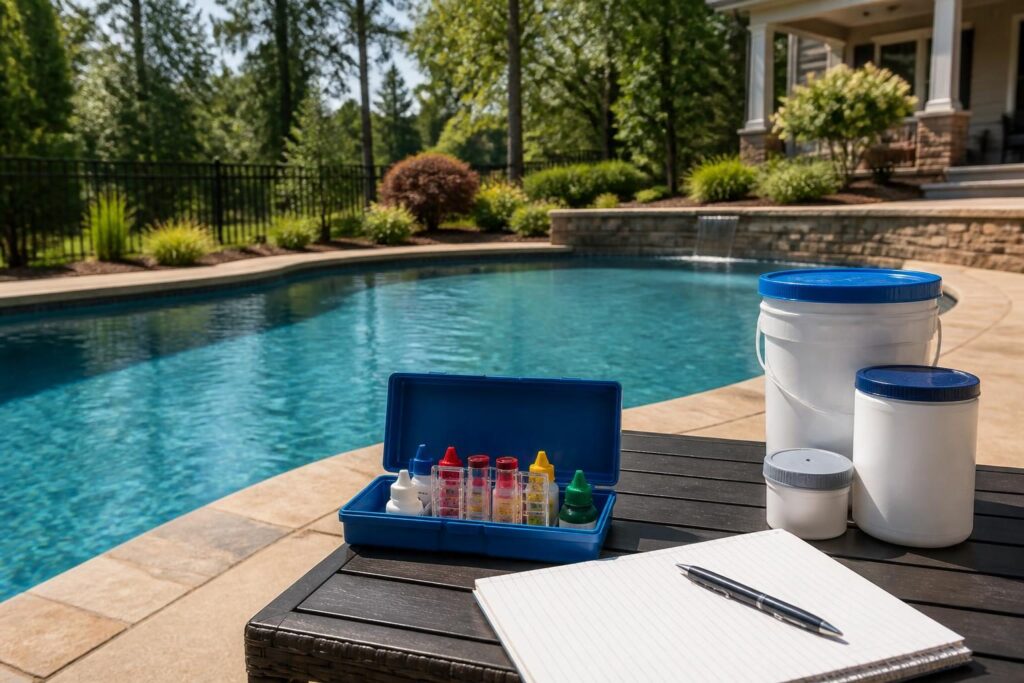
Pool cyanuric acid management North Carolina homeowners can understand starts with one simple idea: stabilizer helps protect chlorine from sunlight. It does not replace sanitizer testing, and it does not correct every water-care problem. North Carolina’s bright summer sun, warm water, rain, pollen, swimming, and evaporation can all change how you interpret a test result.

Cyanuric acid is commonly called stabilizer or conditioner. It binds with some chlorine in the water and slows chlorine loss caused by ultraviolet light. That protection can make outdoor chlorine treatment more practical. However, the relationship is a balance. The amount of stabilizer affects how a chlorine result should be understood, while too much can make correction decisions more complicated.
This guide explains the role of stabilizer, the testing decisions that deserve attention, and the records that help you avoid guesswork. It is general homeowner education, not a substitute for product directions, local requirements, or advice from a qualified pool professional.
What cyanuric acid does in an outdoor pool
Sunlight can break down free chlorine, which is the portion available to sanitize the pool. Cyanuric acid helps shield some chlorine from ultraviolet exposure. In that sense, stabilizer acts like a buffer against rapid sunlight loss.
That protection does not mean chlorine becomes unnecessary. Sanitizer still needs testing and maintenance according to the pool’s treatment system and product instructions. Stabilizer also does not remove contaminants, replace filtration, or solve poor circulation.
A useful way to think about pool cyanuric acid management North Carolina homeowners face is to separate three questions:
- Is there enough available chlorine for the pool’s current conditions?
- Is the stabilizer level appropriate for the treatment method?
- Has a recent event changed the water, such as heavy rain, dilution, or a large chemical addition?
These questions connect, but they are not interchangeable. A chlorine reading cannot tell you the cyanuric acid level. A stabilizer reading cannot tell you whether the water has enough active sanitizer for current use.
Why North Carolina sunlight changes testing decisions
Outdoor pools in North Carolina may receive strong sun for long periods during the swimming season. Warm weather can also increase swimming, debris, and sanitizer demand. Those conditions may make chlorine readings change more quickly than they do during a cool, covered period.
Testing at random times can produce confusing comparisons. For example, a result taken soon after chemical addition may not represent the same condition as a result taken after a sunny afternoon, heavy use, or substantial rain. The goal is not to create a perfect routine for every pool. The goal is to compare results taken under reasonably similar conditions.
Build a consistent testing record
Record the date, approximate time, weather, pool use, recent rainfall, products added, and test results. Include free chlorine, pH, and cyanuric acid when your testing method measures it. Follow the test-kit instructions carefully, including sample depth, storage, expiration dates, and reading time.
Testing patterns matter more than one isolated number. If chlorine repeatedly falls after sunny days, investigate the full picture before adding more stabilizer. The cause may involve high bather load, debris, low circulation, inaccurate testing, a treatment-system setting, or another water-care issue.
The CDC’s home pool water treatment and testing guidance provides general information about chlorine, pH, and residential pool testing. Product labels and your pool professional’s instructions may address your specific system in greater detail.
How sanitizer products can affect stabilizer readings
Some chlorine products contain cyanuric acid, while others do not. Stabilized chlorine products can add both sanitizer and stabilizer over time. A product that adds chlorine without cyanuric acid may affect the balance differently. Salt-based systems also require system-specific instructions and testing decisions.
Read the active ingredients and directions before treating the water. Avoid assuming that two products with similar names have the same effect. Keep a record of the product, amount, date, and reason for use. That record can explain why a stabilizer result changes even when no separate conditioner was added.
For pool cyanuric acid management North Carolina homeowners should also consider dilution. Rain, splash-out, intentional water removal, leaks, and replacement water can change concentration. Evaporation removes water but generally leaves dissolved chemicals behind. Adding water after evaporation can therefore affect concentration differently than replacing water after a spill or drain-down.
Do not treat these situations as interchangeable. If water loss seems unusual, review the related observations before changing chemistry. The guide on pool evaporation versus a possible leak can help organize what to monitor before requesting professional testing.
Why guesswork can create a second problem
Adding stabilizer without a reliable test can push the level higher than intended. Unlike a short-lived sanitizer adjustment, stabilizer may remain in the water for a long time. If the level becomes excessive for the pool’s treatment approach, future chlorine readings and adjustment decisions may become harder to interpret.
The same concern applies to repeated “small” additions. Several unrecorded doses can create a larger change than expected. Measuring by appearance, smell, or a single chlorine result cannot determine how much stabilizer the pool needs.
A careful process includes:
- Test the water with a suitable method.
- Check the product label and treatment-system instructions.
- Confirm the pool volume used for dosing calculations.
- Account for recent dilution, rain, water replacement, or stabilized chlorine use.
- Make only the documented adjustment recommended for the situation.
- Allow the product to circulate as directed before retesting.
Do not combine chemicals in a container or add products in a way the label does not permit. Store chemicals securely, keep them dry when required, and follow all handling warnings. A licensed or otherwise qualified pool professional can help when results conflict, the test is unclear, or the water does not respond as expected.
A homeowner checklist for stabilizer decisions
Use this checklist before adjusting cyanuric acid or changing a chlorine routine:
- What is the current cyanuric acid result, and when did you measure it?
- Which test method produced the result?
- Has the test kit or strip passed its expiration date?
- What chlorine product or sanitizer system does the pool use?
- Does that product add cyanuric acid?
- How much product has been added since the last stabilizer test?
- Has the pool received heavy rain, replacement water, or unusual water removal?
- Has swimming, debris, pollen, or warm weather increased sanitizer demand?
- Are circulation and filtration operating according to the equipment instructions?
- Does the product label give a target or adjustment method for this use?
When a result seems surprising, test again using the same method or compare it with a fresh sample checked by a qualified service provider. Do not chase every small change with a chemical addition. Trends, complete records, and consistent sampling usually support better decisions than quick reactions.
How stabilizer fits with broader water care
Stabilizer is only one part of a complete maintenance routine. A pool also needs appropriate sanitizer, pH control, circulation, filtration, debris removal, and attention to water level. Poor circulation can leave areas with different conditions, even when a test from one sample looks acceptable.
North Carolina’s spring pollen and summer storms may add organic material or dilute the water. After those events, test before making assumptions. The article on North Carolina pollen pool maintenance covers ways to organize care during a high-debris season. For heavy swimming or hot weather, use a complete testing record rather than changing stabilizer alone.
Homeowners should also account for their specific pool finish, equipment, cover, sanitizer system, and manufacturer instructions. A covered pool may experience different sunlight exposure than an uncovered pool. An automated system may require different operating checks than a manually dosed pool.
Records that make future testing easier
A simple water-care file can prevent repeated uncertainty. Keep the pool volume, equipment and sanitizer-system details, product labels, test-kit information, and service recommendations together. Add a dated log for cyanuric acid, free chlorine, pH, water additions, rain, chemical doses, and unusual pool use.
Photograph product labels if the packaging changes. Record the reason for each adjustment, not only the amount. This can help a homeowner or service professional identify whether a result followed dilution, product selection, testing conditions, or a recurring demand pattern.
For pool cyanuric acid management North Carolina, documentation is especially useful when seasonal conditions change. Compare spring startup, peak summer sun, rainy periods, and cooler covered periods separately. Avoid treating one season’s results as a universal instruction for the next.
When to request qualified help
Ask for professional help if repeated tests disagree, the water remains cloudy or discolored, sanitizer readings behave unexpectedly, or you are unsure how a salt, feeder, or automated system affects stabilizer. Follow the product label and equipment instructions while waiting for guidance.
Contact a qualified pool professional for system-specific water-care advice. If work involves equipment, electrical components, drainage, or a change that may affect permits or inspections, consult the appropriate licensed professional or local authority. Build a Pool in North Carolina can help homeowners organize questions, records, and decisions, but local requirements and professional recommendations control the project.