
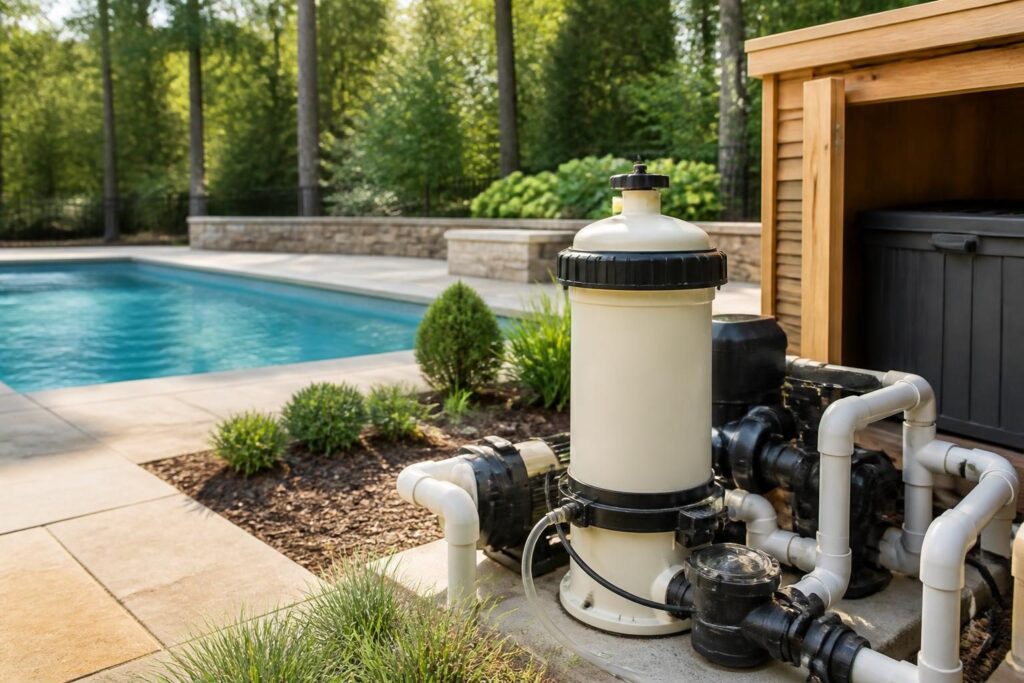
A pool chemical feeder inspection checklist helps North Carolina homeowners spot visible equipment concerns before they become confusing maintenance or service problems. The goal is not to open chemical containers, adjust dosing, or repair a pressurized system. Instead, use a calm visual review of the feeder, nearby tubing, labels, connections, storage area, and operating information.

Chemical feeders may include tablet chlorinators, liquid chemical pumps, or other dosing equipment. Each design has different instructions and hazards. North Carolina conditions can also vary by weather, equipment location, ventilation, and local requirements. Follow the product manual and ask a qualified pool professional when a concern involves chemicals, electrical components, pressure, leaks, or system operation.
What a safe inspection does—and does not do
A visual inspection is a condition check. It can help you notice missing labels, damaged tubing, loose covers, staining, unusual moisture, or blocked access. It does not prove that a feeder is dosing correctly or that a chemical concentration is safe for swimming.
Before looking closely, keep children and pets away from the equipment area. Do not touch wet components, chemical residue, tubing connections, or unknown deposits. Never mix products, smell a container to identify it, or reach inside a feeder. Avoid switching valves or changing settings unless the owner’s instructions specifically identify a routine homeowner control.
- Inspect in daylight or with adequate lighting.
- Keep the feeder closed during a visual review.
- Wear the protection specified by the product instructions if the manufacturer requires it.
- Stop if you see a spill, strong odor, vapor, damaged container, or active leak.
- Contact the appropriate service professional for concerns you cannot identify safely.
For broader handover information, review the pool equipment startup checklist. It can help you organize manuals and operating instructions without treating a general checklist as a substitute for model-specific guidance.
Pool chemical feeder inspection checklist: exterior condition
Start with the feeder’s outside surfaces. Look for cracks, distortion, corrosion, sun damage, or a cover that does not appear to close as designed. Do not force a stuck lid. A damaged housing can expose people to chemicals or affect how the equipment operates.
Check the area around the feeder for unexplained moisture, crusty deposits, discoloration, or plant growth. A mark may come from ordinary water, a past spill, or a chemical issue. You do not need to determine the cause by touching it. Photograph the condition from a safe distance and ask the pool contractor or service technician for direction.
Use these visual questions
- Is the feeder upright and supported as the installation instructions show?
- Are the cover, body, and visible fasteners intact?
- Can you see any residue around seams, caps, or fittings?
- Does anything look swollen, brittle, cracked, or unusually discolored?
- Is the equipment area clear enough for safe service access?
Do not remove a cover from a liquid chemical container or open a tablet chamber just to inspect its contents. Product labels and manuals control the safe method. If the equipment needs internal cleaning or replenishment, use the stated procedure or arrange qualified service.
Inspect tubing, connections, and visible plumbing
Small chemical lines deserve careful attention. Look for kinks, splits, brittleness, loose clips, unsupported sections, or tubing that rubs against a sharp edge. Flexible tubing can age from sunlight, heat, chemicals, and movement. A line that appears intact may still need professional testing.
Observe visible connections without tightening, disconnecting, or repositioning them. Note whether fittings look misaligned or whether a connection shows staining or moisture. Never place a hand under a suspected leak. Pressure and chemical exposure can create risks that are not obvious from a photograph.
Compare the visible setup with the equipment diagram in the manual. The diagram may identify the chemical line, injection point, check valve, or flow direction. Do not rely on memory or assume that two similar feeders use the same arrangement.
- Photograph tubing from several angles.
- Record the feeder model and any visible part number.
- Write down when you first noticed a change.
- Note whether the pump, filter, or automation display shows an alert.
- Leave repairs and line replacement to a qualified professional when instructions require it.
If equipment connections are near electrical components, keep the review visual only. For a nontechnical discussion of pool electrical records, see electrical bonding and grounding review questions.
Review labels, markings, and operating instructions
Labels help prevent guessing. A useful pool chemical feeder inspection checklist includes the feeder identification label, chemical product label, warning information, flow arrows, and any service markings. Labels should remain readable and attached. Replace missing or damaged information through the manufacturer or service provider rather than creating your own chemical instructions.
Keep the manual close to the equipment record. Confirm that it matches the installed model, not merely a similar product. Save the manual as a paper copy and a digital file. Include photos of the installed feeder, tubing path, valves, and control display.
Questions for the service professional
- What feeder model is installed, and what products is it designed to use?
- Which tasks are safe for the homeowner?
- Which warning signs require immediate shutdown or service?
- What does each visible valve, arrow, or indicator mean?
- How should an alert, loss of flow, or suspected leak be handled?
- Which replacement parts must match the original model?
Operating instructions should explain normal controls, alarms, maintenance intervals, and emergency steps. Ask for clarification before changing a setting that affects chemical delivery. A feeder may be connected to circulation equipment or automation, so an apparently simple adjustment can affect the wider system.
Check chemical storage and the surrounding area
Storage deserves its own review. Keep products in their original, clearly labeled containers. Follow each label’s storage directions. Do not transfer chemicals into drink bottles, unmarked containers, or containers used for another product.
Look for a dry, stable storage arrangement that protects products from children, pets, heat, water intrusion, and direct exposure. Do not place incompatible products together. Never stack containers in a way that could make one fall onto another. Keep chemicals away from fuels, fertilizers, household cleaners, and other materials unless the product instructions allow that arrangement.
Do not clean a spill with another chemical or improvise a neutralizing method. If a container is damaged, leaking, swollen, or producing an unusual odor, leave the area and follow the product label’s emergency guidance. Contact emergency services or the appropriate poison and chemical safety resource when the situation may threaten people.
After severe weather, inspect from a safe distance for displaced containers, water intrusion, or debris. The related storm inspection and cleanup routine can help you separate general equipment checks from chemical concerns.
Confirm instructions without changing the system
A pool chemical feeder inspection checklist should end with an operating-information review. Locate the normal startup and shutdown instructions, emergency contact details, model information, and any service records. Confirm that household members know not to experiment with feeder settings or handle products without training.
Do not assume a clear pool proves correct chemical dosing. Water testing, calibration, replenishment, and feeder adjustment require the product instructions and, when appropriate, a qualified pool professional. If the feeder affects an automated system, ask how an alert should be handled before relying on remote controls.
Record the following:
- Date and weather conditions.
- Feeder make, model, and serial information, if available.
- Visible damage, moisture, residue, or label problems.
- Photos of tubing and connections.
- Displayed alerts or unusual operating sounds.
- Service requests and the professional’s written recommendations.
Use the pool chemical feeder inspection checklist again after service, replacement, or a major equipment change. Keep the notes with the rest of your equipment records. Build a Pool in North Carolina can be a useful homeowner education resource, but the installed product manual remains the primary source for model-specific operation.
When to stop and request help
Stop the inspection if you find an active chemical leak, strong odor, visible vapor, damaged container, unexplained heat, sparking, wet electrical equipment, or a feeder that appears pressurized or unsafe. Keep people away and follow the product’s emergency instructions. Do not troubleshoot by opening the feeder, disconnecting tubing, or mixing materials.
Local requirements can vary with the property, equipment, adopted codes, utilities, and project scope. The North Carolina Office of State Fire Marshal documents can help homeowners locate current building-code material, but local authorities and qualified professionals should confirm how requirements apply.
Consult a licensed pool contractor, equipment technician, electrician, or other qualified specialist when the concern involves dosing, chemical exposure, pressure, wiring, automation, or a repair. Contact the local inspections department if your project or equipment change raises a permit or inspection question. A careful visual review is valuable, but it should never replace professional evaluation where safety depends on details you cannot verify.