
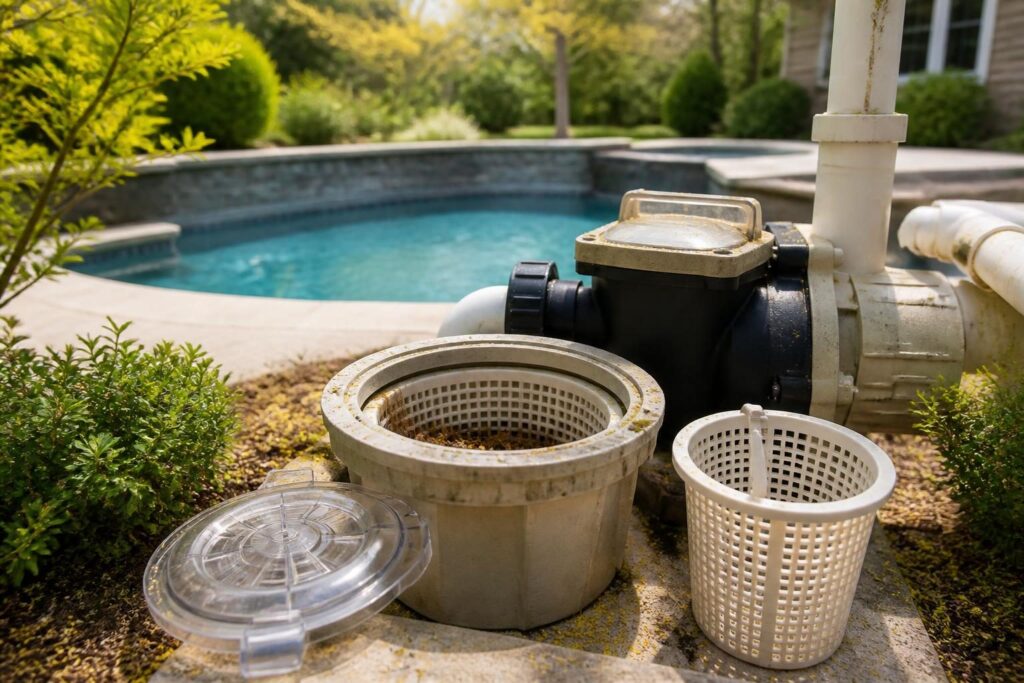
Pool pump basket skimmer maintenance North Carolina homeowners can perform regularly helps protect circulation equipment and keeps small debris from becoming a larger water-care problem. A skimmer basket catches leaves and surface debris. The pump basket catches debris that passes through the skimmer. Both need attention because a blocked basket can reduce water flow and place extra strain on the circulation system.

North Carolina pools face changing conditions through the year. Spring pollen can arrive quickly. Summer storms may bring leaves, twigs, and dirty runoff. Warm, humid weather can also increase the importance of steady circulation and regular observation. This guide offers a practical routine, not a substitute for equipment instructions or professional service.
How the skimmer and pump baskets work together
The skimmer is the opening at the pool wall that draws water from the surface. Its basket holds larger debris before water travels toward the pump. The pump basket sits inside the clear strainer housing near the equipment pad. It provides a second collection point before water reaches the pump and filter.
These baskets do not replace the pool filter. They handle larger material, while the filter removes smaller particles from circulating water. A clean basket system supports the intended flow path. It also gives you useful clues when something changes.
- Skimmer basket: catches leaves, insects, grass, and floating debris.
- Pump basket: catches material that passes through the skimmer or enters another suction line.
- Filter: removes finer particles and requires its own pressure-based maintenance routine.
- Pump: moves water through the circulation and treatment equipment.
Basket care is only one part of a complete routine. For broader seasonal context, review this North Carolina seasonal pool equipment schedule. Settings, run time, water level, and test results can affect how often baskets fill.
Pool pump basket skimmer maintenance North Carolina routine
Choose a regular inspection day and add extra checks after windy weather, heavy swimming, or visible debris. The correct interval depends on trees, landscaping, weather, pool cover use, and the basket design. A simple routine is easier to follow when each step has a clear purpose. This pool pump basket skimmer maintenance North Carolina approach works best when you record normal conditions before problems appear.
Before opening the baskets
- Turn the pump off using the normal control or timer.
- Wait until moving water stops before opening the pump strainer lid.
- Keep hands, tools, and loose clothing away from moving equipment.
- Follow the equipment manufacturer’s instructions for shutoff and restart.
- Do not open a pressurized filter vessel as part of ordinary basket cleaning.
Never force a lid, drain plug, valve, or basket that does not release normally. If you are unsure which control isolates the equipment, stop and ask a qualified pool professional. Electrical components and pressurized systems deserve extra caution.
Clean the skimmer basket
- Lift the skimmer lid carefully and remove the basket by its handle.
- Empty leaves and debris into a waste container, not back into the pool.
- Rinse the basket with a garden hose or clean water.
- Check for cracks, broken ribs, a damaged handle, or a poor fit.
- Replace the basket so it sits correctly and cannot bypass debris.
Do not use the basket as a place to hold chemicals, weights, or loose objects. Keep the skimmer lid seated and in good condition. A damaged lid can create a trip or access concern, so ask a qualified professional about replacement requirements.
Clean the pump basket
- Confirm that the pump is off and the system is not actively pressurized.
- Open the clear strainer lid according to the manufacturer’s instructions.
- Remove the basket and empty its contents.
- Rinse the basket and inspect the housing for leaves, stones, or broken plastic.
- Check the lid and sealing ring for dirt, damage, or signs of poor seating.
- Reinstall the basket in its intended position.
- Close the lid as directed. Do not overtighten components that are designed for hand tightening.
Some pump systems require priming after the lid is replaced. Priming means filling the pump housing with water so the pump can establish circulation. Follow the equipment manual. If the pump does not prime normally, shut it down rather than allowing it to run without adequate water flow.
Flow clues to record instead of guessing
Basket cleaning should include observation. You do not need to diagnose every change yourself. Your goal is to notice a pattern, record it, and decide whether professional help is needed.
- Is the pump basket filled with water during operation?
- Can you see return flow similar to its usual condition?
- Does the skimmer draw surface water without unusual swirling or air?
- Has the pump become louder, more rattly, or more difficult to prime?
- Persistent air bubbles appear under the clear lid when they were not present before.
- A pressure reading differs from its normal recorded range.
- Flow drops soon after cleaning the baskets.
One clue does not identify a cause. Low water, a dirty filter, a closed valve, an air leak, a suction-side obstruction, or equipment wear may produce similar symptoms. Avoid changing several valves or settings at once. Record what you see and consult the equipment manual or a qualified pool technician.
A useful log entry includes the date, weather, basket contents, water level, pump setting, filter pressure, visible flow, and any unusual sound. Photos can help show changes over time. The pool equipment manuals and labels homeowner file article offers a practical way to keep these records with model information and service notes.
Adjusting the routine for North Carolina pollen season
Pollen can collect on the water surface and move through the skimmer. A light-looking layer may still fill a basket quickly when wind continues. During heavy spring pollen, inspect baskets more often than your normal schedule. That is when pool pump basket skimmer maintenance North Carolina homeowners already perform may need shorter inspection intervals.
Use a leaf net or skimmer net for large surface debris before it reaches the skimmer. Work gently around the pool and avoid pushing debris toward drains or suction fittings. If pollen coats the surface, remove as much as practical before relying on the circulation system to carry it away.
- Check the skimmer basket after windy days.
- Inspect the pump basket when the skimmer has collected heavy material.
- Watch filter pressure and water clarity rather than focusing only on basket fullness.
- Rinse nets and tools so collected pollen does not return to the pool.
- Keep nearby soil, mulch, and grass clippings from washing into the water.
For more detail on pollen’s effect on surfaces, filters, and testing, see North Carolina pollen pool maintenance. A clean basket does not solve every pollen-related water issue.
Storm-season checks for baskets and equipment
Storm preparation begins before the forecast worsens. Remove loose debris from the pool and surrounding area when it is safe. Confirm that the equipment area is accessible and that covers, gates, and drainage paths are not obstructed.
After a storm, do not restart equipment automatically if flooding, standing water, damaged wiring, or fallen branches affect the equipment pad. Keep people away from unsafe areas and contact the appropriate qualified professional. Electrical equipment exposed to water requires careful evaluation.
After the weather clears
- Look across the pool surface for branches, soil, and other large debris.
- Check the skimmer basket before asking the pump to handle a heavy load.
- Inspect the pump basket only after following the normal shutdown procedure.
- Look for unusual water level changes or visible runoff entering the pool.
- Check for equipment damage, loose lids, broken fittings, or wet electrical components.
- Test water according to your normal method before swimming.
Heavy debris may require manual removal before circulation resumes. Do not reach into a drain, suction opening, or moving equipment. This pool maintenance after storms checklist can help organize the wider inspection.
Protecting baskets, lids, and pump seals
Small maintenance habits can prevent avoidable wear. Rinse baskets with clean water instead of striking them against hard surfaces. Keep spare baskets matched to the equipment model. A basket that is too small, too tall, or poorly shaped may not seat correctly.
Inspect the pump lid and sealing ring when you clean the basket. Dirt on the sealing surface may allow air into the system. A flattened, cracked, or damaged ring may need replacement. Use only products and procedures approved for that equipment. Do not apply household cleaners or improvised lubricants without checking the manual.
Keep the equipment pad clear enough for inspection and service. Do not stack chemicals, tools, toys, or yard waste against the pump. Ventilation and service access matter, especially when a heater or other equipment shares the area.
A simple seasonal checklist
Use this as a starting point, then adapt it to your property and equipment instructions.
| Season or condition | What to check | What to record |
|---|---|---|
| Routine week | Skimmer basket, pump basket, lid, visible flow | Debris amount and unusual sounds |
| Heavy pollen | Surface debris, skimmer load, filter pressure | How quickly baskets fill |
| After wind | Branches, leaves, basket condition, equipment access | Storm date and any damage clues |
| After heavy rain | Water level, runoff, clarity, equipment area | Water observations before restart |
| Before colder weather | Lids, baskets, plumbing instructions, service records | Winter preparation steps completed |
Record the normal appearance of your pump basket and return flow when the system is operating well. That baseline makes gradual changes easier to notice. You can also compare equipment operation with your scheduled run times using this guide to pool pump run time in North Carolina.
For energy-performance information when comparing pump equipment, review ENERGY STAR Pool Pumps. Certification information does not replace sizing, installation, or operating guidance from a qualified professional.
When to stop and call a qualified professional
Stop troubleshooting and seek help if the pump repeatedly loses prime, runs dry, leaks, trips an electrical protection device, shows damaged wiring, or makes a new grinding sound. Ask for service when flow remains poor after basic checks, or when you cannot identify the correct valve and shutdown procedure.
North Carolina requirements and safe practices can vary with the property, equipment, adopted codes, utilities, flood conditions, and project scope. Consult the local inspections department for applicable local requirements. Use a licensed pool contractor or qualified pool technician for circulation repairs. Contact a licensed electrician for electrical concerns, and another appropriate specialist when flooding, drainage, or structural conditions affect the equipment area.
Build a Pool in North Carolina encourages homeowners to keep calm, dated records. A consistent basket routine cannot prevent every equipment problem, but it can reveal changes earlier and support clearer conversations with the right professional.