
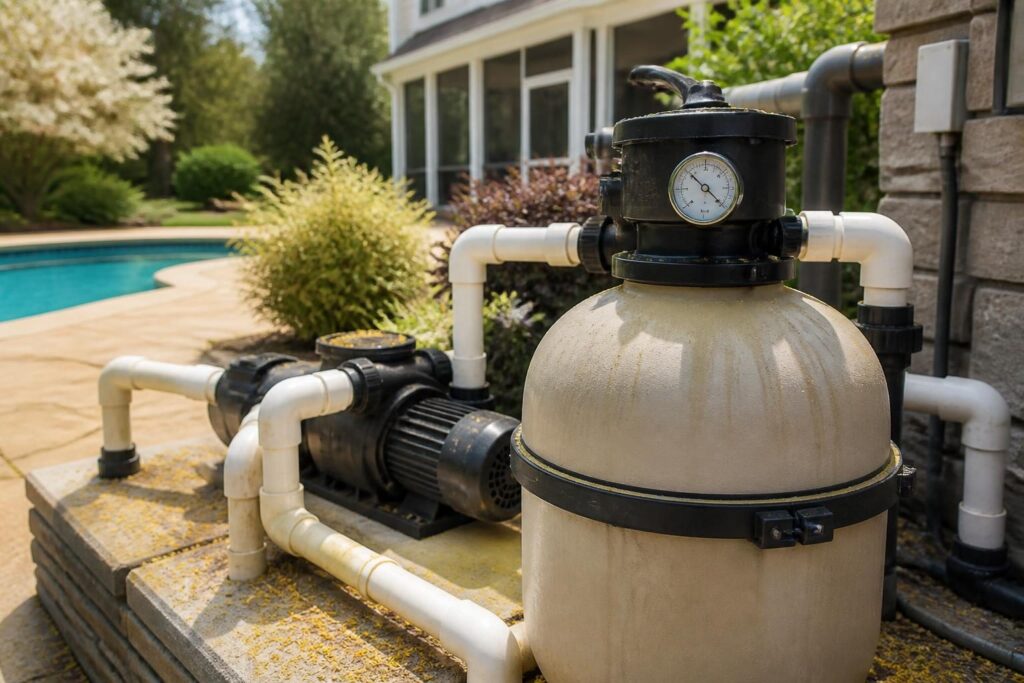
Pool filter pressure gauge troubleshooting safely starts with observation, not guesswork. A pressure gauge can help you notice changes in water flow, filter loading, trapped air, or equipment behavior. However, the gauge is only one part of the circulation system. Its reading does not prove that a filter, pump, valve, or pipe has failed.

North Carolina weather can bring pollen, leaves, heavy rain, warm water, and changing maintenance demands. Those conditions may affect circulation and filter pressure. Use the steps below to record useful information without opening pressurized equipment or attempting electrical work.
What the pressure gauge can—and cannot—tell you
A pool filter pressure gauge measures pressure at one point in the circulation system. On many residential systems, it sits on or near the filter tank. The number changes as water moves through the filter and connected plumbing.
A reading is most useful when compared with your system’s normal baseline. That baseline is the pressure observed when the filter is clean, the water level is suitable, valves are in their usual positions, and the pump is operating at a known setting.
There is no universal “correct” pressure for every pool. Filter type, pump speed, plumbing size, equipment layout, water level, and valve position all matter. A new gauge may also show a different reading from the old one without changing the actual system condition.
Keep these limits in mind:
- The gauge does not measure water chemistry or water quality.
- A gauge does not confirm that every return is receiving proper flow.
- Pressure alone does not identify a blockage.
- Readings may differ at different pump speeds.
- The gauge cannot replace the manufacturer’s operating instructions or professional diagnosis.
For broader cleaning decisions, compare your notes with this guide to filter pressure and water conditions. The goal is to recognize a meaningful change, not chase a single number.
Start with a safe visual check
Before touching the filter, pump, valves, or gauge, turn off the system if the manufacturer’s instructions allow that step. Keep hands, clothing, and tools away from moving parts. Do not loosen a clamp, lid, drain plug, union, or pressure fitting while the system may be pressurized.
Pool filter pressure gauge troubleshooting safely begins with looking from a safe position and recording what you see. A photograph of the gauge, pump display, valve positions, and equipment area can help a qualified service professional understand the situation.
- Is the gauge needle steady, drifting, stuck, or visibly damaged?
- Is the gauge face readable, or is condensation blocking the scale?
- Does the pressure reading change when the pump speed changes?
- Are pool returns producing their usual movement?
- Is the skimmer basket area drawing water normally?
- Do you see water, mist, dampness, or an active drip near equipment?
- Is the filter tank, lid, or clamp showing damage or unusual movement?
- Did the reading change after cleaning, vacuuming, adding water, or a storm?
Do not reach into the pool to inspect suction fittings while equipment is operating. Stop and seek qualified help if you see a damaged drain cover, exposed wiring, a strong leak, unusual noise, or equipment that cycles unexpectedly.
Understanding high and low pressure readings
What a higher-than-usual reading may suggest
A pressure reading above the established baseline often means the system is meeting more resistance after the gauge location. A loaded filter is one possible reason. Fine debris, pollen, cloudy water, or a recent cleanup can increase resistance.
A partially closed return valve, blocked return path, or incorrectly positioned multiport valve may also change pressure. A heater, cleaner, chlorinator, or other component can affect the reading when water passes through it.
For pool filter pressure gauge troubleshooting safely, homeowners can compare the gauge with recent maintenance records and visible water flow. Avoid opening the filter to “check inside” unless a qualified professional confirms the system is fully isolated, depressurized, and safe to service.
What a lower-than-usual reading may suggest
A low reading can occur when the pump runs at a lower speed or when the system receives too little water. A low pool water level, blocked skimmer basket, air entering the suction side, or a pump that does not prime normally may affect circulation.
Loose connections or leaks on the suction side can draw air without producing an obvious water leak. You may notice bubbles in the pump basket or air returning through the pool outlets. These clues are useful, but they do not identify the exact source.
A gauge can also fail in the low position. If the needle remains at zero while the pump clearly operates, compare the reading with flow behavior and the gauge’s condition. Do not assume the gauge is accurate or inaccurate without further testing.
Air concerns around the filter and pump
Air in a circulation system can appear as bubbles in a clear pump lid, intermittent bubbles at return outlets, loss of prime, or a gurgling sound. A small amount of air may occur during startup. Persistent air deserves attention because it can affect circulation and may signal a suction-side issue.
Air can also remain in the filter tank after maintenance. Many filters include an air-relief feature. Its purpose and operating method vary by equipment design. Follow the filter manufacturer’s instructions rather than turning a valve by trial and error.
Never remove a filter lid or loosen a pressure component because the gauge reading looks unusual. A gauge that falls to zero after the pump stops does not prove that the tank is safe to open. Pressure can remain trapped, and a faulty gauge may not display it.
Contact qualified pool service help if you observe continuing bubbles, repeated loss of prime, a rising pressure reading, water escaping from a tank connection, or uncertainty about how to depressurize the equipment.
Use a simple observation record
A short record can separate a one-time change from a repeatable pattern. Note the date, weather, water level, pump speed, pressure reading, filter condition, and visible flow. Record what changed before the reading changed.
Useful comparison points include:
- Shortly after a known filter cleaning.
- During the normal pump schedule and speed.
- Before and after heavy pollen, leaves, or rain.
- Pressure when the pool water is clear versus cloudy.
- Return flow with normal valve positions.
- Any bubbles, alarms, unusual sounds, or priming problems.
- Whether the gauge reading agrees with a separate service measurement.
Do not change several settings at once. If you increase pump speed, move valves, clean a filter, and add water together, you may not know which action affected the reading. Make one safe observation at a time, when practical.
For related documentation, review the equipment startup record checklist. Manuals, model numbers, service notes, and photographs can save time when a technician needs system details.
Gauge limitations and replacement questions
Pressure gauges are small, replaceable instruments. Their needles may stick, their faces may cloud, or their internal mechanisms may lose accuracy. A damaged gauge should not serve as a reliable safety indicator.
Ask a qualified service professional to assess the gauge when:
- A needle stays fixed despite clear changes in pump operation.
- Cracked, fogged, or unreadable glass blocks the gauge face.
- Readings are inconsistent with visible flow and recent records.
- The gauge leaks around its connection.
- The pressure suddenly changes without an obvious operating change.
- You do not know the system’s normal baseline.
Replacement is not always a simple matter of choosing a gauge with the same appearance. Thread size, pressure range, connection style, compatibility, and installation procedure matter. The filter manufacturer’s documentation and a qualified technician can help confirm the correct part. For pump energy information, homeowners can also consult ENERGY STAR’s pool pump guidance.
When to stop observing and request service
Call qualified pool service help promptly if pressure rises rapidly, the pump loses prime repeatedly, the filter tank leaks, or the equipment makes grinding, rattling, or forceful vibrating sounds. Stop using equipment that shows damaged housings, exposed electrical parts, burning smells, or uncontrolled water discharge.
Keep swimmers away from equipment problems that could affect suction, electrical safety, or water quality. A pressure reading alone may not reveal a dangerous condition. If electrical components are involved, use a licensed electrician or other qualified professional rather than opening panels or testing wiring yourself.
Before requesting help, gather the filter and pump model numbers, gauge photographs, recent readings, maintenance dates, pump settings, and a description of any bubbles or flow changes. Also note whether the issue began after cleaning, vacuuming, rainfall, landscaping work, or a change in equipment operation.
North Carolina requirements and professional responsibilities can vary by jurisdiction, property conditions, adopted code, utilities, and project scope. For equipment, electrical, pressure, or water-flow concerns, consult the local inspections department when permitting questions arise, and use a licensed pool contractor, electrician, or other qualified specialist for diagnosis and repairs. Build a Pool in North Carolina provides homeowner education, not a substitute for site-specific professional advice.
Key takeaways for homeowners
- Compare readings with your system’s normal baseline, not a universal target.
- Check pump speed, water level, valve positions, visible flow, and recent conditions.
- Persistent bubbles may indicate air entry or another circulation concern.
- Never open pressurized pool equipment based only on a gauge reading.
- Photographs and dated notes make service conversations more useful.
- Use qualified help for pressure, electrical, equipment, or code-related concerns.
Careful observation is valuable, but safe limits matter more than solving every problem yourself. A clear record can help a qualified professional test the system efficiently and recommend the next step. Pool filter pressure gauge troubleshooting safely should end with qualified service whenever pressure, air, or equipment behavior remains uncertain.