
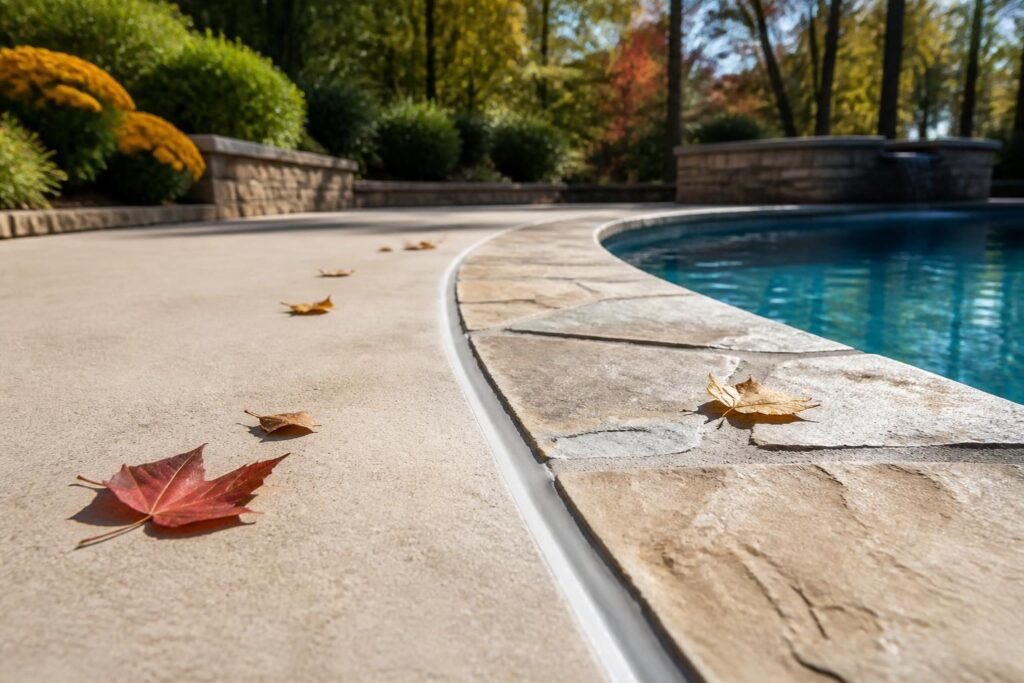
Good pool expansion joint sealant maintenance North Carolina homeowners perform seasonally can help reveal movement, moisture entry, and debris buildup before small joint changes become harder to evaluate. These joints sit where materials meet, such as a concrete deck beside pool coping, a deck beside a wall, or a walkway beside another slab.

Sealant does not stop all movement. It helps keep a joint flexible while reducing the path for water and debris. Weather, sunlight, rain, temperature changes, soil conditions, cleaning methods, and nearby landscaping can all affect its condition. A homeowner inspection helps with observation and documentation, but it does not replace a qualified contractor’s assessment.
What an expansion joint does around a pool
An expansion joint is a planned separation between adjoining materials. The joint gives those materials room to move independently instead of forcing every change into the concrete, coping, tile, or nearby structure. A flexible sealant often fills the joint to limit water and debris entry while allowing some movement.
Pool areas may contain several different materials. Concrete can respond differently from stone coping, brick, pavers, tile, or a retaining structure. Their edges may also have different temperatures and moisture exposure. That is why a joint can deserve attention even when the surrounding deck looks generally sound.
Do not assume every line in a deck is an expansion joint. Some lines are control joints, construction joints, cracks, or intentional transitions. Their purpose and repair method may differ. If you cannot identify the joint type, ask the pool contractor or a qualified concrete or sealant professional before removing material.
Why North Carolina seasons can expose sealant problems
North Carolina pool areas experience changing conditions across the year. Hot sun can warm exposed deck surfaces. Rain can keep joints damp and wash soil toward low areas. Winter cold can make some sealants less flexible for a time, while spring growth and pollen add organic debris around the joint.
Seasonal movement does not automatically mean a defect. A small change may reflect expected material movement. The important question is whether the joint remains filled, bonded at its edges, and free of conditions that allow water or debris to collect below the sealant.
Drainage also matters. Repeated wetting near a joint can make deterioration easier to notice. Sprinkler overspray, roof runoff, pool splash-out, and water carried by foot traffic may all increase exposure. For related questions, review pool deck drainage around doors and walkways.
For broader building-code and inspection context, homeowners can review the North Carolina Office of State Fire Marshal documents and interpretations. Confirm current requirements and local interpretations with the appropriate inspections department.
Seasonal inspection routine for pool joints
A simple routine works best when it uses the same viewing points each time. Inspect in good daylight, and avoid walking on loose edges or probing an open joint. Take overview and close photographs. Include a ruler or another familiar object only when you can place it safely without entering the joint.
Pool expansion joint sealant maintenance North Carolina homeowners plan should use the same locations, viewing angles, and notes each season. Consistency makes gradual changes easier to spot without turning a visual check into a diagnosis.
Spring: check winter exposure
After winter weather, look for sealant that has pulled away from one or both sides. Note splits, holes, missing sections, hardening, bubbling, or areas that appear lower than the surrounding surface. Check whether leaves, pine needles, sand, or soil have packed into the joint.
Spring is also a useful time to compare the deck with earlier photographs. Look for new offsets between coping and concrete, changes in a nearby crack, or a lifted edge. Do not use a joint inspection to diagnose structural movement. Record what changed and ask a qualified professional whether further evaluation makes sense.
Summer: watch heat, sunlight, and water exposure
During the swimming season, inspect areas exposed to strong sun, frequent splash-out, and cleaning activity. Sealant may show surface wear where furniture, toys, cleaning tools, or foot traffic repeatedly contact the joint. Keep sharp tools away from the material.
Observe whether irrigation sprays directly onto the deck or coping. Persistent overspray can keep the joint wet and carry soil into gaps. The article Pool Landscape Irration Overspray Backflow Questions offers a broader review of sprinkler direction and runoff near a pool.
Autumn: remove debris without damaging the joint
Leaves and seed material can collect where coping meets the deck. Remove loose debris with a soft brush or a method approved for your surface and sealant. Avoid forcing a pressure-washer tip into the joint. High-pressure water can dislodge weak material or drive water beneath an edge.
Tree debris deserves extra attention in wooded or landscaped yards. Keep planting soil and mulch from being pushed against the joint. If nearby trees create repeated buildup, plan a cleaning routine rather than scraping aggressively. See pool tree canopy leaf load planning in North Carolina for related maintenance considerations.
Winter: document before access becomes limited
Before a cover, furniture, or seasonal storage blocks the area, photograph the joint and surrounding surfaces. Note missing sealant, open gaps, staining, or standing water after rain. If you winterize the pool, follow the equipment and cover instructions provided for the system.
Do not apply a new product simply because temperatures are changing. Sealant selection, surface preparation, joint dimensions, moisture conditions, and curing requirements can affect the result. Let product instructions and professional recommendations guide any repair decision.
Signs that deserve closer attention
Several observations justify a call to a qualified pool contractor, concrete professional, or sealant specialist. These signs do not prove a structural problem. They indicate that a homeowner should avoid guessing about the cause.
- Sealant has separated from the concrete, coping, or another joint edge.
- A section has gone missing, torn, become brittle, sunk deeply, or filled with hard debris.
- The joint repeatedly holds water, soil, or organic material after routine cleaning.
- Coping or deck edges appear offset, lifted, tilted, or newly uneven.
- A nearby crack changes, widens, or develops a height difference.
- Water appears to reach a wall, room, crawl space, or other sensitive area.
- Previous repairs fail again within a short period or in the same location.
Keep the area safe while you wait for evaluation. Mark the location in your records, but do not place a trip hazard over the joint. Keep children away from loose pieces and avoid disturbing material that may help a professional understand the failure.
Questions to ask before sealant work
A useful conversation begins with identification, not a product name. Ask the professional to explain what type of joint exists and which materials meet at its edges. Request a written description of the proposed preparation, replacement material, and expected limitations.
- Is this a movement joint, control joint, construction joint, or crack?
- What condition can you see beneath or beside the existing sealant?
- Does the surrounding concrete, coping, drainage, or soil need separate evaluation?
- How will you remove old sealant and packed debris?
- What surface and weather conditions does the work require?
- Which areas should remain unused while the material cures?
- What maintenance or inspection interval does the product manufacturer recommend?
- What records, product details, and care instructions will the professional provide?
Keep photographs, dates, contractor notes, product information, and invoices together. If the pool remains under a construction or repair warranty, read the applicable documents before authorizing work by another party. A clear record can help separate an old condition from a new observation.
Regular pool expansion joint sealant maintenance North Carolina homeowners record can also help professionals compare changes across seasons. Note the joint location, weather, nearby drainage, and any cleaning or landscaping work.
How joint records support better decisions
Use a seasonal table with the date, weather conditions, location, visible sealant condition, nearby surface changes, debris, and action taken. Photograph the same corners and transitions each time. Add a short note after heavy rain, major landscaping, or other work near the pool.
Records should describe observations rather than conclusions. “Open dark line at the coping-to-deck transition” is more useful than “foundation failure.” Include scale and direction when practical, but do not attempt engineering measurements without suitable training.
For a broader photo system, read seasonal coping movement checks and photo guidance. If the nearby deck itself appears to settle or change level, compare your notes with the guidance on pool deck settlement monitoring.
When to bring in a qualified professional
Routine visual checks can help you notice change, but sealant repair may involve surface preparation, material compatibility, moisture control, access, and safe work practices. Consult a licensed pool contractor, qualified concrete or sealant professional, engineer, surveyor, drainage specialist, or other appropriate expert when movement is substantial, repeated, unclear, or close to a structure.
Pool expansion joint sealant maintenance North Carolina homeowners handle should remain observational unless a qualified professional recommends a repair method. North Carolina requirements and project conditions can vary by jurisdiction, property, adopted codes, drainage patterns, and construction scope. Contact the local inspections department when a repair may affect a regulated structure or safety feature. Build a Pool in North Carolina encourages homeowners to verify the right professional and current local requirements before work begins.