
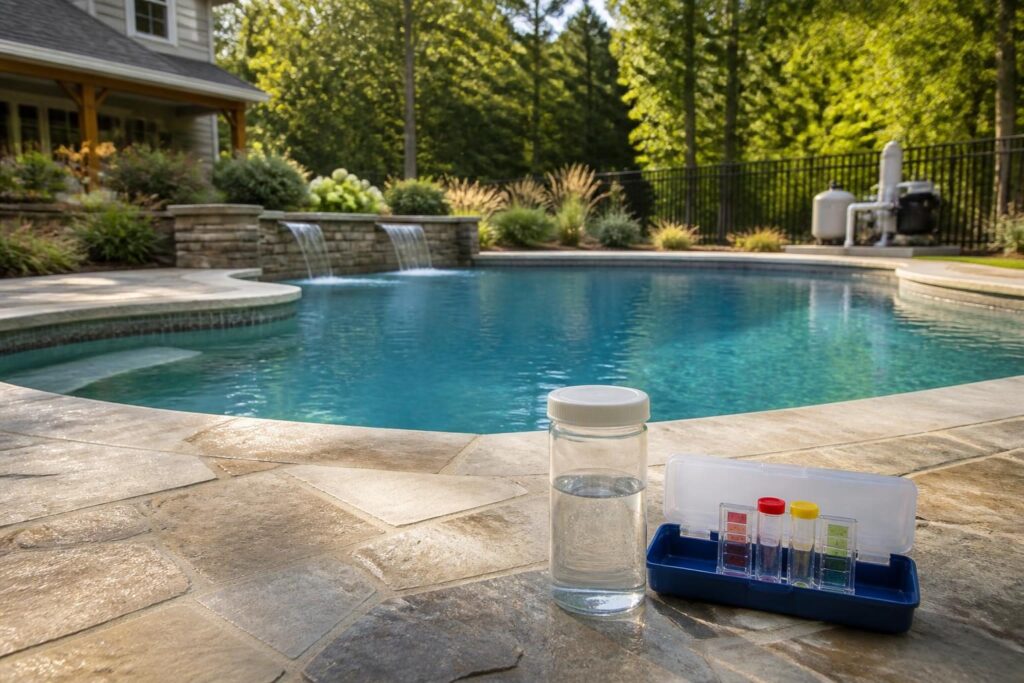
Pool fill water testing North Carolina homeowners plan before the first chemicals enter the pool can prevent confusing startup problems. Municipal water, private-well water, and delivered water may have different mineral and metal profiles. A baseline test gives you a clearer starting point.

The goal is not to make the water perfect before filling. It is to understand the source, collect useful results, and make measured adjustments. Your pool contractor or water-care professional can then select a treatment sequence that fits the surface, equipment, sanitizer system, and local conditions. Use pool fill water testing North Carolina results to compare the source with the water that actually enters the pool.
Start by identifying the fill-water source
Ask where the water will come from and who controls access to it. A garden hose connected to the home supply may use municipal water or a private well. A delivery truck may bring water from a separate source with its own treatment history.
Source matters because water chemistry can change before it reaches the pool. Well water may contain iron, manganese, hardness, or other dissolved minerals. Municipal water may contain disinfectants and may vary by utility system. Delivered water may suit filling, but you still need source details and a test record.
- Confirm the planned source and backup source.
- Ask whether the water passed through a softener, filter, or treatment system.
- Record the provider, delivery date, and approximate volume when water is delivered.
- Ask whether the source has a recent laboratory or provider analysis.
- Check whether filling could affect household water pressure, a well, or septic use.
For private wells, do not assume a previous household test answers every pool-startup question. A health-focused well test and a pool-treatment test may serve different purposes. The North Carolina Environmental Health resource can help you find state information about private wells and onsite wastewater. Verify property-specific questions with the appropriate local health department or qualified well professional.
What to test before adding treatment
Collect a baseline sample from water as close as practical to the actual fill. If water will sit in a storage tank, pass through treatment equipment, or arrive by truck, sample the water that will enter the pool when possible.
Ask the testing provider which methods and limits apply to the intended use. A basic pool test commonly considers pH, total alkalinity, calcium hardness, and sanitizer-related results. Source-water testing may also examine metals and other characteristics that affect appearance, staining, scaling, or treatment choices.
Core results to record
- pH: A measure of acidity or alkalinity that affects comfort, surfaces, and sanitizer performance.
- Total alkalinity: A measure of the water’s resistance to rapid pH change.
- Calcium hardness: The amount of dissolved calcium. Low or high levels can create different surface and scaling concerns.
- Metals: Iron, manganese, and copper can sometimes contribute to discoloration or staining.
- Sanitizer-related results: These establish what is already present and help guide safe startup decisions.
Test results are not treatment instructions by themselves. Pool volume, surface material, water temperature, equipment, and the planned sanitizer system all affect the next step. Follow product labels and professional instructions rather than combining chemicals based on a single test result.
The CDC guidance on home pool water treatment and testing provides general information about residential testing, chlorine, and pH. It does not replace local requirements or advice for a specific pool.
Municipal water: useful questions before filling
Municipal water is often convenient, but convenience does not remove the need for a baseline. Ask your utility whether it publishes a consumer water-quality report. That report may help you understand general source conditions, but it may not describe water at your outdoor spigot or after household treatment.
Consider whether the fill connection passes through a home water softener or filtration device. Softened water may have a different mineral balance than untreated utility water. A filter may also change some results. Record the exact connection used for the fill so later testing has context.
- Which outdoor faucet will supply the pool?
- Does that faucet use softened or filtered water?
- Could filling the pool at the planned rate interfere with household use?
- Is a backflow device or other plumbing review needed?
- Who will decide whether a treatment step occurs during filling or afterward?
Plumbing changes, backflow protection, and connection requirements can depend on the property and local utility. Ask the utility, licensed plumber, or other qualified professional to confirm any site-specific requirements.
Well water: test for metals and hardness early
Well water deserves extra planning because its appearance can change after exposure to air. Water that looks clear at the hose may later develop orange, brown, gray, or green discoloration. That change can relate to dissolved metals, but only testing can identify the likely cause.
Hardness also matters. Hard water contains more dissolved calcium and magnesium. When hardness, pH, temperature, and evaporation interact, deposits may form on surfaces or equipment. Low hardness can create a different set of concerns, especially for some pool finishes. The proper target depends on the pool system and professional guidance.
Do not use household water-treatment equipment as a shortcut without understanding its effect. A softener, iron filter, carbon filter, or other device may change the water, but it may not address every pool-startup issue. Ask the well professional and pool professional to coordinate their recommendations.
Review the existing well records, treatment equipment, and access needs before filling. If construction could affect the well, water line, pump, or service access, document the condition first. The internal guide on pool construction near private well water supply access covers related planning questions.
Delivered water: document the load and source
Delivered water can reduce pressure on a household supply and may help when a well has limited production. It also introduces a separate logistics and documentation step. Ask the delivery provider what type of water it supplies, where it comes from, and whether a recent analysis is available.
Keep the delivery ticket with your pool records. Note the date, truck or provider identification if supplied, amount delivered, and any water-quality information. If more than one load is used, keep each record separate. Different loads may not have identical results.
Plan the route, hose placement, and truck access before the delivery day. Protect finished surfaces and keep hoses away from areas where they could create a trip hazard. Confirm who controls the fill rate and who watches the pool while water enters.
For logistics questions, see pool water delivery planning in North Carolina. Water delivery does not remove the need to verify local drainage, access, or property restrictions.
How to handle metals without guessing
Metals are a common reason homeowners want more than a basic strip test. Iron and manganese may contribute to yellow, orange, brown, or dark discoloration. Copper may contribute to blue-green staining or tinting under some conditions. These signs have several possible causes, so avoid diagnosing the water by color alone.
Ask whether the test can measure the metals relevant to your source. Discuss the result before adding a sequestrant, oxidizer, sanitizer, or other product. A sequestrant is a treatment product intended to keep some metals in solution. Its use, dosage, and maintenance depend on the product and water conditions.
- Save the original metal results.
- Record the product name, amount, date, and reason for use.
- Photograph unusual discoloration before treatment.
- Track whether the appearance changes after circulation.
- Ask when the water should be retested.
Never mix products in a container or add chemicals in an order that conflicts with the label. If the water changes rapidly, stop and contact a qualified pool professional for guidance.
Hardness and the pool surface
Calcium hardness deserves attention during the initial fill because the water may remain in contact with the new surface for a long time. The appropriate range varies with the surface, water balance, temperature, and treatment system. Your installer or water-care professional should identify the target for your pool.
Hardness does not respond like pH. Raising or lowering it may require a specific product, dilution, partial replacement, or another controlled approach. Those decisions should follow tested results and professional instructions.
After the first adjustment, retest at the interval your pool professional recommends. Record both the measured result and the target used. A note such as “hardness adjusted” gives less useful information than the original value, final value, product, amount, and date.
For related long-term concerns, read pool calcium hardness and scaling guidance. Startup care may require different attention from routine seasonal maintenance.
Build a clear initial-adjustment record
A startup record helps you and future service providers understand what happened during the first fill. Keep it with equipment manuals, warranties, surface-care instructions, and water-treatment notes.
| Record | What to include |
|---|---|
| Source | Municipal, well, delivered, or blended source; faucet or provider details |
| Sample | Date, location, collection method, and testing provider |
| Baseline | pH, alkalinity, hardness, metals, sanitizer, and other reported values |
| Adjustment | Product, amount, date, reason, and person or company providing direction |
| Follow-up | Retest date, new result, observations, and remaining questions |
Take photographs of the test report, product labels, delivery tickets, and visible water conditions. Do not rely only on a phone app or memory. Save digital copies in a project folder and keep a paper copy if that helps your household.
Questions to ask before the first chemicals go in
- What source will fill the pool, and has that source been tested recently?
- Which results matter most for this surface and sanitizer system?
- Should we test the sample before, during, or after filling?
- Could this property’s water contain iron, manganese, copper, or excessive hardness?
- What is the treatment sequence, and how long should circulation run?
- When should the water be retested?
- Which startup adjustments does the project scope include?
- Who records the baseline and final readings?
Good records do not replace professional judgment. They make the discussion more precise and help separate source-water issues from later changes caused by rain, use, evaporation, treatment, or equipment operation. Keeping pool fill water testing North Carolina results with the startup record also gives future service providers useful context.
For additional routine testing context, review the related guide on pool water chemistry after heavy use. Build a Pool in North Carolina encourages homeowners to keep source information and adjustment records together from the first fill onward.
North Carolina requirements and recommended practices can vary by jurisdiction, property conditions, utilities, septic systems, flood zones, and project scope. Consult the local inspections or health department when applicable, along with a licensed pool contractor, water-treatment professional, well or septic professional, plumber, or other qualified specialist for site-specific decisions. Keep pool fill water testing North Carolina records available when you discuss the source and initial treatment plan.