
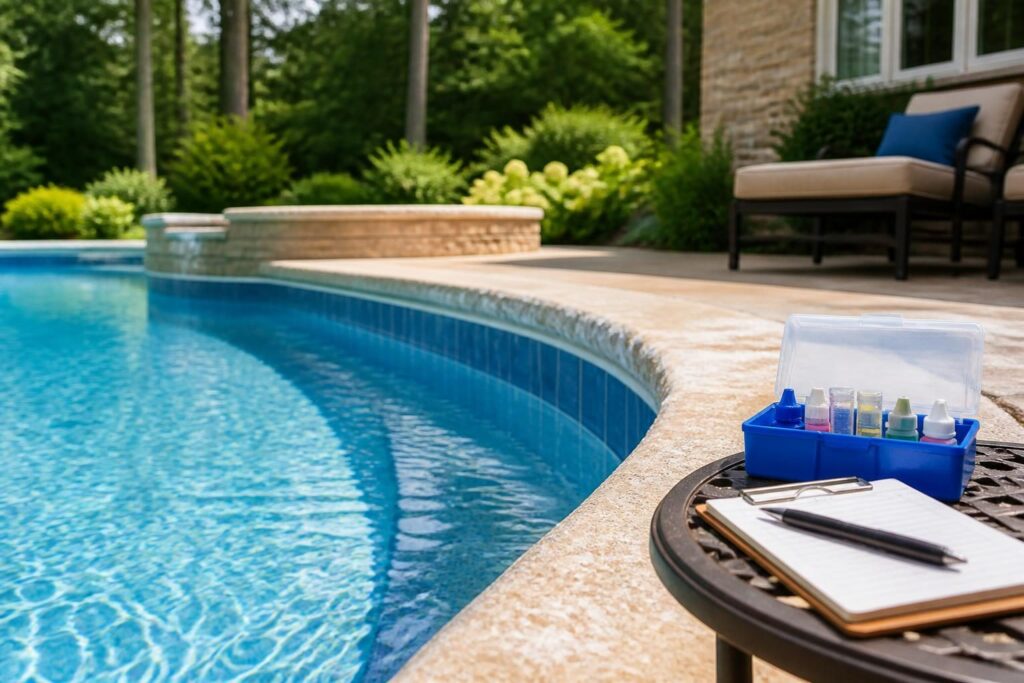
Pool calcium hardness scaling North Carolina homeowners notice often begins with a small clue: a white ring, rough tile, cloudy water, or flakes near a return. These signs do not identify one cause by themselves. Calcium hardness is one part of a larger water-balance picture that also includes pH, total alkalinity, temperature, evaporation, and the pool surface.

For pool calcium hardness scaling North Carolina homeowners, the goal is not to chase one number. Instead, test consistently, record conditions, and look for trends. A useful record can help you or a qualified pool professional decide whether the water is scaling, corrosive, diluted, or simply reacting to a recent change.
What calcium hardness means in pool water
Calcium hardness describes the amount of dissolved calcium in the water. Calcium is not automatically harmful. Water needs a balanced level because very low calcium can contribute to water that seeks minerals from cement-based surfaces. Excess calcium can combine with other conditions and form deposits.
People commonly call those deposits scale. Scale is a hard mineral buildup that may appear on tile, plaster, aggregate finishes, heaters, salt-cell plates, fittings, or inside plumbing. Its appearance can vary from white and chalky to gray, tan, or rough and crust-like.
A test result should be read alongside the pool’s surface, equipment, recent weather, chemical additions, and maintenance history. A single reading cannot explain every deposit. If scale is widespread, persistent, or attached to equipment, ask a qualified pool professional to evaluate it before using a treatment.
How pH and alkalinity affect scaling risk
pH measures how acidic or basic the water is. Total alkalinity measures the water’s resistance to rapid pH change. They are related, but they are not interchangeable. A pool can have an acceptable alkalinity result and still show a pH pattern that encourages deposits.
As pH rises, dissolved calcium can leave the water more readily and form solid deposits. High alkalinity can also make pH difficult to control, depending on the water source and treatment method. Adding chemicals without retesting can create a cycle of correction and overcorrection.
For general residential testing guidance, review the CDC’s home pool water treatment and testing information. The CDC provides public-health guidance about testing, chlorine, and pH. It does not replace product instructions, local requirements, or advice from a qualified pool professional.
Questions to ask when results change
- Did the pH rise steadily, or did it change after one chemical addition?
- Has the pool been topped off after evaporation or heavy rain?
- Was the water tested before or after treatment, circulation, or cleaning?
- Has the pool surface, heater, salt system, or tile shown a new texture or deposit?
- Does the result fit the testing method’s instructions and expiration date?
Why temperature and evaporation matter in North Carolina
Warm water can make scale formation more likely when other water-balance conditions already favor deposits. Pool use, sunlight, heating, and warm weather can also increase evaporation. Evaporation removes water but leaves dissolved minerals behind. The remaining water becomes more concentrated until fresh water enters the pool.
North Carolina pools may experience hot summers, intense rain, pollen, and changing temperatures. Heavy rain can dilute some chemicals, while evaporation can concentrate minerals. A pool that receives frequent top-offs may also reflect the mineral content of the replacement water.
Private well water deserves special attention. Its mineral content can vary by property and source. If a well supplies makeup water, test that source or ask a water professional what it contributes. The same principle applies to municipal water: current results are more useful than assumptions about a whole region.
Keep a note of unusual weather and water additions. The North Carolina pollen pool maintenance guide can help connect seasonal conditions with filtration and water-care observations.
Surfaces and equipment can reveal different problems
Scale does not appear equally on every pool component. Tile may show a distinct waterline ring. A plaster or aggregate finish may feel rough before deposits become easy to see. Metal fittings can collect buildup around edges. A heater or salt-cell component may develop deposits where water moves through a warm or electrically active area.
Surface type matters when choosing a response. A method that works for one material could damage another. Do not scrape aggressively, add acid, or use a descaling product without checking the surface, equipment, and product instructions. Ask the builder, finish manufacturer, equipment manufacturer, or qualified service professional when you cannot identify the material.
Photographs make records more useful. Take close images of deposits and wider images showing their location. Use the same areas and similar lighting when possible. Include the date, water level, recent weather, and whether the pump was operating.
How to build a useful scaling record
A simple log can reveal whether the issue follows evaporation, rain, heating, a water refill, or a change in treatment. Record results in the same format each time. Include the test method, not only the number, because strips, liquid kits, and professional tests may produce different levels of detail.
Suggested water-balance log
- Date and approximate time
- Water temperature, if available
- pH and total alkalinity
- Calcium hardness
- Sanitizer result and treatment added
- Water level and recent top-off
- Rain, heat, or unusual weather since the last entry
- Filter pressure and circulation observations
- Visible scale, cloudiness, roughness, or waterline deposits
- Photos, product names, and amounts added
Keep test results separate from guesses. For example, write “white rough ring at tile line” rather than “high calcium caused scale.” That distinction helps a professional assess the evidence without treating an unconfirmed explanation as fact.
You can also compare records with equipment observations. A filter that needs attention after a period of debris or cloudy water may not indicate calcium scale. Review when filter pressure and water conditions suggest cleaning before linking every flow change to mineral deposits.
Testing decisions for homeowners
Routine testing is more useful when it follows a consistent schedule and method. Test after major changes only as directed by the product or service professional. Allow circulation when instructions call for it. Do not combine chemicals because a result looks unusual, and never mix products unless the label specifically permits the procedure.
Consider a more detailed test when scale appears repeatedly, the pool uses well water, the water source changes, or heating is frequent. A professional test may provide additional information about the water’s mineral balance. Ask what the technician tested, when the technician took the sample, and how the results relate to the pool surface and equipment.
For pool calcium hardness scaling North Carolina concerns, compare each new result with earlier records before making a correction. If a result seems far outside the usual pattern, repeat the test according to the kit instructions or request confirmation. Store test chemicals properly, check expiration dates, and keep samples away from contamination. A dependable trend is more valuable than a rushed correction.
Consistent records make pool calcium hardness scaling North Carolina decisions easier to discuss with a qualified professional. They also help separate a short-term reading from a recurring water-balance pattern.
What not to assume about visible scale
White material is not always calcium carbonate scale. It could be residue from a chemical product, grout or construction material, dust, biofilm, or another deposit. Cloudiness may also have several possible causes. The location, texture, timing, and water results all matter.
Likewise, a normal calcium-hardness result does not prove that a surface or heater is unaffected. Local conditions at a warm component can differ from what a whole-pool sample suggests. Equipment deposits may require inspection by a qualified technician.
Do not drain a pool solely because a test or deposit is concerning. Draining can create structural, groundwater, surface, and disposal questions. First ask a qualified pool professional whether the pool, finish, weather, and site conditions make draining or treatment appropriate.
A practical response checklist
- Photograph the deposit and note where it appears.
- Record recent rain, evaporation, top-offs, heating, and chemical additions.
- Test pH, alkalinity, calcium hardness, sanitizer, and temperature when possible.
- Check the test method, expiration dates, and sampling instructions.
- Compare the result with earlier records instead of relying on one reading.
- Pause aggressive cleaning or chemical treatment until you identify the surface.
- Ask a qualified professional to assess repeated scale or equipment deposits.
- Keep invoices, test reports, product labels, photographs, and service notes together.
For related debris and seasonal observations, see the guide to removing pool debris safely in North Carolina. Debris is not the same as scale, but it can affect circulation, filtration, and the reliability of your observations.
When to bring in a qualified professional
Consult a licensed pool contractor or qualified water-care professional when deposits return quickly, affect a heater or salt system, damage appears on the finish, or test results conflict. Ask a surface specialist or equipment technician about material-safe cleaning. If replacement water comes from a private well, a water-treatment professional may help interpret its mineral content.
Requirements and safe procedures can vary with the pool surface, equipment, water source, and local conditions. Build a Pool in North Carolina encourages homeowners to keep clear records and verify technical decisions with the appropriate qualified specialist before acting.