
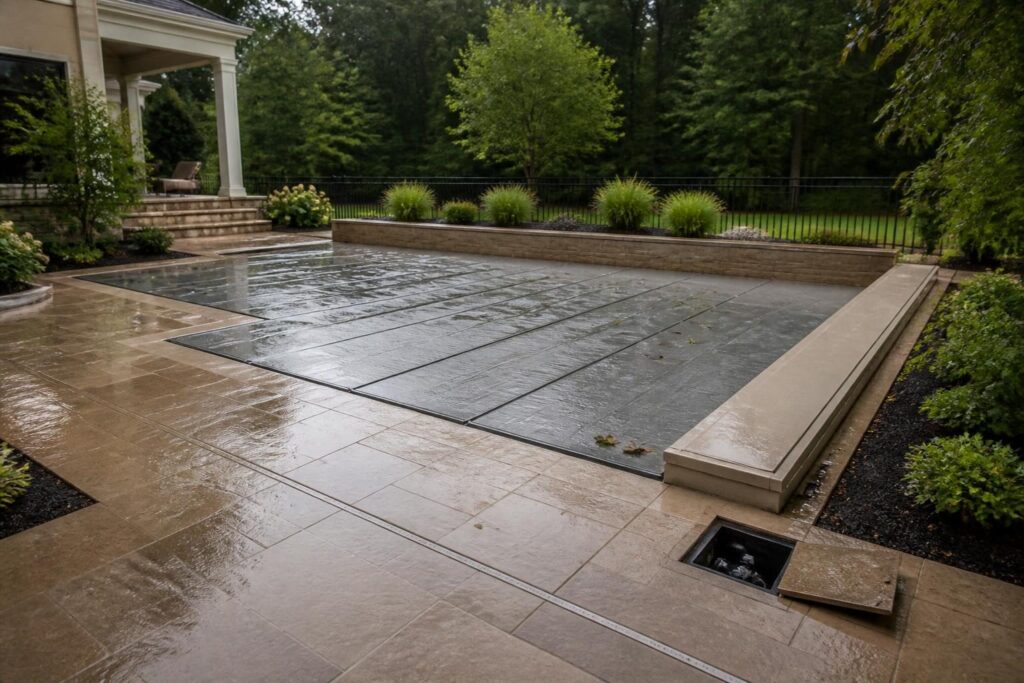
Good pool automatic cover drainage planning starts before the cover is installed. In North Carolina, repeated rain, pollen, leaves, and sudden storms can place water and debris on the cover. A well-planned system should move that water safely, keep the cover box serviceable, and avoid sending runoff toward the home, equipment, or neighboring property.

An automatic cover is a motorized barrier that opens and closes across the pool. Its fabric, tracks, motor, cover box, drainage details, and operating controls work as one system. Drainage is not simply a cleanup issue. It affects safety, equipment access, water management, and the long-term condition of nearby construction.
Why automatic cover drainage deserves early attention
Rainwater can collect on a closed cover when the surface cannot shed water quickly. Leaves and pine needles can hold additional moisture. Heavy debris may also interfere with movement, obscure the cover, or add strain to components. The right response depends on the cover design, local grading, drainage outlets, and manufacturer instructions.
Drainage planning also protects the cover box. This recessed space houses the rolled cover and related components. If water enters the box without a dependable path away, it may remain around the fabric, motor, or access area. Homeowners should ask the pool contractor to explain how the box drains, where the water goes, and how the route will remain reachable for service.
For a new installation or replacement, pool automatic cover drainage planning should begin while the deck, grades, and equipment locations remain flexible. Do not assume that a nearby deck drain solves every problem. A drain may be too small, poorly positioned, obstructed, or unable to handle the flow from a particular site. The contractor or a qualified drainage professional should assess the complete path, including discharge points and surrounding grades.
Pool cover box drainage: questions to resolve
Pool automatic cover drainage planning should identify the cover box location and its drainage method on the design documents. The detail may involve a dedicated drain, a pump system, a connection to another approved drainage feature, or a combination of methods. The appropriate arrangement varies with site conditions and product requirements.
Ask how the box handles ordinary rain
- Where does water entering the box collect?
- What carries that water away from the cover and home?
- Is the drainage route visible, cleanable, and protected from soil or mulch?
- Does the design depend on a pump, and if so, what activates it?
- What happens if the pump loses power or the outlet becomes blocked?
Request a simple marked-up plan or photograph showing the drain, pump, discharge route, and access points. Keep it with the cover manual and equipment records. If the route is underground, ask for its location and any cleanout or inspection points. Future service becomes easier when a homeowner does not have to guess where the line runs.
Plan for cleaning and service access
The access panel should open without damaging the deck or surrounding finish. Service personnel may need to reach the pump, motor, switches, drain connection, or cover mechanism. Avoid allowing landscaping, furniture, stored equipment, or permanent construction to block that space.
Ask whether the cover box requires periodic vacuuming, flushing, or inspection. Clarify which tasks the homeowner may perform safely and which require a qualified professional. Never reach into moving cover mechanisms or energized equipment. Follow the manufacturer’s instructions and shut down equipment only as directed.
Automatic cover pump access and backup planning
Some automatic covers use a pump to remove water from the cover or box. Automatic cover pump access should be treated as a routine service need, not an afterthought. The pump needs a reachable location, suitable power, protection from damage, and a clear discharge route. Electrical work should be reviewed by a qualified electrician under the requirements that apply to the property.
Ask the contractor to demonstrate the pump controls during handover. You should know how to identify normal operation, a blocked intake, an unusual sound, and an alarm or fault indication. Get written instructions for responding to a pump problem during rain. A temporary portable pump may not suit every cover or electrical setup.
Confirm what prevents water from flowing back toward the box after the pump stops. The answer may involve system components that require professional inspection. Do not modify valves, wiring, discharge piping, or controls without advice from the responsible qualified professional.
Power interruptions are possible during North Carolina storms. Ask what the manufacturer recommends when the cover is closed and rain continues during an outage. Keep the answer with your emergency records. The plan may differ from ordinary pool cleanup procedures.
Surrounding grades and discharge paths
Pool automatic cover drainage planning must consider the deck, coping, lawn, planting beds, retaining features, and home. Grade describes the slope of the ground or finished surface. Small changes can redirect water toward the pool, cover box, basement, crawl space, equipment pad, or a neighbor’s property.
Review the finished elevations around the pool with the contractor. Ask where rainwater from the cover, deck, roof, and yard will travel during ordinary storms. A drainage outlet should not create erosion, standing water, slippery surfaces, or concentrated flow against a foundation. Site-specific grading and discharge decisions may require a qualified designer or engineer.
North Carolina requirements can vary by jurisdiction, property conditions, adopted code, utilities, flood zones, and project scope. If flooding may affect the property, review the FEMA Flood Map Service Center and confirm site-specific questions with the local authority or qualified professional. Flood mapping does not replace a property evaluation or design review.
Construction can temporarily change how water moves. Soil piles, open trenches, unfinished decks, and compacted access paths may send rain toward the cover box or house. The site team should maintain safe temporary drainage while work continues. State stormwater and erosion requirements may also apply to land-disturbing work. Homeowners can review official information from NC DEQ’s Construction Stormwater Program.
Debris management during wet North Carolina weather
Rain does not arrive alone. Wind can carry leaves, blossoms, roof grit, and small branches onto a closed cover. Pool cover debris control reduces strain and makes inspections more useful. It also helps prevent organic material from washing into the pool when the cover opens.
- Trim or manage nearby vegetation before the pool season, while preserving safe access.
- Keep roof runoff and downspouts from discharging onto the cover or cover box.
- Remove branches and sharp objects before using the cover.
- Use only cleaning tools approved for the cover fabric and track system.
- Check drains, screens, gutters, and discharge points after heavy rain.
- Do not operate the cover when debris or standing water may obstruct movement.
Ask for written guidance on the maximum acceptable debris or water condition before operating the cover. A homeowner should not test uncertain movement by repeatedly cycling the mechanism. Stop and contact the responsible service professional if the cover hesitates, folds, shifts in its track, or makes an unfamiliar sound.
For broader cleanup practices, see this guide to removing pool debris safely in North Carolina. The cover manufacturer’s instructions remain the primary source for cover-specific tools and limits.
Inspection questions before accepting the system
Use a documented walk-through before final handover. The goal is not to perform technical testing yourself. It is to confirm that the system’s design, access, instructions, and visible conditions match the approved project scope.
- Can the contractor point out every cover drain, pump, control, cleanout, and discharge point?
- Can you safely reach the service areas without moving permanent construction?
- Does the cover open and close according to the manufacturer’s operating instructions?
- What weather or debris conditions require the cover to remain closed?
- How should standing water be handled after a power outage?
- Which visible conditions require immediate service?
- What maintenance interval applies to drains, pumps, tracks, and the cover box?
- Which documents identify the product, installer, warranty process, and service contact?
Take photographs of access panels, drain locations, controls, and discharge areas. Save product manuals, approved drawings, commissioning notes, service instructions, and any inspection records. Record the date of the handover and the names of the responsible companies in your project file without relying on memory.
Build a practical rainwater management routine
After storms, inspect from a safe position before opening or closing the cover. Look for pooled water, heavy debris, blocked drains, erosion, displaced landscaping, and water near the home or equipment. Keep people away from damaged electrical equipment and obtain qualified help when conditions are uncertain.
Use a simple seasonal routine. During leaf-heavy periods, check the cover and drainage points more often. After intense rain, inspect the discharge route. Before extended absences, confirm that automatic controls, pump access, and backup instructions are current. Maintenance frequency depends on the system, weather, debris load, and manufacturer guidance.
For related cover decisions, review what to compare when planning a pool safety cover. A cover is one layer of protection, not a substitute for appropriate barriers, supervision, and other safety measures. The U.S. Consumer Product Safety Commission’s Pool Safely guidance explains the value of multiple protection layers.
Good pool automatic cover drainage planning gives the cover box, pump, discharge route, and surrounding grades a clear place in the project records. Consult the local inspections department about applicable requirements. Use a licensed pool contractor for cover-system questions, a qualified electrician for electrical work, and an engineer, surveyor, drainage specialist, or septic professional when site conditions call for one. Build a Pool in North Carolina can help homeowners organize the questions, records, and decisions that support that review.