Skip to content
Home
The Pool
Blog
Build a pool in North Carolina
Home
The Pool
Blog
Posts in Pool Water Care
by
the_Writer
July 23, 2026
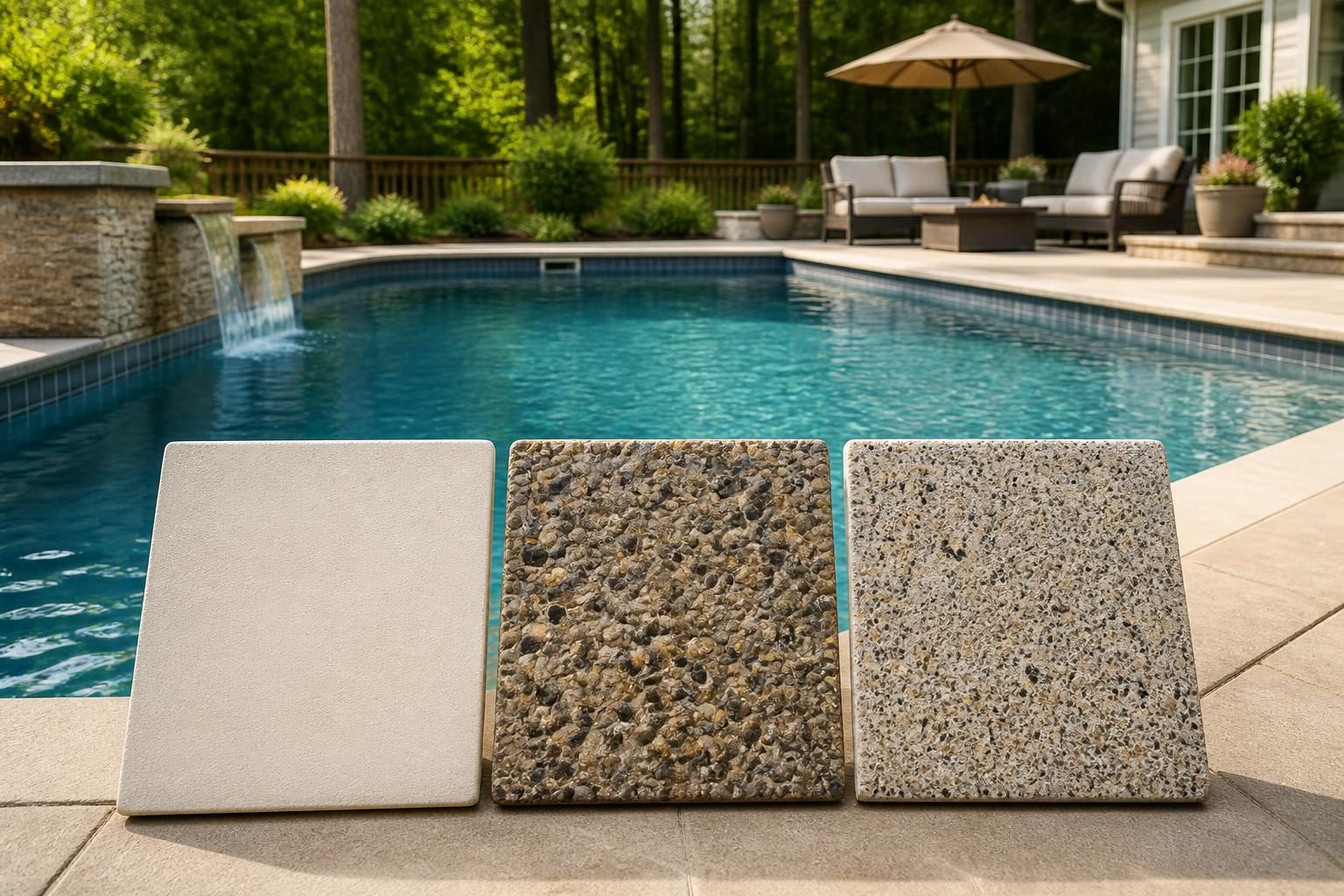
Compare Pool Surface Finishes for Maintenance: Plaster, Pebble, and Aggregate
Compare plaster, pebble, and aggregate pool finishes by appearance, texture, chemistry care, cleaning, startup, and long-term ownership considerations.
0
read more
Search
Recent Posts
Pool Equipment Startup Checklist North Carolina Homeowners Can Use
Pool Plumbing Pressure Testing Documentation in North Carolina: What to Record
How to Plan Pool Drainage Near Basement Crawl Space
Pool Construction Around Existing Sprinkler System: A Homeowner Planning Guide
How to Plan Pool Drainage Discharge Away From House Structures
Recent Comments
No comments to show.