
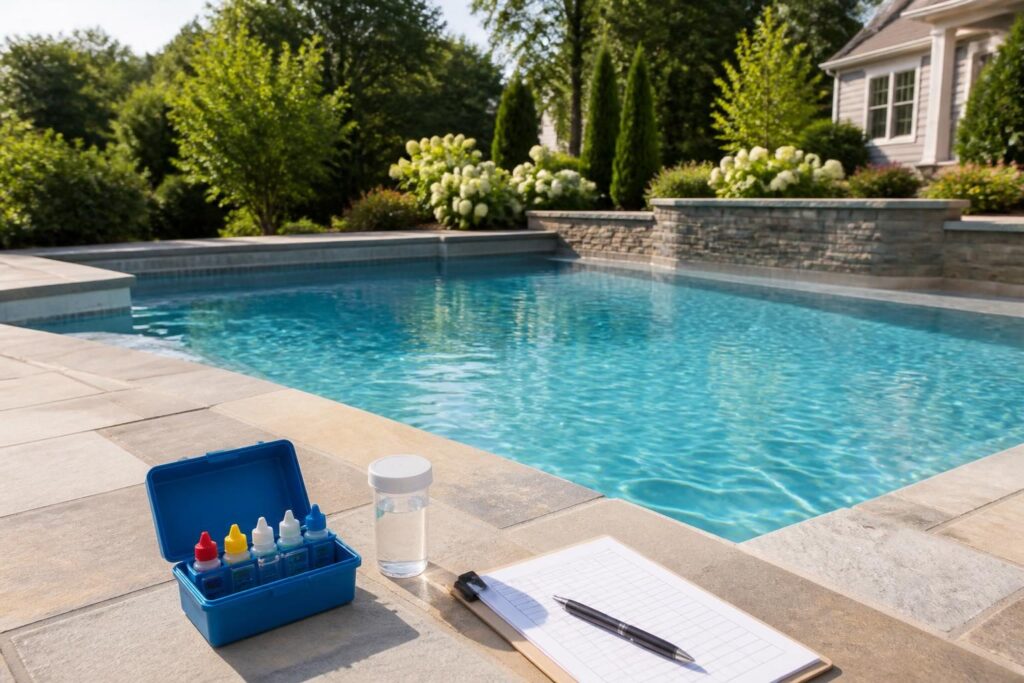
Pool water balance after fresh fill North Carolina homeowners can manage more confidently when they test in a deliberate order. Fresh water is not automatically ready for swimming or routine treatment. Its source, mineral content, alkalinity, temperature, and exposure to sunlight can change the next steps.

This guide explains a practical sequence for a residential pool after filling or substantially adding water. It is general education, not a substitute for product directions, professional water analysis, or local public-health guidance. If the pool has a new surface, specialty finish, salt system, heater, or unusual source water, ask the builder or a qualified pool professional for a startup procedure.
Why fresh fill water needs a measured approach
Water from a municipal supply, private well, tanker, or another approved source may begin with different characteristics. Municipal water may contain disinfectant and may vary by treatment system. Well water can introduce metals, hardness, or other minerals. Delivered water may have its own treatment history.
Adding chemicals before testing can create an avoidable problem. You may raise one reading while another condition remains unknown. A large dose can also make later corrections harder. Instead, collect a baseline and adjust one factor at a time.
Keep the pump circulating according to the equipment instructions before sampling. Avoid testing water that sat still in a skimmer, hose, bucket, or isolated plumbing section. Take the sample from the pool, below the surface, and away from return jets when possible.
Record the water source first
- Write down whether the water came from a municipal supply, private well, delivery, or another source.
- Record the fill date, approximate amount added, and any visible color, odor, foam, or cloudiness.
- Save the test method, test date, and product labels used for every adjustment.
- Ask the pool contractor or water professional whether the surface or equipment requires special startup limits.
For a deeper source review, see questions about pool fill water source and treatment. That record can help explain later changes caused by dilution or repeated top-offs.
Start with a baseline test before treatment
A baseline is the starting point for pool water balance after fresh fill North Carolina homeowners need to document. Testing order matters because some readings influence how others behave. Use a reliable liquid test kit or another method suitable for your pool. Follow its storage, sample volume, expiration, and reading instructions. If results look surprising, repeat the test or seek a professional comparison before making a major correction.
Test observations and core balance factors
A useful baseline sequence begins with basic observations, then moves through the main balance factors:
- Water level and appearance: Confirm the pool is filled to its normal operating level. Note cloudiness, tint, particles, or surface deposits.
- Temperature: Record water temperature because chemical behavior and testing conditions can change with temperature.
- pH: This shows how acidic or basic the water is. It affects swimmer comfort, sanitizer performance, and surface or equipment conditions.
- Total alkalinity: This describes the water’s resistance to rapid pH movement. It helps provide stability, but the desired range depends on the pool system and treatment plan.
- Calcium hardness: This measures dissolved calcium. Low or high readings can matter for water balance, scaling, and some pool surfaces.
- Sanitizer: Test the active sanitizer used by the pool system, such as chlorine. Do not assume the reading from a previous pool or source applies to this fill.
- Cyanuric acid: If an outdoor chlorine pool uses it, test it separately. It can protect chlorine from sunlight, but it also changes how a homeowner interprets sanitizer readings.
- Salt or specialty-system readings: For a saltwater system, verify salinity with the method recommended for that equipment. A salt cell does not replace basic water testing.
The CDC provides general guidance about residential pool chlorine, pH, and water testing. Review its home pool water treatment and testing guidance, then compare it with current product and equipment instructions.
Adjust the foundation before chasing sanitizer
After the baseline, avoid changing every number at once. Begin with the factors that support stable water. In many treatment plans, that means reviewing pH and total alkalinity before fine-tuning sanitizer. The correct order can vary by product, pool surface, and professional startup instructions.
Make one measured adjustment, allow the product to circulate as directed, and test again. Do not estimate a dose from pool size alone if the label requires a measured volume, starting reading, or special procedure.
When pH is outside the recommended range, follow the chemical label and the pool professional’s instructions. Some products affect more than one reading. For example, a pH adjustment can influence alkalinity, while an alkalinity adjustment can move pH.
Calcium hardness deserves separate attention. Fresh fill water may be soft, hard, or mineral-rich. The appropriate response depends on the pool surface and the water-care plan. Ask before making a large correction, especially with a new plaster, aggregate, or other cement-based finish.
Use a simple adjustment record
- Date and time of the test
- Water temperature and source
- Test method and results
- Product name and amount added
- Pump circulation period
- Next test time and new results
- Any color, cloudiness, scale, or odor observed
This log helps you see whether a reading is moving toward the target or repeatedly drifting. It also gives a service professional useful information without relying on memory.
Account for dilution from the fill and later additions
Fresh water dilutes chemicals already in the pool. The effect depends on how much water was replaced. A small top-off may produce a modest change. A drain-and-refill can change several readings at once.
Do not assume that a previous cyanuric acid, salt, calcium, or sanitizer level remains valid after a large refill. Test again after the water has mixed. If you partly drained the pool, confirm that the builder’s instructions addressed the surface and structure before refilling.
Top-off water can also reintroduce the same issue. Well water may add metals or minerals. Municipal water may add a different alkalinity or disinfectant profile. Delivered water may differ from the source used during construction. Keep source notes in the maintenance file.
Rain can dilute some dissolved substances while adding debris and changing the water level. Irrigation overspray can introduce soil, fertilizer, or landscape runoff. Review irrigation overspray and backflow questions if sprinklers reach the pool or deck.
Protect the new balance from North Carolina sunlight
Outdoor pools in North Carolina receive strong seasonal sunlight, and warm water can increase sanitizer demand. A fresh fill may have little or no stabilizer, depending on the source and previous treatment. Chlorine can therefore decline faster when the pool is uncovered and exposed.
Test sanitizer at the interval recommended for your pool and product. Avoid responding to one low reading with repeated large additions. First check whether the pump circulated, you performed the test correctly, and sunlight, rain, debris, or early use affected the result.
Cyanuric acid requires measured decisions. Its role is different from chlorine, and adding more does not directly replace sanitizer. If you need a focused explanation, read cyanuric acid management in North Carolina sunlight.
Use a cover only as designed and keep safety controls in place. A cover may reduce sunlight and evaporation, but it does not remove the need for testing, circulation, cleaning, or safe chemical storage.
Retest before swimming or enabling equipment
After each adjustment, allow the product to circulate for the label’s stated period. Then retest the affected readings. Do not rely on clear water alone. Water can look clean while its pH, sanitizer, or mineral balance remains unsuitable.
Before normal use, confirm the water meets the treatment plan and product directions. Ask the pool professional when to start a salt generator, heater, automatic dosing system, or other specialty equipment. Some equipment should not operate under certain water conditions.
Do not mix chemicals together or add them in the same container. Follow label warnings, ventilation instructions, protective-equipment guidance, and storage requirements. Keep children and pets away from treatment products and the dosing area.
Fresh-fill decision checklist
- Has the water circulated long enough for a representative sample?
- Did you identify the water source and record the fill date?
- Did you test pH, alkalinity, hardness, sanitizer, and relevant stabilizer or salt?
- Do measured results and current labels support the adjustments?
- Did you change one main factor before retesting?
- Could sunlight, rain, debris, irrigation, or early swimming explain a change?
- Have you asked about special requirements for the pool surface and equipment?
When to request help with fresh-fill water balance
Pause and seek help when results conflict, water changes color, scale appears, the sanitizer will not hold, or a test indicates unusual metals or minerals. A qualified pool professional or water-treatment specialist can use a more complete analysis and review the pool’s surface, equipment, and source.
Pool water balance after fresh fill North Carolina can vary with the property, water source, adopted rules, equipment, and project scope. For questions involving a private well, septic system, discharge, or environmental-health concern, contact the appropriate local authority or qualified specialist. Consult the local inspections department, licensed pool contractor, electrician, engineer, surveyor, septic professional, or other qualified expert when the issue extends beyond routine homeowner testing. Build a Pool in North Carolina offers planning information, but local verification remains essential.
For homeowners documenting pool water balance after fresh fill North Carolina, a simple sequence and consistent log are more useful than rushed corrections.