

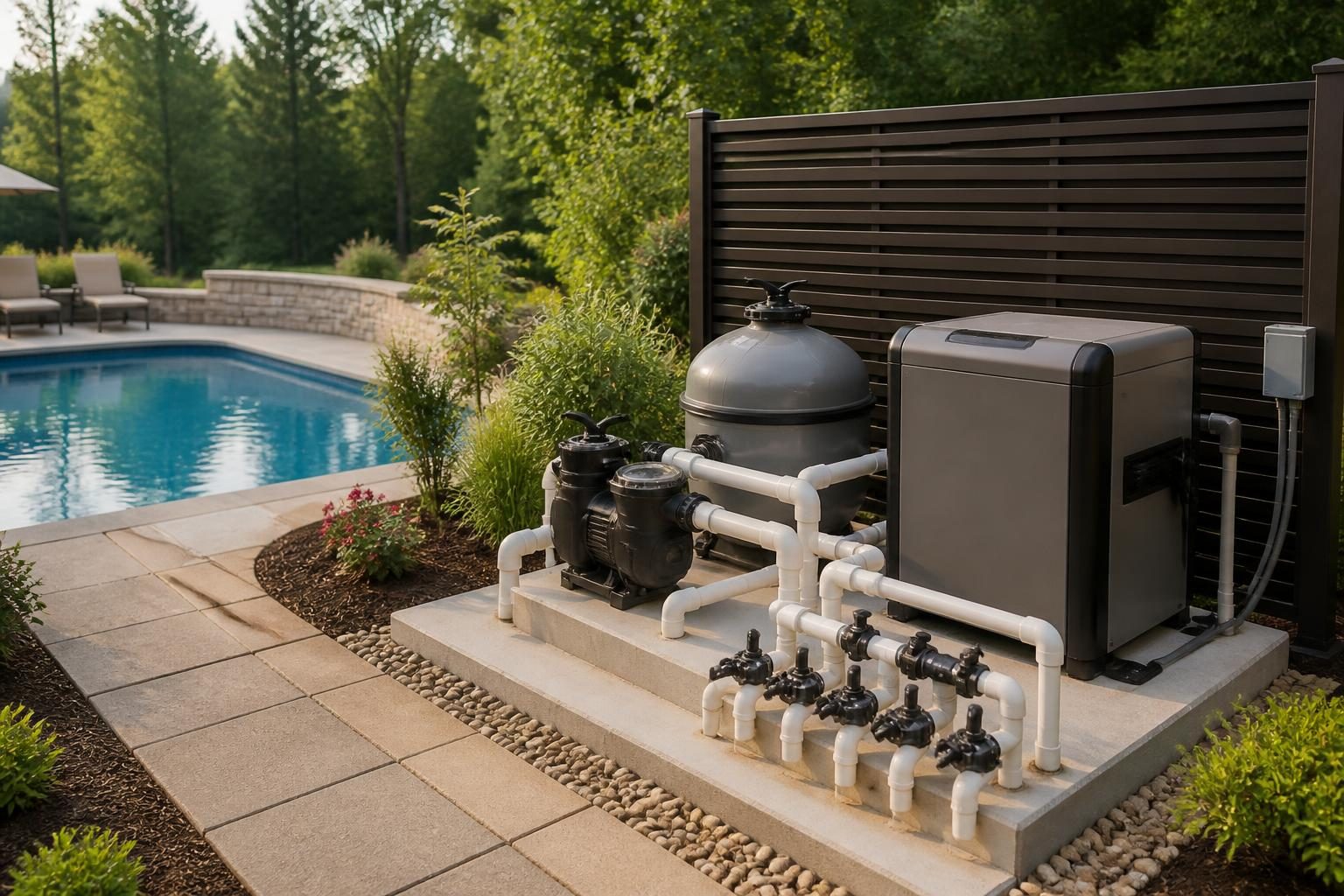
Learn how to spot air in pool circulation, perform safe homeowner observations, and know when to stop the equipment and call qualified service.
Learn which pump, filter, heater, sanitation, flow, temperature, and control readings to record after a new pool is commissioned.
Learn how to inspect pool equipment for drips, wet areas, pressure changes, and connection clues without opening unsafe components or attempting unsupported repairs.
Build a practical North Carolina routine for clearing pool debris, checking flow clues, protecting equipment, and responding to pollen and storms.
Learn how to record pump, heater, lighting, and automation use so your North Carolina pool decisions rely on patterns instead of guesses.
Compare placement, vibration control, screening, ventilation, and service clearance strategies for a quieter residential pool equipment area.
Plan a pool equipment pad around service access, drainage, noise, weather, ventilation, plumbing runs, and future maintenance needs.
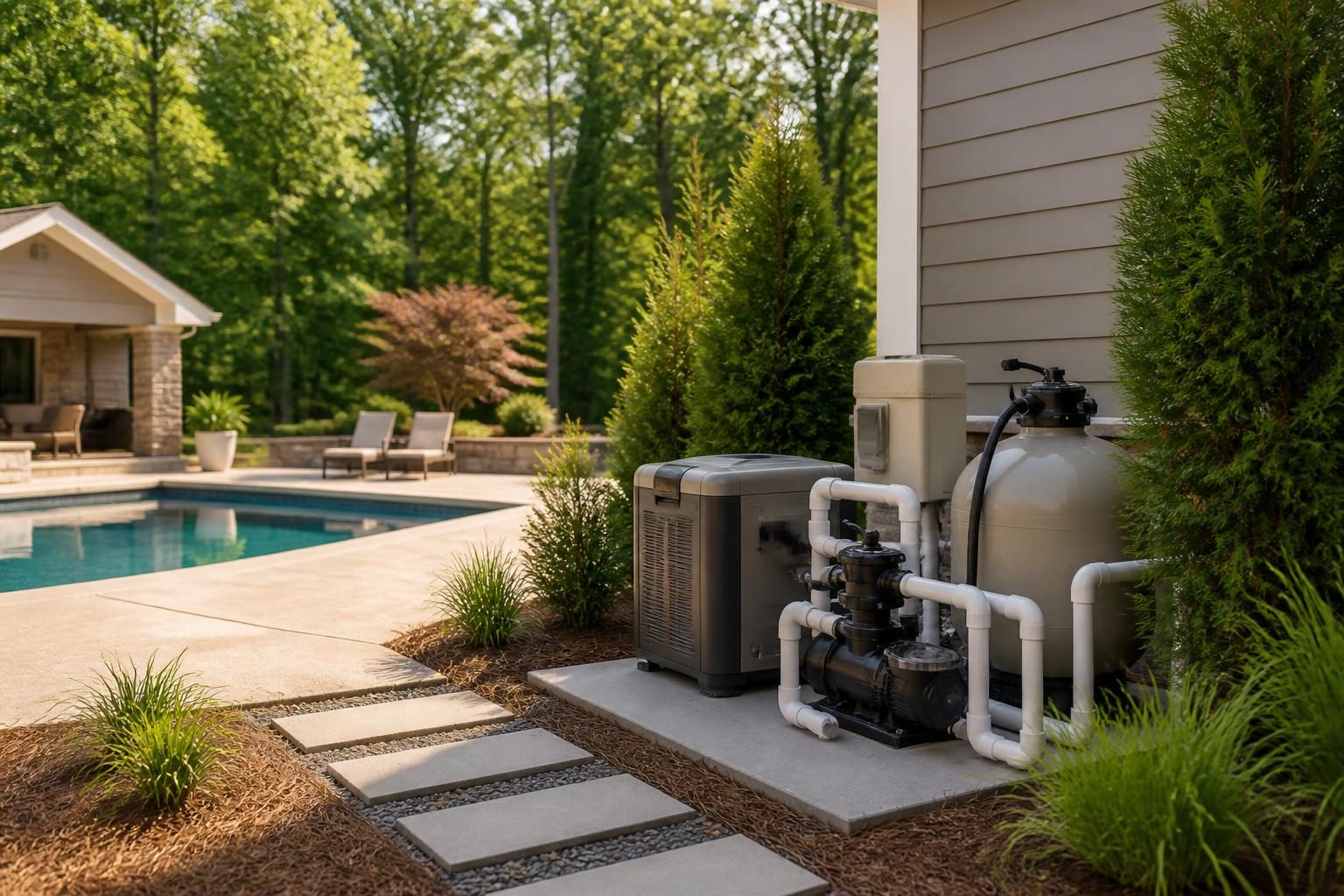
Use this practical guide to place pool equipment with better access, drainage, ventilation, service space, and neighborhood awareness.