Skip to content
Home
The Pool
Blog
Build a pool in North Carolina
Home
The Pool
Blog
Posts in pH
by
the_Writer
July 17, 2026
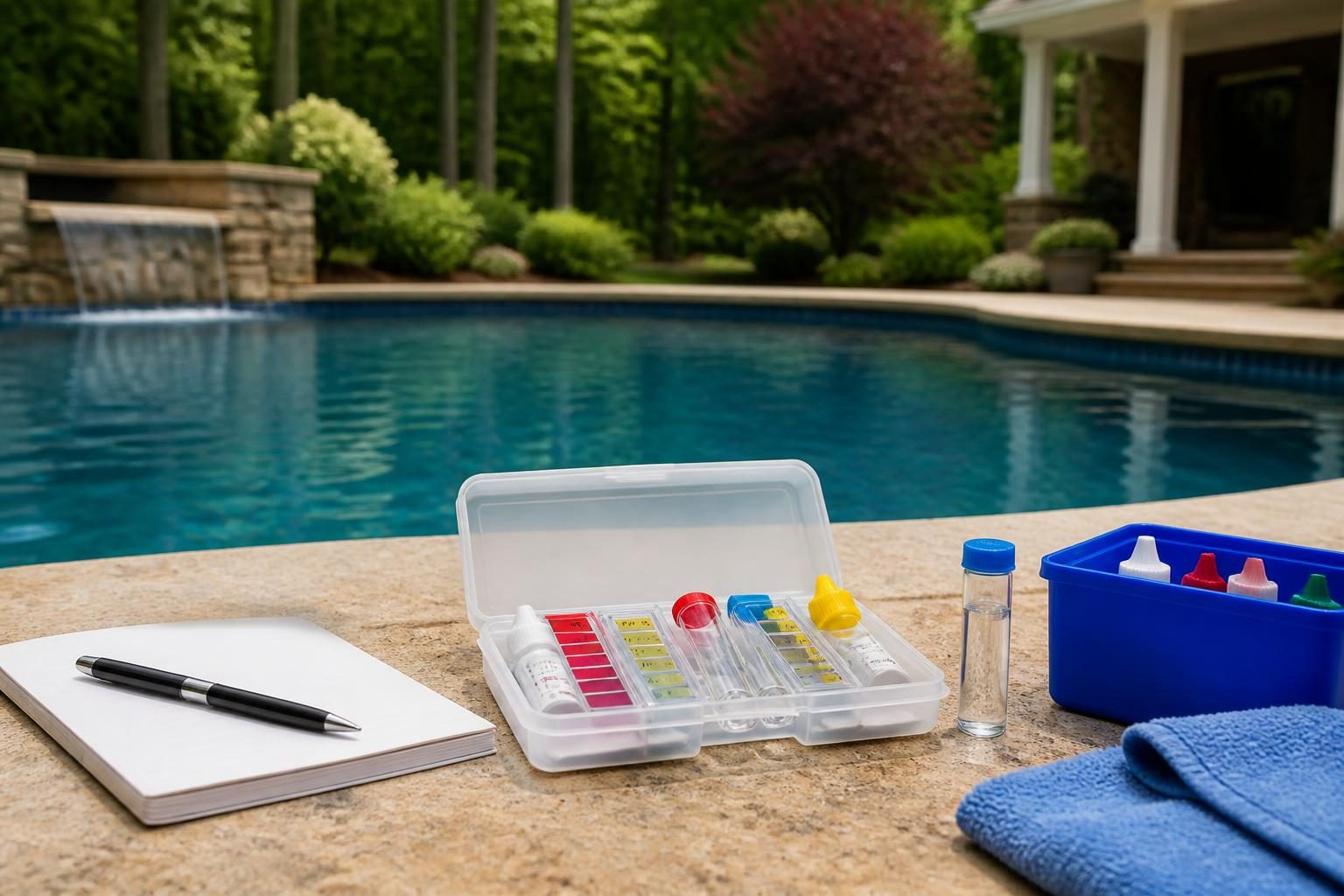
Home Pool Water Testing Basics: A Practical Guide
Learn how to test pool water at home, understand chlorine and pH, choose reliable test methods, keep useful records, and recognize when professional help is needed.
0
read more
Search
Recent Posts
Pool Equipment Startup Checklist North Carolina Homeowners Can Use
Pool Plumbing Pressure Testing Documentation in North Carolina: What to Record
How to Plan Pool Drainage Near Basement Crawl Space
Pool Construction Around Existing Sprinkler System: A Homeowner Planning Guide
How to Plan Pool Drainage Discharge Away From House Structures
Recent Comments
No comments to show.