
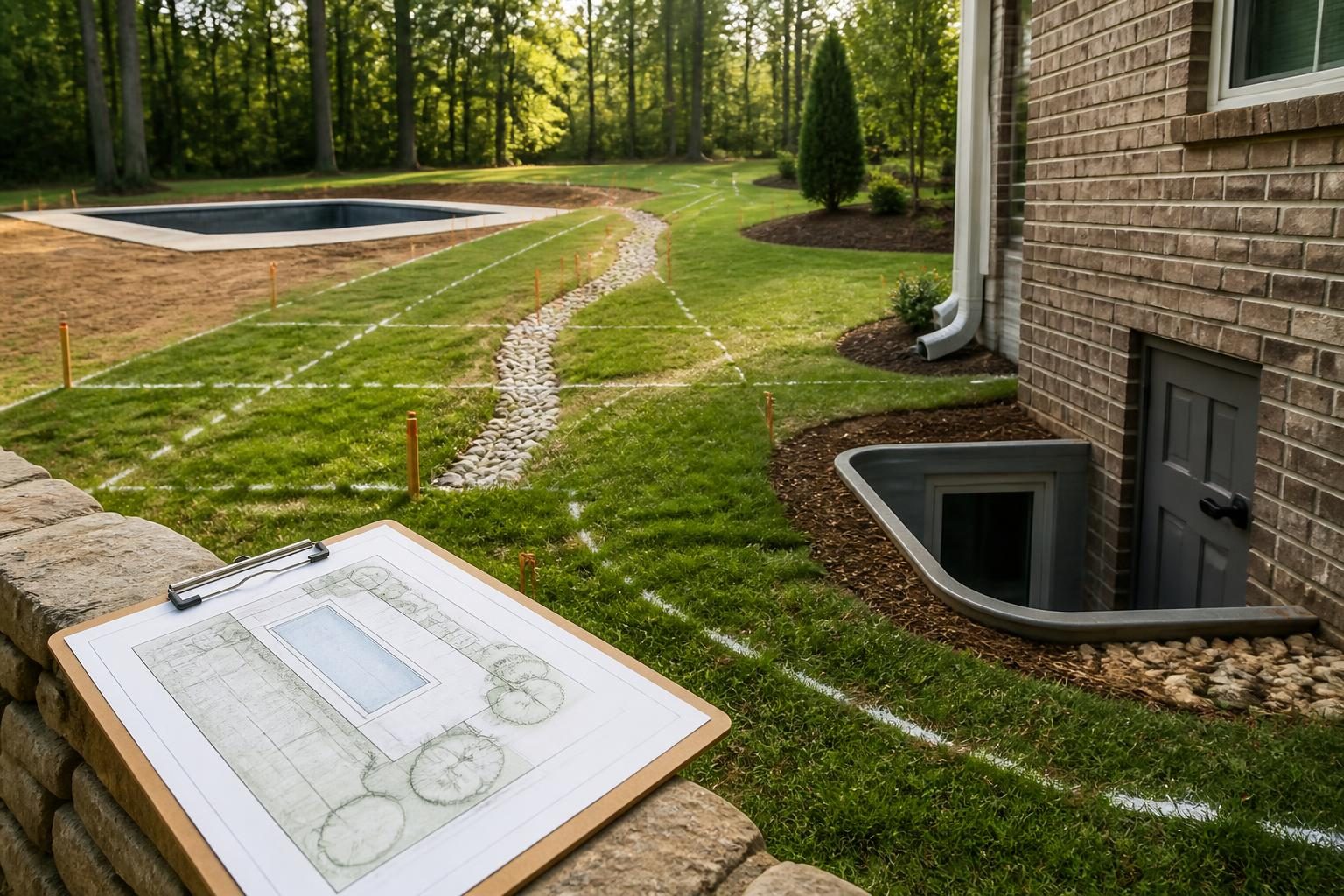
Planning a pool near a basement or crawl space requires careful review of water flow, excavation distance, grading, and foundation conditions.
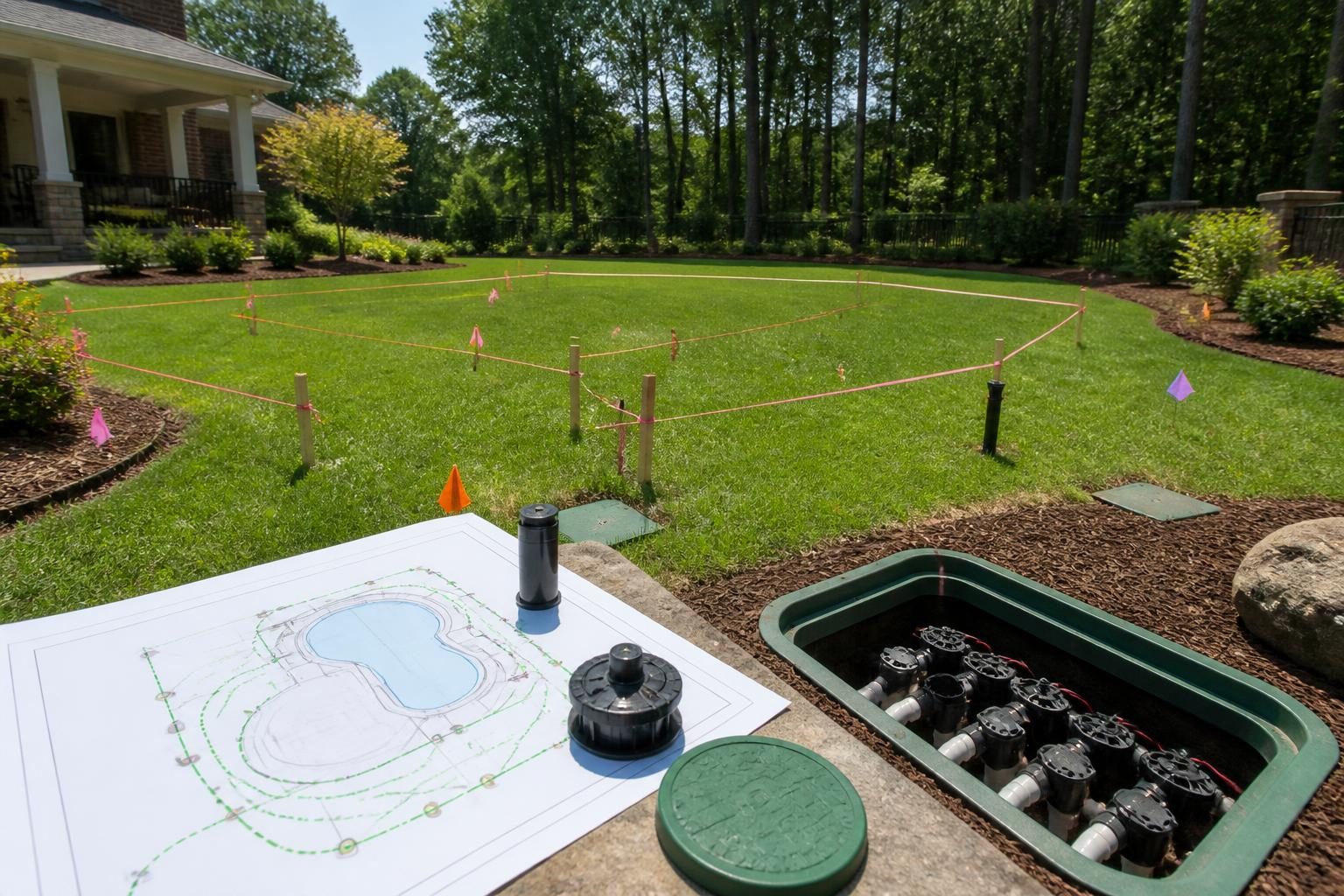
Learn how to map irrigation lines, protect sprinkler components, plan rerouting, and document changes before pool excavation begins.
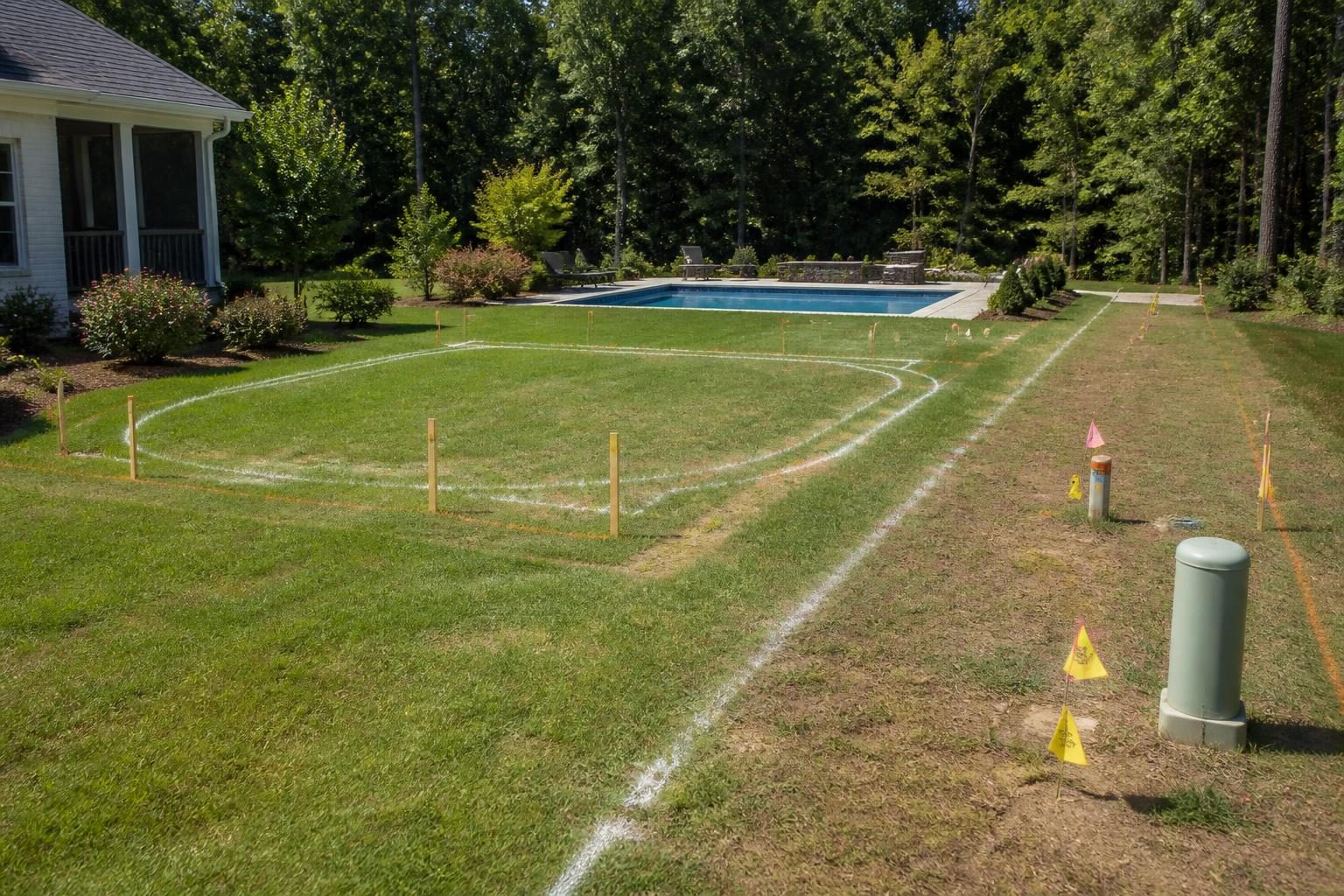
A utility easement can affect pool placement, excavation, access, drainage, and future repairs. Use this North Carolina homeowner checklist before approving a site plan.
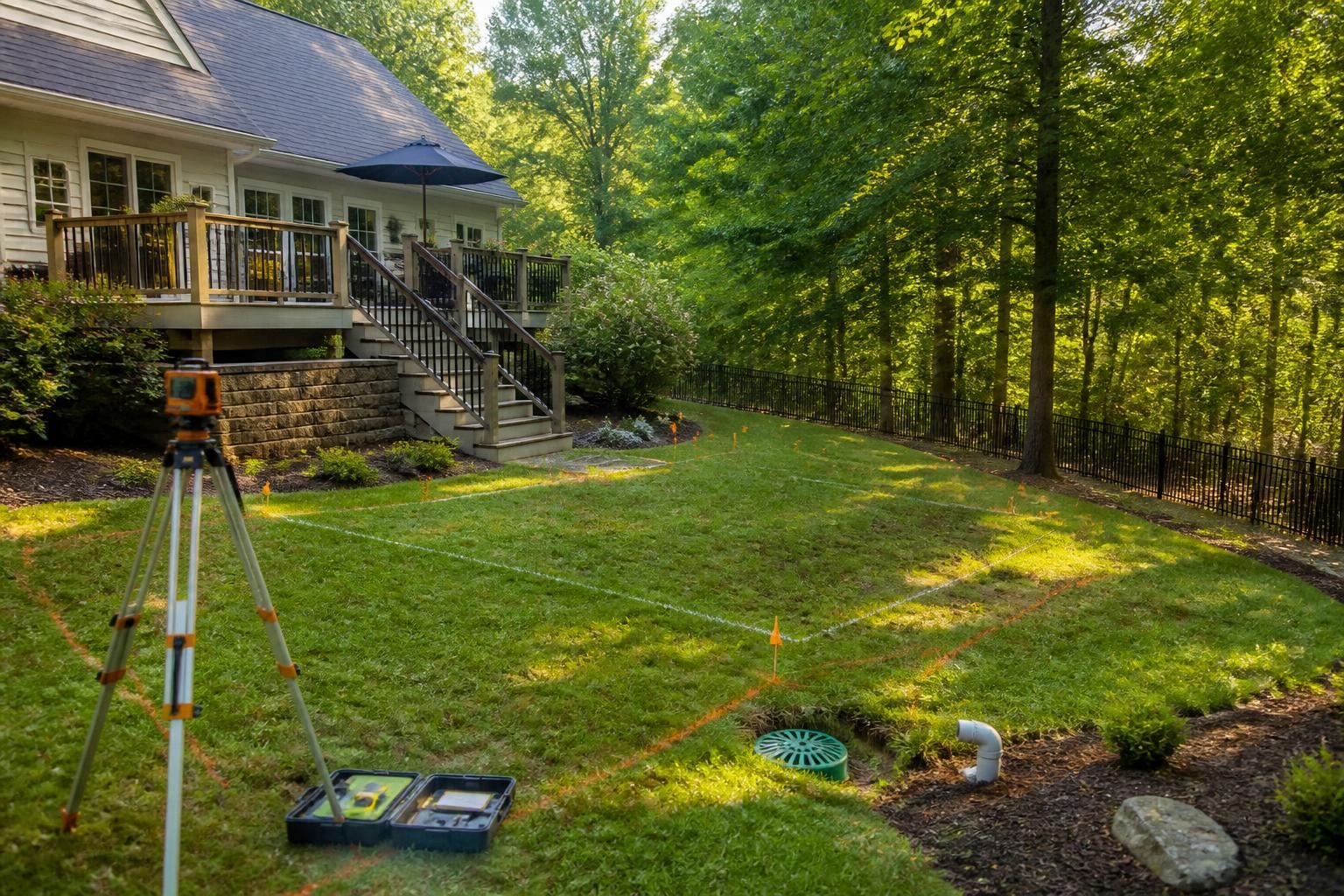
Assess slope, access, utilities, drainage, soil, structures, and usable yard area before commissioning an in-ground pool design in North Carolina.
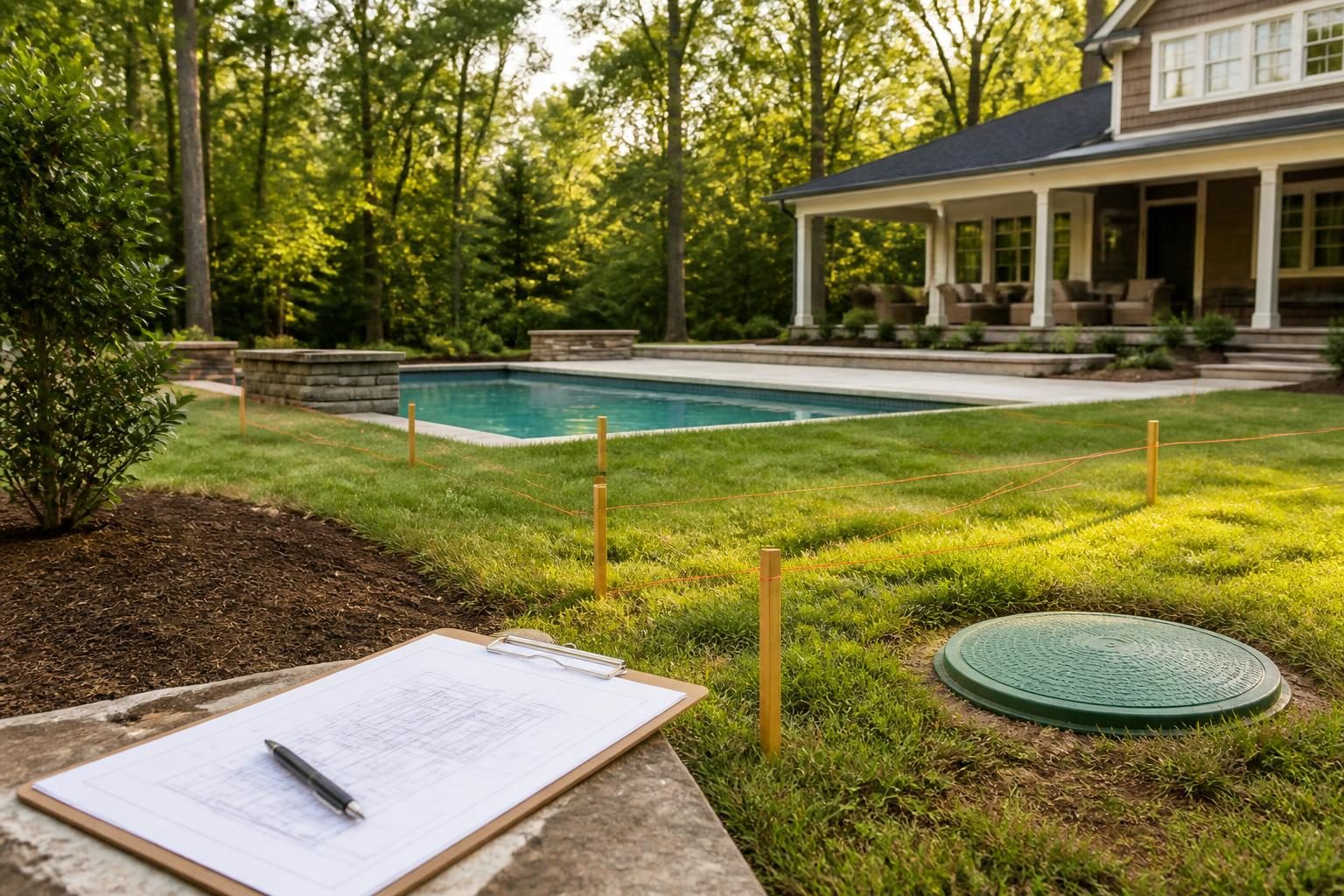
Learn how a proposed pool can affect septic tanks, drain fields, repair areas, access, drainage, and heavy-equipment planning in North Carolina.
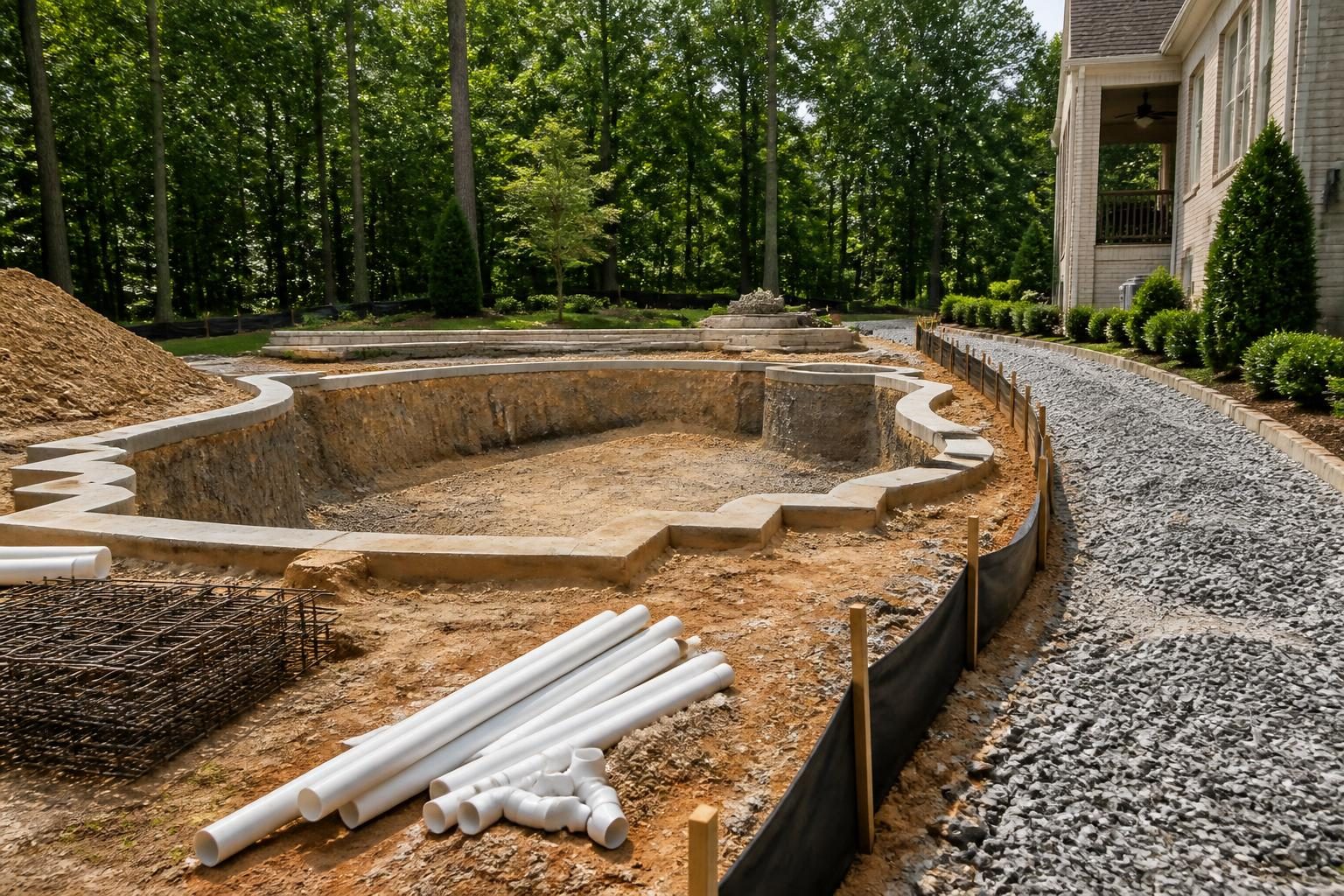
Learn why pool schedules change in North Carolina and how design, permits, soil, weather, materials, access, trades, and correction work can affect progress.
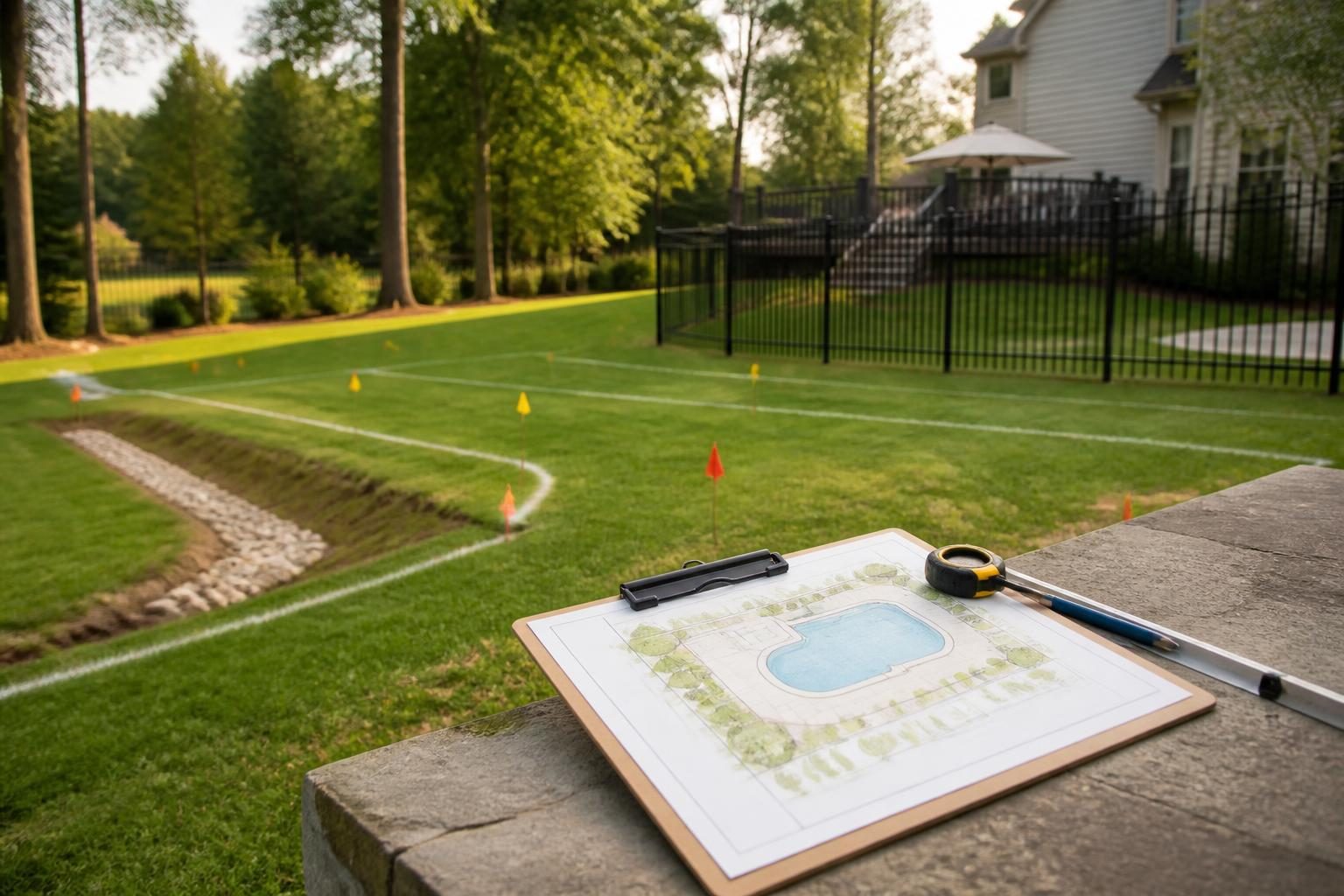
Before choosing a pool layout, contact the local inspections department. These questions can reveal permit, site, barrier, drainage, septic, and electrical issues early.