
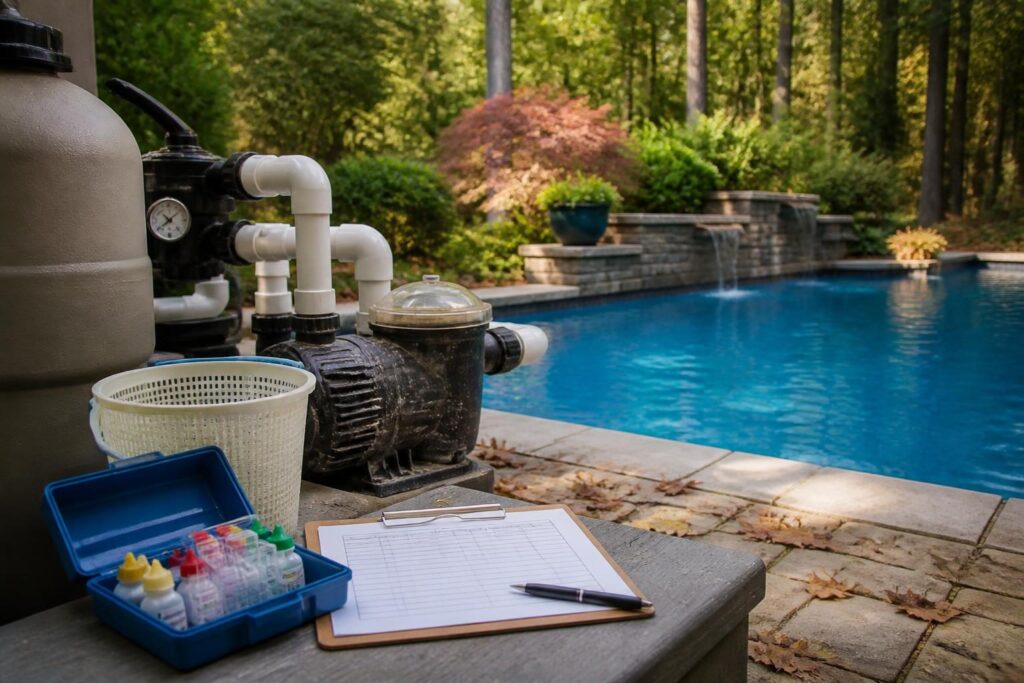
Pool water testing log interpretation equipment checks helps you understand why results change. A test shows the water condition at one moment. A useful log connects that result with pump operation, filter status, weather, swimming activity, water level, and recent maintenance.

This approach can prevent random adjustments. It also gives you better questions for a qualified pool professional when chemistry does not respond as expected. North Carolina conditions can change quickly. Warm weather, pollen, heavy rain, high humidity, and changing bather load may all affect the pool.
This article explains how to read patterns without treating general information as a substitute for product instructions, local requirements, or professional advice. For basic residential testing guidance, review the CDC guidance on home pool water treatment and testing.
Start with a complete pool water testing log
A single chemical reading rarely explains a problem. Begin with consistent records. Use the same testing method, note the test time, and record anything that could have changed the water since the previous entry.
Your pool water testing log interpretation equipment checks process becomes more useful when each entry answers the same basic questions. Consistency makes trends easier to see and reduces confusion caused by missing context.
- Date and approximate time of the test
- Water temperature, if available
- Sanitizer, pH, and other results included in your testing routine
- Recent chemical additions, including the product and amount shown on its label
- Pump schedule and whether circulation appeared normal
- Filter pressure or other manufacturer-approved indicators
- Recent filter cleaning, basket cleaning, backwashing, or cartridge service
- Rain, storms, pollen, wind, unusually hot weather, or long periods without a cover
- Number of swimmers and any unusually heavy use
- Water level, visible debris, cloudiness, color changes, or surface deposits
Record observations before making an adjustment. Otherwise, you may forget which condition existed first. A dated photo of a display, test strip, or equipment panel can support the written entry.
Compare chemistry trends with circulation
Circulation moves water through the skimmer, pump, filter, heater, and return lines. If circulation is limited, treated water may not distribute evenly. Testing one sample can then give an incomplete picture.
When a result changes, compare it with the pump record. Did the pump run during the expected period? Did it stop unexpectedly? Was the system placed in a different schedule? Did a control, timer, or automation setting change?
Look for a repeated pattern. Results that worsen after short operating periods may point to a circulation question. That does not identify the cause. A qualified pool professional can evaluate the pump, controls, valves, flow, and related equipment.
Questions for a circulation review
- Was the pump running when the sample was collected?
- Did the returns show the usual movement?
- Was the water level high enough for normal skimmer operation?
- Was the pump basket or skimmer basket unusually full?
- Did the system make a new sound or show an alert?
- Was any service performed before the chemistry shifted?
Do not open equipment, remove covers, or alter electrical settings unless the manufacturer’s instructions and your qualifications support that action. Turn to a licensed specialist for electrical, mechanical, or circulation concerns.
Use filter records to explain changing results
Filtration removes suspended material from the water. A loaded or poorly operating filter can affect clarity and may change the way the system behaves. Your log should connect test results with filter observations rather than treating filter service as a separate task.
Compare cloudy water, rising pressure readings, reduced return movement, or increased cleaning frequency with the dates of your chemistry tests. A repeated relationship may show that the system needs professional review or maintenance under the equipment instructions.
Keep filter type, model information, manufacturer-recommended cleaning method, consistent pressure observations, service dates, clarity changes, and unresolved questions together. For a broader record system, see this residential pool maintenance log template.
Account for weather and North Carolina seasons
Weather provides essential context. Rain can add dilution, debris, and runoff concerns. Hot weather can increase evaporation and pool use. Spring pollen may load baskets and filters. Humid conditions can support faster biological growth when other care factors are not steady.
Write a short weather note beside each test. Also note whether the cover was used and whether debris entered the pool. When water level changes after rain or heat, record the observation before adding water. If loss continues, compare conditions carefully and consider professional leak testing. See pool water evaporation versus a possible leak.
Connect test results with swimmer load and maintenance
People introduce oils, sweat, cosmetics, and other contaminants. More swimmers usually mean a greater treatment demand. Record heavy use, parties, lessons, or extended swimming periods. Note whether the pool was tested before use, after use, or the next morning.
Maintenance events also need dates. Record skimming, vacuuming, basket cleaning, filter service, chemical additions, and water replacement. If you adjust several things at once, you may not know which action affected the next result.
A simple comparison method
- Circle the first unusual chemistry result.
- Review the previous two or three entries.
- Mark changes in weather, use, water level, and equipment operation.
- Check whether maintenance occurred before or after the change.
- Make only label-directed or professionally recommended adjustments.
- Retest using the timing and method appropriate to the product or guidance.
- Record the outcome without assuming one test proves the cause.
Read patterns instead of isolated numbers
Trend reading means asking what changed, when it changed, and what else changed at the same time. A repeated pH shift may deserve a different question than one unusual reading after a storm. A recurring clarity issue may require an equipment review, not simply more chemicals.
- Stable: results and equipment observations remain consistent.
- Event-related: the change follows rain, heavy use, pollen, or maintenance.
- Persistent: the result remains unusual across repeated tests.
- Unclear: records are incomplete or the testing method changed.
These labels do not diagnose a pool problem. Persistent or unclear patterns call for a qualified pool professional. For sanitation concerns after heavy use, compare your records with this guide to pool water chemistry after heavy use.
Build an equipment-check worksheet
A short worksheet can sit beside the testing log. It should support observation, not encourage unsafe troubleshooting.
| Area | Record | When to seek help |
|---|---|---|
| Circulation | Pump schedule, return movement, alerts, unusual sounds | Flow changes, repeated alarms, or uncertain operation |
| Filtration | Pressure or indicator reading, cleaning date, water clarity | Persistent cloudiness or unusual readings |
| Water level | Rain, evaporation conditions, additions, visible loss | Continuing unexplained loss |
| Sanitation | Test method, results, product additions, timing | Repeated abnormal results or unsafe water concerns |
| Heating | Operating status, temperature setting, service date | Fuel, electrical, combustion, or control concerns |
Heating equipment may involve fuel, combustion, gas, or electrical systems. Use the manufacturer’s instructions and consult a qualified technician. Review this pool heater maintenance checklist for North Carolina homeowners.
Know when the log is telling you to pause
Pause routine adjustments when test results conflict, the water looks unsafe, equipment behaves unexpectedly, or you cannot confirm the testing method. Avoid adding multiple products in response to uncertainty. Follow product labels and seek qualified guidance.
Keep records of the question you want answered. Include recent results, equipment observations, weather, swimmer load, maintenance, and photographs. This gives a professional a clearer starting point than a single statement that the water “looks wrong.”
Pool water testing log interpretation equipment checks works best as a calm review process. It connects evidence without claiming that a homeowner can diagnose every issue. Build a Pool in North Carolina encourages homeowners to keep this information with equipment manuals, labels, service records, and emergency contacts.
For ongoing reviews, use pool water testing log interpretation equipment checks to compare the chemistry record with operating evidence, rather than treating either record alone as a diagnosis.
Consult your local inspections department for jurisdiction-specific questions. Contact a licensed pool contractor for circulation or filtration concerns, a qualified electrician for electrical issues, and the appropriate heater, septic, drainage, or engineering specialist when site or system conditions require it. North Carolina requirements can vary by jurisdiction, adopted code, property conditions, utilities, septic systems, flood zones, and project scope.