
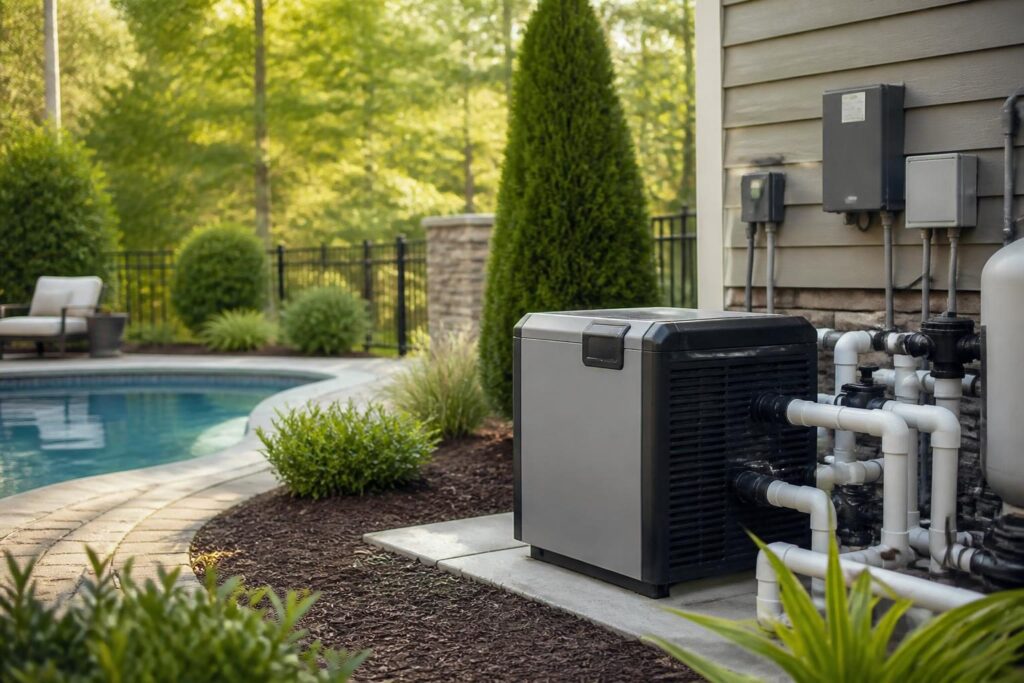
A pool heater maintenance checklist North Carolina homeowners can follow helps protect equipment, support reliable operation, and identify questions before a small concern becomes a larger service visit. North Carolina weather can shift from cool nights to humid heat, heavy rain, pollen, and occasional freezes. Those changes affect airflow, water conditions, controls, and the equipment area.

This guide covers homeowner observations and recordkeeping. It does not replace the manufacturer’s instructions or advice from a qualified pool technician, electrician, gas professional, or other specialist. Requirements can vary by equipment type, fuel source, property conditions, and local jurisdiction.
Start with the heater manual and a safe inspection routine
Before checking anything, identify the heater type. Common residential systems include gas heaters, heat pumps, and electric resistance heaters. Each design has different service needs, operating controls, and safety concerns. Find the model and serial number on the unit, then save the installation and operating manuals.
Never remove covers, bypass safety controls, open gas components, or work inside electrical panels as a routine homeowner task. Turn the system off according to the manufacturer’s instructions before making a visual inspection. If you smell gas, see damaged wiring, hear unusual combustion sounds, or find scorching, leave the area and contact the appropriate qualified professional.
Keep a basic equipment file
- Record the heater manufacturer, model, serial number, fuel type, and installation date if known.
- Save manuals, receipts, warranty documents, service invoices, and replacement-part information.
- Note normal display messages, typical water temperature, and regular operating sounds.
- Photograph the equipment area after installation and significant changes.
These records give a technician useful context. They also help you compare a new symptom with the heater’s normal condition.
Check clearances, airflow, and the equipment area
Heaters need suitable space around them. Clearances help protect combustible materials, allow air movement, and provide room for inspection and service. Exact distances depend on the model and installation instructions. Do not assume that an open-looking area meets the manufacturer’s requirements.
Walk around the heater during each inspection. Look for leaves, pine needles, mulch, stored items, toys, vines, and tall vegetation near air openings or exhaust areas. After landscaping work, confirm that soil, edging, irrigation, and plants have not shifted toward the equipment. Keep combustible storage away from fuel-burning equipment.
Airflow problems may appear as repeated shutdowns, unusual odors, poor heating, or fault messages. Those signs have several possible causes. Do not diagnose a fuel or combustion problem from a visual check alone. Instead, record what happened, when it happened, and which controls were active.
Airflow and clearance checklist
- Compare the current equipment area with the heater manual’s clearance diagrams.
- Remove loose debris without blocking vents or openings.
- Check that fencing, screens, covers, and landscaping do not restrict air movement.
- Look for water dripping onto the heater from gutters, downspouts, irrigation, or a roof edge.
- Keep access paths usable for routine service and emergency inspection.
Do not enclose a heater, add a decorative screen, or relocate equipment without first asking the pool contractor or a qualified equipment professional. A change that looks harmless can affect airflow, exhaust, access, or other installation conditions.
Review controls, sensors, and operating behavior
Controls include the heater display, thermostat, remote system, timer, automation panel, and related sensors. A maintenance check should confirm that the system responds as expected, not that every setting is optimized for every season.
Record the selected temperature, operating mode, water-flow status, and any error code. If the heater runs but does not raise the water temperature as expected, check simple operating conditions first. Confirm that circulation is running, valves are in their normal positions, and filter pressure or flow appears typical for your pool.
Some heaters require minimum water flow before operating. Low flow can result from a dirty filter, closed valve, air in the system, a pump issue, or another condition. Avoid repeatedly resetting a fault without finding its cause. Repeated ignition failures, flow faults, high-limit warnings, or unexplained shutdowns deserve professional attention.
Questions to record during a control check
- Does the display turn on normally?
- Does the heater start only when circulation is operating?
- Are error codes new, intermittent, or recurring?
- Does the remote or automation command match the local display?
- Did the problem begin after a storm, power interruption, plumbing change, or water-treatment adjustment?
Keep the exact wording of an error message. A photo of the display can prevent confusion during a service call.
Maintain water chemistry before it harms equipment
Pool water passes through the heater, so water balance matters to the entire circulation system. Incorrect chemistry may contribute to scale, corrosion, cloudy water, or other equipment concerns. Targets depend on the system, sanitizer, surface, and manufacturer guidance.
Test water using a reliable method and follow product instructions. Track pH, sanitizer, alkalinity, and other readings your pool professional recommends. Avoid adding chemicals directly near heater components or changing several products at once without understanding the instructions.
The CDC’s guidance on home pool water treatment and testing provides general information about testing, chlorine, and pH. It is not a substitute for your heater manual or local professional advice.
Water problems may follow heavy rain, high swimmer use, poor circulation, or a long period without testing. North Carolina pollen and humidity can also increase debris and maintenance demands. For related seasonal water-care ideas, see the North Carolina pollen pool maintenance guide.
Water-care warning signs
- Visible scale or deposits near returns, fittings, or heater connections.
- Persistent cloudy water or unusual staining.
- Rapid changes in pH or sanitizer readings.
- Repeated heater faults after chemical treatment.
- A service professional’s recommendation to inspect internal heat-transfer components.
If you suspect scale, corrosion, or a chemical-dosing error, stop guessing. Record recent readings and products, then ask a qualified pool professional how to proceed.
Use a seasonal pool heater inspection plan
A seasonal review helps you notice changes before periods of heavy use. A pool heater maintenance checklist North Carolina homeowners use should account for regional differences. Homes in the mountains, Piedmont, and coastal areas may face different wind, humidity, storm, and freezing conditions.
Before regular spring and summer use
- Clear debris from the equipment area and confirm service access.
- Inspect visible plumbing, unions, valves, and connections for moisture or damage.
- Review filter condition and normal circulation indicators.
- Test controls without changing safety settings.
- Check water chemistry before extended heating.
Spring pollen can load filters and increase cleaning needs. A dirty filter can reduce flow, but pressure readings must be interpreted for your filter type and system. The related guide on when to clean a residential pool filter explains why pressure and water conditions matter together.
Before cooler weather or a long shutdown
Review the manufacturer’s instructions for reduced use, drainage, freeze protection, or winterization. Do not assume that turning off the heater alone protects connected plumbing. If your plan involves draining, disconnecting, fuel work, electrical work, or specialized freeze protection, ask a qualified professional.
North Carolina winter conditions vary by location and year. Use the pool equipment winter protection checklist as a planning aid, then confirm the steps for your exact equipment.
Keep service records that explain the heater’s history
A service record should be more than a receipt folder. It should show what was observed, what was adjusted, which parts were replaced, and what follow-up remains. Add each inspection, cleaning, repair, water event, or operating problem to your pool heater maintenance checklist North Carolina record.
- Date and weather conditions, especially after heavy rain, storms, or freezing nights.
- Water readings and recent chemical additions.
- Heater settings, run behavior, display messages, and photographs.
- Filter pressure or flow observations before and after cleaning.
- Service company details, technician notes, parts, and recommended follow-up.
- Any change to landscaping, drainage, plumbing, electrical supply, or automation.
Ask service providers to identify the heater model, observed condition, work completed, parts used, and any limitations on the inspection. Keep copies of written recommendations. If the heater is under warranty, follow the manufacturer’s documentation and service requirements rather than relying on memory.
For a broader recordkeeping system, use the residential pool maintenance log template. A clear log can also help a future homeowner or service professional understand the equipment’s history.
Know when a professional inspection is appropriate
Call for qualified help when the heater has repeated fault codes, unusual smells, damaged wiring, water inside the cabinet, visible corrosion, combustion concerns, or unexplained performance changes. Electrical, gas, venting, structural, and drainage questions require the right licensed or qualified specialist.
Ask the professional what they inspected, what they found, what remains uncertain, and what maintenance you can safely perform. Confirm whether the work affects a warranty, permit record, fuel connection, electrical installation, or other regulated condition. North Carolina requirements can vary by local authority, adopted code, utilities, and project scope. When a permit or inspection question arises, verify current information with the local inspections department and consult the appropriate licensed professional.
A consistent pool heater maintenance checklist North Carolina homeowners can adapt to their equipment makes seasonal care easier. Focus on clearances, airflow, controls, water chemistry, weather changes, and records. Build a Pool in North Carolina offers homeowner education, but your equipment manual and qualified local specialists should guide decisions about repairs, fuel, electrical work, and code-related matters.