
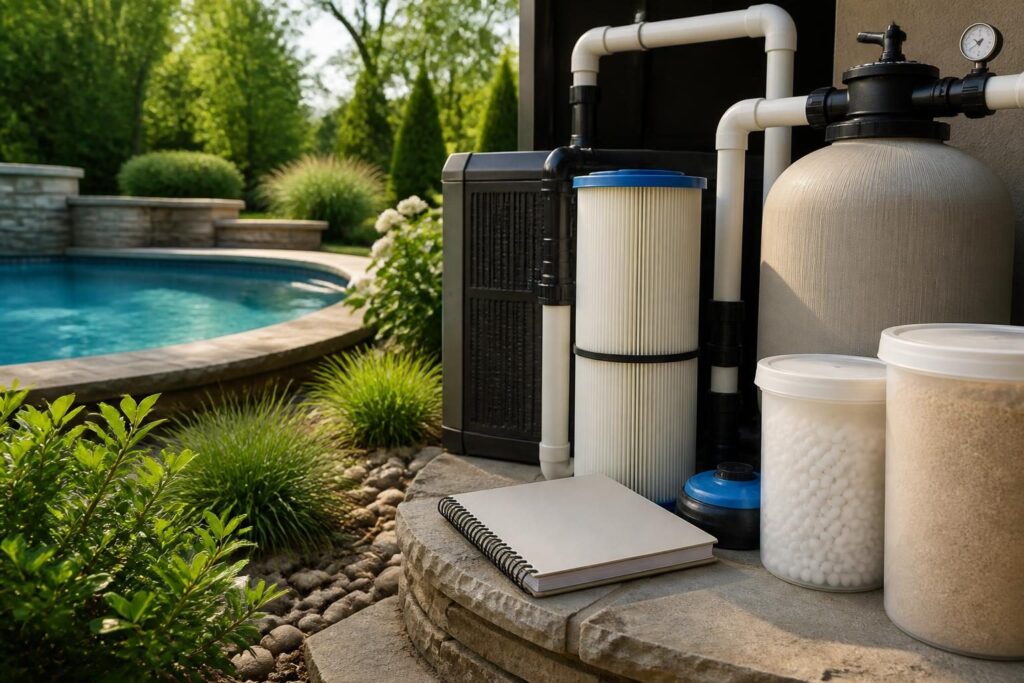
Good pool filter media replacement records help North Carolina homeowners understand how equipment performs over time. A useful file can show when a cartridge was replaced, when sand or diatomaceous earth (DE) media received service, what the filter pressure measured, and how water looked afterward.

These records do not replace manufacturer instructions or qualified service. They provide practical history. That history can help you describe a change clearly, compare seasonal performance, and avoid replacing media because of one unusual reading.
Why pool filter media replacement records matter
Pool filtration removes suspended material from circulating water. Cartridge filters use pleated fabric elements. Sand filters pass water through specially graded filter sand. DE filters use a fine powder that coats internal grids or elements.
Each design has different service needs. A cartridge may need cleaning or replacement. Sand may need inspection, replacement, or other service identified by the manufacturer. DE systems require the correct fresh charge after cleaning or backwashing. Recording the filter type prevents confusion later.
Pressure readings need context. A clean starting pressure, often called the baseline, gives you a comparison point for later observations. The correct baseline depends on the equipment, plumbing, pump setting, water level, and gauge condition.
Do not treat a pressure number as a universal pass-or-fail limit. Record the reading under repeatable conditions and ask a pool professional to interpret unexpected changes. For safe homeowner observations, see safe pool filter pressure gauge troubleshooting.
What to record for every filter
Start with an equipment identity page. Take clear photos of the filter label, pressure gauge, valves, pump, and nearby plumbing. Keep the original manual if available. The model number matters because parts, media amounts, cleaning methods, and service intervals vary.
- Filter manufacturer and complete model number
- Filter type: cartridge, sand, or DE
- Installation date, if known
- Pool volume, if documented by the designer or contractor
- Pump model and normal operating speed or schedule
- Pressure after cleaning, backwashing, or media replacement
- Date and reason for each service event
- Water clarity, flow, and visible debris observations
- Cleaning products, replacement parts, or media used
- Service provider name, if applicable
- Receipts, photographs, work descriptions, and instructions
Record operating conditions too. Note whether the pump ran at its usual speed, whether swimmers had recently used the pool, and whether rain, pollen, algae, or landscaping debris affected the water. Those details make a pressure reading more useful.
Keep the file with other equipment information. The related pool equipment manuals and labels reference file can help organize model details, diagrams, settings, and service documents.
Cartridge filter replacement records
A cartridge filter contains one or more removable pleated elements. Cleaning usually involves removing the elements and rinsing debris from the pleats. The manual may specify additional cleaning steps, drying practices, or replacement guidance.
For each cartridge service, record the date, starting pressure, reason for cleaning, and element condition. Describe what you saw instead of using vague terms. Note fine dust, leaves, oily residue, damaged pleats, a torn band, or a loose end cap when present.
- Number of cartridges and each part number
- Pressure before shutdown and after cleaning
- Whether you rinsed, chemically cleaned, or replaced the cartridge
- Condition of pleats, bands, end caps, and housing seals
- Whether clarity or return flow changed afterward
- Date and reason for the next inspection
Replace a cartridge based on condition, performance, manufacturer guidance, and professional assessment. A single high reading does not prove the element has reached the end of its service life. A low reading does not prove correct operation if the pump, gauge, valves, or water level changed.
Sand filter media replacement records
Sand filters hold a measured bed of filter media inside a tank. Backwashing reverses flow to remove collected material. Over time, media can become worn, contaminated, or affected by channeling. Channeling means water finds paths through the media instead of filtering evenly.
Do not open a pressurized filter or remove media without following the manual and arranging appropriate professional help. Record service after the system reaches a safe shutdown condition and the work ends.
- Tank manufacturer, model, and media specifications
- Date the old sand or approved media came out
- Type and grade of replacement media
- Quantity installed, if the service provider documented it
- Condition of old media and internal components
- Pressure after reassembly and restart
- Backwash and rinse observations
- Leaks, unusual flow, cloudy return water, or valve concerns
Do not substitute a different media product because its packaging looks similar. Confirm compatibility with the filter manual or a qualified pool professional. Keep the product label, receipt, and service description with the record.
DE filter media replacement records
DE filters use a fine powder that coats filter grids or elements. The powder differs from sand and cartridge material. After cleaning or backwashing, the system generally needs the manufacturer’s specified DE charge. The correct amount depends on the filter model and service method.
Record the product name, amount added, and reason for service. If a service provider performs the work, request a written description. Include whether the technician inspected, rinsed, repaired, or replaced the grids or elements.
- Filter model and grid or element configuration
- Date of backwash, teardown cleaning, or media recharge
- DE product and documented quantity
- Condition of grids, manifold, clamps, tank, and seals
- Pressure before service and after stabilization
- Whether DE appeared in the pool after restart
- Leaks, damaged fabric, or abnormal return flow
DE in the pool after service can have several causes. Avoid guessing from appearance alone. Stop and seek qualified advice if the system leaks, pressure behaves unusually, or the filter cannot be reassembled according to its instructions.
When to update the file
Update pool filter media replacement records whenever the filter, media, gauge, pump, plumbing, or operating schedule changes. New pump speeds can change pressure. Valve adjustments can change flow. A replacement gauge can change the apparent reading. Note each change, even when it does not involve filter media.
Make another entry after routine cleaning, backwashing, media replacement, suspected contamination, or service. Also update the file when water clarity changes without an obvious chemical cause. In North Carolina, pollen, storms, warm weather, and heavy swimming can create different filtration conditions across the year.
A simple entry can include:
- Date and time
- Filter type and pump setting
- Pressure reading and water-level condition
- Recent weather, swimming, or debris conditions
- Cleaning or replacement action
- Water clarity and return-flow observations
- Photos, receipts, and follow-up questions
Review pool filter media replacement records before calling for service. Look for patterns rather than isolated numbers. A pressure rise after repeated debris exposure may suggest a cleaning question. A pressure change after equipment work may point to a system change that deserves review.
How to store a useful filter history
Use one digital folder and one simple spreadsheet, notebook, or printed form. Label photos with the date and equipment name. Save manuals by model number. Keep receipts and service descriptions in chronological order.
Do not record only successful work. Note incomplete observations, missing model information, and questions awaiting an answer. Honest gaps are more useful than estimated dates or guessed media quantities.
When selling the home or changing service providers, share copies rather than the only originals. Include the filter model, media type, recent pressure history, and unresolved equipment questions. For broader maintenance timing, review this guide to cleaning a pool filter using pressure and water conditions.
Questions to ask before media service
Before approving work, ask for the exact filter model and the reason service is recommended. Ask what the provider will inspect, what media or parts the provider will use, and what pressure the provider will record after startup. Request the written amount of sand or DE when relevant.
Also ask whether the service includes seals, grids, laterals, cartridges, gauges, or other components. Clarify which observations indicate normal operation and which require a follow-up visit. The written scope should identify exclusions, especially when the original problem may involve the pump, valves, plumbing, or water chemistry.
Water quality records belong beside filter records. The CDC’s home pool water treatment and testing guidance provides general information about testing, chlorine, and pH. Local conditions and equipment instructions still matter.
A practical review schedule
Check the file during routine maintenance and complete a review before the swimming season, after major storms, and before scheduled service. The right frequency depends on pool use, equipment, water conditions, and manufacturer instructions.
Use the review to confirm that the pressure gauge works, labels remain readable, and the recorded model matches the installed equipment. Keep current photos if equipment has changed. These small steps can reduce confusion when a part needs identification.
Keep pool filter media replacement records available when requesting service, comparing replacement media, or transferring maintenance responsibilities. A complete history can help a qualified professional assess trends without relying on memory.
Consult a licensed pool contractor or qualified service technician for media selection, filter teardown, unusual pressure, leaks, damaged components, or persistent water-quality problems. Ask the local inspections department or another appropriate professional if equipment changes raise permitting or electrical questions. Build a Pool in North Carolina offers homeowner-focused planning and maintenance education, but local authorities and qualified specialists remain the proper source for property-specific decisions.