
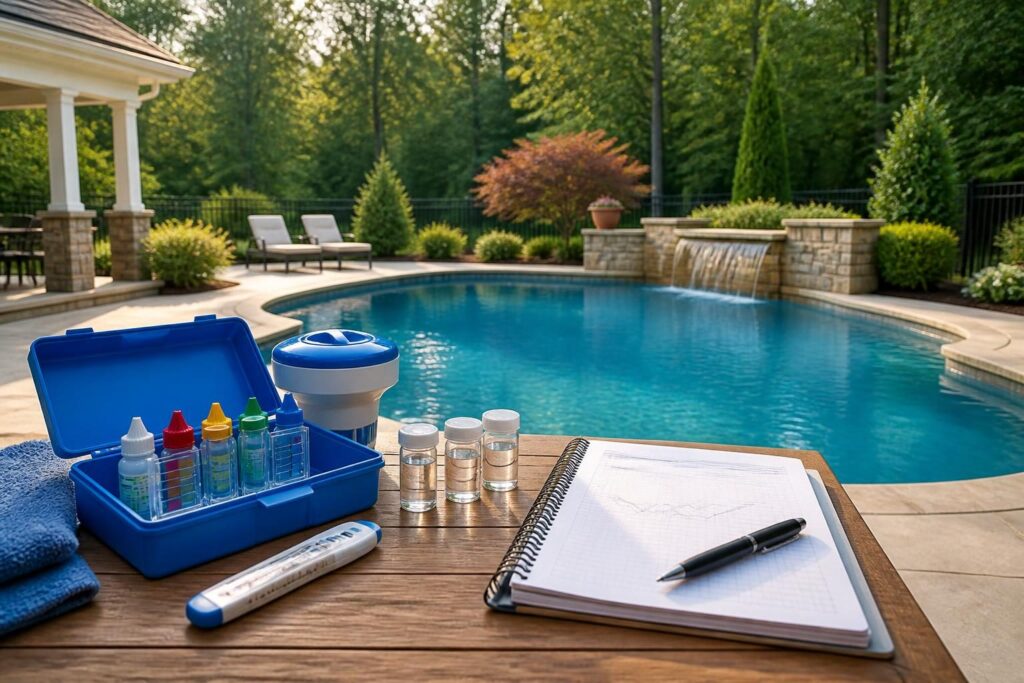
Pool total alkalinity tracking North Carolina homeowners can use is less about chasing one test result and more about understanding patterns. Total alkalinity helps pool water resist sudden pH movement. When alkalinity changes, pH may become harder to control, even when the water looks clear.

North Carolina weather can add variables. Rain, heat, evaporation, pollen, heavy swimming, source water, and seasonal equipment changes may affect water balance. A simple record helps you separate a short-term change from a repeated trend. It also gives a qualified pool professional better information when results do not respond as expected.
What total alkalinity does in pool water
Total alkalinity describes the water’s ability to buffer acids. In practical terms, it can help slow rapid pH changes. pH measures how acidic or basic the water is, while alkalinity describes part of the water’s resistance to change.
These measurements work together, but they are not interchangeable. Adjusting one can influence the other. That is why adding chemicals based on a single number may create a new problem. The product label, test method, pool volume, water temperature, and existing chemistry all matter.
Many homeowners use a target range supplied by their pool professional, test-kit manufacturer, or chemical-system instructions. There is no single universal setting for every pool. Plaster, vinyl, fiberglass, saltwater, manual-chlorine, and automated systems may have different care considerations.
The CDC’s home pool water treatment and testing guidance explains the importance of routine testing and balanced water. Use current product directions and obtain local or professional guidance when your system has special requirements.
Why pH stability matters to homeowners
pH affects swimmer comfort, sanitizer performance, and the condition of pool materials. Water that moves outside the operating range for a system may contribute to irritation, cloudy water, deposits, or surface concerns. Those outcomes can have several causes, so a test result does not prove the cause by itself.
When alkalinity is too low for a particular pool-care program, pH may move more easily. Some homeowners describe this as “pH bounce.” When alkalinity is higher than the system needs, pH may resist adjustment or tend to rise. Calcium, temperature, aeration, and sanitizer choices can also affect the broader balance.
North Carolina conditions make trend review useful. A hot period can increase swimming and evaporation. Rain can dilute water or introduce contaminants. Spring pollen can increase cleaning and filtration demands. These events do not automatically require a specific chemical dose, but they are useful notes beside your test results.
Build a useful alkalinity and pH record
A record does not need to be complicated. Use a notebook, spreadsheet, or maintenance app. Enter results before making adjustments whenever possible. Record the test method and the time, because strips, liquid kits, and digital instruments may not produce identical readings.
- Date and approximate time of each test.
- Water temperature, if available.
- Total alkalinity and pH readings.
- Free chlorine or the sanitizer measurement used by your system.
- Water appearance, such as clear, dull, cloudy, or discolored.
- Recent rain, high heat, heavy use, refill, draining, or unusual debris.
- Chemical or equipment changes, including the product and measured amount.
- Filter pressure, pump schedule, and any alarms or service visits.
Keep the original test result separate from your action. For example, write “alkalinity reading: [result]” and then “added product: [name and amount].” This prevents a later adjustment from being mistaken for the initial condition.
For better pool total alkalinity tracking North Carolina homeowners can maintain, add a short observation after each test. Note whether the pH changed quickly, stayed steady, or moved after an event. Over several weeks, the record may reveal whether the pool has a stable pattern or repeated drift.
Consistent pool total alkalinity tracking North Carolina homeowners can maintain also makes service conversations more efficient. A dated log shows what changed, when it changed, and whether the result continued after an adjustment.
Questions your log should answer
- Does pH rise after every refill or only during hot weather?
- Does alkalinity fall after repeated dilution or water replacement?
- Do readings change after a sanitizer-system adjustment?
- Are test results consistent between two methods?
- Did a chemistry change improve the trend or create a new one?
Test consistently before changing the routine
Testing at inconsistent times makes trends difficult to interpret. Choose a repeatable routine that fits your pool-care instructions. Avoid testing immediately after adding a chemical unless the product directions specifically call for that timing.
Collect the sample from a consistent location and depth. Follow the test kit’s instructions for rinsing, sample volume, reagent order, expiration dates, and reading the endpoint. Store reagents as directed. A damaged, expired, or poorly stored kit can create false confidence.
If two tests disagree, do not automatically average them. Check the kit condition and instructions first. You can repeat the test, compare it with a properly maintained method, or ask a pool professional to test the water. Record which method produced each result.
Testing should cover more than alkalinity and pH. The right group of measurements depends on the sanitizer and pool surface. It may include free chlorine, stabilizer, calcium hardness, salt, or other system-specific values. Review related calcium concerns in this guide to tracking calcium hardness and scaling.
Use trends instead of isolated numbers
One unusual reading deserves attention, but it may not explain the whole situation. First, confirm the test. Then review recent events and compare the result with earlier entries. Look for repeated movement across several tests rather than reacting to every small variation.
A practical review has three steps:
- Confirm: Repeat the test according to the kit instructions and check the reagents.
- Contextualize: Review rain, refills, pool use, temperature, equipment settings, and recent treatment.
- Document: Record what happened before and after any adjustment.
Do not make several large changes at once. Multiple changes can hide the cause of a trend. Follow the product label and your pool professional’s instructions. Never mix concentrated pool chemicals, and store them away from children, pets, heat, moisture, and incompatible products.
Saltwater systems still require water testing. The salt cell produces sanitizer, but it does not remove the need to monitor pH, alkalinity, and other system measurements. Seasonal checks are covered in this saltwater system maintenance guide.
When results deserve professional guidance
Ask a qualified pool professional for help when readings remain outside the recommended range, move sharply after reasonable adjustments, or do not match the water’s appearance. Professional testing can help identify whether the issue involves the test method, source water, chemical interaction, equipment operation, or another condition.
Seek guidance before making major corrections if the pool has a new finish, unusual water source, automated dosing equipment, a salt system, a heater, or visible material damage. Also ask for help when anyone experiences repeated eye or skin irritation, especially if multiple water measurements are uncertain.
Contact a professional promptly when you notice persistent cloudiness, staining, scale, strong odors, damaged equipment, chemical fumes, or a suspected chemical exposure. Keep people away from unsafe areas and follow product emergency instructions. Call emergency services or poison-control resources when an exposure may be serious.
Bring these records to a service visit
- At least several recent test entries, including the test method.
- Product labels or photographs of products used.
- Notes about rain, refilling, heavy use, and water delivery.
- Equipment model information and recent setting changes.
- Photos of cloudiness, deposits, staining, or equipment displays.
- A list of symptoms, dates, and actions taken, without guessing at the cause.
A simple homeowner review routine
Set a regular testing and recording schedule that follows your pool-care instructions. Review the log at least once each month during active use. Compare current readings with prior entries and mark weather or maintenance events.
This approach makes pool total alkalinity tracking North Carolina more useful because it connects readings with conditions, actions, and outcomes instead of treating each result alone.
At the end of the season, save a summary. Note the water source, recurring pH direction, alkalinity changes, chemical products, equipment adjustments, and service recommendations. This record can make next season’s startup more predictable without treating last year’s settings as a guaranteed formula.
Build a Pool in North Carolina encourages homeowners to treat water care as an ongoing observation process. Good records support safer decisions, clearer service conversations, and earlier recognition of unusual patterns.
For persistent or confusing results, consult a qualified pool contractor or water-care professional. Ask the local health or other appropriate authority about any applicable public-health concern. A licensed electrician, equipment technician, or other specialist may be needed when the problem involves electrical equipment, dosing controls, heaters, or system installation. Requirements and best practices can vary by property, equipment, water source, and local conditions.